
CBAK Energy Expands Model 32140 Capacity at Nanjing Phase II, Advances Digital Manufacturing
Sentiment and the balance of points
Rhea-AI Sentiment reads the wording of the document, how positive or negative its language is on a 1 to 5 scale. The balance of points shown with the takes weighs what the document actually discloses, so the two can disagree, for example when a trial that missed its main goal is described in upbeat language.
Rhea-AI Summary
CBAK Energy (NASDAQ: CBAT) announced expanded Model 32140 FS cell production capacity at its Nanjing Phase II facility, which currently has 3 GWh of annual capacity and is planned, under its long-term development plan, to reach 18 GWh, supported by about 2.9 million sq ft of planned gross floor area on roughly 58.8 acres.
The facility focuses on full-tab large cylindrical Model 32140 cells, with cumulative deliveries reaching 92 million units as of August 7, 2026. According to CBAK Energy, advanced process engineering, full automation of defined core processes, AI-enabled inspection and a “one cell, one digital identity” traceability system are used to enhance consistency, throughput, and digital quality control as production scales.
Positive
- Nanjing Phase II long-term plan to reach 18 GWh annual capacity, six times current 3 GWh
- 92 million cumulative Model 32140 cell deliveries as of August 7, 2026
- Planned facility footprint of about 2.9 million sq ft on approximately 58.8 acres
- Anode dual-roll continuous calendering improves electrode thickness consistency by 30%
- Winding equipment speed up to 240 units per minute; laser welding up to 120 units per minute
- AI-enabled inspection achieves 100% detection rate for insufficient-fusion weld defects within its defined scope
Negative
- None.
Details
News Market Reaction – CBAT
On Aug 20, the day this news came out, CBAT closed 16.79% above the previous close. Argus tracked a peak move of +19.3% during that session. Our momentum scanner recorded 18 alerts for this stock that day. Relative volume reached 6.3x the daily average during tracking.
Data tracked by StockTitan Argus for the Aug 20 session.
Key Figures
- Current annual capacity
- 3 GWh
- Nanjing Phase II
- Planned annual capacity
- 18 GWh
- Nanjing Phase II long-term development plan
- Planned capacity multiple
- 6 times
- Planned capacity versus current facility capacity
- Cumulative deliveries
- 92 million units
- Model 32140 cells as of August 7, 2026
- Thickness consistency improvement
- 30%
- Dual-roll continuous calendering on the anode line
- Winding speed
- 240 units per minute
- Model 32140 cell assembly
- Laser welding speed
- 120 units per minute per machine
- On-the-fly current-collector disk welding
- Weld defect detection rate
- 100%
- AI-enabled inspection within defined inspection scope
Historical Context
-
Model 32140 shipments surpassed prior-year and full-year 2025 volumes
-
Full-tab LFP cells advanced through customer testing and module validation
-
High-rate LFP cells targeted AI data-center backup power applications
-
Company completed its Nevada-to-Cayman Islands redomiciliation
-
Company presented cylindrical battery solutions for European storage markets
24h Move is the share-price change in the day after each event; other market factors may also have contributed.
Key Terms
gigawatt-hours technical
calendering technical
induction heating technical
jelly-roll technical
AI-generated analysis. How Rhea-AI works. Not financial advice.




DALIAN, China, Aug. 20, 2026 (GLOBE NEWSWIRE) -- CBAK Energy Technology Limited (NASDAQ: CBAT) (“CBAK Energy” or the “Company”), a leading lithium-ion battery manufacturer and energy solutions provider in China, today announced that it has expanded production capacity for its Model 32140 FS cells at its Nanjing Phase II facility. The expansion marks another step in the Company’s strategy to scale large cylindrical cell manufacturing for global markets and strengthens its ability to respond to evolving customer requirements across energy storage, electric mobility and other emerging applications.
Nanjing Phase II currently has 3 gigawatt-hours (GWh) of annual production capacity. Under the project’s long-term development plan, total annual production capacity is planned to reach 18 GWh—six times the facility’s current capacity. The planned expansion is supported by approximately 2.9 million square feet of planned gross floor area across a site of approximately 58.8 acres.
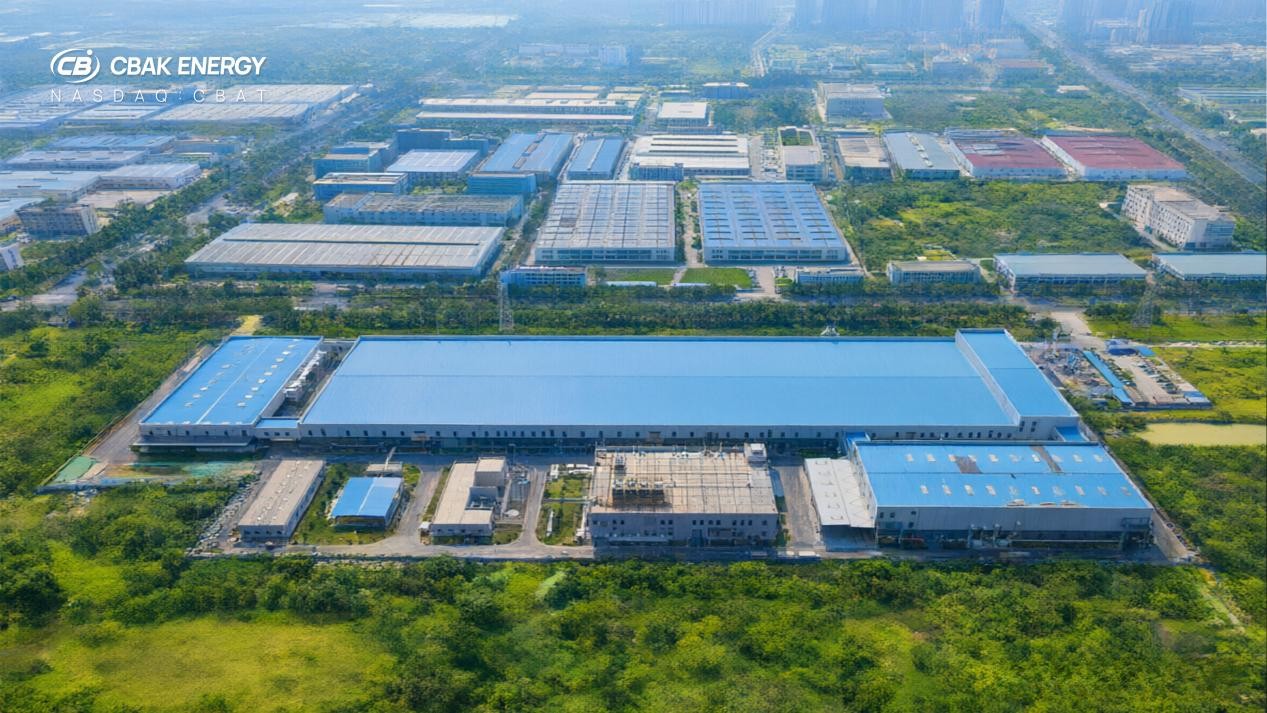
An aerial view of CBAK Energy’s Nanjing Phase II project
The facility’s principal product is CBAK Energy’s Model 32140 full-tab large cylindrical cell. As of August 7, 2026, cumulative deliveries of the Company’s Model 32140 cells had reached 92 million units, underscoring the commercial scale already achieved by the platform. At Nanjing Phase II, expanded capacity is supported by an integrated manufacturing approach that combines process engineering, automation and digital quality control to help maintain product consistency, operating efficiency and manufacturing traceability as production scales.
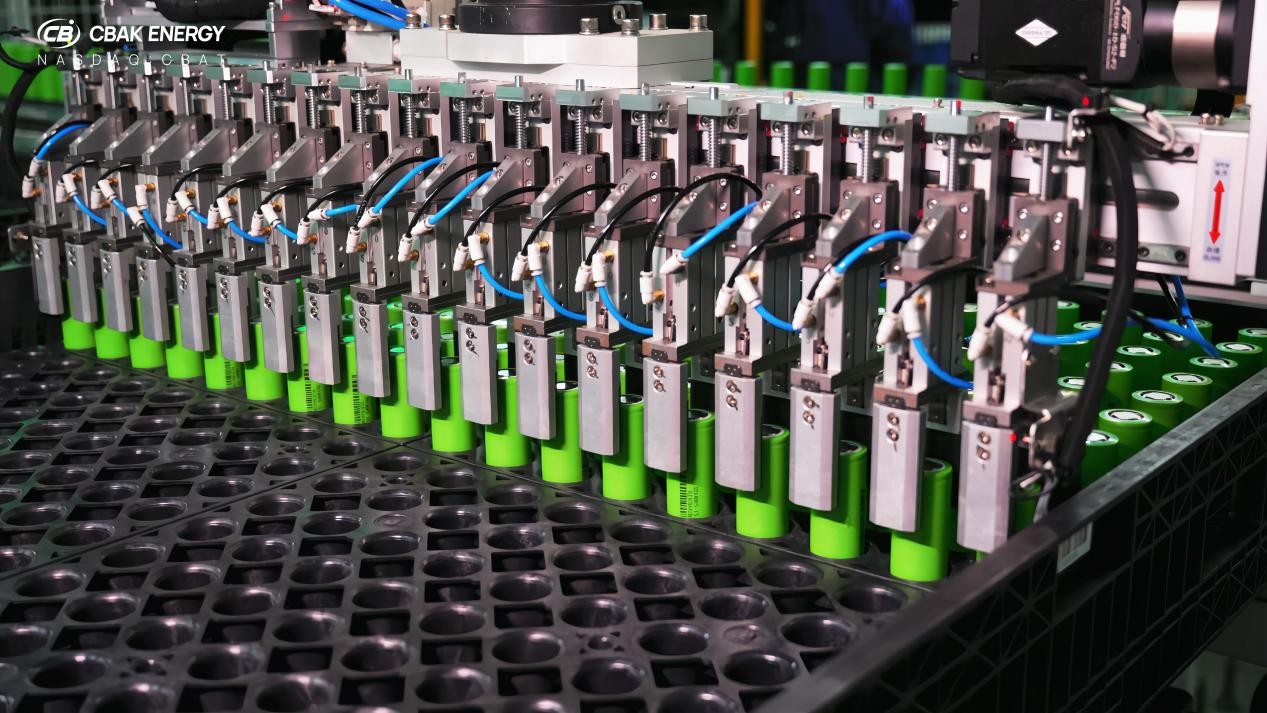
Automated equipment handles Model 32140 cells on a production line, supporting repeatable processing and reduced manual intervention.
Advanced Process Engineering for Consistency and Reliable Supply
Nanjing Phase II applies advanced process solutions across key stages of Model 32140 production. During electrode rolling and slitting, dual-roll continuous calendering on the anode line improves electrode thickness consistency by
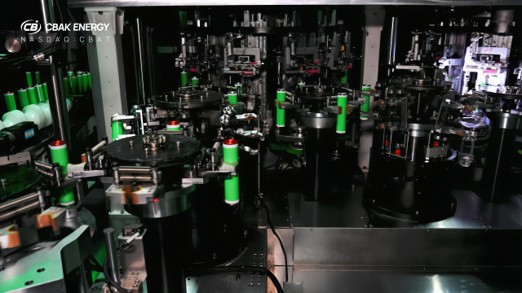
A rotary indexing system performs high-speed tab rubbing and single-step full-tab forming during Model 32140 cell assembly.
In downstream cell assembly, winding equipment operates at up to 240 units per minute, while a rotary indexing system integrates tab flattening into a single-step full-tab forming process. Laser welding further enhances throughput and process repeatability: on-the-fly laser welding of current-collector disks reaches up to 120 units per minute per machine, while bottom laser penetration welding increases the current-carrying area by approximately one-third, with an average cycle time of approximately 0.35 seconds per weld. Together, these capabilities combine speed and repeatability to support efficient high-volume production.
Automation Enabling Scaled Production
Automation supports a low-touch operating model across material handling and core production at Nanjing Phase II. Automated guided vehicles provide end-to-end material delivery, and
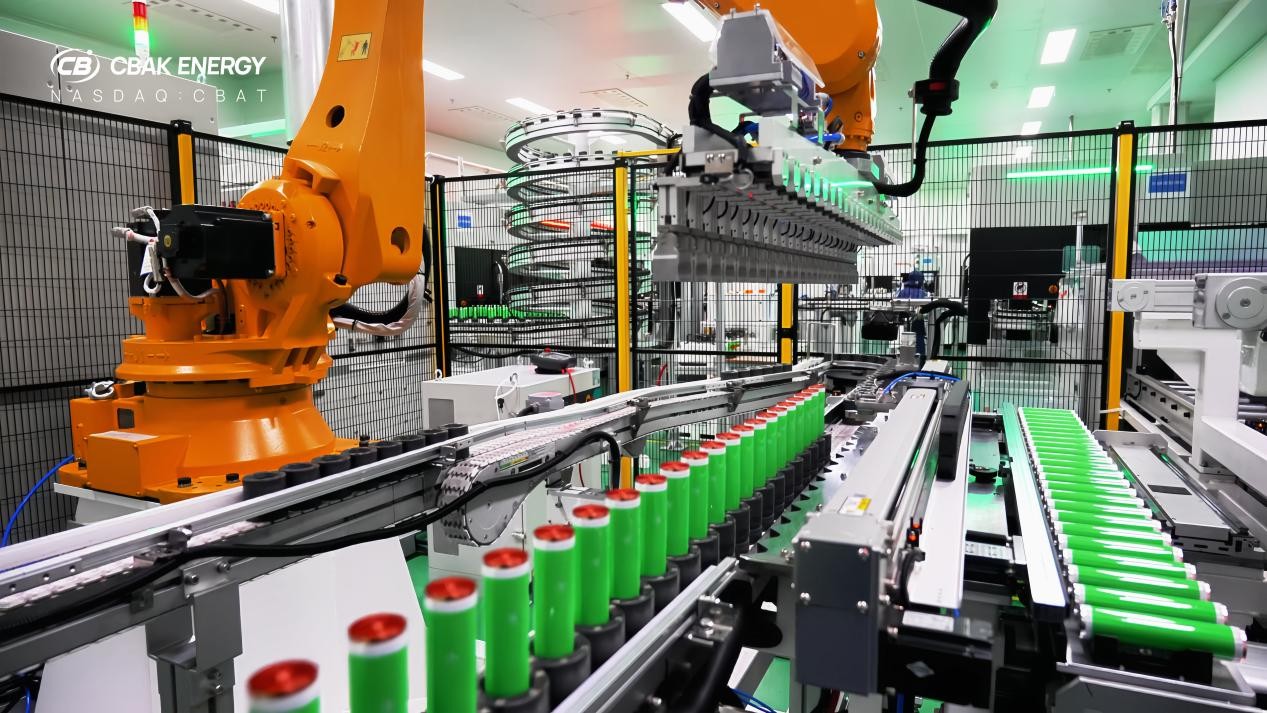
An integrated robotic material-handling system transfers Model 32140 cells between production stages.
Digital Quality Control and Cell-Level Traceability
Nanjing Phase II uses a “one cell, one digital identity” traceability architecture that links each cell to its manufacturing record. More than 100 critical product parameters are inspected in-line and continuously tracked, while UV marking connects each finished-cell code to its corresponding jelly-roll code. This cell-level digital thread supports manufacturing traceability and enables more targeted root-cause analysis when a quality issue is identified.
Within its defined inspection scope, the line’s AI-enabled inspection system achieves a
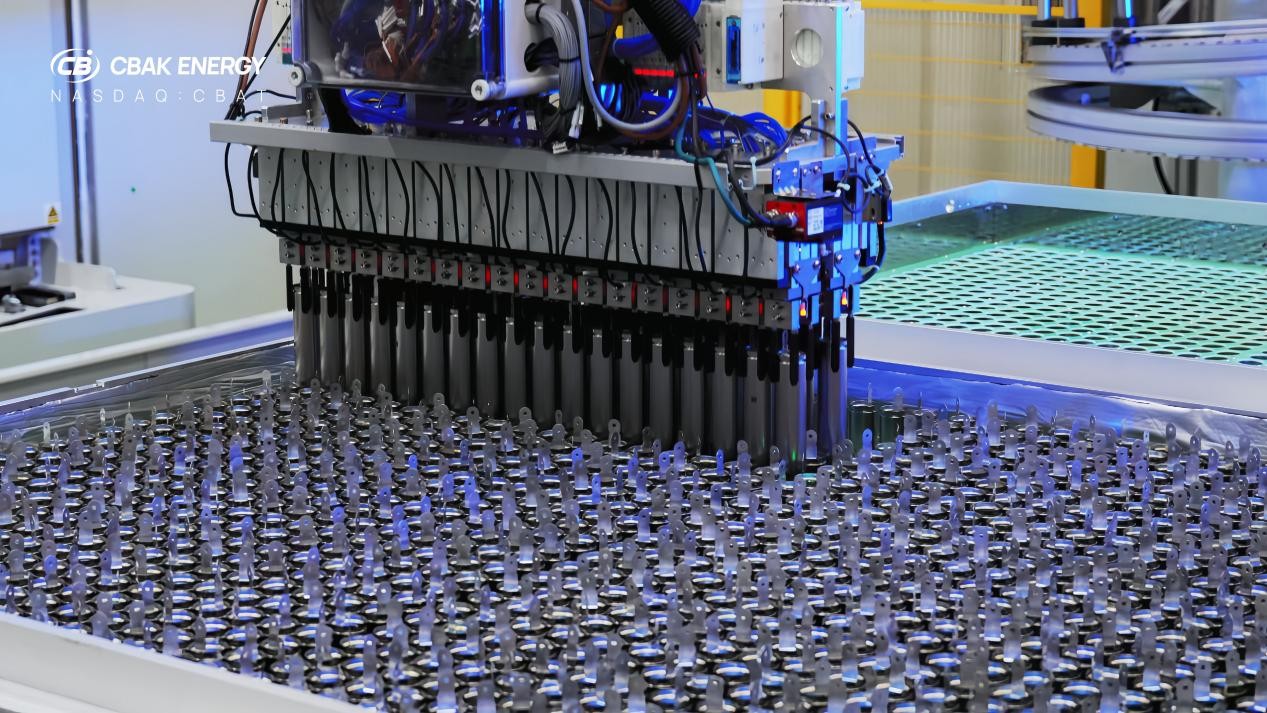
Automated production equipment operates within a digitally managed manufacturing system that links each cell to its production record.
“Manufacturing excellence is how we translate battery innovation into dependable supply for customers,” said Chenggang Yuan, Deputy General Manager of Nanjing CBAK New Energy Technology Co., Ltd. “At Nanjing Phase II, process discipline, automation and manufacturing traceability operate as an integrated system. As we execute the project’s long-term plan toward 18 GWh of annual capacity, this platform is designed to help us scale Model 32140 production while maintaining the consistency, responsiveness and traceability required by customers across energy storage, advanced electric mobility and other emerging applications.”
About CBAK Energy
CBAK Energy Technology Limited (NASDAQ: CBAT) is a leading China-based high-tech enterprise that develops, manufactures and sells high-power lithium-ion and sodium-ion batteries, as well as raw materials used in high-power lithium battery manufacturing. The Company’s products and solutions serve electric vehicles, light electric vehicles, energy storage systems and other high-power applications. In January 2006, CBAK Energy became the first Chinese lithium battery manufacturer to list on the Nasdaq Stock Market. The Company operates subsidiaries in Dalian, Nanjing, Shaoxing and Shangqiu and maintains a large-scale research, development and production base in Dalian.
Forward-Looking Statements
This press release contains forward-looking statements within the meaning of the safe harbor provisions of the U.S. Private Securities Litigation Reform Act of 1995. Statements that are not historical facts, including statements regarding the planned expansion of Nanjing Phase II’s annual production capacity from its current 3 GWh to 18 GWh; the timing, pace and completion of that planned expansion; the Company’s ability to scale Model 32140 production while maintaining product consistency, operating efficiency, manufacturing traceability and reliable supply; and the expected benefits of its process engineering, automation, digital quality-control and AI-enabled inspection systems, are forward-looking statements. These forward-looking statements are based on the Company’s current expectations and assumptions and are subject to risks and uncertainties that could cause actual results to differ materially from those expressed or implied. Actual results may differ as a result of various factors, including production-line performance, commissioning, utilization and ramp-up; the Company’s ability to fund, construct, equip and achieve the planned capacity expansion; its ability to convert additional capacity into output, shipments and revenue; manufacturing yields, product quality and consistency; the performance, availability and integration of automation, inspection and digital systems; the availability and cost of raw materials, equipment, labor, energy and other production inputs; changes in customer demand, order timing, order volumes or product mix; supply chain and logistics conditions; competition; macroeconomic, market and regulatory conditions; and other risks described in the Company’s filings with the U.S. Securities and Exchange Commission. Readers are cautioned not to place undue reliance on these forward-looking statements. Except as required by applicable law, the Company undertakes no obligation to update or revise any forward-looking statements, whether as a result of new information, future events or otherwise.
For more information, please visit: https://en.cbak.com.cn/
Email: marketing@cbak.com.cn
LinkedIn: https://www.linkedin.com/company/cbakenergy
X: https://x.com/CBAKEnergy
Stocktwits: https://stocktwits.com/CBAK_Official
Investor Relations
Email: ir@cbak.com.cn
Website: https://ir.cbak.com.cn/
Photos accompanying this announcement are available at
https://www.globenewswire.com/NewsRoom/AttachmentNg/7a0f8a23-4d54-4953-8420-af6c974ed21e
https://www.globenewswire.com/NewsRoom/AttachmentNg/470a7931-1320-4318-b4af-03ded4d0cd18
https://www.globenewswire.com/NewsRoom/AttachmentNg/86b029f2-8105-4c83-a5f4-53400e088677
https://www.globenewswire.com/NewsRoom/AttachmentNg/e3b013ea-32ec-460f-9d9e-b29c6c2c34e1
https://www.globenewswire.com/NewsRoom/AttachmentNg/60aa031d-a2b2-4876-ac55-4bb07552afb5

FAQ
AI-generated questions and answers. How Rhea-AI works. Not financial advice.