
CRML Set to Become the Market Leader for Hafnium Production and Supply Security Taking Away China's Current 75% Market Share
Critical Metals Corp (Nasdaq: CRML) highlighted forecasts of nearly 70% global hafnium demand growth by 2030, driven by aerospace, semiconductors, AI data centers, and nuclear uses.
Rhea-AI Summary
Critical Metals Corp (Nasdaq: CRML) highlighted forecasts of nearly 70% global hafnium demand growth by 2030, driven by aerospace, semiconductors, AI data centers, and nuclear uses.
The Tanbreez Project in Greenland is expected to yield at least 130,000 tons of concentrate annually by 2030, while a proposed Romanian refinery could produce about 120–150 tons of hafnium per year. Current global hafnium production is estimated at only 70–75 tonnes annually, with China supplying about 75%. High‑purity hafnium prices are reportedly US$13–15 million per ton, and market participants see a roughly 20‑ton annual supply shortfall for critical applications.
Details
News Market Reaction – CRML
On May 12, the day this news came out, CRML closed 2.15% below the previous close.
Data tracked by StockTitan Argus for the May 12 session.
Key Figures
- Tanbreez concentrate output
- 130,000 tons per year
- Minimum annual concentrate production by 2030
- Hafnium grade
- 2,300 ppm
- Hafnium concentration in exported eudialyte concentrate
- Refinery hafnium capacity
- 120–150 tons per year
- Projected output from proposed Romanian JV refinery
- High-purity hafnium price
- US$13–15 million per ton
- Reported range for 99.99% purity hafnium in early 2026
- Lower-purity hafnium price
- US$6 million per ton
- Reported for 98–99% purity unwrought hafnium products
- Annual supply shortfall
- 20 tons per year
- Estimated shortfall for critical hafnium applications
- Global hafnium production
- 70–75 tonnes per year
- Estimated annual global hafnium production
- AI/data hafnium market CAGR
- 10% CAGR; US$420M to US$726M
- Forecast 2026–2030 market tied to AI and data infrastructure
Historical Context
-
Exclusivity period extended with European Lithium to finalize scheme deed.
-
Greenland approves 70% acquisition of 60° North ApS tied to Tanbreez.
-
May 04
Sector positioning
- 24h Move
- +3.8%
Article highlights tungsten supply dynamics and reshoring trade exposure.
-
Apr 30
Project advancement
- 24h Move
- +11.9%
Greenland Skaergaard project advances with new consultants and LOI.
-
CRML closes final 50.5% Tanbreez stake, reaching 92.5% ownership.
24h Move is the share-price change in the day after each event; other market factors may also have contributed.
Key Terms
superalloys technical
control rods technical
high-k metal gate technical
compound annual growth rate (CAGR) financial
small modular reactors (SMRs) technical
neuromorphic computing technical
rare-earth concentrate technical
by-product technical
AI-generated analysis. How Rhea-AI works. Not financial advice.




NEW YORK, May 12, 2026 (GLOBE NEWSWIRE) -- Critical Metals Corp. (Nasdaq: CRML) (“Critical Metals Corp” or the “Company”), a leading critical minerals mining company, today highlighted industry forecasts indicating that global hafnium demand could increase by nearly
Critical Metals expects the Tanbreez Project in Greenland to produce a minimum of 130,000 tons of concentrate annually by 2030. Hafnium concentrations within the exported eudialyte concentrate are expected to exceed 2,300 ppm. The Company’s proposed joint-venture refinery in Romania, which is expected to process approximately
The global hafnium market remains structurally supply constrained, with annual production estimated at only 70–75 tonnes per year. Demand growth linked to AI-driven semiconductor manufacturing and high-temperature aerospace alloys has intensified pressure on available supply, contributing to shortages of high-purity hafnium used in advanced 2nm and 5nm semiconductor fabrication.
At present, China accounts for approximately
Tony Sage, Chairman of CRML, commented:
“Hafnium is becoming increasingly critical for advanced semiconductors, AI infrastructure, aerospace, and nuclear technologies, yet the global supply remains extremely limited and heavily concentrated in China. We believe Tanbreez has the potential to become one of the most important Western sources of hafnium supply.”
“Through our planned downstream refining strategy, Critical Metals aims to support the growing demand for secure, reliable, and scalable hafnium supply across the United States, Europe, and NATO markets. This production does not detract from Critical Metals also producing other critical elements such as Terbium, Gallium, and Niobium.”
Key Demand Drivers
- Advanced Semiconductors: Hafnium oxide is increasingly used in high-k metal gate technologies for advanced semiconductor nodes, including 3nm and below, to reduce current leakage and improve transistor performance.
- AI and Data Centres: Rapid growth in AI infrastructure and high-performance computing is increasing demand for advanced chip architectures requiring high-purity hafnium compounds.
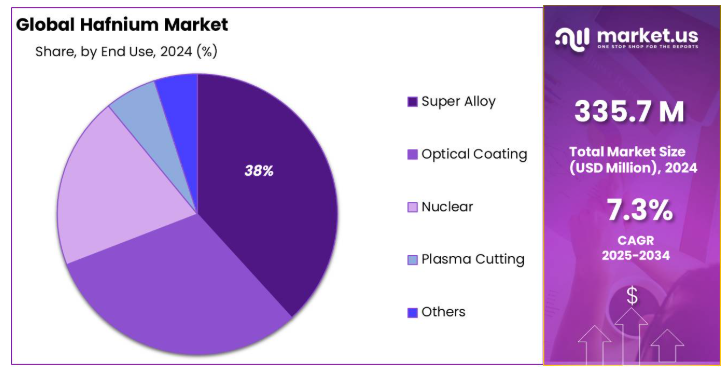
- Aerospace Superalloys: Hafnium is a critical component in high-temperature nickel-based superalloys used in turbine blades and advanced jet engine applications due to its heat and corrosion resistance.
- Nuclear Energy: Demand for hafnium control rods continues to rise because of hafnium’s superior neutron absorption capabilities, particularly in naval reactors and next-generation nuclear power systems.
- Emerging Computing Technologies: Research into hafnium oxide-based memory and neuromorphic computing technologies may further expand future demand.
Market Dynamics
Industry forecasts project the hafnium market associated with AI and data infrastructure alone could grow at a compound annual growth rate (CAGR) of approximately
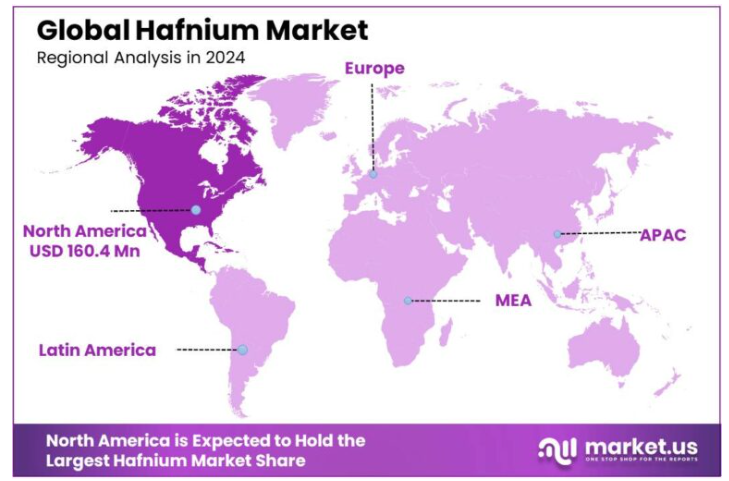
The hafnium market is characterized by concentrated production, limited refining capacity, and increasing geopolitical sensitivity surrounding critical mineral supply chains. Rising demand across aerospace, defense, semiconductor, and nuclear sectors has contributed to significant price volatility and supply tightness.
Critical Metals believes that additional reliable western supply from Tanbreez and the Company’s proposed downstream processing operations could materially improve market stability and reduce reliance on existing concentrated supply sources.
Potential Impact of Increased Hafnium Supply
The Company believes expanded hafnium availability and lower-cost extraction technologies could support broader industrial adoption across several sectors:
- Semiconductors and AI Infrastructure: Lower-cost, high-purity hafnium oxide could accelerate adoption in advanced semiconductor nodes, AI accelerators, advanced DRAM, and high-performance computing applications.
- Aerospace Manufacturing: Greater availability may support expanded use of hafnium-containing superalloys and enable increased adoption of advanced manufacturing techniques such as 3D-printed aerospace components.
- Small Modular Reactors (SMRs): More affordable Hafnium could increase deployment in next-generation nuclear reactor control systems due to its neutron absorption properties.
- Industrial Applications: Lower prices may encourage substitution back toward hafnium-based materials in sectors such as plasma cutting and specialty industrial tooling.
- Supply Chain Diversification: Additional western supply could reduce market concentration currently dominated by China, Russia, France, and the United States, while lowering geopolitical and pricing volatility.
Supply Constraints Expected to Persist
Despite strong demand growth, significant new supply from traditional producers is not expected in the near term because hafnium production remains closely tied to zirconium refining, particularly nuclear-grade zirconium production. As a result, hafnium supply growth may remain constrained unless zirconium demand also increases substantially.
About Critical Metals Corp.
Critical Metals Corp (Nasdaq: CRML) is a leading mining development company focused on critical metals and minerals, and producing strategic products essential to electrification and next generation technologies for Europe and its western world partners. Its flagship Project, Tanbreez, is one of the world's largest, rare earth deposits and is located in Southern Greenland. The deposit is expected to have access to key transportation outlets as the area features year-round direct shipping access via deep water fjords that lead directly to the North Atlantic Ocean.
Another key asset is the Wolfsberg Lithium Project located in Carinthia, 270 km south of Vienna, Austria. The Wolfsberg Lithium Project is the first fully permitted mine in Europe and is strategically located with access to established road and rail infrastructure and is expected to be the next major producer of key lithium products to support the European market. Wolfsberg is well positioned with offtake and downstream partners to become a unique and valuable asset in an expanding geostrategic critical metals portfolio.
With this strategic asset portfolio, Critical Metals Corp is positioned to become a reliable and sustainable supplier of critical minerals essential for defense applications, the clean energy transition, and next-generation technologies in the western world.
For more information, please visit https://www.criticalmetalscorp.com/.
Cautionary Note Regarding Forward Looking Statements
This news release contains forward-looking statements within the meaning of Section 27A of the Securities Act of 1933, as amended, and Section 21E of the Securities Exchange Act of 1934, as amended (the “Exchange Act”). Forward-looking statements may include expectations of our business and the plans and objectives of management for future operations. These statements constitute projections, forecasts and forward-looking statements, and are not guarantees of performance. Such statements can be identified by the fact that they do not relate strictly to historical or current facts. When used in this news release, forward-looking statements may be identified by the use of words such as “estimate,” “plan,” “project,” “forecast,” “intend,” “will,” “expect,” “anticipate,” “believe,” “seek,” “target,” “designed to” or other similar expressions that predict or indicate future events or trends or that are not statements of historical facts. In addition, any statements that refer to projections, forecasts or other characterizations of future events or circumstances, including any underlying assumptions, are forward-looking statements.
Forward-looking statements are subject to known and unknown risks and uncertainties and are based on potentially inaccurate assumptions that could cause actual results to differ materially from those expected or implied by the forward-looking statements. Actual results could differ materially from those anticipated in forward-looking statements for many reasons, including the factors discussed under the “Risk Factors” section in the Company’s Annual Report on Form 20-F filed with the U.S. Securities and Exchange Commission. These forward-looking statements are based on information available as of the date of this news release, and expectations, forecasts and assumptions as of that date, involve a number of judgments, risks and uncertainties. Accordingly, forward-looking statements should not be relied upon as representing our views as of any subsequent date, and we do not undertake any obligation to update forward-looking statements to reflect events or circumstances after the date they were made, whether as a result of new information, future events or otherwise, except as may be required under applicable securities laws.
Reference
https://market.us/report/hafnium-market/
https://www.imarcgroup.com/hafnium-market
Critical Metals Corp.
Investor Relations: ir@criticalmetalscorp.com
Media: pr@criticalmetalscorp.com
Photos accompanying this announcement are available at
https://www.globenewswire.com/NewsRoom/AttachmentNg/d3ef28b7-e06b-4790-8e8a-e2b8c5025464
https://www.globenewswire.com/NewsRoom/AttachmentNg/dacfeabb-8231-4ef1-8008-f36daa9c7fae

FAQ
AI-generated questions and answers. How Rhea-AI works. Not financial advice.