
CanAlaska Announces Assay Results from Winter Drill Program on West McArthur Project
CanAlaska Uranium (OTCQX: CVVUF) reported geochemical assay results from its 2026 winter drill program at the West McArthur Project, a joint venture with Cameco in the southeastern Athabasca Basin.
Sentiment and the balance of points
Rhea-AI Sentiment reads the wording of the document, how positive or negative its language is on a 1 to 5 scale. The balance of points shown with the takes weighs what the document actually discloses, so the two can disagree, for example when a trial that missed its main goal is described in upbeat language.
Rhea-AI Summary
CanAlaska Uranium (OTCQX: CVVUF) reported geochemical assay results from its 2026 winter drill program at the West McArthur Project, a joint venture with Cameco in the southeastern Athabasca Basin. Twenty-four unconformity tests were completed, with uranium mineralization intersected in ten holes along the C10S corridor around the high-grade Pike Zone.
Assays confirm previously reported radiometric equivalent grades and define a hydrothermal system over 1.3 km of strike, with over 1.0 km containing uranium mineralization, including the 140 m high-grade core of Pike Zone. Highlight intervals include WMA101-02 with 5.4 m at 1.48% U3O8, including 0.5 m at 8.42% U3O8 and 0.4 m at 10.5% U3O8, and WMA100-02 with 0.5 m at 2.89% U3O8. CanAlaska holds 88.89% of West McArthur and states it remains well funded, with over $25 million in treasury for ongoing 2026 summer drilling, expected to conclude in September. The company also appointed Rebecca Kupchinski as Exploration Manager, adding Athabasca Basin discovery and project management experience.
Positive
- 10 of 24 winter drill holes intersected uranium mineralization along the C10S corridor
- Hydrothermal system now defined over 1.3 km strike, with >1.0 km containing uranium mineralization
- Pike Zone high-grade core spans 140 m within the mineralized trend
- WMA101-02 returned 5.4 m at 1.48% U3O8, including 0.4 m at 10.5% U3O8
- WMA100-02 intersected 0.5 m at 2.89% U3O8 away from the main Pike Zone
- CanAlaska reports being well funded with over $25 million in treasury for 2026 drilling
- West McArthur Joint Venture is co-funded with Cameco; CanAlaska holds 88.89% ownership
- Appointment of Exploration Manager Rebecca Kupchinski adds Athabasca Basin discovery and drilling management experience
Negative
- None.
Details
News Market Reaction – CVVUF
On Aug 17, the day this news came out, CVVUF closed 4.52% below the previous close.
Data tracked by StockTitan Argus for the Aug 17 session.
AI-generated analysis. How Rhea-AI works. Not financial advice.




Geochemical Assays Confirm Continuation of Uranium Mineralization Along Unconformity Target
Rebecca Kupchinski Hired as Exploration Manager
Saskatoon, Saskatchewan--(Newsfile Corp. - August 17, 2026) - CanAlaska Uranium Ltd. (TSXV: CVV) (OTCQX: CVVUF) (FSE: DH7) ("CanAlaska" or the "Company") is pleased to report that it has received the geochemical assay results from the 2026 winter drill program completed at the West McArthur Project (the "Project") in the southeastern Athabasca Basin (Figure 1). During the winter program, the Company focused on continued step outs to the southwest and northeast of the currently defined high-grade mineralized footprint of the Pike Zone. The Company successfully stepped out 350 metres southwest and 350 metres northeast from previous drilling, intersecting continued strong alteration, structure, graphitic host stratigraphy, and multiple drill fences with unconformity-associated and basement-hosted uranium mineralization. Geochemical assay results confirm the previously reported eU3O8 results and highlight the uranium mineralization associated with hydrothermal alteration and structural disruption along strike in both directions on the C10S corridor. The continuation of the hydrothermal system and uranium mineralization along trend in both directions from the high-grade Pike Zone highlights the continued potential for additional pods of high-grade mineralization and the requirement for continued systematic evaluation in both directions along the C10S corridor.
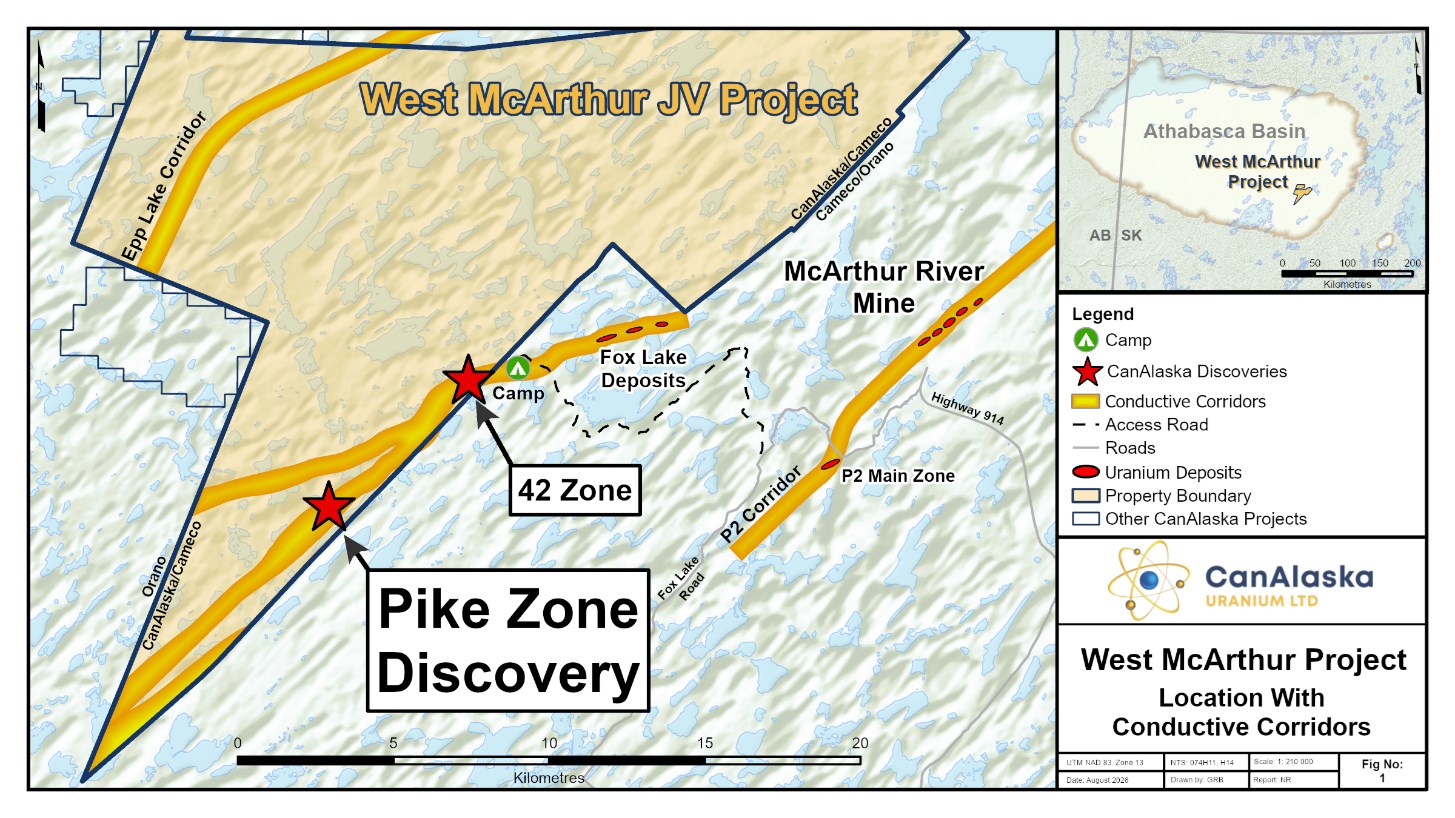
Figure 1 – West McArthur Project Location
To view an enhanced version of this graphic, please visit:
https://images.newsfilecorp.com/files/2864/309745_3eea6c7734f43ba3_002full.jpg
CanAlaska CEO, Cory Belyk, comments, "Confirmation of uranium mineralization in geochemical assays is an important step in showing the potential for the C10S corridor to host additional zones of high-grade mineralization. As the summer program progresses, the CanAlaska team is very focused on following the alteration and uranium mineralization along the host fault structure looking for the start of that next 'pearl' of high-grade uranium. CanAlaska remains well funded for the summer drilling program with over
The 2026 winter drill program on the West McArthur project consisted of twenty-four unconformity tests, ten of which contained uranium mineralization (Table 1). The results of the winter drill program indicate that the hydrothermal system associated with the unconformity target area along the C10S corridor has now been defined over 1.3 kilometres strike length, with over one kilometre strike length containing uranium mineralization, including the 140-metre-long high-grade core of the Pike Zone (Figure 2). The winter drill program was successful in identifying key structural controls and alteration vectors associated with uranium mineralization on multiple drill fences moving both to the northeast and southwest of the high-grade Pike Zone footprint, highlighting the continued potential for additional mineralized pods within the hydrothermal system. In addition, the geochemical results in WMA101-02 and WMA100-02 confirm the presence of high-grade uranium mineralization away from the high-grade Pike Zone area in both directions along the C10S trend.
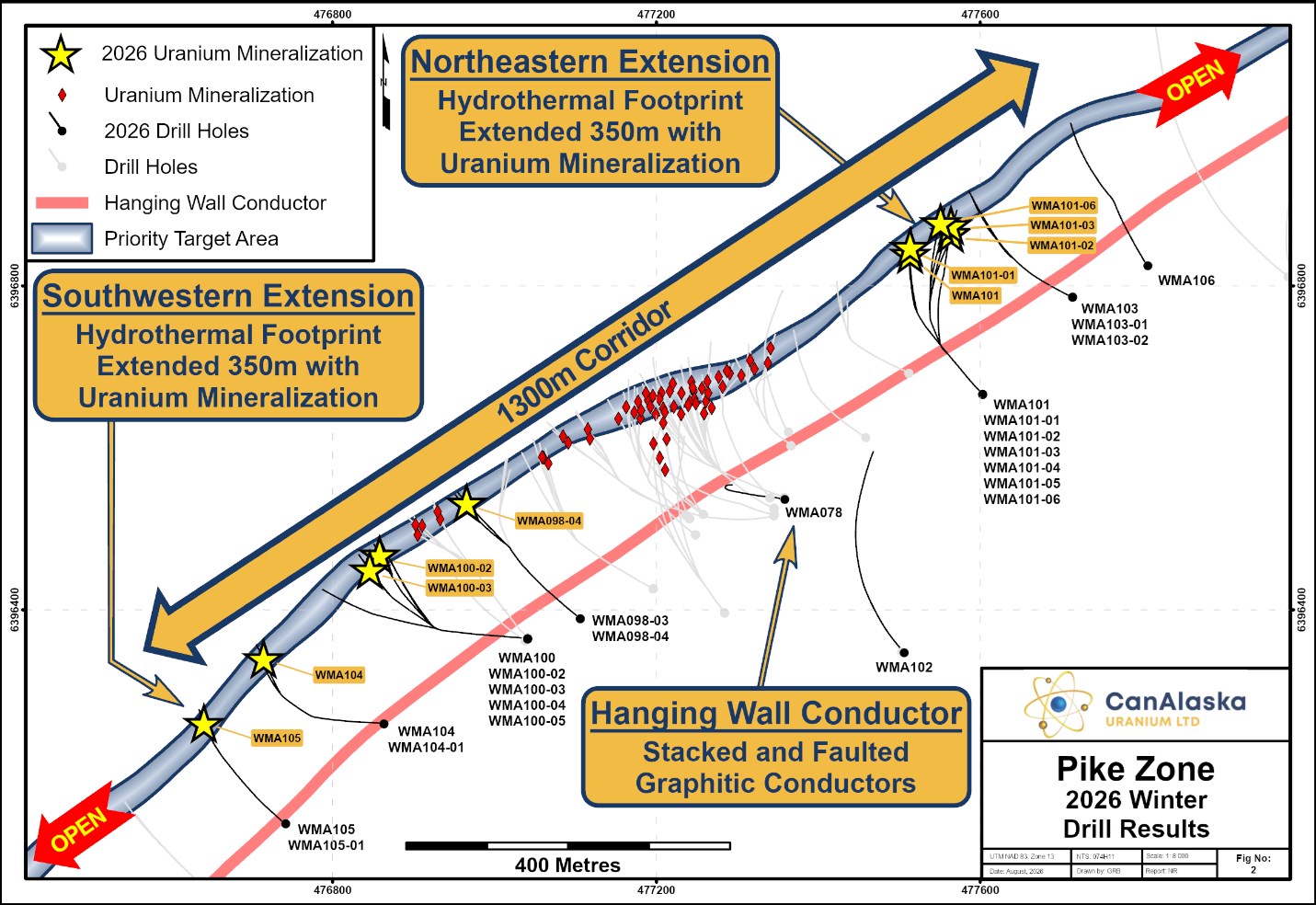
Figure 2 – Winter Drill Program Assay Results
To view an enhanced version of this graphic, please visit:
https://images.newsfilecorp.com/files/2864/309745_3eea6c7734f43ba3_004full.jpg
| Table 1: Intersections with Geochemical Assay and Radiometric Equivalent Intervals | ||||
| DDH | From (m) | To (m) | Length (m)9 | Average Grade (% U3O8) |
| WMA098-041,6 | 813.7 | 814.2 | 0.5 | 0.17 |
| WMA100-022,6 | 831.7 | 832.0 | 0.3 | 0.13 |
| WMA100-022,6 | 832.8 | 833.3 | 0.5 | 2.89 |
| WMA100-032,6 | 832.4 | 832.9 | 0.5 | 0.08 |
| WMA1013,6 | 823.1 | 823.6 | 0.5 | 0.19 |
| WMA1013,6 | 826.9 | 828.9 | 2.0 | 0.22 |
| WMA101-013,6 | 823.2 | 823.7 | 0.5 | 0.95 |
| WMA101-023,6 | 812.1 | 817.5 | 5.4 | 1.48 |
| Including3,7 | 816.1 | 816.6 | 0.5 | 8.42 |
| WMA101-023,6 | 818.5 | 819.0 | 0.5 | 3.97 |
| WMA101-023,6 | 821.9 | 822.3 | 0.4 | 10.5 |
| WMA101-033,6 | 822.5 | 824.0 | 1.5 | 0.13 |
| WMA101-033,6 | 825.5 | 826.0 | 0.5 | 0.46 |
| WMA101-063,6 | 825.9 | 826.4 | 0.5 | 0.12 |
| WMA1044,6 | 835.5 | 836.0 | 0.5 | 0.11 |
| WMA1044,8 | 829.3 | 830.2 | 0.9 | 0.28 |
| WMA1055,6 | 830.4 | 830.7 | 0.3 | 0.22 |
| WMA1055,6 | 834.1 | 834.4 | 0.3 | 0.11 |
| ||||
The West McArthur project, a Joint Venture with Cameco Corporation, is operated by CanAlaska which holds an
2026 West McArthur Summer Drill Program Update
The 2026 summer drill program on the West McArthur Project is currently ongoing, where the primary focus is continued systematic testing to evaluate the C10S corridor for additional pods of high-grade uranium mineralization. Primary target areas are concentrated both to the southwest and northeast of the high-grade Pike Zone area. The drill program is focused on additional step-outs along the trend and infill testing of larger gaps where strong hydrothermal alteration and lower-grade uranium mineralization indicate the potential for additional pods. The Company expects to complete the summer portion of the 2026 exploration program in September.
Technical Disclosure: Geochemical Assay Sampling Procedures and Use of Radiometric Equivalent Grades
During active exploration programs drillholes are radiometrically logged using calibrated downhole GeoVista NGRS and TGGS (Triple GM) gamma probes which collect continuous readings along the length of the drillhole wall. Downhole logging is not a direct measurement of the recovered core and represents the wall rock material of the drillhole. Preliminary radiometric equivalent uranium grades ("eU3O8") are then calculated from the downhole radiometric results. The probe is calibrated using an in-house algorithm calculated from the calibration of the probe at the Saskatchewan Research Council facility in Saskatoon and from the comparison of probe results against previously reported geochemical analyses. At extremely high radiometric equivalent uranium grades, downhole gamma probes may become saturated, resulting in the probe being overwhelmed, which in turn can create difficulties in accurately determining extremely high-grade radiometric equivalent uranium grades, and a cap may be applied to the grade. The equivalent uranium grades are preliminary and are subsequently reported as definitive assay grades following sampling and chemical analysis of the mineralized drill core. In the case where core recovery within a mineralized intersection is poor or non-existent, radiometric grades are considered to be more representative of the mineralized intersection and may be reported in the place of assay grades. Radiometric equivalent probe results are subject to verification procedures by qualified persons employed by CanAlaska prior to disclosure.
All assay drill core samples from the program, completed as NQ-sized core, were shipped to the Saskatchewan Research Council Geoanalytical Laboratories (SRC) in Saskatoon, Saskatchewan in secure containment for preparation, processing, and multi-element analysis by ICP-MS and ICP-OES using total (HF:NHO3:HClO4) and partial digestion (HNO3:HCl), boron by fusion, and U3O8 wt% assay by ICP-OES using higher grade standards. Assay samples are chosen based on downhole probing radiometric equivalent uranium grades and scintillometer (SPP2 or CT007-M) peaks. Assay sample intervals comprise 0.3 - 0.8 metre continuous half-core split samples over the mineralized intervals. With all assay samples, one half of the split sample is retained and the other sent to the SRC for analysis. The SRC is an ISO/IEC 17025/2005 and Standards Council of Canada certified analytical laboratory. Blanks, standard reference materials, and repeats are inserted into the sample stream at regular intervals by CanAlaska and the SRC in accordance with CanAlaska's quality assurance/quality control (QA/QC) procedures. Geochemical assay data are subject to verification procedures by qualified persons employed by CanAlaska prior to disclosure.
All reported depths and intervals are drill hole depths and intervals, unless otherwise noted, and do not represent true thicknesses, which have yet to be determined.
New Exploration Manager
CanAlaska is pleased to announce the hiring of an Exploration Manager. Ms. Rebecca Kupchinski has over six years of experience supporting and managing exploration and delineation drilling programs in the Athabasca Basin. She was a part of the discovery teams for both the Pike Zone, with CanAlaska Uranium Ltd., and the Patterson Corridor East discovery, with NexGen Energy Ltd. Most recently, she was the Exploration Manager, Canada with Uranium Energy Corp., where she focused on the planning and execution of exploration activities, supported the advancement of the Roughrider deposit through a conversion drilling program, and played a key role in building the Company's Saskatchewan-based exploration team. Ms. Kupchinski is a licensed Professional Geoscientist and holds a B.Sc. degree in Geology from the University of Saskatchewan.

To view an enhanced version of this graphic, please visit:
https://images.newsfilecorp.com/files/2864/309745_3eea6c7734f43ba3_005full.jpg
Rebecca Kupchinski, Exploration Manager, comments, "I am excited to return to CanAlaska to both rejoin the team that helped shape my early career, and to further explore the West McArthur property while continuing to test new ideas across the Company's broader exploration portfolio. CanAlaska has crafted a strong pipeline of exploration opportunities, demonstrated by their continued success along the C10S corridor and prospective results from their recently tested Nebula and Key Extension projects. I look forward to supporting this next chapter of exploration and working with the team towards the Company's next discovery."
CanAlaska CEO, Cory Belyk, comments, "It is a true pleasure to welcome Rebecca back to the CanAlaska team. Rebecca brings a wealth of new experience from her time spent with NexGen Energy Ltd and Uranium Energy Corp over the past few years that will help drive CanAlaska's portfolio toward successful uranium discoveries."
About CanAlaska Uranium
CanAlaska is a leading explorer of uranium in the Athabasca Basin of Saskatchewan, Canada. With a project generator model, the Company has built a large portfolio of uranium projects in the Athabasca Basin. CanAlaska owns numerous uranium properties, totaling approximately 375,000 hectares, with clearly defined targets in the Athabasca Basin covering both basement and unconformity uranium deposit potential. The Company has recently concentrated on the West McArthur high-grade uranium expansion with targets in 2024 and 2025 leading to significant success at Pike Zone. Fully financed for the 2026 drill season, CanAlaska is focused on uranium deposit discovery and delineation in a safe and secure jurisdiction. The Company has the right team in place with a track record of discovery and projects that are located next to critical mine and mill infrastructure.
The Company's head office is in Saskatoon, Saskatchewan, Canada with a satellite office in Vancouver, BC, Canada.
The Qualified Person under National Instrument 43-101 Standards of Disclosure for Mineral Projects for this news release is Nathan Bridge, MSc., P. Geo., Vice-President Exploration for CanAlaska Uranium Ltd., who has reviewed and approved its contents.
On behalf of the Board of Directors
"Cory Belyk"
Cory Belyk, P.Geo., FGC
CEO, President and Director
CanAlaska Uranium Ltd.
Contacts:
| Cory Belyk, CEO and President | General Enquiry |
| Tel: +1.306.668.6900 | Tel: +1.306.668.6915 |
| Email: cbelyk@canalaska.com | Email: info@canalaska.com |
Neither TSX Venture Exchange nor its Regulation Services Provider (as that term is defined in the policies of the TSX Venture Exchange) accepts responsibility for the adequacy or accuracy of this release.
Forward-looking information
All statements included in this press release that address activities, events or developments that the Company expects, believes or anticipates will or may occur in the future are forward-looking statements. Forward-looking statements are frequently identified by such words as "may", "will", "plan", "expect", "anticipate", "estimate", "intend" and similar words referring to future events and results. Forward-looking statements are based on the current opinions and expectations of management. These forward-looking statements involve numerous assumptions made by the Company based on its experience, perception of historical trends, current conditions, expected future developments and other factors it believes are appropriate in the circumstances. In addition, these statements involve substantial known and unknown risks and uncertainties that contribute to the possibility that the predictions, forecasts, projections and other forward-looking statements will prove inaccurate, certain of which are beyond the Company's control. Actual events or results may differ materially from those projected in the forward-looking statements and the Company cautions against placing undue reliance thereon.
The Company believes that the expectations reflected in forward-looking statements included herein are reasonable, but no assurance can be given that these expectations will prove to be correct and such forward-looking statements included herein should not be unduly relied upon. These statements speak only as of the date hereof. The Company does not intend, and does not assume any obligation, to revise or update these forward-looking statements, except as required by applicable law.
To view the source version of this press release, please visit https://www.newsfilecorp.com/release/309745
FAQ
AI-generated questions and answers. How Rhea-AI works. Not financial advice.