
CanAlaska Begins Fall Drill Program at Key Extension Project
CanAlaska starts a 6–10 hole fall drill campaign at its Key Extension uranium project, targeting geophysically defined basement-hosted structures.
Sentiment and the balance of points
Rhea-AI Sentiment reads the wording of the document, how positive or negative its language is on a 1 to 5 scale. The balance of points shown with the takes weighs what the document actually discloses, so the two can disagree, for example when a trial that missed its main goal is described in upbeat language.
Rhea-AI Summary
CanAlaska Uranium (CVVUF) has begun its 2026 fall diamond drill program at the 100%-owned Key Extension uranium project in the southeastern Athabasca Basin, Saskatchewan. One drill is operating and 6–10 holes are planned.
The program will test high-priority basement-hosted uranium targets defined by recent high-resolution airborne geophysics and historical drilling. Work will focus up-ice of the historically reported Orchid Lake radioactive boulder field and along a >10 km western conductive trend interpreted to host graphitic metasedimentary rocks and fault zones favourable for uranium. The company expects drilling to finish in late October 2026 and states it is fully financed for the Key Extension program, while geochemical assays from the prior winter drilling remain pending.
Details
News Market Reaction – CVVUF
On Sep 8, the day this news came out, CVVUF closed 3.14% above the previous close.
Data tracked by StockTitan Argus for the Sep 8 session.
AI-generated analysis. How Rhea-AI works. Not financial advice.




Drilling Focused on High-Priority Targets for Basement-Hosted Uranium Deposits
Focus is Up-Ice of Orchid Lake Boulder Field and Along Western Conductive Trend
Saskatoon, Saskatchewan--(Newsfile Corp. - September 8, 2026) - CanAlaska Uranium Ltd. (TSXV: CVV) (OTCQX: CVVUF) (FSE: DH7) ("CanAlaska" or the "Company") is pleased to announce the start of the 2026 fall drill program on the Key Extension project (the "Project") in the southeastern Athabasca Basin (Figure 1). The 2026 Key Extension fall program will focus on a series of high-priority target areas identified from recent high-resolution airborne geophysical surveys and the review of historical drilling programs on the project. One drill has been mobilized to the project site and drilling has now begun (Figure 1). The Key Extension project is
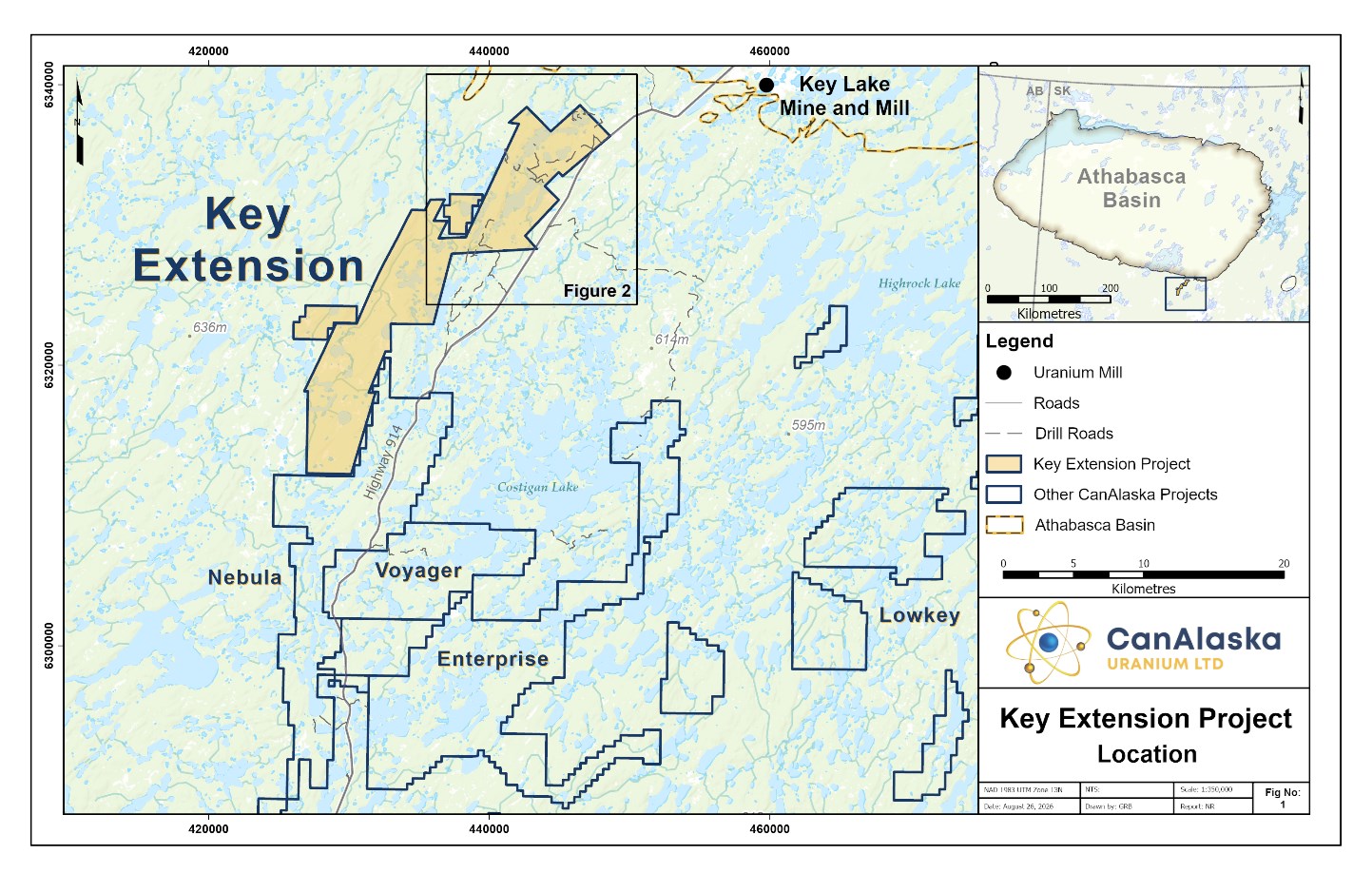
Figure 1 – Key Extension Project Location Map
To view an enhanced version of this graphic, please visit:
https://images.newsfilecorp.com/files/2864/313168_fcc49f57a45dea81_002full.jpg
CanAlaska CEO, Cory Belyk, comments, "The Key Extension project is a high-priority project within the CanAlaska portfolio. In the winter drill program, the team discovered the right rocks with large-scale structures and hydrothermal alteration. The style of alteration encountered is a good indication that hydrothermal fluids, possibly uranium-bearing, have passed through the rocks in a significant way. The team is now on the hunt for where uranium may have been deposited within these hydrothermal systems along these structural zones. CanAlaska is fully funded to carry out the Key Extension program."
2026 Key Extension Fall Exploration Program
The 2026 fall drill program on the Key Extension project will consist of one diamond drill operating to complete an estimated 6 to 10 drillholes. The primary focus for the fall program will be on continued drill testing of a series of high-priority target areas identified based on the recent airborne geophysical surveys (Figure 2). The Company recently completed a winter drill program on the Project that highlighted the consistent intersection of graphitic stratigraphy containing re-activated semi-brittle basement fault zones with associated hydrothermal clay and chlorite alteration (See News Release Dated June 23rd, 2026). The high-priority exploration target areas on the Key Extension project remain focused on a series of long-linear magnetic low corridors associated with conductivity high corridors that are interpreted to extend from the Key Lake Mine and Mill complex area through the Company's Key Extension and Nebula projects. The magnetic lows with associated conductivity highs are interpreted to represent the graphitic metasedimentary rocks of the lower Wollaston Domain in the highly prospective Wollaston-Mudjatik transition zone. Drill targets on the Key Extension project within the graphitic metasedimentary package are focused on areas of interpreted structural complexity, where interpreted bends and breaks in the conductive rocks may create the potential for transport and trap of hydrothermal uranium-bearing mineralizing fluids.
For the fall drill program, the Company is focused on two key target areas on the Key Extension project:
Up-Ice of the Orchid Lake Boulder Field: A series of drillholes are planned to continue testing the conductive stratigraphy along the western conductive trend up-ice of the historically reported Orchid Lake radioactive boulder field where up to
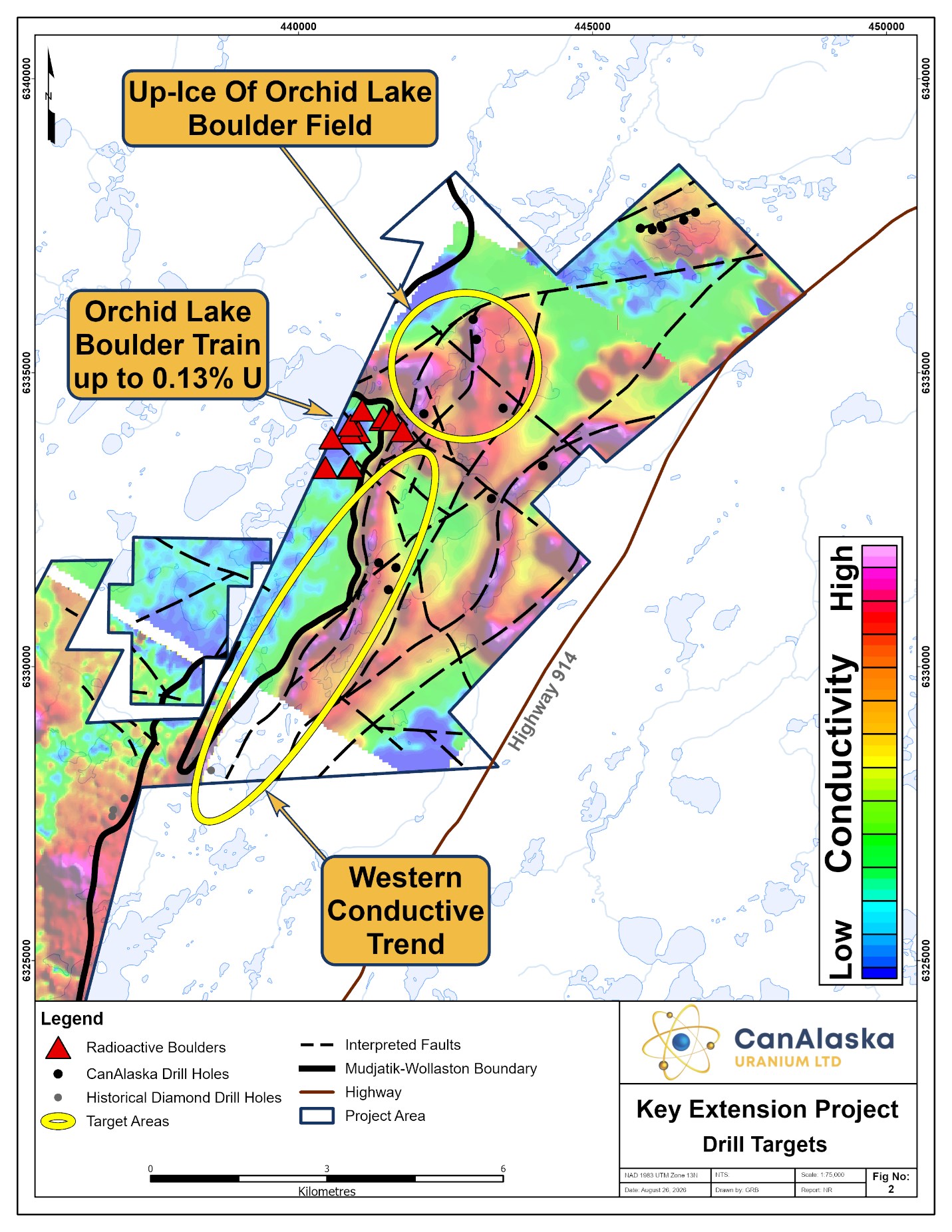
Figure 2 – Key Extension Drill Program Target Areas
To view an enhanced version of this graphic, please visit:
https://images.newsfilecorp.com/files/2864/313168_fcc49f57a45dea81_004full.jpg
Western Conductive Trend: A series of drillholes are planned to test the long-linear conductive trend along the western margin of the Key Extension project. This conductive trend, which represents over 10 kilometres of sparsely tested conductive target stratigraphy, parallels the highly prospective Wollaston-Mudjatik transition zone. Along the trend, multiple conductor-parallel fault zones have been interpreted from the high-resolution geophysical data. The interaction between these conductor-parallel and cross-cutting fault zones represents high-priority exploration targets for basement-hosted uranium deposits. A drill program on the Key Extension project in 2023 successfully intersected graphitic host rocks showing evidence of multiple post-Athabasca structural reactivation events, hydrothermal alteration, and associated uranium enrichment along the western conductive trend (see News Release dated August 29th, 2023).
The Company expects the fall 2026 drilling program on the Project to be completed in late October. Geochemical assay results from the winter drill program on the Key Extension project are pending.
Technical Disclosure - Historical Results, Neighbouring Properties, and Grab Samples
The historical results contained within this news release have been captured from the Saskatchewan Mineral Assessment Database (SMAD) as available and may be incomplete or subject to minor location inaccuracies. Management cautions that historical results collected and reported by past operators unrelated to CanAlaska have not been verified nor confirmed by a Qualified Person; however, the historical results form a scientific basis for ongoing work on the subject projects. Any historical rock / boulder samples are selective samples by nature and as such are not necessarily representative of the mineralization hosted across the property.
This news release refers to neighbouring properties in which the Company has no interest. Results, discoveries, or mineralization on proximate land or neighboring properties, whether in stated current resource estimates or historical resource estimates, are not necessarily indicative of results, discoveries, or mineralization on the Company's properties.
All reported depths and intervals are drill hole depths and intervals, unless otherwise noted, and do not represent true thicknesses, which have yet to be determined.
About CanAlaska Uranium
CanAlaska is a leading explorer of uranium in the Athabasca Basin of Saskatchewan, Canada. With a project generator model, the Company has built a large portfolio of uranium projects in the Athabasca Basin. CanAlaska owns numerous uranium properties, totaling approximately 375,000 hectares, with clearly defined targets in the Athabasca Basin covering both basement and unconformity uranium deposit potential. The Company has recently concentrated on the West McArthur high-grade uranium expansion with targets in 2024 and 2025 leading to significant success at Pike Zone. Fully financed for the 2026 drill season, CanAlaska is focused on uranium deposit discovery and delineation in a safe and secure jurisdiction. The Company has the right team in place with a track record of discovery and projects that are located next to critical mine and mill infrastructure.
The Company's head office is in Saskatoon, Saskatchewan, Canada with a satellite office in Vancouver, BC, Canada.
The Qualified Person under National Instrument 43-101 Standards of Disclosure for Mineral Projects for this news release is Nathan Bridge, MSc., P. Geo., Vice-President Exploration for CanAlaska Uranium Ltd., who has reviewed and approved its contents.
On behalf of the Board of Directors
"Cory Belyk"
Cory Belyk, P.Geo., FGC
CEO, President and Director
CanAlaska Uranium Ltd.
Contacts:
| Cory Belyk, CEO and President | General Enquiry |
| Tel: +1.306.668.6900 | Tel: +1.306.668.6915 |
| Email: cbelyk@canalaska.com | Email: info@canalaska.com |
Neither TSX Venture Exchange nor its Regulation Services Provider (as that term is defined in the policies of the TSX Venture Exchange) accepts responsibility for the adequacy or accuracy of this release.
Forward-looking information
All statements included in this press release that address activities, events or developments that the Company expects, believes or anticipates will or may occur in the future are forward-looking statements. Forward-looking statements are frequently identified by such words as "may", "will", "plan", "expect", "anticipate", "estimate", "intend" and similar words referring to future events and results. Forward-looking statements are based on the current opinions and expectations of management. These forward-looking statements involve numerous assumptions made by the Company based on its experience, perception of historical trends, current conditions, expected future developments and other factors it believes are appropriate in the circumstances. In addition, these statements involve substantial known and unknown risks and uncertainties that contribute to the possibility that the predictions, forecasts, projections and other forward-looking statements will prove inaccurate, certain of which are beyond the Company's control. Actual events or results may differ materially from those projected in the forward-looking statements and the Company cautions against placing undue reliance thereon.
The Company believes that the expectations reflected in forward-looking statements included herein are reasonable, but no assurance can be given that these expectations will prove to be correct and such forward-looking statements included herein should not be unduly relied upon. These statements speak only as of the date hereof. The Company does not intend, and does not assumes any obligation, to revise or update these forward-looking statements, except as required by applicable law.
To view the source version of this press release, please visit https://www.newsfilecorp.com/release/313168
FAQ
AI-generated questions and answers. How Rhea-AI works. Not financial advice.
What is the scope and timing of CanAlaska's 2026 fall drill program at Key Extension?
The fall 2026 drill program at Key Extension uses one diamond drill and is planned for an estimated 6 to 10 drillholes. Drilling has started and the company expects the program to be completed in late October 2026.
Which target areas are being prioritized in the Key Extension fall drilling?
Drilling is focused on two main target areas: up-ice of the historically reported Orchid Lake radioactive boulder field along the western conductive trend, and a long-linear western conductive trend that extends over more than 10 kilometres of sparsely tested graphitic stratigraphy parallel to the Wollaston-Mudjatik transition zone.
How were the current drill targets at Key Extension defined?
The targets are based on recent high-resolution airborne geophysical surveys and a review of historical drilling. High-priority areas are associated with long-linear magnetic lows and conductivity highs interpreted as graphitic metasedimentary rocks, especially where structural complexity such as bends and breaks in conductive rocks may create potential traps for uranium-bearing hydrothermal fluids.
What previous drilling results guide the new program at Key Extension?
A recent winter drill program intersected graphitic stratigraphy with semi-brittle basement fault zones and hydrothermal clay and chlorite alteration, while a 2023 program along the western conductive trend intersected graphitic host rocks with evidence of multiple post-Athabasca structural reactivation, hydrothermal alteration, and associated uranium enrichment. Geochemical assay results from the winter drill program are still pending.
Has the source of the Orchid Lake radioactive boulder field been identified?
Drillholes KEY017 and KEY018 in the recent winter program intersected graphitic stratigraphy with semi-brittle fault zones and localized chlorite and clay alteration, but the results did not explain the source of the Orchid Lake boulder field. As a result, additional drill targets immediately up-ice along the interpreted glacial ice direction of the boulder field are planned.
What cautions does CanAlaska provide regarding historical and neighbouring property data?
Management cautions that historical results from past operators, captured from the Saskatchewan Mineral Assessment Database, may be incomplete or slightly inaccurate and have not been verified by a Qualified Person, although they provide a scientific basis for ongoing work. The company also notes that results or mineralization on neighbouring properties are not necessarily indicative of what may be found on its own properties, and that reported drill depths and intervals do not represent true thicknesses, which are still undetermined.