
Descartes Study: 39% of High-growth Companies Leverage Trade Compliance as Competitive Advantage
Descartes Systems Group (DSGX) has released a comprehensive study revealing key insights into trade compliance strategies among companies with different growth trajectories.
Rhea-AI Summary
Descartes Systems Group (DSGX) has released a comprehensive study revealing key insights into trade compliance strategies among companies with different growth trajectories. The study found that 39% of high-growth companies (expecting >15% growth over two years) view trade compliance as a competitive advantage, compared to 22% of slower-growing firms.
The research highlighted that 57% of surveyed companies consider technology important for competitive advantage in trade compliance. This perspective is particularly strong among growth-oriented businesses, with 72% of fast-growing companies viewing technology as a valuable differentiator, versus 41% of companies with growth expectations.
The study, which surveyed 887 corporate decision-makers across 16 countries, also revealed that high-growth companies typically allocate larger teams to trade compliance, averaging 8 people compared to 6 in slower-growing companies. Additionally, 47% of fast-growing companies prioritize technology investment to address international trade challenges, significantly higher than the 18% reported by companies with growth prospects.
Positive
- Study positions DSGX as thought leader in trade compliance technology
- Research validates company's strategic focus on trade compliance solutions
- Findings suggest strong market potential for DSGX's technology solutions
Negative
- None.
Details
News Market Reaction – DSGX
In the trading session that priced this news, DSGX gained 0.83%, reflecting a mild positive market reaction.
Data tracked by StockTitan Argus on the day of publication.
AI-generated analysis. How Rhea-AI works. Not financial advice.




ATLANTA and LONDON, March 17, 2025 (GLOBE NEWSWIRE) -- Descartes Systems Group (Nasdaq:DSGX) (TSX:DSG), the global leader in uniting logistics-intensive businesses in commerce, released findings from its study Top Three Traits of Companies with a Successful Approach to Trade Compliance. The study showed that
Furthermore,
Figure 1: Importance of technology for competitive advantage in trade compliance strategies
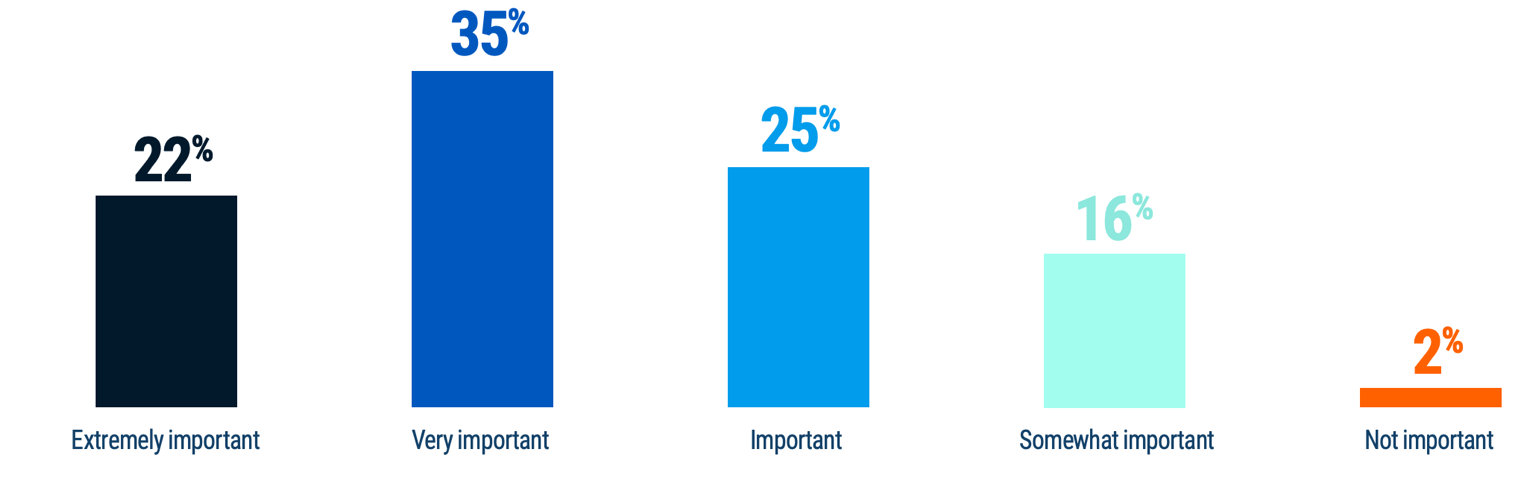
Source: Descartes/SAPIO
The study also revealed that
In addition to gaining competitive advantage by leveraging trade compliance and investing in technology, higher-growth companies are focused on building a well-resourced compliance team. The study found that companies with greater than
“Given the volatility of the current trade landscape, rife with evolving tariffs, trade barriers, sanctions and regulations, effective and efficient global trade compliance is a distinct competitive differentiator,” said Jackson Wood, Director, Industry Strategy at Descartes. “Companies that invest in building their compliance teams view compliance as a strategic advantage. They leverage leading technologies to turn compliance into an engine for growth while creating more resilient supply chain operations.”
Descartes and SAPIO Research surveyed 887 corporate decision makers in international trade compliance and/or supply chain intelligence across Argentina, Benelux, Brazil, Canada, China, Denmark, Finland, France, Germany, India, Japan, Mexico, Norway, Sweden, UK and USA. The goal was to understand the strategies, tactics and technologies used by companies involved in international trade to help gain a competitive advantage and ensure continued business growth, and to identify if these varied by factors such as country, industry, company size and business growth. Respondents are members of company leadership teams, from management level to Chief Executive Officer or Owner. To learn more, read the study Top Three Traits of Companies with a Successful Approach to Trade Compliance.
Learn more about Descartes’ global trade intelligence solutions.
About Descartes
Descartes (Nasdaq:DSGX) (TSX:DSG) is the global leader in providing on-demand, software-as-a-service solutions focused on improving the productivity, security and sustainability of logistics-intensive businesses. Customers use our modular, software-as-a-service solutions to route, track and help improve the safety, performance and compliance of delivery resources; plan, allocate and execute shipments; rate, audit and pay transportation invoices; access global trade data; file customs and security documents for imports and exports; and complete numerous other logistics processes by participating in the world’s largest, collaborative multimodal logistics community. Our headquarters are in Waterloo, Ontario, Canada and we have offices and partners around the world. Learn more at www.descartes.com, and connect with us on LinkedIn and Twitter.
Global Media Contact
Cara Strohack
cstrohack@descartes.com
Cautionary Statement Regarding Forward-Looking Statements
This release contains forward-looking information within the meaning of applicable securities laws (“forward-looking statements”) that relate to Descartes’ global trade intelligence solution offerings and potential benefits derived therefrom; and other matters. Such forward-looking statements involve known and unknown risks, uncertainties, assumptions and other factors that may cause the actual results, performance or achievements to differ materially from the anticipated results, performance or achievements or developments expressed or implied by such forward-looking statements. Such factors include, but are not limited to, the factors and assumptions discussed in the section entitled, “Certain Factors That May Affect Future Results” in documents filed with the Securities and Exchange Commission, the Ontario Securities Commission and other securities commissions across Canada including Descartes’ most recently filed management’s discussion and analysis. If any such risks actually occur, they could materially adversely affect our business, financial condition or results of operations. In that case, the trading price of our common shares could decline, perhaps materially. Readers are cautioned not to place undue reliance upon any such forward-looking statements, which speak only as of the date made. Forward-looking statements are provided for the purposes of providing information about management’s current expectations and plans relating to the future. Readers are cautioned that such information may not be appropriate for other purposes. We do not undertake or accept any obligation or undertaking to release publicly any updates or revisions to any forward-looking statements to reflect any change in our expectations or any change in events, conditions or circumstances on which any such statement is based, except as required by law.
A photo accompanying this announcement is available at https://www.globenewswire.com/NewsRoom/AttachmentNg/2458abe4-87e5-4a31-8a58-b127eacde619

FAQ
AI-generated questions and answers. How Rhea-AI works. Not financial advice.