
Altamira Gold Intersects Additional Mineralized Porphyry outside the Maria Bonita Mineral Resource, Extending the Exploration Footprint within the Cajueiro District, Brazil
Altamira Gold (OTCQB: EQTRF) reported new scout drilling results from hole MBA036 west of the Maria Bonita gold resource at the Cajueiro district, Brazil.
Rhea-AI Summary
Altamira Gold (OTCQB: EQTRF) reported new scout drilling results from hole MBA036 west of the Maria Bonita gold resource at the Cajueiro district, Brazil.
The hole cut 19m @ 0.5g/t Au from 239m and 70.6m @ 0.5g/t Au from 277m, indicating a separate early porphyry body and extending the mineralized system westward.
Positive
- MBA036 intersected 19m @ 0.5g/t Au from 239m and 70.6m @ 0.5g/t Au from 277m
- New early-stage porphyry body identified 100m below and west of Maria Bonita resource
- Maria Bonita open-pit resource: 24.19Mt @ 0.46g/t Au Indicated, 25.64Mt @ 0.44g/t Au Inferred
- Cajueiro Central open-pit resource: 5.66Mt @ 1.02g/t Au Indicated, 12.66Mt @ 1.26g/t Au Inferred
- Previous metallurgical tests at Cajueiro Central showed gold recoveries of 94–96%, with further work planned
Negative
- Western extent of Maria Bonita mineralization remains undefined and will require additional drilling
- Later rhyolite porphyry pulses in the MBA036 section contain little gold above the 0.2g/t Au resource cut-off
Details
News Market Reaction – EQTRF
In the May 12 session, EQTRF gained 9.01%, reflecting a notable positive market reaction.
Data tracked by StockTitan Argus on the day of publication.
AI-generated analysis. How Rhea-AI works. Not financial advice.




Vancouver, British Columbia--(Newsfile Corp. - May 12, 2026) - Altamira Gold Corp. (TSXV: ALTA) (FSE: T6UP) (OTCQB: EQTRF) ("Altamira" or the "Company") is pleased to report assay results from an exploration diamond drill hole outside the Maria Bonita mineral resource.
Highlights:
- Scout drilling below the western edge of the Maria Bonita mineral resource has intersected a wide interval of porphyry mineralization including an interpreted preserved portion of an early phase of the porphyry. This intercept lies 100m below and to the west of the previously estimated mineral resource and is a separate body of early-stage porphyry.
- Drill hole MBA036 returned 70.6m @ 0.5g/t gold from 277m downhole to the end of hole, plus 19m @ 0.5g/t gold from 239m in quartz veined rhyolite porphyry.
- The style of mineralization is similar to the early-stage sheeted quartz vein and stockwork mineralization found in the core of the Mara Bonita mineral resource.
- This intercept demonstrates continuity of the porphyry complex to the west and preservation of early phases containing consistent gold mineralization.
CEO Mike Bennett commented; "The drill results from MBA036 are important because they indicate that the Maria Bonita mineralized porphyry system extends further west than previously known. A surface grab sample* 60m south of the western limit of the Maria Bonita mineral resource returned an anomalous gold value of 0.6g/t in altered porphyry and MBA036 was designed to target this surface mineralization at depth. The presence of strong quartz veining and consistent gold mineralization in this hole indicates that the mineralized porphyry system is open to the west. Further drilling will be required to determine the western limit to the mineralization."
CAJUEIRO DISTRICT
The Cajueiro district is located approximately 75km NW of the town of Alta Floresta in the state of Mato Grosso (Figure 1) in central western Brazil. The project is easily accessible by road, lies on open farmland and has grid power and a local water supply. Cajueiro is the most advanced of the key projects that Altamira controls in the region (Figure1).
*By their nature, grab samples are not representative of the bulk grade of the source material
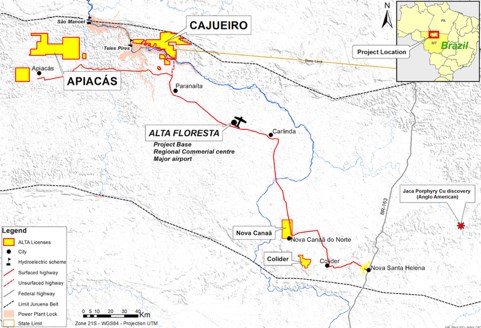
Figure 1: Location of Altamira Gold's projects in the Alta Floresta Belt.
To view an enhanced version of this graphic, please visit:
https://images.newsfilecorp.com/files/4500/297111_cb50f41aa4b88a02_001full.jpg
The Cajueiro district consists of two independently estimated gold mineral resources at Cajueiro Central and Maria Bonita, plus a series of eight additional untested exploration targets within a radius of 8km of Cajueiro Central.
The Cajueiro Central area has a current open pit resource1 of 5.66Mt @ 1.02 g/t gold (185,000 oz) in the Indicated Resource category and 12.66Mt @ 1.26 g/t gold (515,000 oz) in the Inferred Resource category (estimated using a cut-off grade of 0.25g/t Au and a gold price of US
The Maria Bonita open-pit resource consists of Indicated Resources of 24.19Mt @ 0.46g/t gold (357,800 oz) and Inferred Resources of 25.64Mt @ 0.44g/t gold (362,400oz)2. These resources were calculated using a 0.2 g/t gold cut-off grade and a gold price of US
The Maria Bonita porphyry gold deposit forms part of a district-scale portfolio of prospects that are interpreted as having a similar geological origin (Figure 2). The Cajueiro area is characterized by a 15km stretch of former alluvial gold workings along the Teles Pires river. The source of some of this alluvial gold is related to a pronounced east-west corridor of gold anomalies in soils and rock chips and a set of sub-cropping intrusions extending east-west over 8km, implying the presence of a long-standing and deep-seated reactivated crustal structure.
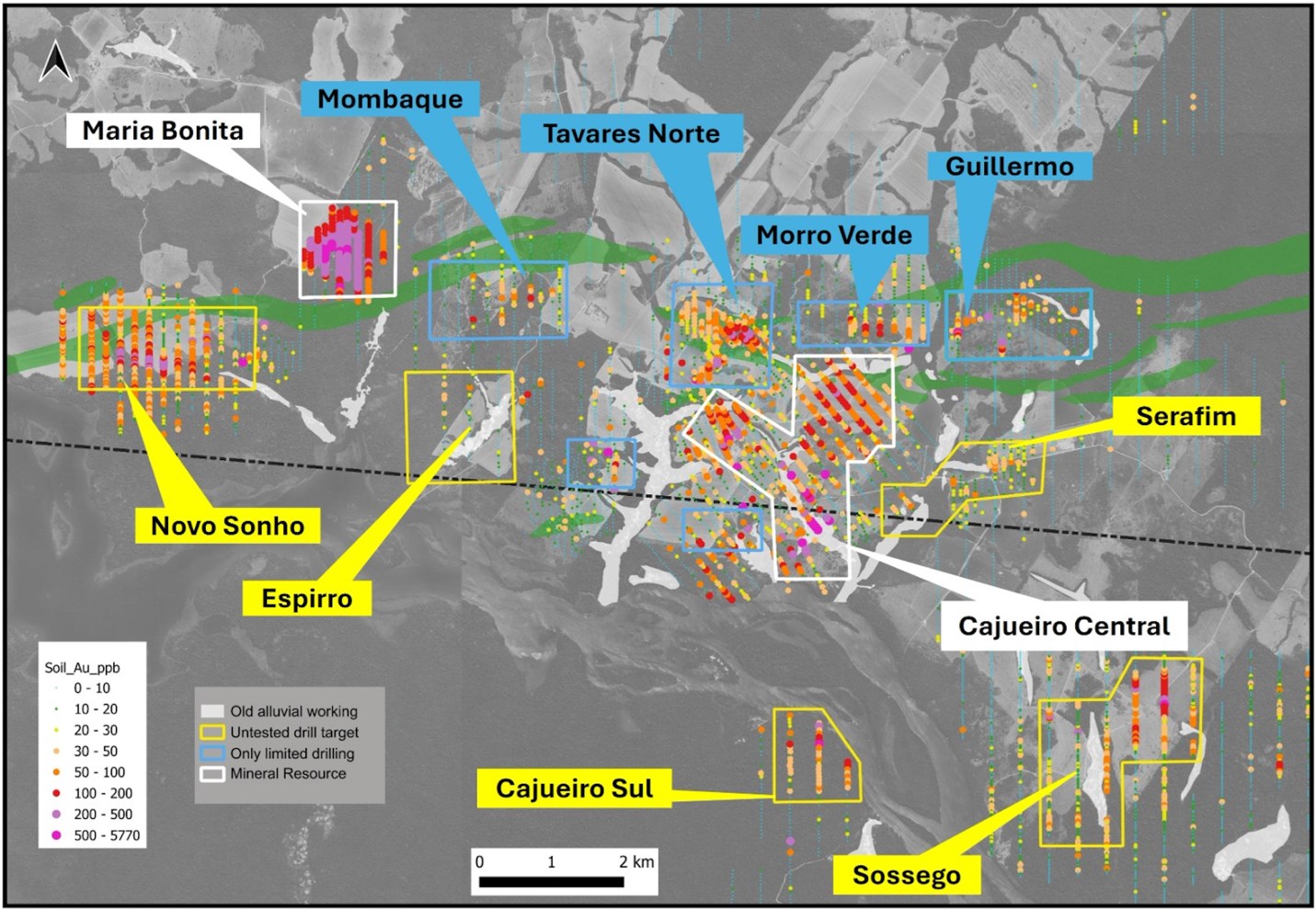
Figure 2: Cajueiro district mineral resources at Cajueiro Central and Maria Bonita (white labels) and prospects (blue labels with scout drilling, yellow labels not yet drilled). An alignment of six of the targets occur in close spatial association to a pronounced east-west fault corridor marked by later gabbroic dykes.
To view an enhanced version of this graphic, please visit:
https://images.newsfilecorp.com/files/4500/297111_cb50f41aa4b88a02_002full.jpg
Maria Bonita Drilling Update
Recent drilling at Maria Bonita has focused on testing the westerly extension of the resource area. Hole MBA036 was collared south of the western end of the optimised pit containing the current mineral resource. A shallow pit excavated in this area to extract local road fill material exposed altered porphyry intrusives. A grab sample from this pit returned a value of 0.6g/t gold.
The drill hole, with an azimuth of 00° and a dip of 55°, was completed to a depth of 348m. The hole transects the Maria Bonita porphyry complex comprising at least three phases of rhyolite porphyry, plus later dykes of felspar porphyry and mafic dolerite.
The evolving geological model for Maria Bonita, infers at least three phases of felsic porphyry intrusion (Figure 3). The wall-rocks to the porphyry complex are tuffs.
The initial porphyry phase is interpreted as the best mineralized and is generally associated with the highest intensity of hydrothermal quartz veins. Where these veins form sheeted veins sets or stockworks, more consistent elevated bulk gold grades are expected, generally in the range 0.7-1g/t. Early quartz veins may contain accessory magnetite as part of the potassic alteration assemblage.
Subsequent porphyry phases, although broadly similar in chemistry and appearance, have lesser veining and generally carry bulk gold grades that are in the range 0.1-0.5g/t gold. The intensity of gold mineralization is interpreted to decrease with the evolution of the intrusive system i.e. successive pulses of rhyolite porphyry.
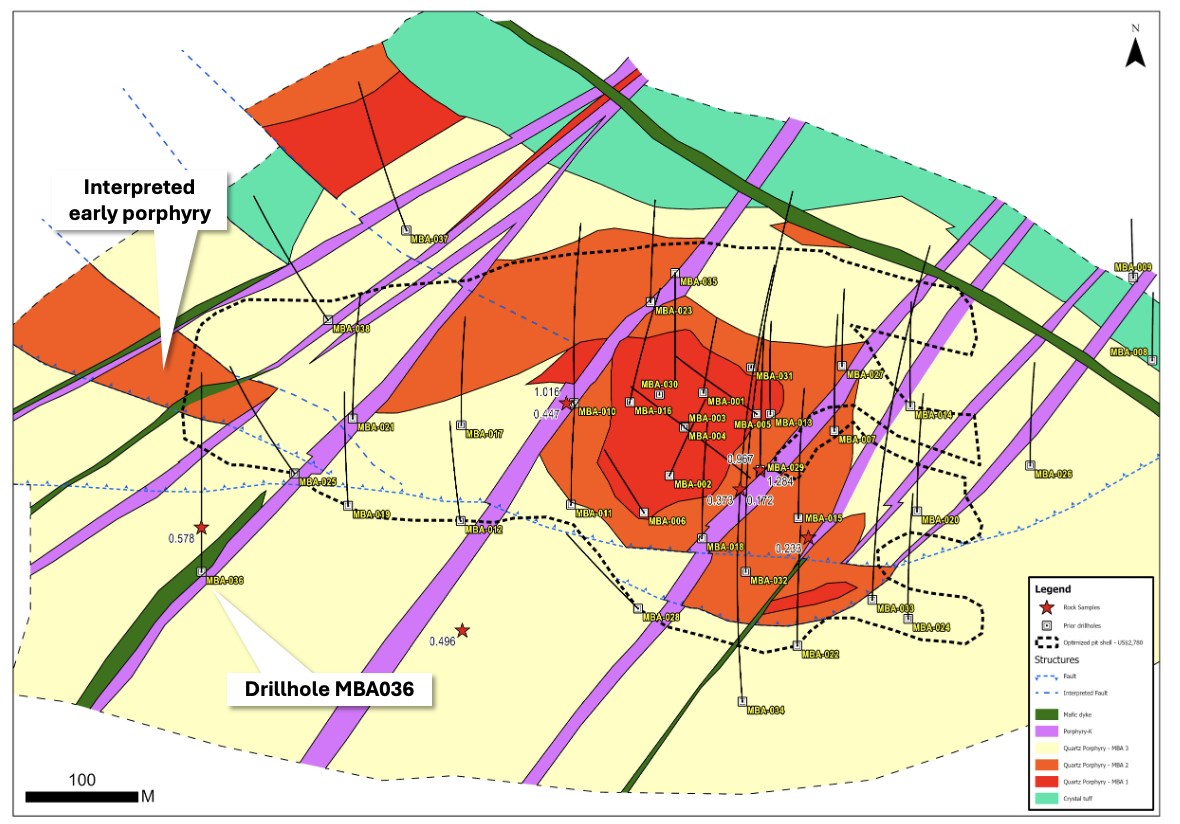
Figure 3: Geology of the Maria Bonita porphyry interpreted from drilling to date. There is no significant outcrop in the area. Volcanic wall rocks to the intrusive suite have been intersected to the north and north-west at depth. Later felspar porphyry dykes and mafic intrusive dykes transect the porphyry. The outline of the optimised pit developed on the mineral resource is shown.
To view an enhanced version of this graphic, please visit:
https://images.newsfilecorp.com/files/4500/297111_cb50f41aa4b88a02_003full.jpg
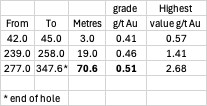
Table 1: Summary of results from drill holes MBA036.
To view an enhanced version of this graphic, please visit:
https://images.newsfilecorp.com/files/4500/297111_cb50f41aa4b88a02_004full.jpg
Gold values in the better mineralized intervals are consistent, as illustrated by the peak values for 1m assay intervals (Table 1).
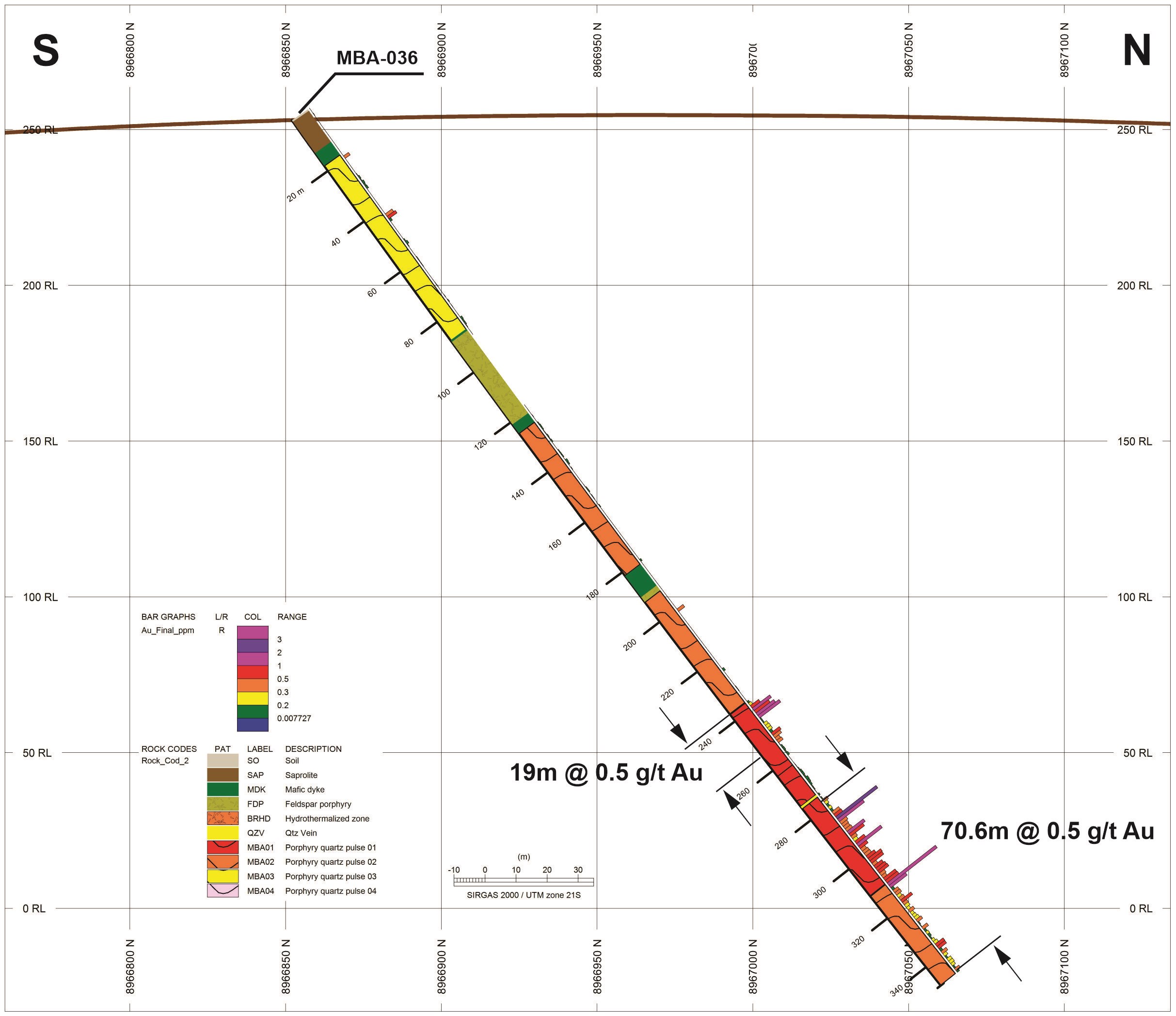
Figure 4: Cross section of drill hole MBA036.
To view an enhanced version of this graphic, please visit:
https://images.newsfilecorp.com/files/4500/297111_cb50f41aa4b88a02_005full.jpg
The drill cross section (Figure 4) shows the deeper intercept in early-stage porphyry of 70.6m @ 0.5g/t gold. Mineralization continues to the bottom of the hole, above the cut-off grade applied to the mineral resource of 0.2g/t gold.
The later rhyolite porphyry pulses in this section do not contain significant gold above the mineral resource cut-off.
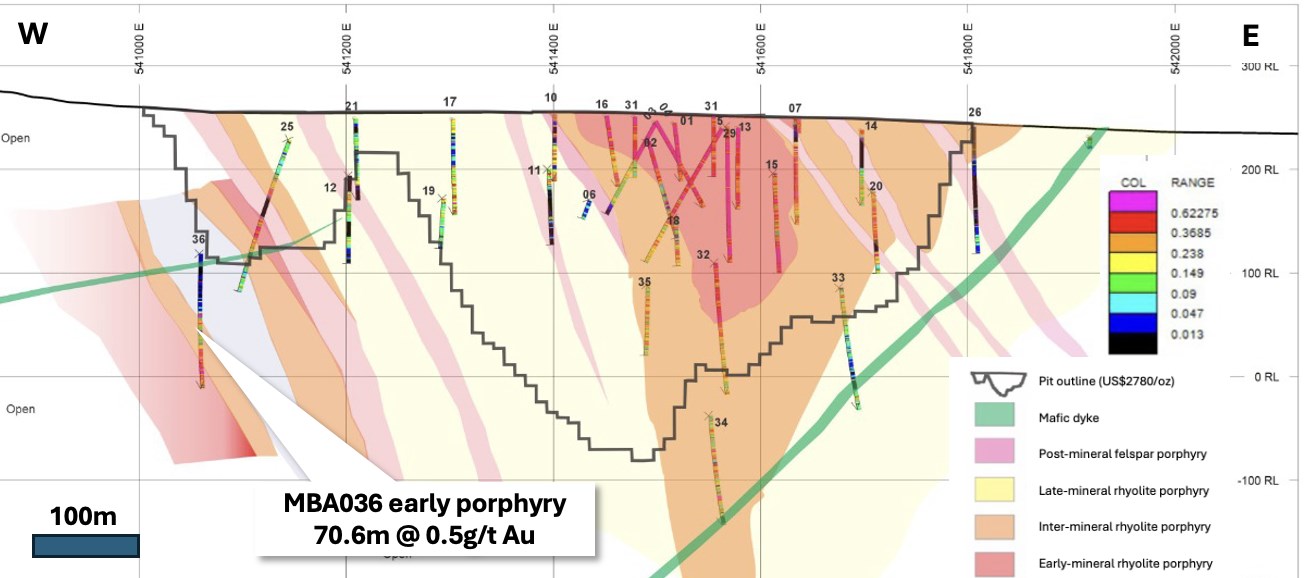
Figure 5: East-West section across the Maria Bonita mineral resource showing the position of the early porphyry extension.
To view an enhanced version of this graphic, please visit:
https://images.newsfilecorp.com/files/4500/297111_cb50f41aa4b88a02_006full.jpg
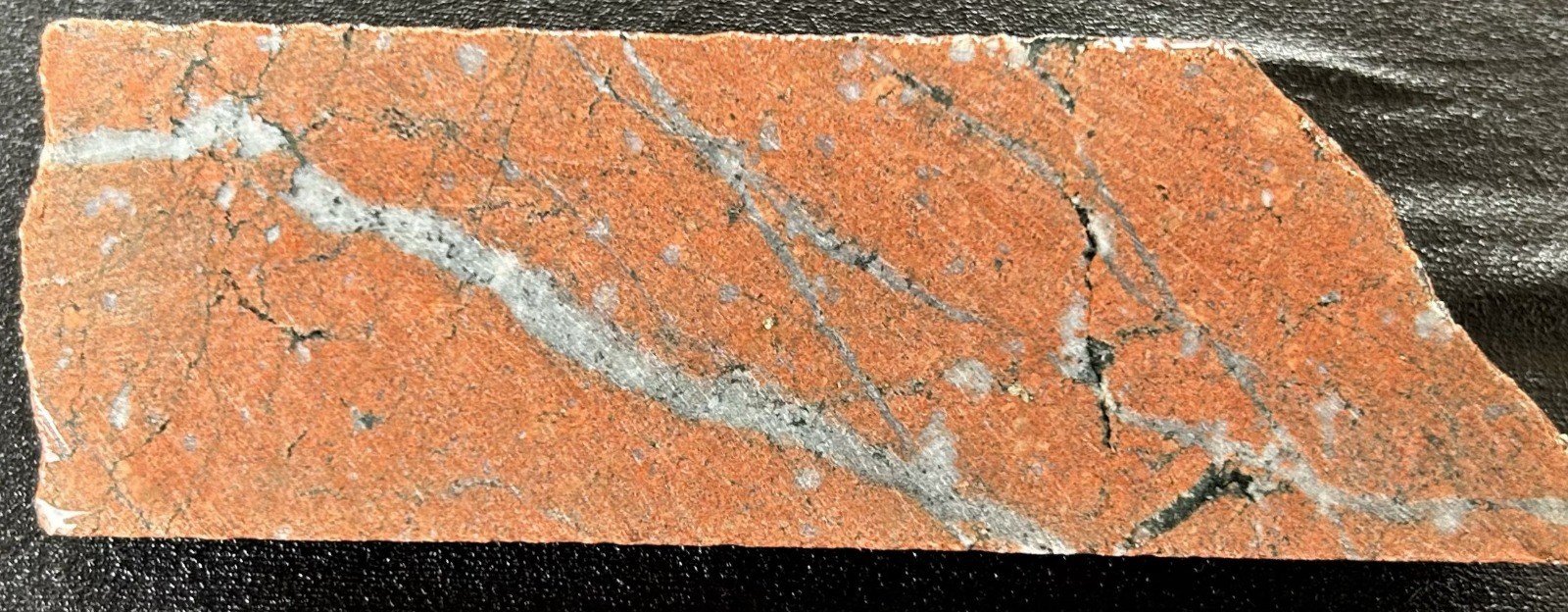
Figure 6: Typical quartz veining within the early porphyry MBA036: 295m. Assay interval 1m @ 1.61g/t gold.
To view an enhanced version of this graphic, please visit:
https://images.newsfilecorp.com/files/4500/297111_cb50f41aa4b88a02_007full.jpg
Next Steps
The Company plans to extend the scout drilling of the newly discovered porphyry at Maria Bonita in tandem with the ongoing resource infill drilling at the Cajueiro Central mineral resource.
Samples of both oxide and sulphide mineralization from Cajueiro Central have been prepared for further metallurgical test work to refine the earlier results that showed a recovery of
Qualified Person
Fernando Benegas, FAusIMM, a consultant to the Company as well as a Qualified Person as defined by National Instrument 43-101, supervised and approved the preparation of the technical information in this news release.
About Altamira Gold Corp.
The Company is focused on the exploration and development of gold projects within western central Brazil, strategically advancing four projects spanning over 100,000 hectares within the prolific Juruena Gold Belt-an area that has historically yielded over 6 million ounces of placer gold3. The Company's advanced Cajueiro project contains two gold deposits. Ongoing exploration and fieldwork at Cajueiro indicate the presence of multiple hard rock gold occurrences, traceable from historical alluvial gold production, highlighting the region's exceptional gold endowment and potential scalability. With two independently established mineral resources, a highly prospective geological setting and a track record of significant discoveries, the Company is well-positioned to unlock further value across its extensive land package.
1NI 43-101 Technical Report, Cajueiro Project, Mineral Resource Estimate: Global Resource Engineering, Denver Colorado USA, 10thOctober 2019; Authors K. Gunesch, PE; H. Samari, QP-MMSA; T. Harvey, QP-MMSA
2 NI43-101 Technical Report, Mineral Resource for the Maria Bonita Prospect: VMG Consultoria, Belo Horizonte, Minas Gerais, Brazil. 12th June 2025; Author V. Myadzel
3 Juliani, C. et al; Gold in Paleoproterozoic (2.1 to 1.77 Ga) Continental Magmatic Arcs at the Tapajós and Juruena Mineral Provinces (Amazonian Craton, Brazil): A New Frontier for the Exploration of Epithermal-Porphyry and Related Deposits. Minerals 2021, 11, 714. https://doi.org/10.3390/min11070714
On Behalf of the Board of Directors,
ALTAMIRA GOLD CORP.
"Michael Bennett"
Michael Bennett
President & CEO
Tel: 604.676.5661
Toll-Free:1-833-606-6271
info@altamiragold.com
www.altamiragold.com
Neither TSX Venture Exchange nor its Regulation Services Provider (as that term is defined in policies of the TSX Venture Exchange) accepts responsibility for the adequacy or accuracy of this release.
The securities described herein have not been registered under the U.S. Securities Act or any state securities laws and may not be offered or sold in the United States absent registration or an applicable exemption from registration requirements under the U.S. Securities Act and any applicable state securities laws.
Forward-looking Statements
Certain information contained herein constitutes "forward-looking information" under Canadian securities legislation. Forward-looking information includes, but is not limited to, statements with respect to the extension of the Warrants. Generally, forward-looking information can be identified by the use of forward-looking terminology such as "will", "intends" or variations of such words and phrases or statements that certain actions, events or results "will" occur. Forward-looking statements are based on the opinions and estimates of management as of the date such statements are made and they are subject to known and unknown risks, uncertainties and other factors that may cause the actual results to be materially different from those expressed or implied by such forward-looking statements or forward-looking information, including the receipt of all necessary regulatory approvals. Although management of the Company has attempted to identify important factors that could cause actual results to differ materially from those contained in forward-looking statements or forward-looking information, there may be other factors that cause results not to be as anticipated, estimated or intended. There can be no assurance that such statements will prove to be accurate, as actual results and future events could differ materially from those anticipated in such statements. Accordingly, readers should not place undue reliance on forward-looking statements and forward-looking information. The Company will not update any forward-looking statements or forward-looking information that is incorporated by reference herein, except as required by applicable securities laws.
Quality Assurance/Quality Control
Drill holes commence in HQ diameter (63.5mm) and proceed to the base of weathering where core diameter is reduced to NQ (47.6mm). Logging and sampling are completed at a secure Company facility located on site. Drill core is cut in half on site by a saw cut or slicer (in soft saprolite).
Until dispatch, samples are stored under the supervision the Company's exploration office. The samples are couriered to the assay laboratory using a commercial contractor. Pulps are returned to the Company and archived.
For all drilling, half core is submitted to SGS Geosol, a leading commercial laboratory in Brazil and analysed for gold by 50g fire assay, plus a suite of other elements by the ICP atomic absorption method, using standard laboratory procedures. Soil and rock chip samples follow the same analytical protocol.
Quality control of drill hole assays follows normal industry procedures of inserting control samples randomly into the submitted batch, comprising field duplicates, independent reference samples and "blank" samples. Selected batches of sample pulps are periodically resubmitted to a third-party laboratory to check the main laboratory precision and accuracy.
Drill holes results are quoted as down-hole length weighted intersections.
Additional information regarding the Company data verification processes is set out in the NI 43-101 Technical Report, Maria Bonita Prospect, June 2025, which can be found on the Company's website.

To view the source version of this press release, please visit https://www.newsfilecorp.com/release/297111
FAQ
AI-generated questions and answers. How Rhea-AI works. Not financial advice.