
First Atlantic Nickel Announces New Alloy Max Zone Discovery - A Second Large-Scale Awaruite (Ni₃Fe) Target Area Extending 7 km North from the RPM Zone at the Pipestone XL Nickel-Cobalt Alloy Project
First Atlantic Nickel (OTCQB: FANCF) announced a new awaruite Alloy Max discovery at Pipestone XL on March 18, 2026: a 4 km by 1.2 km initial target area extending 7 km north of the RPM Zone.
Sentiment and the balance of points
Rhea-AI Sentiment reads the wording of the document, how positive or negative its language is on a 1 to 5 scale. The balance of points shown with the takes weighs what the document actually discloses, so the two can disagree, for example when a trial that missed its main goal is described in upbeat language.
Rhea-AI Summary
First Atlantic Nickel (OTCQB: FANCF) announced a new awaruite Alloy Max discovery at Pipestone XL on March 18, 2026: a 4 km by 1.2 km initial target area extending 7 km north of the RPM Zone. Alloy Max is fully permitted for drilling, has ground access and minimal overburden, and geophysics suggest a potential size larger than RPM. The company raised approximately $7.82M since December 2025 to fund drilling at Alloy Max and RPM.
Positive
- Alloy Max target outlined at 4 km x 1.2 km
- Extends 7 km north of RPM Zone, creating a second large-scale target
- Fully permitted for drilling with ground access and minimal overburden
- $7.82M raised since Dec 2025 to fund drilling and exploration
Negative
- Surface DTR values commonly 0.03%–0.10% DTR Ni, requiring drill confirmation of higher core grades
- No completed NI 43-101 mineral resource estimate reported for Alloy Max or RPM
Details
News Market Reaction – FANCF
On Mar 18, the day this news came out, FANCF closed 1.80% below the previous close.
Data tracked by StockTitan Argus for the Mar 18 session.
AI-generated analysis. How Rhea-AI works. Not financial advice.




GRAND FALLS-WINDSOR, Newfoundland and Labrador, March 18, 2026 (GLOBE NEWSWIRE) -- First Atlantic Nickel Corp. (TSXV: FAN) (OTCQB: FANCF) (FSE: P21) ("First Atlantic" or the "Company") is pleased to announce the discovery of a second large-scale awaruite (Ni₃Fe) nickel-cobalt alloy target area, designated Alloy Max, extending 7 kilometers (km) north of the existing RPM Zone (see Figure 1) within the 30 km Pipestone Ophiolite Complex at its Pipestone XL Nickel-Cobalt Alloy Project in central Newfoundland.
The Alloy Max zone was discovered through the Company's ongoing district-wide surface sampling program, which integrates field geological mapping, rock sampling, Davis Tube Recovery (“DTR”) metallurgical testing, and geophysics to identify magnetically recoverable nickel in awaruite alloy mineralization throughout the 30 km trend. This work has outlined an initial target area at Alloy Max of approximately 4 km in length and 1.2 km in width (see Figure 1), with DTR surface sample grades similar to those observed at the RPM Zone. Geophysical processing on this target indicates the potential for a larger mineralized area than the RPM Zone. At the RPM Zone, this pattern is well established, where drill cores consistently return higher grades than weathered surface samples. Alloy Max is fully permitted and funded for drilling, with ground access in place, minimal overburden, and numerous drill targets identified.
The Alloy Max zone is a new area of awaruite mineralization extending 7 km north of the RPM Zone discovery, reinforcing the district-scale potential of the Pipestone XL Nickel-Cobalt Alloy Project. The Company now has two large-scale awaruite target areas identified within the 30 km Pipestone Ophiolite Complex, with additional untested targets and unexplored ground throughout the district. At the RPM Zone, drilling has confirmed magnetically recoverable awaruite nickel mineralization over an area 800 meters (m) wide and 1.2 kilometers (km) long. Alloy Max is a priority for drilling in 2026 and could represent a second large-scale near-surface zone of awaruite suitable for open pit style bulk tonnage mining. This discovery is in line with the Company's mission to mine and process a large-scale nickel-cobalt feedstock capable of supplying a vertically integrated North American onshore supply chain, from mining directly into downstream battery refining or stainless steel production, with no need for smelting or offshore processing.
HIGHLIGHTS:
- Alloy Max Discovery - New Large-Scale Awaruite Target Area: District-wide surface sampling has outlined a major new area of magnetically recoverable nickel in awaruite alloy mineralization extending 7 km north of the RPM Zone. Alloy Max is a priority target for drilling in 2026.
- 4 km x 1.2 km Target Area Outlined - Larger Initial Area Than RPM Zone: Field geological mapping, surface sampling, and DTR analysis outline an initial target area of approximately 4 km x 1.2 km. Geophysical processing indicates the potential for a larger mineralized size and mass than the RPM Zone, where drilling has confirmed 800 m width x 1.2 km strike length of positive magnetically recoverable awaruite nickel mineralization.
- Rock Surface Sample DTR Grades Consistent With RPM Zone: DTR surface sampling across a large area of Alloy Max has returned magnetically recoverable nickel grades comparable to RPM Zone surface values, where drill core at depth returned significantly higher grades than weathered surface samples.
- Alloy Max Fully Permitted: Approved drill permits are in place for the entire Alloy Max target area. Ground access is in place, with minimal overburden, and numerous drill targets identified.
- District-Scale Potential Accelerating: Alloy Max presents an opportunity for large-scale development with proximity to centralized processing. Two large-scale awaruite target areas now identified within the Pipestone XL district, with ongoing surface sampling continuing to identify new areas of awaruite mineralization throughout the 30 km Pipestone Ophiolite Complex.
$7.8M Raised Without Warrants Since December 2025: Aggregate gross proceeds of approximately$7,819,316 were raised through non-brokered private placements (without warrants), comprising$3,919,316 in flow-through financings and$3,900,000 under the LIFE Offering. Proceeds will support drilling at Alloy Max and the RPM Zone.
For further information, questions, or investor inquiries, please contact Rob Guzman at First Atlantic Nickel by phone at +1-844-592-6337 or via email at rob@fanickel.com.
ALLOY MAX DISCOVERY
The Alloy Max target area (see Figure 1) was identified through the Company's systematic district-wide exploration program, which employs field geological mapping, field surface rock sampling with DTR analysis, and geophysical interpretation to identify and delineate areas of awaruite nickel-cobalt alloy mineralization across the 30 km Pipestone Ophiolite Complex.
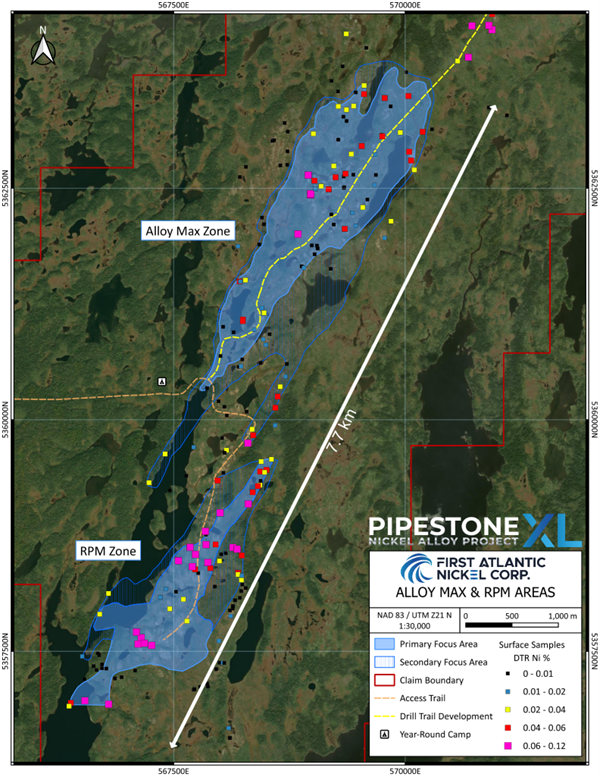
Figure 1: Map of Alloy Max & RPM Zone areas with DTR nickel (%) in surface rock samples
High Resolution Image File of the Alloy Max & RPM Zone Area Map (Figure 1) Available at: https://fanickel.com/images/news/Alloy_Max_Map.jpg
DTR surface sampling at Alloy Max has returned numerous positive magnetically recoverable nickel values at or above
The initial target area, defined by the integration of field geological mapping, surface rock sampling, DTR (magnetic separation and recovery) testing, and geophysics, is approximately 4 km in length and 1.2 km in width. Geophysical processing on this target indicates the potential for Alloy Max to exceed the size of the RPM Zone. Awaruite mineralization at Alloy Max has been confirmed both visually in surface rock samples and through DTR analysis.
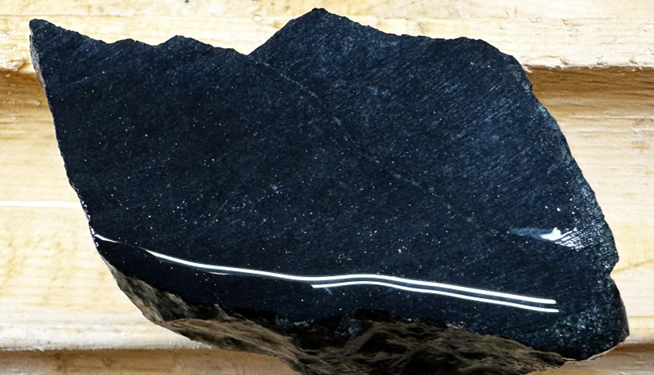
Figure 2: Surface sample from Alloy Max target area with visible disseminated awaruite nickel-cobalt alloy mineralization
ALLOY MAX DRILLING
Alloy Max has fully approved drill permits in place which encompass the entire outlined target area shown on the Figure 1 map. The area features existing ground access, minimal overburden, and favourable conditions for near-surface drill testing. Numerous drill targets have been identified within Alloy Max based on the integration of surface DTR results, geological mapping, and geophysical data.
The Company has designated Alloy Max as a priority drilling target area in 2026.
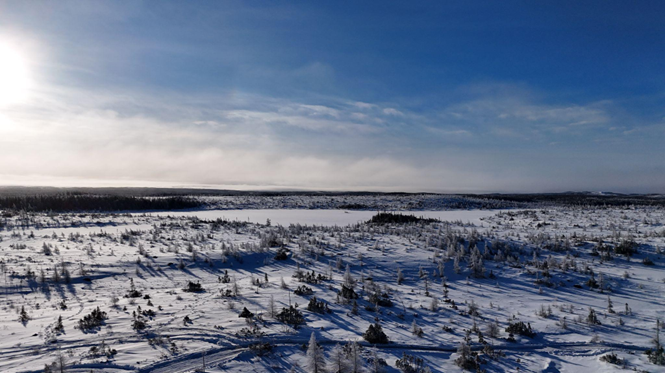
Figure 3: Drill access trail extended through Alloy Max target area
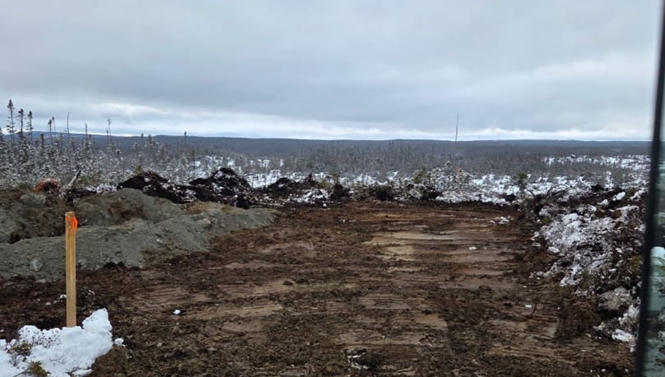
Figure 4: Drill target site preparation in the Alloy Max Zone
CAPITALIZED TO DRILL ALLOY MAX & RPM ZONE
Since December 2025, the Company has raised aggregate gross proceeds of approximately
AWARUITE (Ni₃Fe) - EARTH'S RAREST NATURALLY MAGNETIC HIGH-GRADE NICKEL-IRON-COBALT ALLOY MINERAL
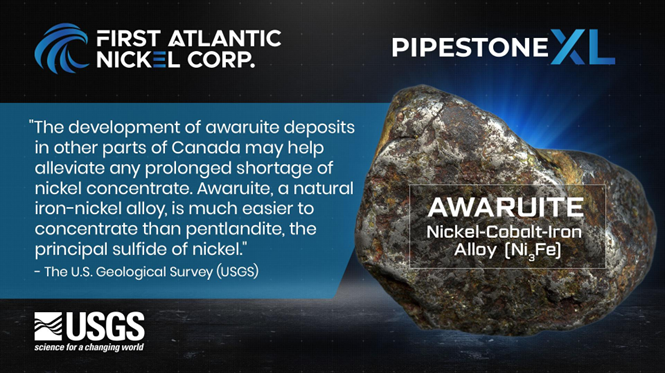
Figure 5: Quote from USGS on Awaruite Deposits1
Awaruite (Ni₃Fe) is a naturally occurring nickel-iron-cobalt alloy mineral containing approximately
Awaruite's strong natural magnetic properties - up to 10 times more magnetic than magnetite - enable recovery through magnetic separator drums commonly used in large-scale open-pit bulk-tonnage iron ore mines across North America for over a century. DTR is a standard metallurgical test used in iron ore mining globally to measure the recovery of magnetic minerals, and is a specific method for measuring awaruite recovery from drill core.
As stated in the August 2025 report "From Rocks to Power" from the Battery Metals Association of Canada4:
"Awaruite is not a sulfide nor an oxide nickel ore but a high-content native nickel–iron ore. Simple beneficiation processes after mining could provide
The Battery Metals Association of Canada has also stated in June 20255:
"A future nickel metallurgical plant could be designed to produce nickel sulfate or even precursors to the cathode active material (pCAM) for NMC batteries. Nickel sulfate can be produced by leaching nickel matte from nickel sulfide concentrates if the facility is a smelter, or it can be easily produced from a hydrometallurgical facility leaching awaruite concentrates.”
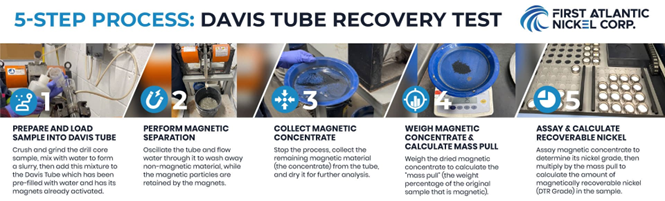
Figure 6: Davis Tube Recovery (DTR) Metallurgical Test 5 Step Process
The Company has released an educational video that breaks down the DTR test into five simple steps. This video is a valuable resource for anyone interested in understanding mineral exploration. Please visit https://www.youtube.com/watch?v=q3zsgDtLWns to view the video.
INVESTOR INFORMATION
The Company's common shares trade on the TSX Venture Exchange under the symbol "FAN", the American OTCQB Exchange under the symbol "FANCF" and on several German exchanges, including Frankfurt and Tradegate, under the symbol "P21".
Investors can get updates about First Atlantic by signing up to receive news via email and SMS text at www.fanickel.com.
FOR MORE INFORMATION:
First Atlantic Investor Relations
Robert Guzman
Tel: +1 844 592 6337
rob@fanickel.com
DISCLOSURE
Adrian Smith, P.Geo., a director and the Chief Executive Officer of the Company is a qualified person as defined by NI 43-101. The qualified person is a member in good standing of the Professional Engineers and Geoscientists Newfoundland and Labrador (PEGNL) and is a registered professional geoscientist (P.Geo.). Mr. Smith has reviewed and approved the technical information disclosed herein.
ANALYTICAL METHOD & QA/QC
Representative rock samples were collected in the field from outcrops or subcrop exposures, while avoiding float material. Sample locations were documented using handheld GPS units. All samples were securely sealed, labeled and shipped to Activation Laboratories Ltd. (“Actlabs”) in Ancaster, Ontario, an ISO 17025 certified and accredited laboratory operating independently of First Atlantic.
Each sample was crushed, with a 250 g sub-sample pulverized to
The magnetic fractions are collected, dried, weighed and fused using a lithium metaborate/tetraborate flux with a lithium bromide releasing agent, then analyzed on a wavelength dispersive XRF for multiple elements including nickel, cobalt, iron and chromium. The magnetically recoverable nickel grade was calculated by multiplying the XRF fusion nickel value by the weight of the magnetic fraction and dividing by the total recorded feed weight or magnetic mass pulled from the sample.
The Company’s quality assurance/quality control (QA/QC) protocol included the insertion of blanks, duplicates, and certified reference material (standards), to monitor the precision and accuracy of the laboratory results. All analytical results successfully passed QA/QC screening at the laboratory. All QA/QC protocols were performed by Actlabs. The Davis Tube Recovery (“DTR”) method described above is a bench scale metallurgical test used to measure the magnetically recoverable nickel (“DTR Ni %”).
ABOUT FIRST ATLANTIC NICKEL CORP.
First Atlantic Nickel Corp. (TSXV: FAN) (OTCQB: FANCF) (FSE: P21) is a critical mineral exploration company in Newfoundland & Labrador developing the Pipestone XL Nickel-Cobalt Alloy Project. The project spans the entire 30-kilometer Pipestone Ophiolite Complex, where multiple zones, including RPM, Alloy Max, Super Gulp, Atlantic Lake, and Chrome Pond, contain awaruite (Ni₃Fe), a naturally occurring magnetic nickel-iron-cobalt alloy of approximately ~
The U.S. Geological Survey recognized awaruite's strategic importance in its 2012 Annual Report on Nickel, noting that these deposits may help alleviate prolonged nickel concentrate shortages since the natural alloy is much easier to concentrate than typical nickel sulfides. The Pipestone XL Nickel-Cobalt Alloy Project is located near existing infrastructure with year-round road access and proximity to hydroelectric power. These features provide favorable logistics for exploration and future development, strengthening First Atlantic's role to establish a secure and reliable source of North American nickel production for the stainless steel, electric vehicle, aerospace, and defense industries. This mission gained importance when the US added nickel to its critical minerals list in 2022, recognizing it as a non-fuel mineral essential to economic and national security with a supply chain vulnerable to disruption.
Neither the TSX Venture Exchange nor its Regulation Services Provider (as that term is defined in policies of the TSX Venture Exchange) accepts responsibility for the adequacy or accuracy of this release.
Forward-looking statements:
This news release may include "forward-looking information" under applicable Canadian securities legislation. Such forward-looking information reflects management's current beliefs and is based on a number of estimates and/or assumptions made by and information currently available to the Company, including with respect to the Company’s exploration and financing activities, while considered reasonable, are subject to known and unknown risks, uncertainties, and other factors that may cause actual results and future events to differ materially from those expressed or implied by such forward-looking information.
Forward-looking information in this news release includes, but is not limited to, statements regarding: the timing, scope, objectives and results of the Company's exploration and drilling programs at Pipestone XL, including planned drilling at the Alloy Max target area and continued exploration of the RPM Zone; the potential size, continuity and extension of awaruite-bearing mineralization at Alloy Max and throughout the 30 km Pipestone Ophiolite Complex; the interpretation and application of DTR results, surface sampling, geological mapping, and geophysical data; the expected relationship between surface DTR grades and subsurface drill core grades; the potential for Alloy Max to represent a larger mineralized area than the RPM Zone; the potential for large-scale development scenarios and onshore vertical integration from mining to refining; the Company's capital position and ability to fund planned exploration and drilling activities using proceeds from recent financings; and the Company's ability to advance its projects, obtain financing, and execute its business plans.
Forward-looking information is based on, among other things, assumptions regarding: the continuity of geology and mineralization suggested by surface sampling, geological mapping, and geophysical data; DTR recoverability results remaining comparable under similar conditions; the availability of drill rigs, contractors, services, personnel, supplies, and equipment; the receipt of required permits and approvals within expected timeframes; prevailing and future commodity prices, market conditions, and demand; and the Company's ability to obtain financing on reasonable terms to fund planned exploration programs including the deployment of proceeds from recently completed financings.
Readers are cautioned that such forward-looking information is neither a promise nor a guarantee and is subject to known and unknown risks and uncertainties, including, but not limited to, general business, economic, competitive, political and social uncertainties, uncertain and volatile equity and capital markets, lack of available capital or ability to effectively deploy available capital, actual results of exploration activities, environmental risks, future prices of base and other metals, operating risks, accidents, labour issues, delays in obtaining governmental approvals and permits, and other risks in the mining industry. Additional factors and risks including various risk factors discussed in the Company's disclosure documents which can be found under the Company's profile on http://www.sedarplus.ca. Should one or more of these risks or uncertainties materialize, or should assumptions underlying the forward-looking statements prove incorrect, actual results may vary materially from those described herein as intended, planned, anticipated, believed, estimated or expected.
The Company is presently an exploration stage company. Exploration is highly speculative in nature, involves many risks, requires substantial expenditures, and may not result in the discovery of mineral deposits that can be mined profitably. Furthermore, the Company currently has no mineral reserves on any of its properties. As a result, there can be no assurance that such forward-looking statements will prove to be accurate, and actual results and future events could differ materially from those anticipated in such statements. The Company undertakes no obligation to update forward-looking information, except as required by applicable securities laws.
1 https://d9-wret.s3.us-west-2.amazonaws.com/assets/palladium/production/mineral-pubs/nickel/mcs-2012-nicke.pdf
2 https://www.sciencedirect.com/science/article/abs/pii/S0892687522002667
3 https://fpxnickel.com/projects-overview/what-is-awaruite/
4 https://transitionaccelerator.ca/wp-content/uploads/2025/08/From-Rocks-to-Power-Nickel.pdf
5 https://netzeroindustrialpolicy.ca/wp-content/uploads/2025/07/BMAC_TA_EFL_Western_Canadian_Battery_Value_Chain.pdf
Photos accompanying this announcement are available at:
https://www.globenewswire.com/NewsRoom/AttachmentNg/e012260e-61c5-424d-acec-6347a2e2e8e3
https://www.globenewswire.com/NewsRoom/AttachmentNg/e870aa52-de32-439c-b053-ec1c115dc1b6
https://www.globenewswire.com/NewsRoom/AttachmentNg/0944cae7-b705-452e-b236-8684ebc969fb
https://www.globenewswire.com/NewsRoom/AttachmentNg/6574198b-11c0-474a-a403-09476a172aa5
https://www.globenewswire.com/NewsRoom/AttachmentNg/df6e0a9e-42e2-4f25-bd9c-61008606597b
https://www.globenewswire.com/NewsRoom/AttachmentNg/3f76bee1-4425-4c47-abc4-ffd48f8d87f5

FAQ
AI-generated questions and answers. How Rhea-AI works. Not financial advice.