
Faraday Future Founder and Global CEO YT Jia Shares Weekly Updates on Robots Delivery to Central Michigan University, Brain Blocks AI Module, and Industrial Scenario Validation
Sentiment and the balance of points
Rhea-AI Sentiment reads the wording of the document, how positive or negative its language is on a 1 to 5 scale. The balance of points shown with the takes weighs what the document actually discloses, so the two can disagree, for example when a trial that missed its main goal is described in upbeat language.


- FFR has delivered two Aegis Ultra robots to
Central Michigan University, the first customer for FFR inMichigan . This marks the first sale and delivery to a university lab in the state and moves the Company beyond K–12 schools into universities and research labs, broadening the customer base of FFR’s Education and Research Ecosystem. - FFR released its first financial results since completing the acquisition of the robotics business last week and FFAI is scheduled to report its 2026 third quarter financial results on Monday, November 16, 2026.
- FFR team recently completed a simulation-based validation of a label-based parts-sorting scenario using Faber U, our wheeled mobile manipulator.
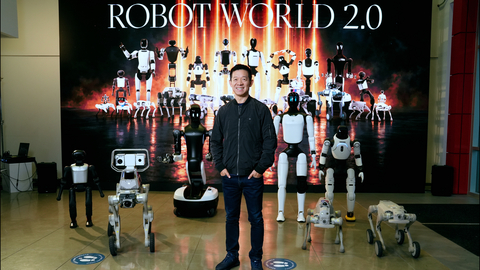
Faraday Future Founder and Global CEO YT Jia Shares Weekly Updates on Robots Delivery to
“Welcome to Weekly Report 81. Let me start with another update on our Hundred-City Initiative for robot deployment. FFR has delivered two Aegis Ultra robots to
First, we’re moving beyond K–12 schools into universities and research labs, broadening the customer base of FFR’s Education and Research Ecosystem. Second, we’re expanding from
Going forward, we’ll launch a customer success tour across our four industry ecosystems, visiting customers to see our robots at work in real-world settings. Through videos and written updates, we’ll share more feedback and firsthand experiences straight from users on the front lines.
In our Industrial and Logistics Ecosystem, the team recently completed a simulation-based validation of a label-based parts-sorting scenario using Faber U, our wheeled mobile manipulator. This lays out the groundwork for testing on real robots and proof-of-concept projects in real-world settings. Faber combines autonomous mobility, precise manipulation, and dual-arm coordination. Building on those strengths, we’ll validate it on real robots and on site, and step by step develop Skills and Industry Productivity Solutions for sorting, machine loading and unloading, and logistics transfer. Now let me turn to our Four-Core Full-Stack AI products and business.
Today I’ll focus on our Physical AI Brain and Developer Platform Core. Brain Blocks, one of the six development tools on our Developer Platform, has launched an AI module along with motion recording and playback. It can recognize gestures, body poses, objects, and sounds, and use those results in block-based programs, with no coding required. This makes developing robot perception and motion far more intuitive and greatly lowers the barrier to programming. In turn, it speeds up the adoption and application of Physical AI.
On November 6, FFR hosted a developer workshop in Silicon Valley on vibe coding, where even beginners could program using natural language. The event produced a batch of new Skills, adding to our Skills Store. It also gave us experience as we explore ways for FFR and developers to share in the revenue together.
This week, FFR released its first financial results since completing the acquisition of the robotics business. For the first nine months of the year, the acquired robotics business generated unaudited standalone combined revenue of approximately
In the next phase, we’ll focus on advancing the Hundred-City Initiative, RoboShare’s Ten-City Strategy, and the “Built in USA” Acceleration Program. We’ll keep expanding sales and deployment and improving our operating and financial performance.
We also plan to launch our Physical AI Cloud technology platform during CES, together with our Productivity Token standards, which will define how Productivity Tokens are measured, calculated, and used. Together, they will bring together the capabilities of our Physical AI Brain and Developer Platform and establish a way to measure and settle robot productivity. This will provide a foundation for pricing and transacting robot-sharing services, and make transactions across the industry more efficient.
Given the time, I won’t go through everything in our Q3 results here. For details, please refer to FFR’s public filings.
At FFAI, our strategic and business upgrades are also moving forward. This includes plans of building a Physical AI Device manufacturing, testing, and validation center for FFR robots at our
ABOUT FARADAY FUTURE
Founded in 2014, Faraday Future (FF) is a U.S.-based Physical AI ecosystem company dedicated to merging the future of robotics and mobility solutions through AI innovation and technologies. Following the completion of the transfer of its robotics business to FF EAI Robotics Ecosystem Inc. (FFR), Faraday Future is upgrading into a Robotaxi and EAI Cabin (Intelligent cabin) shared mobility operations company and a Physical AI investment holding company. Evolving its automotive business from an EV manufacturer to a Robotaxi Sharing Network and AI Visicabin technology operator. FF aims to advance its “Four Future Trends” concept, once again helping to drive automotive-industry transformation. For more information, please visit Faraday Future's official website: https://www.ff.com/
FORWARD LOOKING STATEMENTS
Some of today’s update is forward-looking, and actual results may differ materially. The risk factors are in our SEC filings. Important factors that may affect actual results or outcomes include, among others: the Company’s ability to continue as a going concern and improve its liquidity and financial position; the Company’s ability to pay its outstanding obligations, which it currently lacks; the availability of sufficient share capital to meet its current obligations and execute on its strategy; the willingness of convertible debt investors to fund the Company after the sale of the Company’s robotics business; tariff uncertainty for imported products, particularly from China; the Company’s ability to homologate FX vehicles for sale; the Company’s ability to secure the necessary funding to execute on the FX strategy, which is substantial; the Company’s ability to secure an occupancy certificate covering all of its Hanford facility; the Company’s ability to remediate its material weaknesses in internal control over financial reporting and the risks related to the restatement of previously issued consolidated financial statements; the Company’s limited operating history and the significant barriers to growth it faces; the Company’s history of substantial losses and expectation of continued losses; the success of the Company’s payroll expense reduction plan; the Company’s ability to execute on its plans to develop and market its vehicles and the timing of these development programs; the Company’s ability to execute on its plans to enter the robotaxi and cybercab industries; the Company’s estimates of the size of the markets for its vehicles and cost to bring those vehicles to market; the rate and degree of market acceptance of the Company’s vehicles; the Company’s ability to cover future warranty claims; the success of other competing manufacturers; the performance and security of the Company’s vehicles; current and potential litigation involving the Company; the Company’s ability to receive funds from, satisfy the conditions precedent of and close on the various financings described elsewhere by the Company; the result of future financing efforts, the failure of any of which could result in the Company seeking protection under the Bankruptcy Code; the Company’s indebtedness; the Company’s ability to use its “at-the-market” program; insurance coverage; general economic and market conditions impacting demand for the Company’s products; potential negative impacts of a reverse stock split; potential cost, headcount and salary reduction actions may not be sufficient or may not achieve their expected results; circumstances outside of the Company’s control, such as natural disasters, climate change, health epidemics and pandemics, terrorist attacks, and civil unrest; risks related to the Company’s operations in China; the success of the Company’s remedial measures taken in response to the Special Committee findings; the Company’s dependence on its suppliers and contract manufacturer; the Company’s ability to develop and protect its technologies; the Company’s ability to protect against cybersecurity risks; and the ability of the Company to attract and retain employees, any adverse developments in existing legal proceedings or the initiation of new legal proceedings; the volatility of the Company’s stock price; the ability of the Company to maintain its stock price above
View source version on businesswire.com: https://www.businesswire.com/news/home/20261115525568/en/
Investors (English): ir@ff.com
Investors (Chinese): cn-ir@faradayfuture.com
Media: john.schilling@ff.com
Source: Faraday Future Intelligent Electric Inc.