
Four Nines Gold Intersects Hydrothermal Breccia in First Three Holes at Hayden Hill
Four Nines Gold (OTCQB:FNAUF) reported early geological results from its maiden core drilling program at the Hayden Hill Gold Project in California.
Sentiment and the balance of points
Rhea-AI Sentiment reads the wording of the document, how positive or negative its language is on a 1 to 5 scale. The balance of points shown with the takes weighs what the document actually discloses, so the two can disagree, for example when a trial that missed its main goal is described in upbeat language.
Rhea-AI Summary
Four Nines Gold (OTCQB:FNAUF) reported early geological results from its maiden core drilling program at the Hayden Hill Gold Project in California. The first three holes (HH26‑001 to HH26‑003) have all intersected hydrothermal brecciation and associated epithermal alteration, features commonly linked to high‑grade gold feeder zones, with a total of 1,384 feet drilled so far and assays pending.
According to Four Nines Gold, these intersections validate its modern 3D geological model targeting deeper zones beneath historical Amax workings. Hayden Hill previously produced 480,000 oz of gold and 1.3 million oz of silver. The company is fully funded for this drill campaign and holds a right to acquire 100% of the project from a Kinross Gold U.S.A. subsidiary.
Positive
- All first three drill holes intersected hydrothermal breccias over 1,384 feet drilled
- Historical Hayden Hill production of 480,000 oz gold and 1.3 million oz silver
- Company reports maiden drill results support its modern 3D geological model
- Four Nines Gold is fully funded for the current Hayden Hill drill program
- Right to acquire 100% of Hayden Hill from a Kinross Gold U.S.A. subsidiary
- 10 drill locations already permitted on private land in Lassen County
Negative
- Initial assay results are still pending; no gold or silver grades disclosed
- Current update provides geological observations only, without resource or reserve estimates
AI-generated analysis. How Rhea-AI works. Not financial advice.




Early Drilling Validates Modern Geological Model as First Three Holes Intersect Favorable Hydrothermal Brecciation Commonly Associated With High Grade Gold Feeder Zones, With Initial Assay Results Pending
VANCOUVER, BC / ACCESS Newswire / August 25, 2026 / Four Nines Gold Inc. (CSE:FNAU)(OTCQB:FNAUF)(FWB:F8NA) ("Four Nines" or the "Company") is pleased to report encouraging early geological observations from its maiden core drilling program at the Hayden Hill Gold Project in Lassen County, California. The first three drill holes have each intersected geologically favorable hydrothermal brecciation and associated alteration characteristic of the Hayden Hill epithermal system, which are commonly associated with high grade gold feeder zones. Two holes have been completed and a third is advancing, with 1,384 feet drilled to date.
HIGHLIGHTS
First Three Holes Encounter Targeted Epithermal Alteration & Mineralization: All three holes drilled to date have intersected hydrothermal brecciation and associated alteration.
HH26‑001: completed to 622 feet, intersecting two intervals of multi‑stage hydrothermal breccia.
HH26‑002: completed to 420.6 feet, also intersecting a hydrothermal breccia zone within oxidized and silicified mudstone.
HH26‑003: currently at 341 feet, has intersected sulfide-silica alteration with local zones of hydrothermal brecciation between 159-310 feet.
Assays Pending: Core is being submitted to ALS in Reno, Nevada for preparation and analysis as drilling continues.
Management Comment
Charles Ross, President & CEO of Four Nines Gold, commented:
"This is exactly what we came to Hayden Hill looking for, and we're extremely excited by what we're seeing. Multiple zones of hydrothermal breccia across all three holes confirm the strength of the epithermal system and validate the geological model that led us to these targets. We believed previous operators had left a much bigger story beneath and around the historical mine, and these early observations only strengthen that conviction. The drills are turning, the first assays are ahead of us, and we believe Hayden Hill is entering a potentially transformational period."
Why this Matters for Investors
Consistent Breccia Intersections Across All Holes: Hydrothermal breccias are a hallmark of epithermal gold systems and often occur adjacent to high‑grade feeder structures. Intersecting this unit repeatedly in the first three holes is a strong indicator that the Company is drilling in the right structural corridors.
Validation of the Modern 3D Geological Model: The program is targeting deeper zones beneath historical Amax workings. Early geological results support the updated interpretation and increase confidence in the remaining drill targets.
Potential for High‑Grade Discovery Beneath a Past‑Producing Mine: Hayden Hill open pit mine produced 480,000 oz gold historically but was never systematically drilled to depth. These early observations suggest meaningful upside potential in areas missed by previous operators.
Upcoming Assays Could Be Catalysts: With core now at ALS Reno for preparation and analysis, the first assay results are expected to provide the next major milestone for investors.
A big take-away is drilling angled holes perpendicular to the orientation of the interpreted feed zones provides the highest likelihood that the feeders will be intersected.
Drill Progress
HH26-001
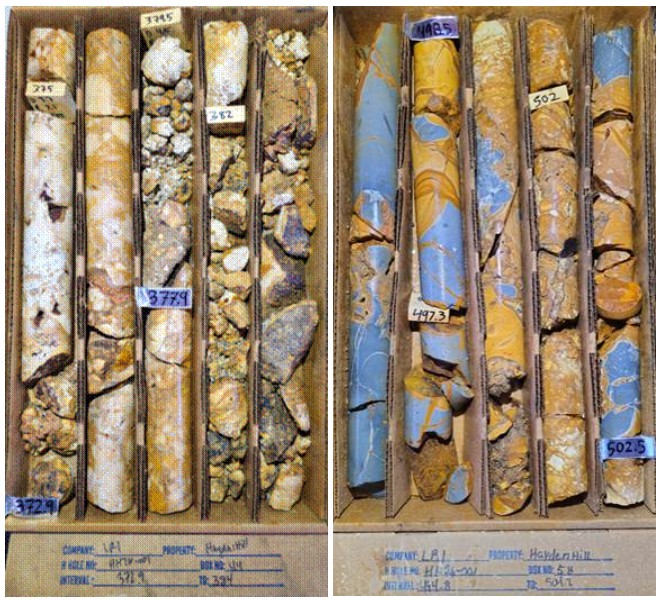
Core hole HH26-001, exploring the North Hi-Grade Target from the P1000N station (Figure 1), has been completed to a length of 622 feet (Table 1). This easterly drilled hole intersected two (2) intervals of hydrothermal breccia, a favorable epithermal alteration type. A summary log of rock units intersected by the hole is as follows:
19.7-97.2 A complex multi-stage hydrothermal breccia (Figure 2)
97.2-121.8 Upper Mudstone Unit altered by passive/pervasive silicification.
121.8-270.8 The Upper Mudstone Unit with variable passive/pervasive silicification and local argillization.
270.8-519 Upper Mudstone Unit cut by stockwork silica breccia veins, clay matrix manganese breccias and clast-supported hydrothermal breccias (Figure 3).
519- 615.5 Fragmental Igneous Unit, which underlies the Upper Mudstone Unit. This unit has been argillically altered and strongly oxidized, with local zones of quartz stockworks.
Figure 1: Drill Hole Location Map
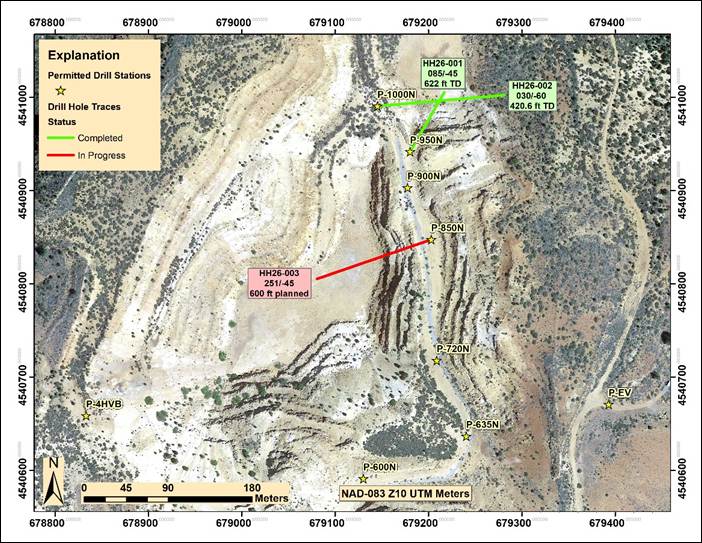
Figure 2: HH26-001 Upper Hydrothermal Breccia
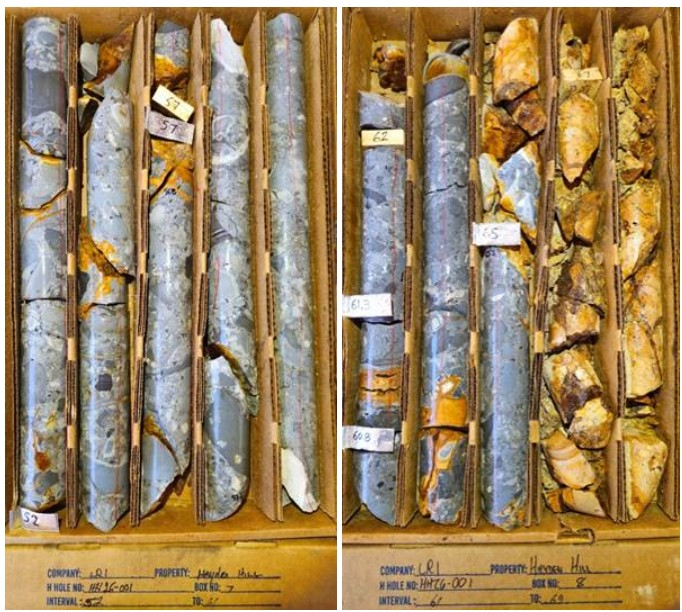
Figure 3: HH26-001 Silicified & oxidized Upper Mudstone Unit cut by breccias and veins
HH26-002
Core hole HH26-002, exploring the North Hi-Grade Target from the P950N station (Figure 1), has been completed to a length of 420.6 feet (Table 1). This northerly drilled hole intersected an interval of hydrothermal breccia, a favorable epithermal alteration type. A summary log of intersected rock units intersected by the hole is as follows:
0-215 Upper Mudstone Unit altered by passive/pervasive silicification, with zones of quartz veinlets.
215-249 Argillized fault zone with variable degree of oxidation and local silicification
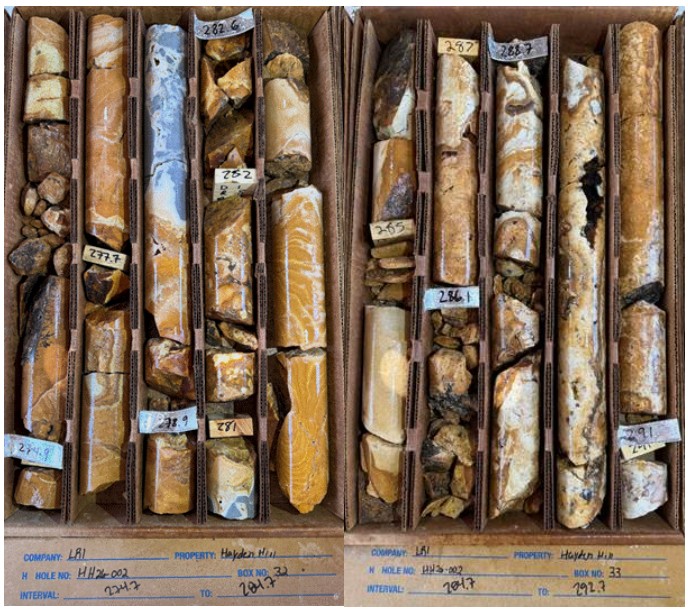
249-298 Oxidized Upper Mudstone Unit cut by stockwork silica breccia veins, clay matrix manganese breccias and clast-supported hydrothermal breccias (Figure 4).
298-420.6 TD Upper Mudstone Unit altered by passive/pervasive silicification, with zones of quartz veinlets.
Figure 4: Brecciated Upper Mudstone Unit
HH26-003
Core hole HH26-003, exploring the Lower Telegraph Target from the P850N station, is in progress at a current depth of 341 feet (Figure 1). The hole initially intersected (0-159 feet) the Upper Mudstone Unit altered by passive/pervasive silicification (Figure 5 - left photo). From 159 to 310 feet the hole intersected sulfide-silica alteration with local zones of hydrothermal brecciation (Figure 5 - right photo).
Figure 5: HH26-003 upper mudstone pervasive silicification (left) & Hydrothermal brecciation (right)
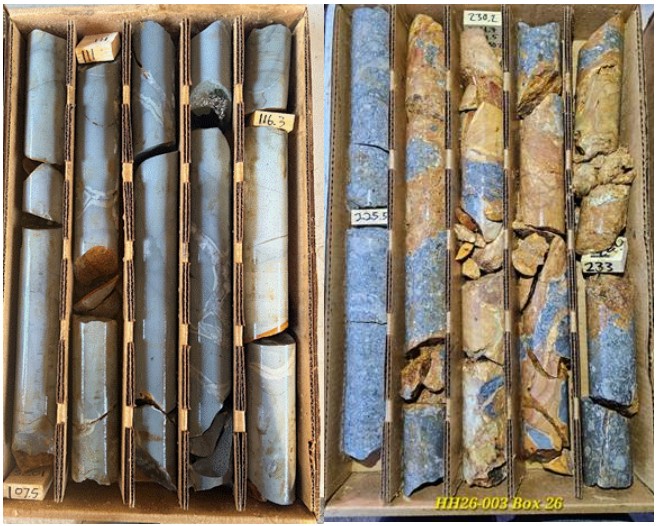
Table 1

The core program is being conducted by LSG Drilling LLC with an office at Anchorage Alaska, utilizing an Everdigm ECR-18 core drill rig. Down-hole surveys are being conducted by LSG, utilizing a Reflex Omnix42 north-seeking gyro tool.
Core is being logged near the project in a secure facility. Logged core is being transported to the laboratory by the geologic team.
Whole core is being submitted to the ALS facility in Reno NV, which is cutting, preparing and analyzing the split core samples. The core samples are being prepared according to ALS code PREP-31BY, with gold and silver values being determined by ME-GRA21 (fire assay with gravimetric finish). The remaining half of the core is being stored in the ALS facility.
Standards, blanks, and crush and pulp stage lab duplicates are being inserted into the core sample stream at a frequency of ~
The Hayden Hill field program is managed by Bryan Kellie, AIPG-CPG.
Qualified Person
David Flint, MSc, AIPG-CPG, Vice President of Exploration and a Qualified Person as defined in National Instrument 43-101, has reviewed and approved the technical information contained in this news release.
About Four Nines Gold Inc.
Four Nines Gold Inc. is a North American gold exploration company focused on unlocking high-grade potential at past-producing assets. The Company's flagship Hayden Hill Gold Project in northern California produced 480,000 ounces of gold and 1.3 million ounces of silver and has not been drilled in nearly three decades. Leveraging a modern 3D geological model, Four Nines has identified multiple untested high-grade feeder zones beneath and adjacent to historic workings targets missed by previous operators due to shallow drilling and outdated interpretations.
Four Nines is fully funded for its maiden drill program, with 10 approved drill locations and field activities underway as of June 2026. Led by a technical team with a strong discovery record and deep experience in epithermal gold systems, the Company is preparing a high-impact drill campaign designed to evaluate deeper structural corridors and expand the project. Four Nines continues to assess additional opportunities in stable jurisdictions and is committed to responsible exploration, transparent communication, and long-term value creation for shareholders.
Four Nines has a right to acquire
Follow Four Nines Gold as the next chapter at Hayden Hill unfolds through ongoing news, field updates, videos, and exclusive project content.
LinkedIn: @Four Nines Gold Inc.
YouTube: @FourNines
Facebook: @FourNinesGoldInc
Instagram: @FourNinesGoldInc
X (formerly Twitter): @FourNinesGold
For more information, please contact the Company at info@fourninesgold.ca or visit our website at www.fourninesgold.ca for project updates and related background information or call 604.977.1999
ON BEHALF OF THE BOARD OF DIRECTORS
FOUR NINES GOLD INC.
Charles Ross
President
1600 - 409 Granville Street
Vancouver, BC, V6C 1T2
Tel: 604.977.1999
Forward-looking statements
This press release contains forward-looking statements and forward-looking information within the meaning of Canadian securities laws (collectively, "forward-looking statements"). Statements and information that are not historical facts are forward-looking statements. Forward-looking statements are frequently, but not always, identified by words such as "expects", "anticipates", "believes", "intends", "estimates", "potential", "possible" and similar expressions, or statements that events, conditions or results "will", "may", "could" or "should" occur or be achieved. Forward-looking statements and the assumptions made in respect thereof involve known and unknown risks, uncertainties, and other factors beyond the Company's control. Forward-looking statements in this press release include statements regarding the proposed geophysical survey, proposed drilling program, the anticipation that the proposed survey will positively refine and prioritize drill targets, such exploration activities will further delineate and identify new mineralized areas and additional high-priority targets. Mineral exploration is highly speculative and characterized by significant risk, including risks related to mineral exploration in general, industry risks, risks that anticipated results may not occur as intended, as well as general risks related to the economy, fluctuating gold prices, capital markets and mining stocks in particular which even a combination of careful evaluation, experience and knowledge may not eliminate. Forward-looking statements in this press release are made as of the date herein. Although the Company believes that the assumptions and factors used in preparing the forward-looking statements in this press release are reasonable, undue reliance should not be placed on such statements. The Company undertakes no obligation to update publicly or otherwise revise any forward-looking statements, whether as a result of new information or future events or otherwise, except as may be required by law.
SOURCE: Four Nines Gold Inc.
View the original press release on ACCESS Newswire
FAQ
AI-generated questions and answers. How Rhea-AI works. Not financial advice.