
Formation Metals Further Validates Open Pit Potential at N2 Gold Project: Intersects Over 100 Metres of Near Surface Target Mineralization in Three New Drillholes
Formation Metals (OTCQB:FOMTF) reported new drill intercepts at its N2 Gold Project (Quebec) from holes N2-25-006, N2-25-009 and N2-25-011, targeting a conceptual multi-million ounce open-pit resource.
Rhea-AI Summary
Formation Metals (OTCQB:FOMTF) reported new drill intercepts at its N2 Gold Project (Quebec) from holes N2-25-006, N2-25-009 and N2-25-011, targeting a conceptual multi-million ounce open-pit resource.
Key intercepts: 102.6 m from 15.3 m (N2-25-006), 135.7 m from 23.3 m (N2-25-009) and 166.8 m from 60.0 m (N2-25-011). Company is running a fully funded 30,000 m drill program (Phase 1: 10,000 m started Sept 25, 2025). Historic global resource ~871,000 oz Au across multiple zones; A zone ~522,900 oz (1.52 g/t) with >3.1 km untested strike. Working capital ~C$13.4M and 2025–26 exploration budget ~C$8.1M.
Positive
- 30,000 m fully funded drill program
- N2-25-011: 166.8 m mineralized interval
- A zone historic: ~522,900 oz at 1.52 g/t Au
- Working capital ~C$13.4M with zero debt
- Exploration budget ~C$8.1M (including tax credits)
Negative
- New drill intercepts report no assay grades for gold
- A zone: only ~35% of strike historically drilled (>3.1 km open)
- Historic global resource is non‑NI 43‑101 (historic estimate)
Details
News Market Reaction – FOMTF
On Dec 11, the day this news came out, FOMTF closed 1.90% above the previous close.
Data tracked by StockTitan Argus for the Dec 11 session.
Key Figures
- N2-25-006 interval
- 102.6 metres
- Target mineralization from 15.3 metres downhole in A zone
- N2-25-009 interval
- 135.7 metres
- Target mineralization from 23.3 metres downhole in A zone
- N2-25-011 interval
- 166.8 metres
- Target mineralization from 60.0 metres downhole in A zone
- Drill program size
- 30,000 metres
- Fully funded campaign at N2 Gold Project, Phase 1 is 10,000 m
- Global historic resource
- ~871,000 oz Au
- Historic resource across A, East, RJ-East, Central and RJ zones
- A zone ounces
- ~522,900 oz Au
- Shallow, highly continuous historic gold deposit in A zone
- Working capital
- ~C$13.4M
- Company working capital with zero debt during 30,000 m program
- Exploration budget
- ~$8.1M
- 2025–2026 exploration budget inclusive of Quebec tax credits
Historical Context
-
Reported wide near-surface mineralized intercepts at N2 Gold Project.
-
Correction highlighting visible gold and historic resource details at N2.
-
Announced visible gold intercepts in early Phase 1 drill holes.
-
Closed second tranche financing and expanded drill program to 30,000 m.
-
Closed first tranche financing to fund 20,000 m drill program at N2.
24h Move is the share-price change in the day after each event; other market factors may also have contributed.
Key Terms
quartz carbonate veins technical
arsenopyrite technical
pyrrhotite technical
volcaniclastic technical
graphitic clastic sediments technical
ni-43 101 regulatory
ppm technical
AI-generated analysis. How Rhea-AI works. Not financial advice.




Highlights:
Significant mineralized sections were intercepted in N2-25-006, N2-25-009 and N2-25-011 drilled in the "A" zone, where the Company is targeting a multi-million ounce conceptual open-pit resource; the Company's maiden drill program is focused on assessing the first three hundred metres vertical.
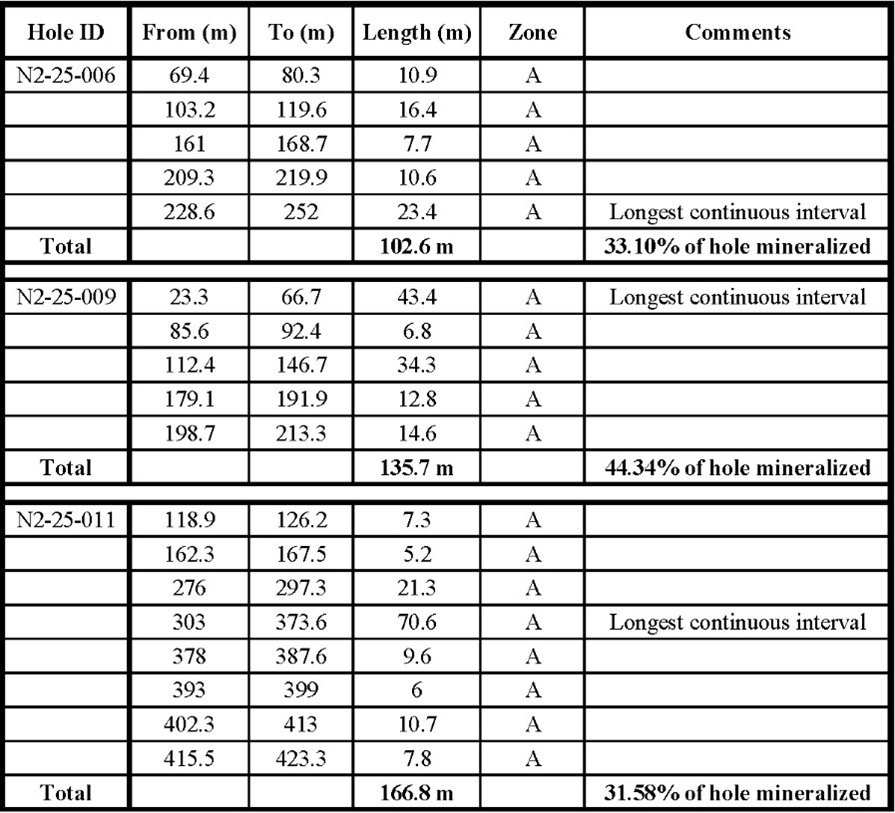
N2-25-006: 102.6 metres of target mineralization intercepted beginning at 15.3 metres downhole, with multiple intervals over 10 metres in width including up to 23.4 metres.
N2-25-009: 135.7 metres of target mineralization intercepted beginning at 23.3 metres downhole, with multiple intervals over 30 metres in width including up to 43.4 metres.
N2-25-011: 166.8 metres of target mineralization intercepted beginning at 60.0 metres downhole, with multiple intervals over 20 metres in width including up to 70.6 metres.
The intense quartz-carbonate veining and sulfide mineralization (pyrite/arsenopyrite) in sheared and brecciated zones observed visually is directly comparable to the material that yielded long gold intervals in historical drilling including 245-91-151, which intercepted 1.7 g/t Au over 35.0 metres.N2-25-003 and N2-25-008 build on the Company's findings at N2-25-001 and N2-25-013, where the Company identified visible gold including within a 30.8 metre interval (see press release dated November 26, 2025) and N2-25-003 and N2-25-008, where the Company identified 152.9 and 208.8 metres of similar shallow target mineralization (see press release dated December 2, 2025).
The Company is undertaking a fully funded 30,000 metre drill program at its flagship N2 Gold Project in Quebec, host to a global historic resource of ~871,000 ounces comprised of 18 Mt grading 1.4 g/t Au (~810,000 oz Au) across four zones (A, East, RJ-East, and Central)2,3 and 243 Kt grading 7.82 g/t Au (~61,000 oz Au) across the RJ zone2,4. Phase 1, consisting of 10,000 metres, commenced on September 25, 2025. In addition to the "RJ" Zone, Phase 1 targets the "A" zone, a shallow, highly continuous, low-variability historic gold deposit with ~522,900 ounces of which only ~
35% of strike has been drilled (>3.1 km open).The Company has working capital of ~C
$13.4M with zero debt. Inclusive of provincial tax credits from the Quebec government, Formation's exploration budget for 2025-2026 is set at ~$8.1M .
VANCOUVER, BC / ACCESS Newswire / December 11, 2025 / Formation Metals Inc. ("Formation" or the "Company") (CSE:FOMO)(FSE:VF1)(OTCQB:FOMTF), a North American mineral acquisition and exploration company, is pleased to provide an update from the fully funded 30,000 metre drill campaign underway at its flagship N2 Gold Property ("N2" or the "Property"), located 25 km south of Matagami, Quebec.
The Company is pleased to announce that it has intercepted significant sections of target mineralization in three (3) additional drillholes as part of its Phase 1 drill campaign at N2.
The long sections of mineralization correlate with the findings of the 55,000 plus metres of historical drilling at N2, including 245-91-151, which intercepted 1.7 g/t Au over 35.0 metres, positively increasing the potential of intercepting long auriferous intervals. The forms of mineralization observed at N2-25-006, N2-25-009, and N2-25-011 also correlate with intervals observed in N2-25-001, N2-25-003, N2-25-008, and N2-25-013, demonstrating the continuous nature of the deposit.
Deepak Varshney, CEO of Formation Metals, stated, "The consistency of this deposit observed within this drill campaign has been spectacular. Building a bulk tonnage open-pit resource requires finding repeatable mineralization across long strikes and widths, and the target mineralization we are observing fits what Formation is focused on its maiden drill campaign."
Mr. Varshney continued: The thick continuous zones of mineralization observed significantly expand the potential for a large-scale, low-strip multi-million ounce open pit development. With 30,000 metres fully funded and nearly 14 million in working capital, Phase 1 is the first step on our journey to realizing this conceptual model and we look forward to sharing further updates in the coming weeks."
Drillhole N2-25-006: Intercepted 102.6 metres of mineralized section,
Drillhole N2-25-009: Intercepted 135.7 metres of mineralized section,
Drillhole N2-25-011: Intercepted 166.8 metres of mineralized section,
All three drillholes were found to have a significant correlation in terms of lithological intervals and sequences, alteration products and mineralization forms and variety between the geological features along these holes and those of surrounding historic drill holes. Some of longest intervals along the mentioned three drill holes are included in the table below (Fig. 1)
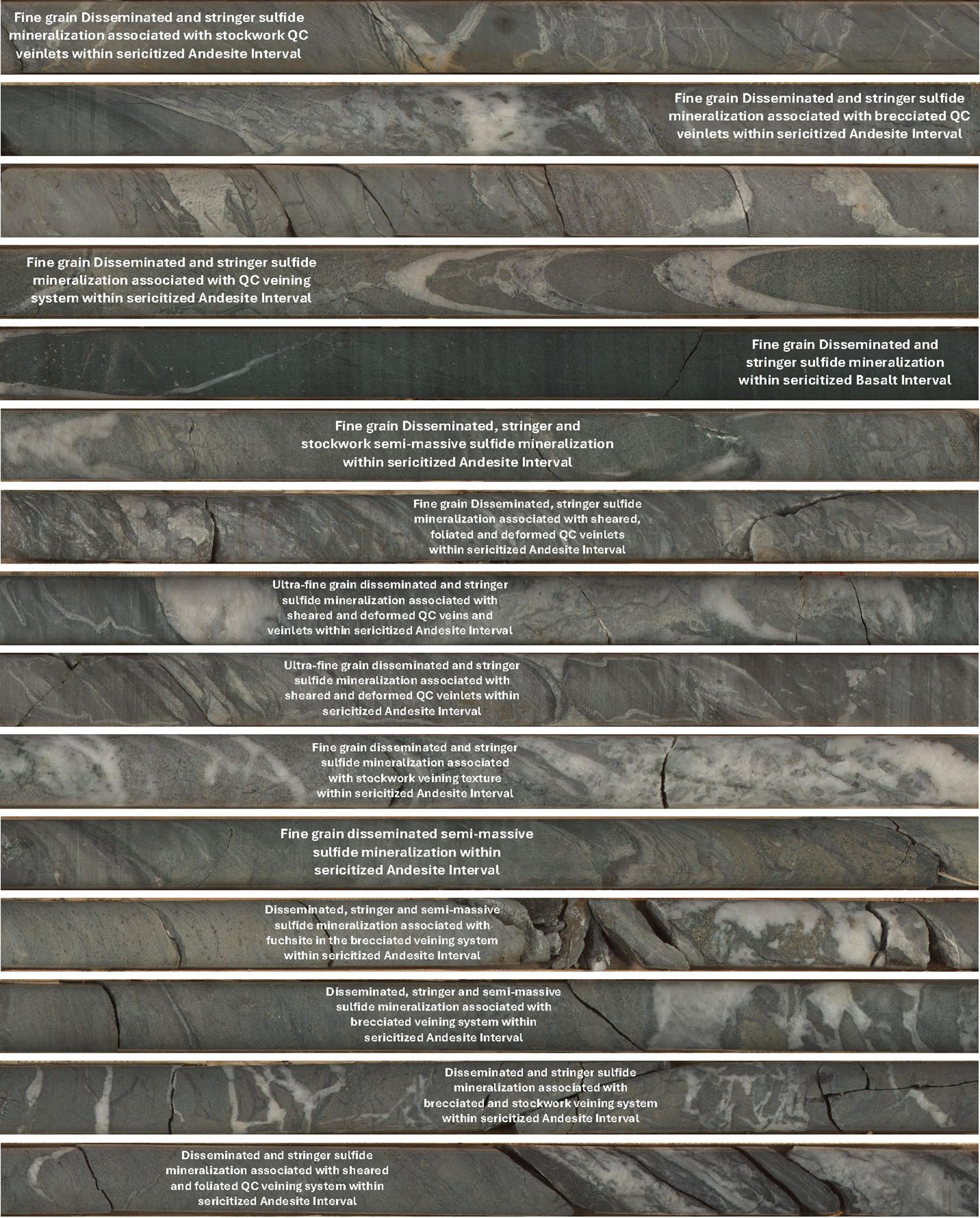
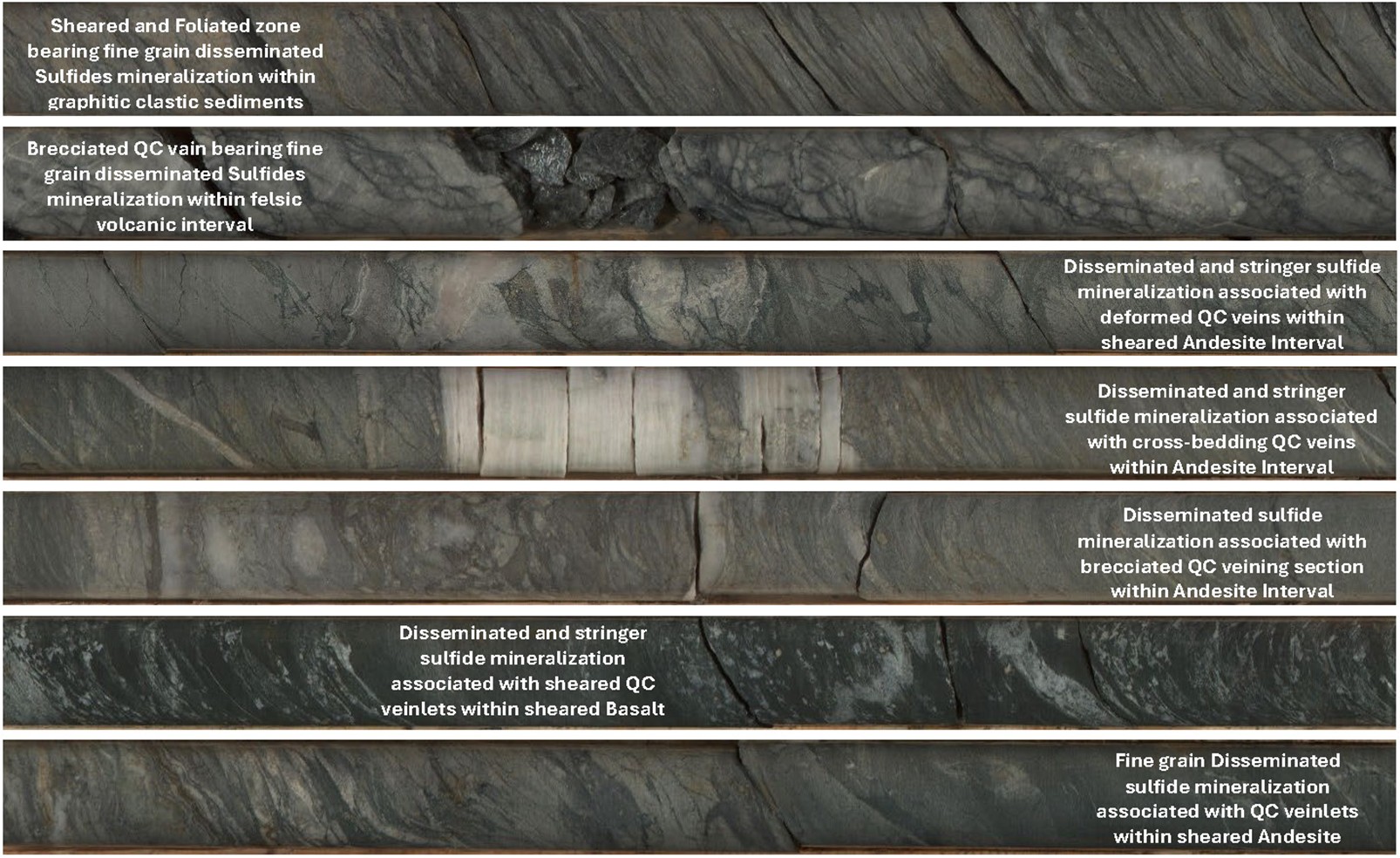
The mineralized sections of N2-25-006 are within the sheared and deformed mafic to intermediate volcanic and less intermediate volcaniclastics and medium grained clastic sediments (sandstone & wacke) rock formations associated with quartz carbonate veins and veinlets (sheared, brecciated and stockwork) and the main alteration products of sericitization and less carbonatization (calcite & ankerite) and silicification dominantly including pyrite, arsenopyrite and less pyrrhotite mineralization in different forms of disseminated, cluster, stringer, semi-massive and fracture filling (Fig. 2).
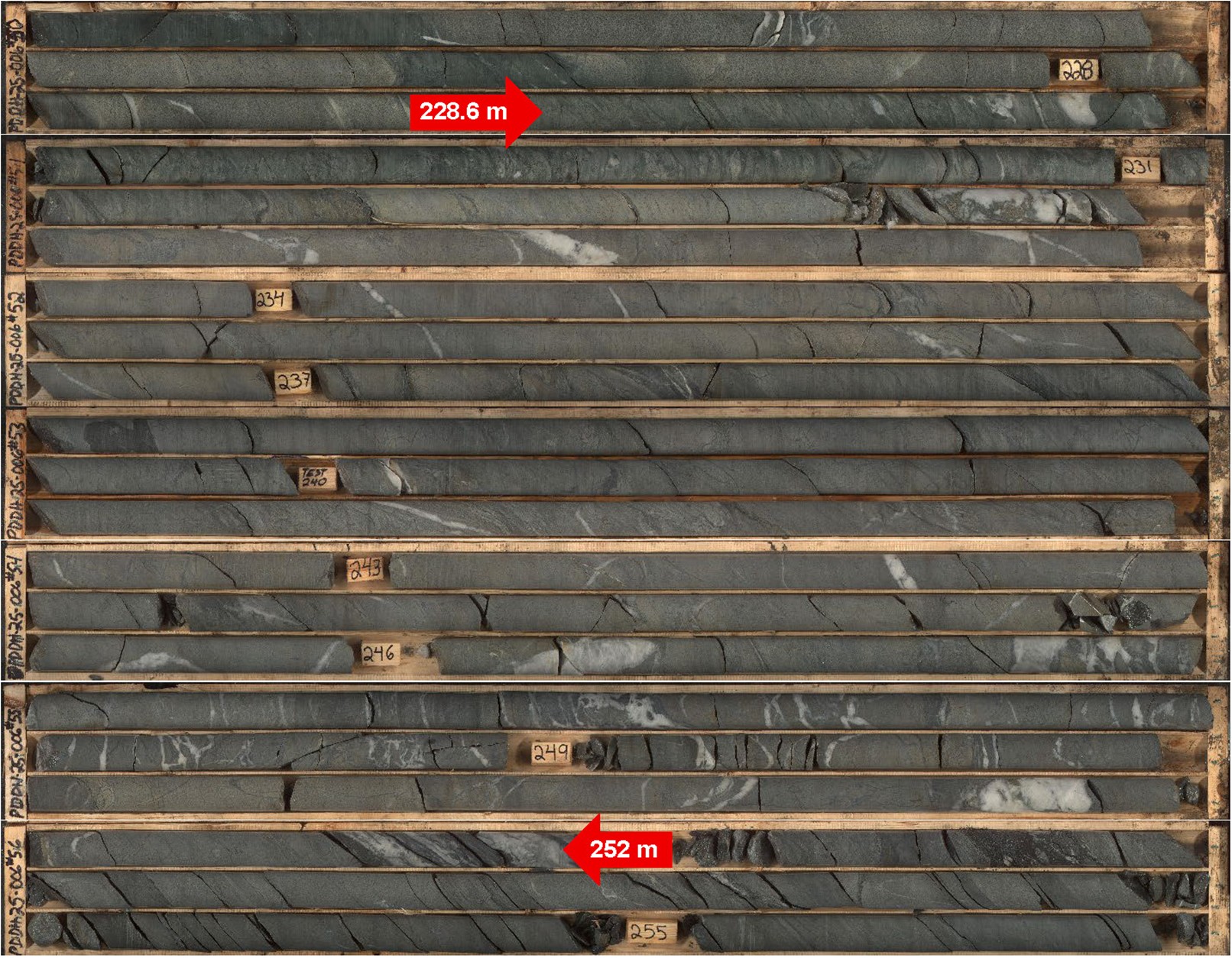
The longest mineralized section along this hole is a 23.4 metre section from 228.6 to 252 metres within intermediate volcanic and volcaniclastic intervals in which pyrite and arsenopyrite are the dominant mineralization in forms of disseminated, stringer, cluster and fracture filling associated with brecciated and stockwork veining system and the main alteration products of chloritization, sericitization and less carbonatization (Fig. 3).
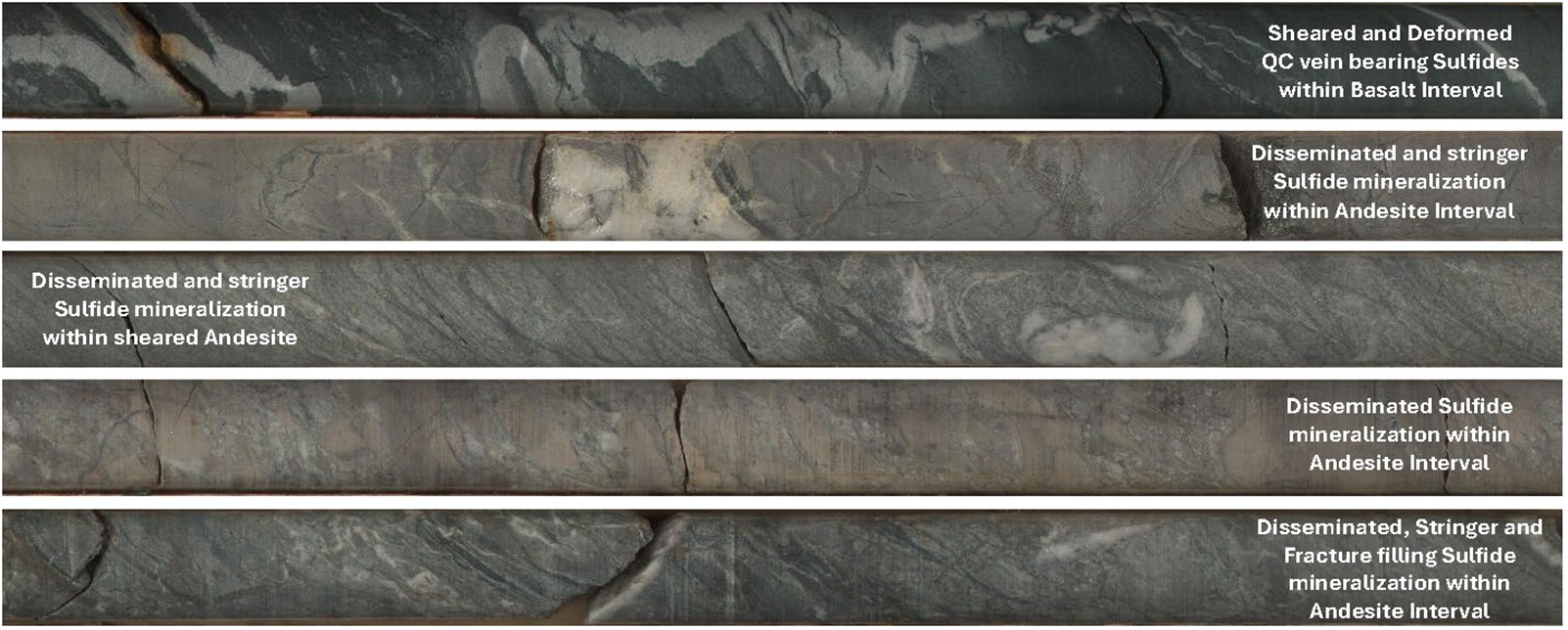
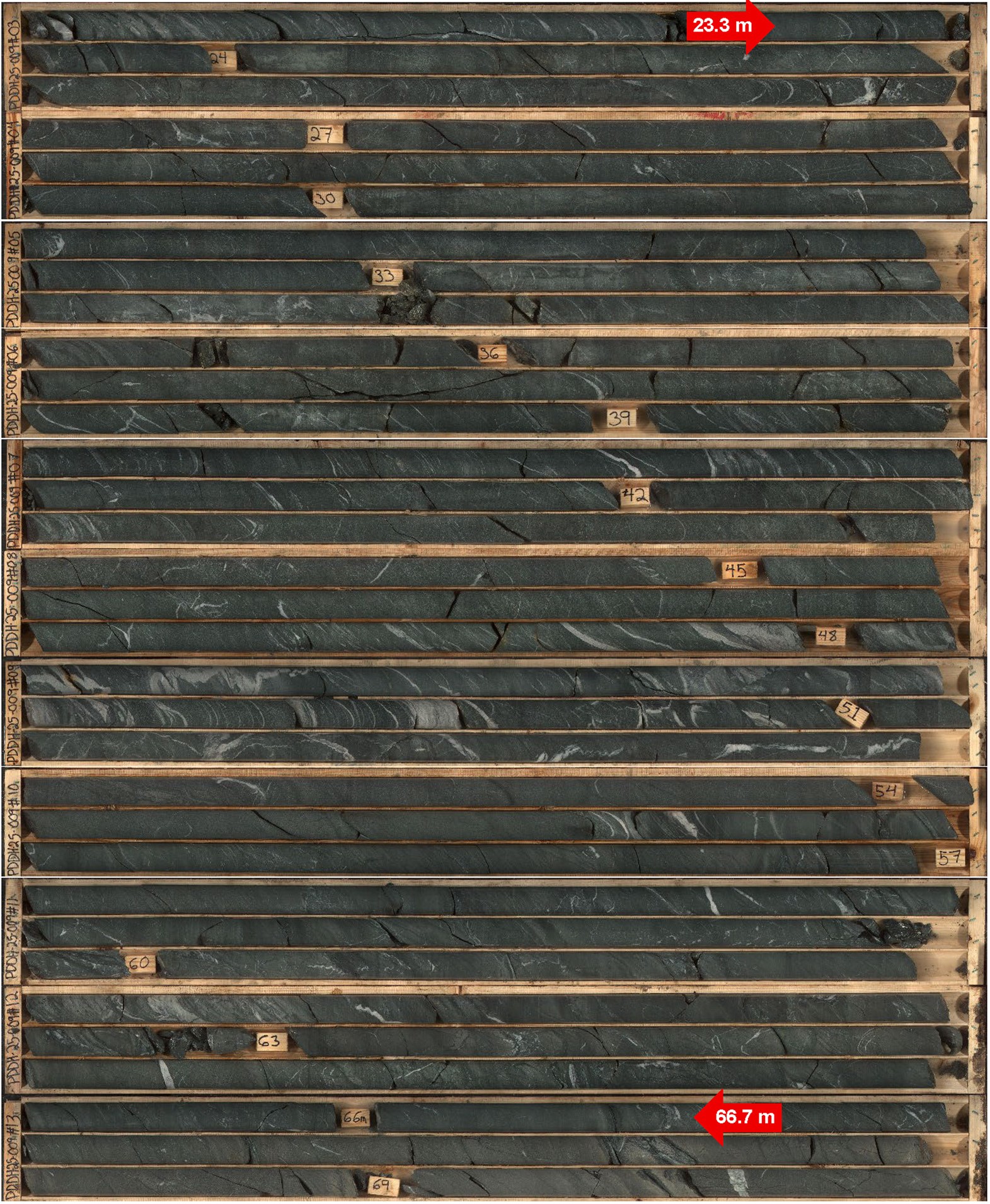
The mineralized sections of N2-25-009 are within the sheared and deformed mafic to intermediate volcanic and less fine to medium grained graphitic clastic sediments (mudstone) rock formations associated with quartz carbonate veins and veinlets and the main alteration products of chloritization, sericitization and less carbonatization and silicification dominantly including pyrite, arsenopyrite and less pyrrhotite mineralization in different forms of disseminated, cluster, stringer and fracture filling (Fig. 4).
The longest mineralized section along this hole is a 43.4 metre section from 23.3 to 66.7 metres downhole within mafic volcanic intervals in which pyrite is the dominant mineralization in forms of disseminated, stringer, cluster and fracture filling associated with the main alteration products of chloritization and less carbonatization. Pyrrhotite is the minor sulfide in this mineralized section (Fig 5).
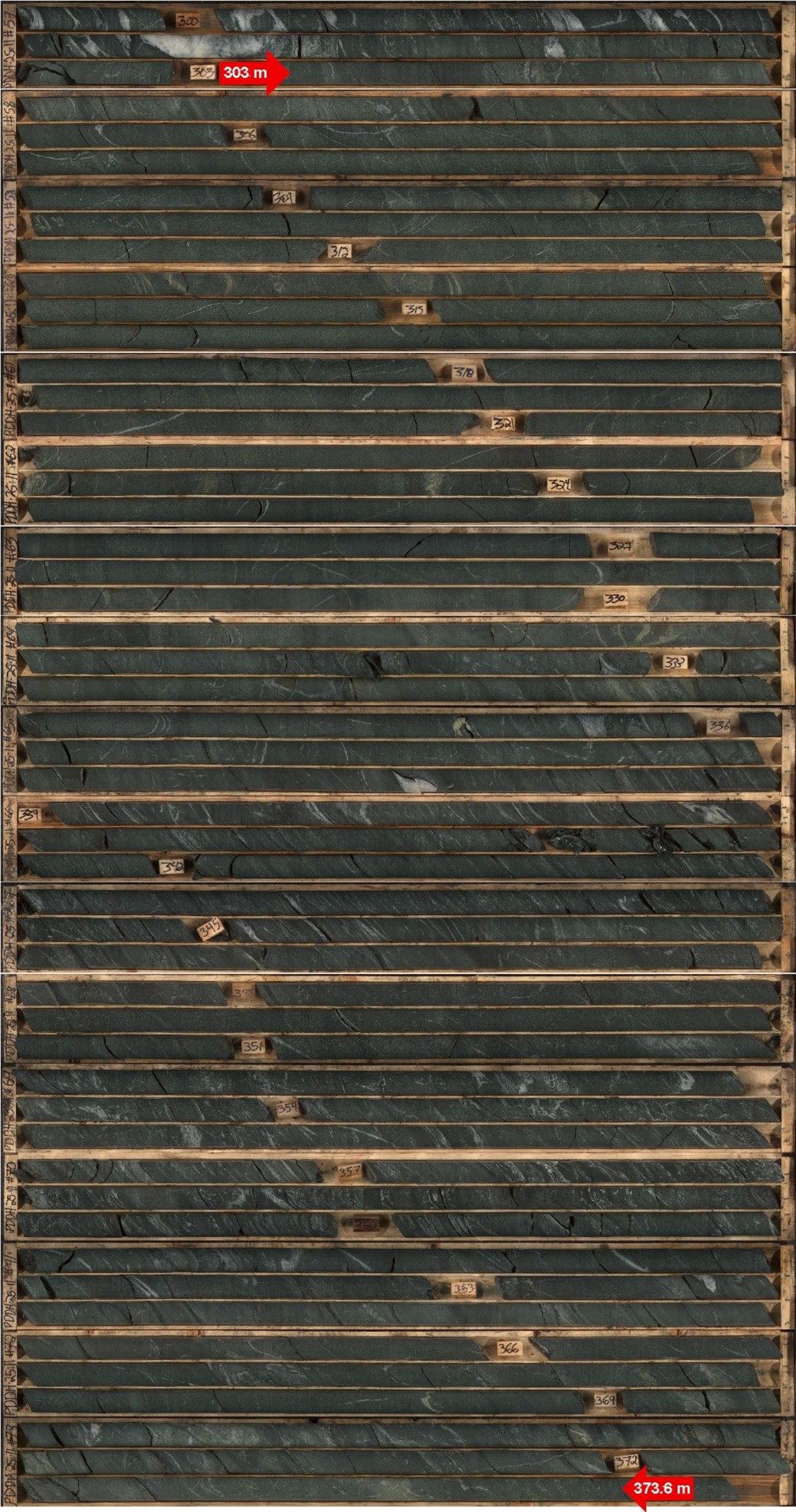
The mineralized sections of N2-25-011 were within the sheared and deformed mafic to intermediate volcanic, fine to medium grained graphitic clastic sediments (mudstone and wacke) and less mafic and felsic intrusion rock formations associated with quartz carbonate veins and veinlets (brecciated and sheared) and the main alteration products of chloritization, sericitization, carbonatization and less silicification and epidotization dominantly including pyrite and less arsenopyrite mineralization in different forms of disseminated, cluster, fracture filling and less stringer. (Fig. 6).
The longest mineralized section along this hole is a 70.6 metre section downhole from 303.0 to 373.6 metres within mafic volcanic intervals in which pyrite is the dominant mineralization in forms of mostly disseminated and less stringer, cluster and fracture filling associated with quartz carbonate veins and veinlets and the main alteration products of epidotization, chloritization and carbonatization (Fig. 7).
Project Summary
Comprising 87 claims totaling ~4,400 ha within the Abitibi sub province of Northwestern Quebec, Formation's flagship N2 Gold Project is an advanced gold project with a global historic resource of ~871,000 ounces comprised of 18 Mt grading 1.4 g/t Au (~810,000 oz Au) across four zones (A, East, RJ-East, and Central)2,3 and 243 Kt grading 7.82 g/t Au (~61,000 oz Au) across the RJ zone2,
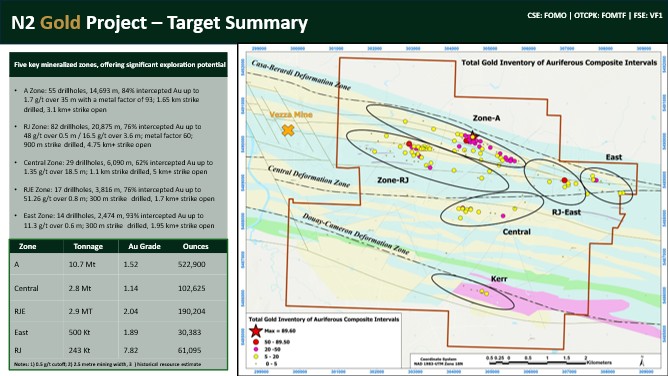
There are six primary auriferous mineralized zones in total, each open for expansion along strike and at depth (Fig. 8). Compilation and geophysical work by Balmoral Resources Ltd. (now Wallbridge Mining) from 2010 to 2018 generated numerous targets that have not yet been investigated with diamond drilling.
The drilling at N2 is designed to focus on discovery drilling at new high-potential targets along the mineralization strikes at the "A", "RJ" and "Central" zones in the northern part of the Property in order to discover new auriferous trends and unlock new zones of gold mineralization. The program will also focus on high-priority infilling and expansion targets in these zones to significantly enhance the auriferous zones identified to-date (Fig. 9).
Historical highlights from the top two priority zones include:
A Zone:A shallow, highly continuous, low-variability historic gold deposit with ~522,900 ounces identified at a grade of 1.52 g/t Au. ~15,000 metres have been drilled historically across 1.65 km of strike, with over 3.1 km of strike remaining to be tested.
84% of historical drillholes intercepted auriferous intervals including up to 1.7 g/t over 35 metres.RJ Zone:a high-grade historic gold deposit with ~61,100 ounces identified at a grade of 7.82 g/t Au, with high-grade intercepts from historical drill holes as high as 51 g/t Au over 0.8 metres and 16.5 g/t Au over 3.5 metres2. This zone was the target of the most recent drilling at the Property by Agnico-Eagle Mines in 2008, when the price of gold was ~US
$800 /oz. Only ~900 metres of strike has been drilled, with 4.75+ km of strike remaining to be tested.
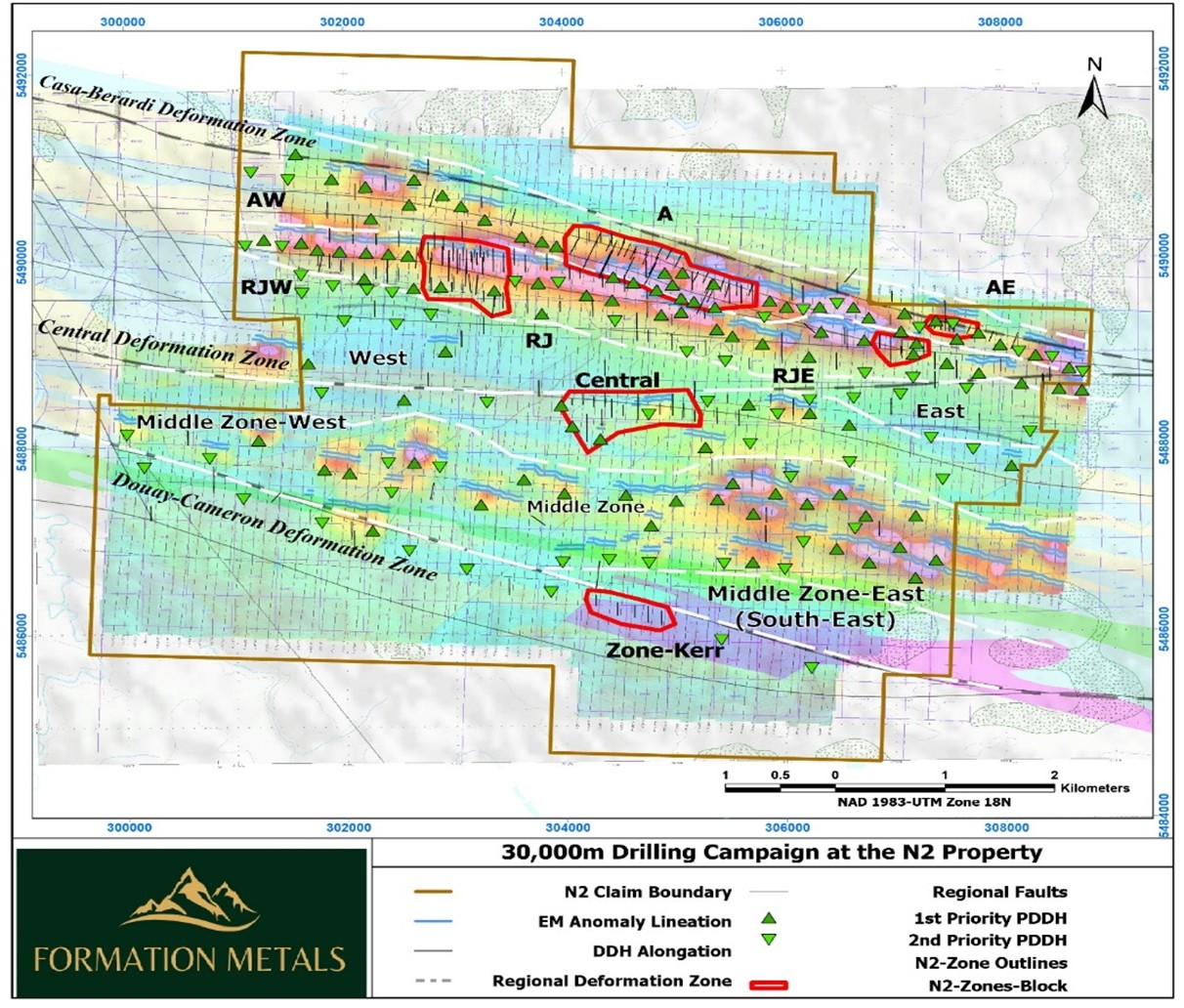
The Company also believes that N2 has significant base metal potential, where it recently completed a revaluation process which revealed significant copper and zinc intercepts within historic drillholes known to have significant gold grades (>1 g/t Au). Assay results range from 200 to 4,750 ppm and 203 ppm to 6,700 ppm, for copper and zinc, respectively, indicating strong potential for elevated base metal (Cu-Zn) concentrations across the property, specifically at the A and RJ zones. Property wide geology at N2 features volcanic and sedimentary rocks formed in regional anticlinal and synclinal flexures. Three principal deformation structures (Fig. 8 & 9), oriented along the known NW-SE to WNW-ESE structural trends typical of VMS deposits in the Matagami region, function as critical geologic controls for mineralization on the property.
For the 2026 exploration season, Formation plans to concentrate its efforts on the northern part of N2, targeting gold deposit expansion and discovery along identified zones and fault systems associated with the main deformation features (specifically WNW-ESE trend), with IP surveys and drilling planned to model mineralized zones that will hopefully contribute to an updated NI-43 101 compliant resource. Formation will also look to further review historic base metal assays from older drill core and undertake additional work in 2025 to assess the property's copper and zinc potential.
Qualified person
The technical content of this news release has been reviewed and approved by Mr. Babak V. Azar, P.Geo., géo (OGQ#10876) an independent contractor and a qualified person as defined by National Instrument 43-101. Historical reports provided by the optionor were reviewed by the qualified person. The information provided has not been verified and is being treated as historic.
About Formation Metals Inc.
Formation Metals Inc. is a North American mineral acquisition and exploration company focused on the development of quality properties that are drill-ready with high-upside and expansion potential. Formation's flagship asset is the N2 Gold Project, an advanced gold project with a global historic resource of ~871,000 ounces (18 Mt grading 1.4 g/t Au (~810,000 oz Au) across four zones (A, East, RJ-East, and Central)2,3 and 243 Kt grading 7.82 g/t Au (~61,000 oz Au) across the RJ zone2,4) and six mineralized zones, each open for expansion along strike and at depth including the "A" zone, of which only ~
FORMATION METALS INC.
Deepak Varshney, CEO and Director
For more information, please call 778-899-1780, email dvarshney@formationmetalsinc.com or visit www.formationmetalsinc.com.
Neither the Canadian Securities Exchange nor its Regulation Services Provider accepts responsibility for the adequacy or accuracy of this release.
Notes and References:
Readers are cautioned that the geology of nearby properties is not necessarily indicative of the geology of the Property.
The above referenced resource estimates do not have a category, are considered historical in nature, and are based on prior data prepared by a previous property owner, and do not conform to current CIM categories.
While the Company considers the estimates to be reliable, a qualified person has not done sufficient work to classify the historical estimates as current resources in accordance with current CIM categories and the Company is not treating the historical estimates as a current resource. A 0.5 g/t Au cut-off was used in the preparation of the historical estimates with a minimum 2.5 metre mining width.
Significant data compilation, re-drilling, re-sampling and data verification may be required by a qualified person before the historical estimates can be classified as current resources. There can be no assurance that any of the historical mineral resources, in whole or in part, will ever become economically viable. In addition, mineral resources are not mineral reserves and do not have demonstrated economic viability. The Company is not aware of any more recent estimates prepared for the N2 Property.
Needham, B. (1994), 1993 Diamond Drill Report, Northway Joint Venture, Northway Property; Cypress Canada Inc.; 492 pages.
Guy K. (1991), Exploration Summary May 1, 1990 to May 1, 1991 Vezza Joint Venture Northway Property; Total Energold; 227 pages.
Forward-looking statements:
This news release includes "forward-looking statements" under applicable Canadian securities legislation, including statements respecting: the Company's plans for the Property and the expected timing and scope of the drilling program at the Property; the Company's goal of delivering a near-surface multi-million-ounce deposit the Property; the Company's view that the Property has the potential for over three million ounces of gold; the Company's planned 30,000-metre drilling program; and statements respecting the Offerings, the timing thereof and the expected use of proceeds therefrom. Such forward-looking information reflects management's current beliefs and is based on a number of estimates and/or assumptions made by and information currently available to the Company that, while considered reasonable, are subject to known and unknown risks, uncertainties, and other factors that may cause the actual results and future events to differ materially from those expressed or implied by such forward-looking statements. Readers are cautioned that such forward-looking statements are neither promises nor guarantees and are subject to known and unknown risks and uncertainties including, but not limited to, general business, economic, competitive, political and social uncertainties, uncertain and volatile equity and capital markets, lack of available capital, actual results of exploration activities, environmental risks, future prices of base and other metals, operating risks, accidents, labour issues, delays in obtaining governmental approvals and permits, and other risks in the mining industry.
The Company is presently an exploration stage company. Exploration is highly speculative in nature, involves many risks, requires substantial expenditures, and may not result in the discovery of mineral deposits that can be mined profitably. Furthermore, the Company currently has no reserves on any of its properties. As a result, there can be no assurance that such forward-looking statements will prove to be accurate, and actual results and future events could differ materially from those anticipated in such statements.
SOURCE: Formation Metals Inc.
View the original press release on ACCESS Newswire
FAQ
AI-generated questions and answers. How Rhea-AI works. Not financial advice.