
Graphite One Engages Ames National Laboratory to Assess Rare Earth Recoveries from Alaska's Graphite Creek Deposit
Earlier garnet testing provides a basis for recovery research, while the broader graphite supply-chain strategy remains dependent on financing.
Sentiment and the balance of points
Rhea-AI Sentiment reads the wording of the document, how positive or negative its language is on a 1 to 5 scale. The balance of points shown with the takes weighs what the document actually discloses, so the two can disagree, for example when a trial that missed its main goal is described in upbeat language.
Rhea-AI Summary
Graphite One (GPHOF) has engaged Ames National Laboratory for a three-month study of rare earth recovery from Alaska’s Graphite Creek deposit.
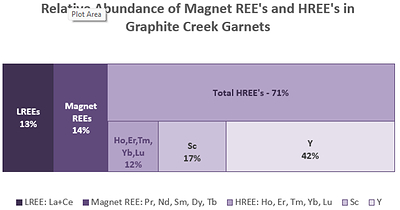
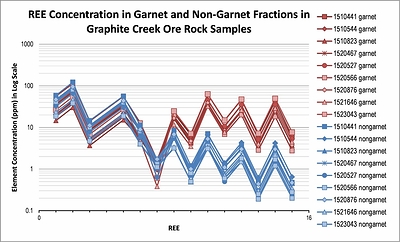
The company-funded project will begin immediately under a Strategic Partnership Project Agreement. It will test recovery from garnet material, including acid leaching, separation and purification, and develop a preliminary scalable processing plan assessing material balances, reagent use, water consumption and waste generation. Earlier testing in 2025 found that 85% of rare earth elements in tested garnet material were magnet or heavy rare earths. The separated garnet fraction had two to six times higher rare earth concentrations than the remaining material. The company’s broader domestic graphite supply-chain strategy remains subject to project financing.
How this balance works
Rhea-AI gives every point it takes from this document a weight. Minor counts 1, Moderate 3 and Major 9, so one Major point outweighs several Minor ones. The bar adds up the weights on each side, and when neither side holds more than 65% of the total the balance reads Mixed.
It reads the document as published, with the same rules for every company, and it does not look at what the market expected or at how the stock traded, so a point can be objectively good on a day the stock falls.
Rhea-AI Sentiment measures something else, the tone of the wording.
Hollow bars mark forward-looking points. How the balance works
Positive
- Minor pointAmes National Laboratory agreement establishes a three-month research program to assess rare earth recovery from Graphite Creek garnets.
- Minor point85% of rare earth elements in garnet material tested in 2025 were magnet or heavy rare earths.
- Minor pointSeparated garnet fraction showed two to six times higher rare earth concentrations than the remaining material.
- Minor pointTested garnet concentrations included dysprosium at 32–63 ppm, yttrium at 198–427 ppm and scandium at 84–141 ppm.
- Minor point. Forward-looking: it has not happened yet and may not happen.Domestic supply-chain plans include Alaska mining and processing, Ohio graphite and anode manufacturing, and potential co-located recycling.
Negative
- Moderate pointProject financing remains a dependency for the broader integrated domestic graphite supply-chain strategy.
- Minor point. Forward-looking: it has not happened yet and may not happen.Recovery development remains preliminary, with the study intended to assess and optimize recovery and develop a scalable processing plan.
- Minor pointGraphite One funds the three-month Ames National Laboratory research program.
AI-generated analysis. How Rhea-AI works. Not financial advice.


Three-month project with the Department of Energy Strategic Special Program will evaluate leaching, heavy and light rare earth separation, and a preliminary scalable process flowsheet
The work, conducted under a Strategic Partnership Project Agreement, will examine garnet preparation and characterization, acid leaching, separation of heavy rare earth elements ("HREEs") from light rare earth elements ("LREEs"), and product purification. Funded by G1. the program is intended to develop a preliminary scalable flowsheet and evaluate its mass balance, reagent use, water consumption and waste generation. The three-month project will commence immediately.
"Graphite Creek's garnets host rare earth elements, including the heavy rare earths and magnet metals that are critical to
Ames Lab G1 REE Work Plan
The Ames Lab program will begin with mineralogical and chemical characterization of the Graphite Creek garnet material, comminution and mechano-chemical activation, followed by preliminary acid-leaching tests. Subsequent work will optimize leaching conditions and screen separation approaches, including solvent extraction, stepwise pH adjustment and fractional crystallization. The final phase will assess precipitation and purification of REE group products and prepare an integrated flowsheet and mass balance.
Graphite Creek REE Potential
The Ames Lab program follows earlier work conducted in 2025 by Graphite One in which garnet grains were mechanically separated from crushed Graphite Creek drill-core samples at the University of Alaska Fairbanks and analyzed for REE concentrations by Activation Laboratories ("ACTLabs").
ACTLabs found that
Graphite One's
Graphite One is advancing a vertically integrated domestic graphite strategy designed to reduce
The Company's strategy includes:
- Mining and processing natural graphite at Graphite Creek, Alaska
- Transporting graphite materials through the Port of Nome
- Manufacturing advanced graphite and anode materials in Ohio
- Potential co-located recycling of graphite and other battery materials
This integrated approach is designed to establish a domestic supply chain spanning resource development, advanced materials manufacturing and potential recycling – supporting the development of a circular
About Ames National Laboratory
Ames National Laboratory is a
About
The
About Graphite One Inc.
GRAPHITE ONE INC. continues to develop its Graphite One Project (the "Project"), with the goal of becoming an American producer of high-grade anode materials that is integrated with a domestic graphite resource. The Project is proposed as a vertically integrated enterprise to mine and process natural graphite and to manufacture synthetic and natural graphite anode active materials primarily for the lithium-ion electric vehicle battery and energy storage markets.
On Behalf of the Board of Directors
"Anthony Huston" (signed)
For more information on Graphite One Inc., please visit the Company's website, www.GraphiteOneInc.com
On X @GraphiteOne
Neither the TSX Venture Exchange nor its Regulation Services Provider (as that term is defined in the policies of the TSX Venture Exchange) accepts responsibility for the adequacy or accuracy of this release.
Forward-Looking Statements
All statements in this release, other than statements of historical facts, including those related to the conduct and results of the research program with Ames Lab, the quantity and quality of and ability to economically extract the rare earth elements from the deposit, timing and completion of permitting, future production, establishment of a processing plant and a graphite manufacturing plant, establishment of a battery materials recycling facility, and events or developments that the Company intends, expects, plans, or proposes are forward-looking statements Generally, forward‐looking information can be identified by the use of forward‐looking terminology such as "proposes", "expects", "is expected", "scheduled", "estimates", "projects", "plans", "is planning", "intends", "assumes", "believes", "indicates", "to be" or variations of such words and phrases that state that certain actions, events or results "may", "could", "would", "might" or "will be taken", "occur" or "be achieved". The Company cautions that there is no certainty that rare earth elements will be extracted from the Project, that rare earth elements extracted will be economically feasible, that either the processing plant and graphite manufacturing plant or the battery materials recycling facility will ever be built, the tests of the Company's material will be successful or that such tests will result in the development of successful products. Although the Company believes the expectations expressed in such forward-looking statements are based on reasonable assumptions, such statements are not guarantees of future performance and actual results or developments may differ materially from those in the forward-looking statements. Factors that could cause actual results to differ materially from those in forward-looking statements include market prices, exploitation and exploration successes, continuity of mineralization, uncertainties related to the ability to obtain necessary permits, licenses and title and delays due to third party opposition, changes in government policies regarding mining and natural resource exploration and exploitation, and continued availability of capital and financing, and general economic, market or business conditions. Readers are cautioned not to place undue reliance on this forward-looking information, which is given as of the date it is expressed in this press release, and the Company undertakes no obligation to update publicly or revise any forward-looking information, except as required by applicable securities laws. For more information on the Company, investors should review the Company's continuous disclosure filings that are available at http://www.sedarplus.ca.

 View original content to download multimedia:https://www.prnewswire.com/news-releases/graphite-one-engages-ames-national-laboratory-to-assess-rare-earth-recoveries-from-alaskas-graphite-creek-deposit-302934491.html
SOURCE Graphite One Inc.
FAQ
AI-generated questions and answers. How Rhea-AI works. Not financial advice.
What will Ames National Laboratory study for Graphite One at Graphite Creek?
Ames National Laboratory will assess rare earth recovery from Graphite Creek garnet material through a three-month, Graphite One-funded program beginning immediately. The work covers preparation, acid leaching, separation of heavy from light rare earth elements, and purification, with a preliminary scalable processing plan as an intended output.
Which rare earth separation methods will Graphite One’s Ames study evaluate?
The program will screen solvent extraction, stepwise pH adjustment and fractional crystallization as separation approaches. Initial work includes mineralogical and chemical characterization, crushing or grinding, mechanical and chemical activation, and preliminary acid-leaching tests. The final phase will assess precipitation and purification of rare earth group products.