
Energy Sovereignty: Localized Methanol Production Emerges as Strategic Alternative to Volatile Oil Routes
HyOrc (OTCQB: HYOR) is promoting localized production of green methanol from processed municipal waste (RDF) at port sites to reduce dependence on centralized oil routes and maritime chokepoints.
Rhea-AI Summary
HyOrc (OTCQB: HYOR) is promoting localized production of green methanol from processed municipal waste (RDF) at port sites to reduce dependence on centralized oil routes and maritime chokepoints. Initial European deployment in Portugal targets ~8 tonnes per day with engineering for modular expansion to 80 tonnes per day.
The modular platform aims to use existing port fuels infrastructure, shorten supply chains, and provide a regional strategic energy reserve as IMO 2028 reporting and fuel standards approach.
Positive
- Local feedstock conversion: converts municipal RDF into marine-grade green methanol at ports
- Initial production capacity ~8 tonnes per day in Portugal
- Modular scalability: engineering completed to expand capacity to 80 tonnes per day
- Infrastructure compatibility: uses existing port pipes and pumps for fuel handling
Negative
- None.
Details
News Market Reaction – HYOR
In the Mar 9 session, HYOR gained 28.39%, reflecting a significant positive market reaction.
Data tracked by StockTitan Argus on the day of publication.
AI-generated analysis. How Rhea-AI works. Not financial advice.




NEW YORK and PORTO, Portugal, March 09, 2026 (GLOBE NEWSWIRE) -- Global shipping’s dependence on fuel moving through narrow maritime chokepoints such as the Strait of Hormuz is drawing renewed attention to the vulnerability of centralized energy supply chains.
A significant portion of the world’s seaborne energy passes through these corridors. When instability affects them, the resulting “energy tax” moves rapidly through freight markets and ultimately into consumer prices. For Europe, a region with minimal domestic hydrocarbon reserves, this dependency represents a persistent risk to both economic stability and supply chain security.
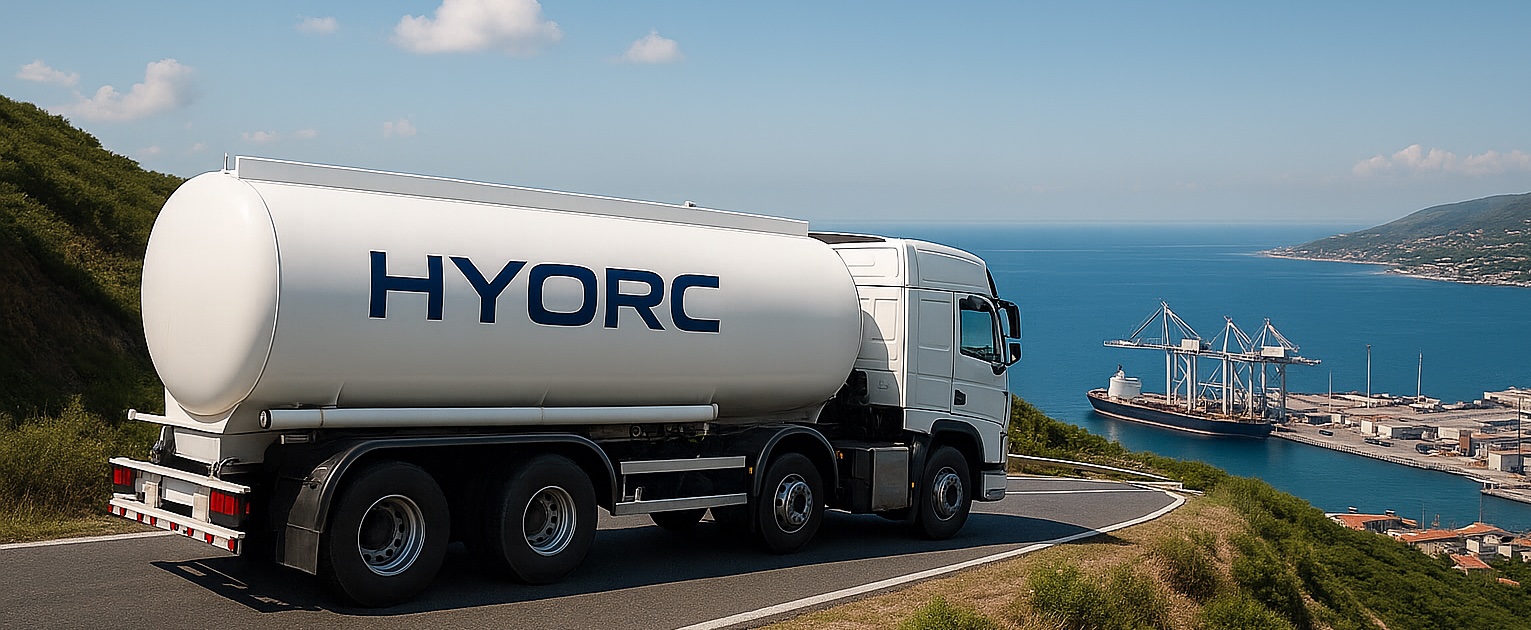
As shipping companies and regulators search for more resilient fuel strategies, localized production models are gaining attention. HyOrc Corporation (OTCQB: HYOR) has developed modular systems designed to convert processed municipal waste (RDF) into green methanol directly at port locations. By producing marine fuel from local waste, the company’s decentralized platform shortens the supply chain and reduces reliance on imported hydrocarbons. This model effectively transforms local waste into a strategic energy reserve.
“Energy security and decarbonization are no longer separate objectives,” said Reginald Fubara, CEO of HyOrc. “Technologies capable of producing renewable fuel locally have the potential to strengthen industrial resilience while supporting the transition to lower-carbon operations.”
Green methanol is becoming a focal point for the shipping industry because, like diesel, it is a liquid at ambient temperature. This logistical compatibility allows ports to utilize existing “pipes and pumps” infrastructure, avoiding the capital-heavy shocks of rebuilding global fuel logistics systems entirely.
HyOrc’s initial European deployment in Portugal is designed to produce approximately 8 tonnes per day of green methanol, with engineering already completed for modular expansion to 80 tonnes per day. As the IMO’s 2028 carbon reporting and fuel standards approach, the availability of scalable, regionally produced marine fuels is expected to become a decisive factor in both energy autonomy and cost stability across global supply chains.
About HyOrc Corporation
HyOrc Corporation (OTCQB: HYOR) develops and commercializes patented hydrogen-capable combustion and waste-to-fuel systems for the shipping, rail, and off-grid power sectors.
Website: www.hyorc.com Press Contact: comms@hyorc.com
Forward-Looking Statements
This release contains forward-looking statements under Sections 27A and 21E of the Securities Acts of 1933 and 1934. These statements involve risks and uncertainties that may cause actual results to differ materially. Factors are described in Company filings with the SEC. The Company undertakes no obligation to update such statements.
A photo accompanying this announcement is available at https://www.globenewswire.com/NewsRoom/AttachmentNg/4b925b34-21ce-442d-98b3-35eeacf481ea

FAQ
AI-generated questions and answers. How Rhea-AI works. Not financial advice.