
Johnson Controls releases second data center reference design guide to advance industrial‑scale AI factory cooling
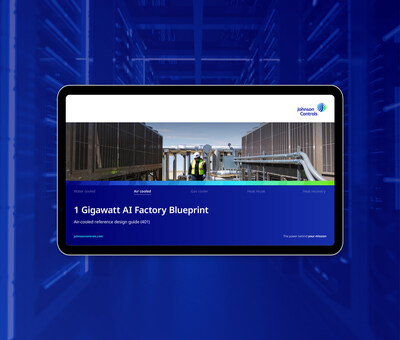
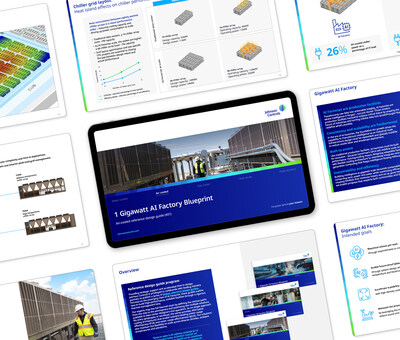
Johnson Controls (NYSE: JCI) released its second AI Factory Reference Design Guide on May 5, 2026, focusing on air‑cooled chillers for gigawatt‑scale data centers.
Sentiment and the balance of points
Rhea-AI Sentiment reads the wording of the document, how positive or negative its language is on a 1 to 5 scale. The balance of points shown with the takes weighs what the document actually discloses, so the two can disagree, for example when a trial that missed its main goal is described in upbeat language.
Rhea-AI Summary
Johnson Controls (NYSE: JCI) released its second AI Factory Reference Design Guide on May 5, 2026, focusing on air‑cooled chillers for gigawatt‑scale data centers. The guide covers designs up to 1 GW, sizing for 220 MW clusters, and integrated architectures using YORK chillers, FCWs and CDUs.
Key metrics cited include returning 50 MW to the AI factory, a 32% improvement in annual energy consumption, zero water usage saving >12 million gallons daily, and a 30% COP improvement with 27% fewer chillers when using warm‑water TCS loops.
Positive
- Zero water usage saving >12 million gallons per day by eliminating cooling towers
- 50 MW returned to the AI factory via bifurcated air/liquid cooling loops
- 32% improvement in annual energy consumption through intelligent redundant chiller use
- 30% COP improvement and 27% fewer chillers from warm‑water TCS loop design
Negative
- None.
Details
News Market Reaction – JCI
On May 5, the day this news came out, JCI closed 0.29% above the previous close.
Data tracked by StockTitan Argus for the May 5 session.
Key Figures
- AI factory scale
- 1 GW
- Maximum AI factory capacity supported by the new air-cooled design guide
- Compute cluster sizing
- 220 MW
- Sizing references for compute clusters in the thermal design guide
- Returned capacity
- 50 MW
- Power returned to AI factory via bifurcated air and liquid loops
- Energy improvement
- 32%
- Annual energy consumption improvement using redundant chillers intelligently
- Peak power savings
- 20 MW
- Peak power saved by mitigating heat island effects
- Water savings
- 12 million gallons per day
- Daily water saved via zero-water cooling and no cooling towers
- COP improvement
- 30%
- Coefficient of Performance gain from higher chilled water temperatures
- Chiller reduction
- 27%
- Fewer chillers needed when supporting warm-water TCS loops
Previous AI Reports
-
Launch of YORK YDAM high-density air-cooled centrifugal chiller for AI factories.
-
Launch of thermal reference design guides for 1-GW AI data centers.
-
$65M Series B in Accelsius to scale liquid cooling for AI and HPC.
-
AI-enabled sensors and video for in-store shopper behavior analytics.
-
Accelsius showcases advanced AI cooling at NVIDIA GTC Washington, D.C.
24h Move is the share-price change in the day after each event; other market factors may also have contributed.
Key Terms
direct-to-chip liquid cooling technical
fan coil walls technical
coolant distribution units technical
coefficient of performance (cop) technical
technology cooling system (tcs) technical
ai factory technical
gigawatt‑scale ai factories technical
AI-generated analysis. How Rhea-AI works. Not financial advice.




- A globally repeatable blueprint for cooling gigawatt‑scale AI factories efficiently and sustainably
- Supports zero‑water cooling, eliminating cooling towers and saving 12+ million gallons of water per day.
- Enables high-efficiency air-cooled designs that can return up to 50 MW to the AI factory and improve annual energy consumption by
32%
As AI brings new scale and complexity to data center design, operators are facing mounting challenges including the power needed for cooling systems, rising cooling‑loop temperatures, efficiency losses from heat islands and limited water availability. Johnson Controls' AI Factory Reference Design Guide Series addresses this challenge by outlining how designers and operators can achieve industry‑leading energy and water efficiency and minimize noise impact on surrounding communities while remaining adaptable to different climates, workloads and growth paths.
The new guide supports the scalable design of data centers of all sizes, up to a 1-GW AI factory, utilizing air-cooled chillers. It outlines a comprehensive thermal cooling architecture that integrates high‑efficiency air-cooled YORK centrifugal chillers (including its YDAM and YVAM chillers), fan coil walls (FCWs) and coolant distribution units (CDUs) to manage both air‑ and liquid‑cooled IT loads. The guide provides sizing references for 220MW compute clusters, including recommended design temperatures and operating conditions across each stage of the thermal chain.
Key outcomes enabled by the design guide include:
- 50MW returned to the AI factory through the implementation of bifurcated loops for air- and liquid- cooling systems.
32% improvement in annual energy consumption through the intelligent utilization of redundant chillers.- 20MW peak power savings by quantifying and mitigating heat island effects of air-cooled chiller plants.
- Zero water usage saves over 12 million gallons daily by eliminating the need for cooling towers to produce facility water.
30% Coefficient of Performance (COP) improvement and27% fewer chillers from raising the chilled water temperature to support warm-water Technology Cooling System (TCS) loops.
"At gigawatt scale, AI factories require a fundamentally different way of thinking about infrastructure," said Austin Domenici, president, Johnson Controls Global Data Center Solutions. "The future requires designing integrated systems that can scale predictably, perform efficiently and adapt as technology evolves. This guide reflects how Johnson Controls helps customers plan holistically for AI growth, from design to operations, anywhere in the world."
Learn more about Johnson Controls's Reference Guide Series at www.johnsoncontrols.com/industries/data-centers/reference-designs.
MEDIA CONTACTS:
Louise Colledge
+4179 414 4996
Email: louise.colledge@jci.com
About Johnson Controls:
Johnson Controls, a global leader in thermal management, mission-critical building systems, energy efficiency, and decarbonization, helps customers use energy more productively, reduce carbon emissions, and operate with the precision and resilience required in rapidly expanding industries such as data centers, healthcare, pharmaceuticals, advanced manufacturing, and higher education.
For more than 140 years, Johnson Controls has delivered performance where it really matters. Backed by advanced technology, lifecycle services and an industry-leading field organization, we elevate customer performance, turn goals into real-world results and help move society forward.
Visit johnsoncontrols.com for more information and follow @Johnsoncontrols on social platforms.


 View original content to download multimedia:https://www.prnewswire.com/news-releases/johnson-controls-releases-second-data-center-reference-design-guide-to-advance-industrialscale-ai-factory-cooling-302762779.html
SOURCE Johnson Controls International plc
FAQ
AI-generated questions and answers. How Rhea-AI works. Not financial advice.