
Building Resilient Food Systems
Kellanova (NYSE: K) outlines how science, technology, and collaboration are central to building resilient food systems, emphasizing AI tools (digital twins, sensors, autonomous systems) and coalition work.
Sentiment and the balance of points
Rhea-AI Sentiment reads the wording of the document, how positive or negative its language is on a 1 to 5 scale. The balance of points shown with the takes weighs what the document actually discloses, so the two can disagree, for example when a trial that missed its main goal is described in upbeat language.
Rhea-AI Summary
Kellanova (NYSE: K) outlines how science, technology, and collaboration are central to building resilient food systems, emphasizing AI tools (digital twins, sensors, autonomous systems) and coalition work.
The company highlights consumer adoption as critical, cites partnerships on regenerative agriculture with Bartlett, Ahold Delhaize USA, and ADM, and calls for modernized regulation and new co-investment finance models. Kellanova reiterates its Better Days purpose and a goal to reach 4 billion people by 2030.
Details
News Market Reaction – K
On Oct 16, the day this news came out, K closed 0.16% above the previous close.
Data tracked by StockTitan Argus for the Oct 16 session.
AI-generated analysis. How Rhea-AI works. Not financial advice.




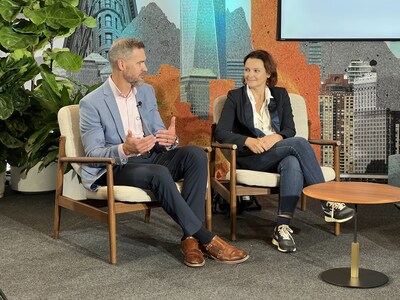
Kellanova, Vice President and Chief Research and Development Officer, Dr. David Lestage, shares insights on how collaborative resilience, science, and technology are paramount in building resilient food systems.
Artificial intelligence (AI) is a powerful accelerant in this shift. What once seemed futuristic is quickly becoming a reality: digital twins that anticipate vulnerabilities, sensors that monitor ecosystems in real-time, and autonomous systems that construct renewable infrastructure. AI is helping us move beyond simply understanding climate risk to actively designing resilience. It is pushing the pace in ways humanity has not managed before.
And yet, technology alone will not carry us forward. Resilience is not invented in a lab or engineered in isolation. It is built on the connections between us — across industries, geographies, and disciplines. Companies cannot do this alone. Coalitions will define the future, and collaboration is no longer optional; it is essential.
One of the most overlooked yet powerful actors in this story is the consumer. Innovation is not just an invention; it is adoption. A farmer can change their practices, a company can redesign its products, and policymakers can shape incentives. But resilience only takes root if consumers choose it. Every purchase is a signal to the market: to reward sustainable practices, to normalize new foods, to hold companies accountable. Our challenge, and our opportunity, is to meet people where they are and design foods that make the sustainable choice also the most delicious, convenient, and affordable. When consumers move, the system moves.
At Kellanova, we've seen the power of working in coalition, and it is a key pillar of how we're bringing our Better Days Promise to life. For example, our Origins program brings NGOs, governments, suppliers, and academics together to source key ingredients more sustainably and equitably. These efforts are not simply projects; they are proof that resilience happens when value is shared across the chain, not hoarded at the top.
Still, barriers remain. Regulations rooted in the 1930s often block the use of better-for-you or more sustainable ingredients. Approval processes for novel foods can stretch for years, discouraging investment and slowing innovation. Outdated standards create confusion instead of clarity. If we want a food system that reflects today's realities, regulation must evolve alongside innovation.
Finance is another barrier. Resilience requires new models of co-investment, where the risks and rewards of transformation are shared. Last year, we collaborated with agribusiness
With ADM, we've invested in regenerative cotton across the
Building resilience is not just about science or business; it's about embracing a holistic approach. It is about trust, urgency, and shared accountability. It's about ensuring that global goals translate into local action, that smallholder farmers are equipped with the necessary tools and training, and that metrics are standardized so that progress can be measured and scaled. It's about designing a food system that can withstand volatility while nourishing billions of people.
A single company, invention, or regulation will not define the future of food. It will be determined by how quickly we can connect science, innovation, and technology into a system built for resilience. That convergence is no longer theoretical — it's happening now.
About Kellanova
Kellanova (NYSE: K) is a leader in global snacking, international cereal and noodles, and
At Kellanova, our purpose is to create better days and ensure everyone has a seat at the table through our trusted food brands. We are committed to promoting sustainable and equitable food access by tackling the crossroads of hunger, sustainability, wellbeing, and equity, diversity & inclusion. Our goal is to create Better Days for 4 billion people by the end of 2030 (from a 2015 baseline). For more detailed information about our commitments, our approach to achieving these goals, and methodology, please visit our website at https://www.kellanova.com.
 View original content to download multimedia:https://www.prnewswire.com/news-releases/building-resilient-food-systems-302585736.html
SOURCE Kellanova
FAQ
AI-generated questions and answers. How Rhea-AI works. Not financial advice.