
Keysight Addresses Cross-Domain Physics Issues That Leave Electronic Designs Vulnerable to Late-Stage Failure
Keysight Technologies (NYSE: KEYS) introduced Keysight Multiphysics, a design and verification solution that integrates physics simulation into electronic engineering workflows to address cross-domain effects that can cause late-stage product failures.




Solution built to streamline design complexity launches its first application targeting structural analysis
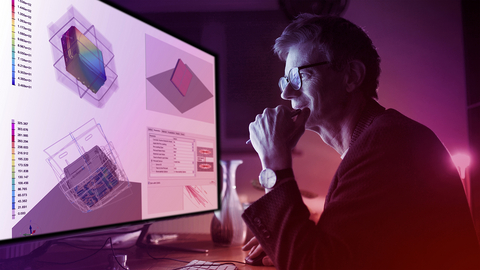
Keysight targets cross-domain physics effects that leave electronic designs vulnerable to late-stage failure.
Electronic products are growing in complexity faster than traditional engineering workflows can scale. As electrical, thermal, mechanical, and optical elements are compressed into tighter, more integrated designs, the physics interactions between them create failure risks that cannot be evaluated in isolation. Physics effects in one domain can produce unintended outcomes in another, and those interdependencies are rarely caught until the physical product is built, when the cost of redesign is highest and projects often miss deadlines and exceed budgets.
Keysight Multiphysics integrates physics simulation into the electronic engineering workflow, completing in hours a process that traditionally takes weeks. The first release addresses structural analysis and includes compliance simulation for drop, shock, and vibration. Previously, this step required building numerous physical prototypes for testing in an external lab, committing design and manufacturing tooling before identifying potential failures. Pre-built application templates embed setup expertise directly into the workflow, improving simulation fidelity. This allows teams to avoid late-stage failures without requiring a computer-aided engineering (CAE) specialist.
Key application benefits:
- Faster time to insight: Simulation-driven development helps teams reduce physical prototype iterations and identify reliability issues earlier in the design cycle.
- Lower redesign cost: Drop, shock, and vibration simulation enables engineers to locate where failures originate and make targeted corrections earlier in development.
- Increased design confidence: An application-specific database, expanded to include modern electronic materials, helps engineers model component behavior under realistic operating conditions.
- Broader access to simulation: A guided workflow interface embeds application expertise for each use case directly into the process, enabling engineers to confidently evaluate product reliability without specialist CAE skills.
- More time for engineering: Automated setup workflows eliminate manual configuration tasks traditionally required for structural simulation.
- Accelerated regulatory sign-off: Built-in compliance workflows support MIL-STD, IEC, and JEDEC standards for shock, drop, and vibration.
Niels Faché, Senior Vice President, Keysight Design Engineering Software, said: “Complexity now defines electronic design. Engineers used to treat electrical, thermal, and mechanical effects as separate problems. That approach can no longer keep pace. We built Keysight Multiphysics by working through the very problems our own engineers faced, giving teams a digital thread to detect failures earlier and more predictably."
Resources
- Web Page: Keysight Multiphysics
- White Paper: Shifting Reliability Left: Guided Virtual Validation for Electronics Shock and Drop Testing
- Video: Introducing Keysight Multiphysics
About Keysight Technologies
At Keysight (NYSE: KEYS), we inspire and empower innovators to bring world-changing technologies to life. As an S&P 500 company, we’re delivering market-leading design, emulation, and test solutions to help engineers develop and deploy faster, with less risk, throughout the entire product life cycle. We’re a global innovation partner enabling customers in communications, industrial automation, aerospace and defense, automotive, semiconductor, and general electronics markets to accelerate innovation to connect and secure the world. Learn more at Keysight Newsroom and www.keysight.com.
View source version on businesswire.com: https://www.businesswire.com/news/home/20260721366524/en/
Keysight Media Contacts
Andrea Mueller
Americas
andrea.mueller@keysight.com
Fusako Dohi
Asia
fusako_dohi@keysight.com
Jenny Gallacher
Europe
jenny.gallacher@keysight.com
Source: Keysight Technologies