
Lockheed Martin-Built GOES-U Weather Satellite Successfully Launched
On June 25, 2024, Lockheed Martin announced the successful launch of the GOES-U weather satellite from NASA's Kennedy Space Center, marking the completion of NOAA's GOES-R series.
Sentiment and the balance of points
Rhea-AI Sentiment reads the wording of the document, how positive or negative its language is on a 1 to 5 scale. The balance of points shown with the takes weighs what the document actually discloses, so the two can disagree, for example when a trial that missed its main goal is described in upbeat language.
Rhea-AI Summary
On June 25, 2024, Lockheed Martin announced the successful launch of the GOES-U weather satellite from NASA's Kennedy Space Center, marking the completion of NOAA's GOES-R series. Lifted by a SpaceX Falcon Heavy rocket, the satellite deployed its solar array and established communications. GOES-U will be renamed GOES-19 and will provide advanced weather imagery, atmospheric measurements, and lightning mapping over North America's East Coast. Lockheed Martin's Advanced Technology Center designed key instruments, including the Geostationary Lightning Mapper and Solar Ultraviolet Imager, enhancing weather forecasting and space weather monitoring. NOAA manages the GOES-R series, with NASA overseeing spacecraft and instrument development. Post-GOES-U, Lockheed Martin will develop the GeoXO constellation for NOAA, offering more accurate weather forecasting into the 2030s.
Positive
- Successful launch of GOES-U satellite, completing NOAA's GOES-R series.
- Enhanced weather forecasting and severe storm tracking capabilities with advanced instruments.
- Lockheed Martin's selection for the development of the GeoXO constellation, indicating future business opportunities and sustained revenue.
Negative
- None.
Details
News Market Reaction – LMT
The recorded move for LMT in the trading session of this news was -0.23%.
Data tracked by StockTitan Argus. Session date unavailable.
AI-generated analysis. How Rhea-AI works. Not financial advice.




NOAA's newest satellite will complete the GOES-R series and provide critical weather and climate data
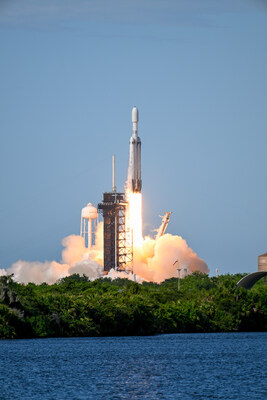
GOES-U is the final satellite in NOAA's Geostationary Operational Environmental Satellites (GOES) - R series of four satellites. After it reaches geostationary orbit, approximately two weeks after launch, GOES-U will be renamed GOES-19. Once in operations over the East Coast of
"The launch of GOES-U is the culmination of more than 16 years of designing, building and launching four important weather satellites for our nation," said Jagdeep Shergill, GOES-U program manager and director of Geo Weather Programs at Lockheed Martin. "Since the launch of the first GOES-R satellite, our nation has had more accurate weather forecasts and more timely severe storm warnings, and this critical service has positively affected everyone in the
NOAA's GOES-R satellites, and soon GOES-U, provide crucial data for weather forecasting, severe storm tracking and climate monitoring. With their advanced instruments and rapid updates, they improve detection of atmospheric phenomena like hurricanes, wildfires and lighting. This real-time data aids the National Weather Service and meteorologist in early warnings, disaster preparedness and resource management, ultimately saving lives and mitigating economic losses.
The GOES-U spacecraft features two high-tech instruments built by Lockheed Martin's Advanced Technology Center in Palo Alto,
- Geostationary Lightning Mapper (GLM), which is a first-of-its-kind operational lightning mapper that tracks lightning across the U.S. in real-time. GLM allows meteorologists to quickly identify intensifying storms and take appropriate action. In 2020, GLM captured a lightning megaflash nearly 500 miles long that broke the world record for longest lightning flash.
- Solar Ultraviolet Imager (SUVI), focuses on space weather and measures the sun in extreme ultraviolet wavelength range. SUVI is essential to understanding active areas on the sun and predicting solar events that may disrupt power utilities, communication or navigation systems here on Earth.
GOES-U is the final satellite of the GOES-R series which will provide critical weather and climate date into the 2030s. Following GOES-U, Lockheed Martin was selected by NASA to develop the nation's next generation weather satellite constellation, Geostationary Extended Observations (GeoXO), for NOAA. GeoXO's new capabilities will deliver more accurate weather forecasting and address emerging environmental issues and challenges. GeoXO, the GOES-R series and the nation's weather satellites are vital infrastructure for national resilience.
NOAA funds, manages and will operate the GOES-R series satellites. NASA oversees the acquisition and development of the GOES-R spacecraft, instruments and launch vehicles. The program is co-located at NASA's Goddard Space Flight Center in
Check out additional GOES-U imagery here and b-roll video here.
About Lockheed Martin
Lockheed Martin is a global defense technology company driving innovation and advancing scientific discovery. Our all-domain mission solutions and 21st Century Security® vision accelerate the delivery of transformative technologies to ensure those we serve always stay ahead of ready. More information at Lockheedmartin.com.
 View original content to download multimedia:https://www.prnewswire.com/news-releases/lockheed-martin-built-goes-u-weather-satellite-successfully-launched-302182604.html
SOURCE Lockheed Martin
FAQ
AI-generated questions and answers. How Rhea-AI works. Not financial advice.