
Mobileye Achieves First TÜV SÜD Inspection Certificate for ADAS Development
The independent assessment covers development-process safeguards for risks that can arise even when a system operates as designed.
Sentiment and the balance of points
Rhea-AI Sentiment reads the wording of the document, how positive or negative its language is on a 1 to 5 scale. The balance of points shown with the takes weighs what the document actually discloses, so the two can disagree, for example when a trial that missed its main goal is described in upbeat language.


Independent audit confirms Mobileye’s automatic emergency braking development process conforms with ISO 21448
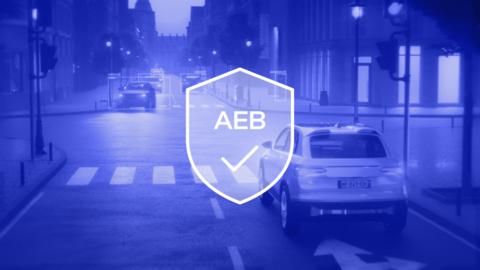
The independent audit by TÜV SÜD inspected that Mobileye’s AEB development process conforms with ISO 21448, the international Safety of the Intended Functionality, or SOTIF, standard for automotive software. The assessment reviewed Mobileye’s AEB development process and the measures used to identify, evaluate and mitigate risks that can arise even when a system is operating as designed. These include the limitations inherent in sensors, perception systems and the real-world conditions in which advanced driver-assistance systems operate.
In a rapidly evolving driver-assistance market, safety validation requires more than extensive road experience or accumulated driving distance. Mobileye builds its approach on disciplined, documented and independently assessed practices designed to identify and address foreseeable risks before deployment. TÜV SÜD’s inspection certificate provides third-party confirmation that Mobileye’s AEB development process meets the requirements of ISO 21448.
AEB is designed to help mitigate or avoid certain frontal collisions by warning the driver and, when appropriate, automatically applying the brakes. Because the function must interpret a wide range of road users, objects and driving environments, its safety depends not only on the absence of hardware or software faults, but also on a structured approach to the intended functionality of the system. TÜV SÜD’s inspection certificate places Mobileye’s longstanding AEB safety-development practices in the framework of ISO 21448, raising the industry standard for safety development processes.
“Mobileye has developed and deployed driver assistance technology for more than two decades, and safety has always been central to how we design and validate these systems,” said Almog Shany, Safety Officer at Mobileye. “TÜV SÜD’s inspection certificate provides an independent view of the rigor behind that process and gives our customers additional confidence in the safety approach supporting our AEB function. Independent validation helps build trust by providing an objective review of repeatable processes, systematic risk assessment and clear engineering accountability for safety.”
The assessment is specific to Mobileye’s AEB development process. At the same time, the underlying safety processes assessed by TÜV SÜD are part of Mobileye’s broader approach to developing driver-assistance and autonomous-vehicle technologies. SOTIF complements functional-safety disciplines by addressing hazards that may result from performance limitations or reasonably foreseeable misuse, rather than failures alone. As driver-assistance functions become more capable and operate in increasingly varied conditions, this distinction is becoming more important for automakers, suppliers and regulators.
Mobileye previously received a TÜV SÜD recommendation for its Safety Management System for SAE Level 4 autonomous systems, covering Mobileye’s safety-management framework for autonomous vehicles using the Mobileye Drive™ system.
___________________________________ |
Mobileye (Nasdaq: MBLY) leads the mobility revolution with our autonomous driving and driver-assistance technologies, harnessing world-renowned expertise in artificial intelligence, computer vision and integrated software and hardware. Since our founding in 1999, Mobileye has enabled the global adoption of advanced driver-assistance systems that save countless lives and reduce crashes, while pioneering groundbreaking technologies such as REM™ crowdsourced road intelligence, Imaging Radar and Compound AI. These technologies drive the ADAS and AV fields towards the future of mobility – enabling self-driving vehicles and mobility solutions at scale, and powering industry-leading ADAS products. To date, more than 250 million vehicles worldwide have been built with Mobileye’s EyeQ technology inside. In 2026, Mobileye acquired Mentee Robotics to pursue the future of physical AI and humanoid robots. Since 2022, Mobileye has been listed independently from Intel (Nasdaq: INTC), which retains majority ownership. For more information, visit https://www.mobileye.com.
“Mobileye,” the Mobileye logo and Mobileye product names are registered trademarks of Mobileye Global. All other marks are the property of their respective owners.
View source version on businesswire.com: https://www.businesswire.com/news/home/20261022351100/en/
Media Contact: Justin Hyde, justin.hyde@mobileye.com
Source: Mobileye