
MiniMed launches Instinct sensors in Europe giving people with diabetes more sensor choice with the same proven outcomes
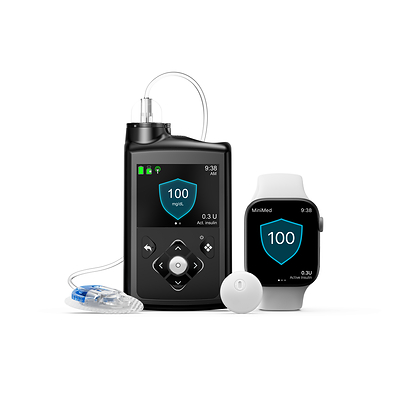
MiniMed (Nasdaq: MMED) launched in Europe the MiniMed™ 780G system integrated with the 15-day Instinct sensor and the MiniMed Go™ system integrated with the Instinct Go sensor, both made by Abbott.
Sentiment and the balance of points
Rhea-AI Sentiment reads the wording of the document, how positive or negative its language is on a 1 to 5 scale. The balance of points shown with the takes weighs what the document actually discloses, so the two can disagree, for example when a trial that missed its main goal is described in upbeat language.
Rhea-AI Summary
MiniMed (Nasdaq: MMED) launched in Europe the MiniMed™ 780G system integrated with the 15-day Instinct sensor and the MiniMed Go™ system integrated with the Instinct Go sensor, both made by Abbott.
CE-marked Instinct sensors expand MiniMed's portfolio, offering smaller, longer-wear CGM options with clinical data showing high Time in Range and strong overnight control.
Positive
- Commercial launch of Instinct and Instinct Go sensors across European markets
- MiniMed™ 780G system now compatible with 15-day Instinct sensor
- CE mark approval obtained for Instinct sensors integration with MiniMed systems
- Real-world data show many MiniMed™ 780G users reach 80% Time in Range
- Study of 8,019 users reports 91% overnight Time in Range with MiniMed™ 780G
- Randomized crossover study shows similar glycemic outcomes with Instinct and Simplera Sync™ sensors
Negative
- None.
Details
News Market Reaction – MMED
On Jun 23, the day this news came out, MMED closed 3.38% below the previous close.
Data tracked by StockTitan Argus for the Jun 23 session.
Key Figures
- Pre-meal bolus window
- 15–20 minutes
- Recommended timing before meals to help control post-meal glucose
- Sensor wear duration
- 15 days
- Instinct sensor wear time in MiniMed 780G integration
- Real-world users
- Over 20,000 users
- U.S. MiniMed 780G real-world analysis sample size
- Guideline Time in Range
- 70% TIR
- ADA and international consensus guideline benchmark
- Achieved Time in Range
- 80% TIR
- Many MiniMed 780G users with optimal settings
- Overnight Time in Range
- 91% TIR
- Overnight TIR in 8,019 U.S. MiniMed 780G users
- Real-world cohort size
- 8,019 users
- U.S. MiniMed 780G overnight Time in Range analysis
- Optimal AIT setting
- 2 hours
- Active Insulin Time used >95% of the time for optimal results
Historical Context
-
U.S. launch of MiniMed Flex pump paired with Simplera Sync sensor.
-
Expanded Abbott agreement for dual glucose-ketone sensors for MiniMed systems.
-
Strong Q4 and FY26 revenue growth with FY27 outlook and margin targets.
-
Showcase of MiniMed Flex and MiniMed Go at ADA Scientific Sessions.
-
Participation in Goldman Sachs Global Healthcare Conference fireside chat.
24h Move is the share-price change in the day after each event; other market factors may also have contributed.
Key Terms
randomized crossover study medical
real-world analysis medical
time in range (tir) medical
ce mark approval regulatory
continuous glucose monitoring (cgm) medical
AI-generated analysis. How Rhea-AI works. Not financial advice.




MiniMed automated insulin delivery and smart MDI systems can now be paired with Instinct and Instinct Go, made by Abbott, the smallest, longest-wear sensors in the company's portfolio
"People with diabetes should not have to choose between flexibility and performance when managing their diabetes — and with MiniMed, they don't have to," said Que Dallara, CEO, MiniMed. "Expanding our sensor portfolio across
For people with type 1 diabetes, accurately counting carbs and remembering to take insulin up to 15 minutes before meals can be challenging, often leading to post-meal blood glucose spikes when doses are delayed, missed, or underestimated.
The MiniMed™ 780G system is the only system with Meal Detection™ technology* designed to reduce post-meal blood glucose spikes when users occasionally forget to bolus or underestimate carbs. Paired with the 15-day Instinct sensor—the world's smallest, thinnest, and most discreet sensor with demonstrated strong glucose accuracy1,2—the MiniMed™ 780G system offers greater choice and flexibility while maintaining proven clinical performance. Recent data from a new randomized crossover study, published in Diabetes Technology & Therapeutics, demonstrated glycemic outcomes were virtually identical when using the MiniMed™ 780G system with either the Simplera Sync™ sensor or Instinct sensor. These results were reinforced by a real-world analysis of over 20,000
Clinical and real-world evidence suggest that the MiniMed™ 780G system can help people with type 1 diabetes achieve consistent glycemic control that substantially exceeds ADA and international consensus guidelines of
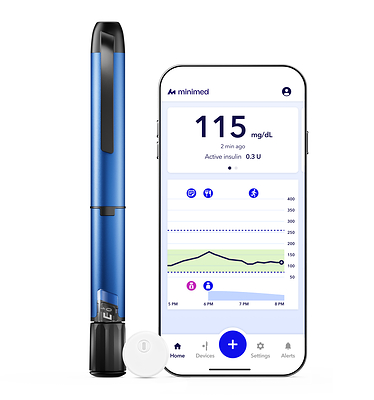
For people using multiple daily injections (MDI), diabetes management remains fragmented across disconnected tools, creating constant "mental math" in daily life. The MiniMed Go™ system integrated with the Instinct Go sensor brings it all together in one place. It is the first solution to combine dose tracking with the InPen™ smart insulin pen and real-time CGM data, addressing the therapy adherence gap for MDI users by providing real-time alerts and actionable insights on a single mobile app when doses are missed or blood glucose spikes – helping MDI users stay on top of their diabetes with less effort.
"People with diabetes have different preferences, lifestyles, and needs, which is why choice matters," said Professor Amir Tirosh of Sheba Medical Center and
The Instinct and Instinct Go sensors begin rolling out across European markets this month following CE mark approval earlier this year for integration with the two systems.
Frequently Asked Questions
Q: What is the MiniMed™ 780G system?
A: It's MiniMed's most advanced automated insulin delivery system that automatically adjusts insulin every five minutes based on real-time glucose readings, helping reduce highs and lows and making diabetes management easier and less time-consuming.§
Q: What is the MiniMed Go™ system?
A: The MiniMed Go™ system is a smart diabetes management solution that connects the InPen™ smart insulin pen with either the Simplera™ sensor or Instinct Go sensor, made by Abbott, through the single MiniMed Go™ app. It provides real-time glucose data, dose calculations, missed dose alerts, and actionable guidance, making MDI therapy easier and more connected.
Q: What makes the Instinct sensor different?
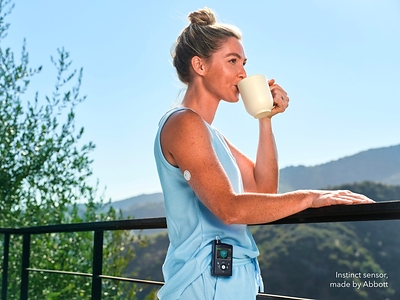
A: The Instinct sensor, made by Abbott, is easy to use and comfortable to wear8 for up to 15 days. It's the world's smallest1,2, thinnest1 and most discreet2 sensor and is designed to work exclusively with MiniMed smart dosing systems.
*Taking a bolus 15 – 20 minutes before a meal helps to keep blood sugar levels under control after eating.
** Overnight period: 12:00 AM- 6:00 AM [24:00 h–06:00 h]. CareLink™ data including CGM metrics, alarms/alerts, and insulin delivery were evaluated in 8019 US MiniMed™ 780G system users (aged ≥7 years, as of 6 November 2023) who transitioned from the MiniMed™ 770G system and had ≥14 nights of CGM data on both systems. CareLink™ data were analysed between 26 February 2023, and 21 October 2023, for MiniMed™ 770G users, and between 8 August 2023, and 6 November 2023, for MiniMed™ 780G users.
§ Refers to SmartGuard™ feature. Individual results may vary
^ Due to inherent analysis limitations, caution is advised when attempting to extrapolate these results to new patients. There could be significant differences.
∞ Reached using optimal settings, Optimal settings are glucose target at 100 mg/dL (5.5 mmol/L) and Active Insulin Time (AIT) at 2 hours and used >
The sensor shape and appearance, Abbott, and "a" logo are marks and/or designs of the Abbott group of companies in various territories and used under license. Sensor image © 2026 Abbott. ™* Third–party brands are trademarks of their respective owners.
- Among patient-applied sensors.
- Data on file. Abbott Diabetes Care, Inc.
- Thrasher JR, Arrieta A, Niu F, Cameron KR, Cordero TL, Shin J, Rhinehart AS, Vigersky RA. Early Real-World Performance of the MiniMed™ 780G Advanced Hybrid Closed-Loop System and Recommended Settings Use in
the United States . Diabetes Technol Ther. 2024 Mar;26(S3):24-31. doi: 10.1089/dia.2023.0453. PMID: 38377317 - Choudhary P, Arrieta A, van den Heuvel T, Castañeda J, Smaniotto V, Cohen O. Celebrating the Data from 100,000 Real-World Users of the MiniMed™ 780G System in
Europe ,Middle East , and Africa Collected Over 3 Years: From Data to Clinical Evidence. Diabetes Technol Ther. 2024 Mar;26(S3):32-37. doi: 10.1089/dia.2023.0433. PMID: 38377326; PMCID: PMC10890936. - McVean, et al. . Diabetes Obes Metab. 2026;28(3):2456-2460
- Laron-Hirsch, M., et al. Glycemic concordance of Simplera Sync™ and Instinct sensors in MiniMed™ 780G system users: A randomized crossover feasibility study. Diabetes Technology and Therapeutics. DOI:10.1177/15209156261449884
- Data on file.
- Alva, Shridhara, Ronald Brazg, Kristin Castorino, Mark Kipnes, David R. Liljenquist, and Hanqing Liu. "Accuracy of the Third Generation of a 14-Day Continuous Glucose Monitoring System." Diabetes Therapy 14, no. 4 (2023): 767-776. https://doi.org/10.1007/s13300-023-01385-6.
About MiniMed
MiniMed is a global leader in insulin delivery, constantly advancing therapies that support people with diabetes in more than 80 countries. Our full-stack, integrated ecosystem, including our insulin delivery systems, CGMs, algorithms, and easy-to-use app experience, is designed to work seamlessly together, supported by white-glove, wrap-around service. For over 40 years, we've pioneered therapies people can rely on by anticipating needs, reducing burden, and helping make life with diabetes easier. Our mission is to make every day a better day for people with diabetes.
Any forward-looking statements are subject to risks and uncertainties such as those described in MiniMed's periodic reports on file with the Securities and Exchange Commission. Actual results may differ materially from anticipated results.


 View original content to download multimedia:https://www.prnewswire.com/news-releases/minimed-launches-instinct-sensors-in-europe-giving-people-with-diabetes-more-sensor-choice-with-the-same-proven-outcomes-302806652.html
SOURCE MiniMed
FAQ
AI-generated questions and answers. How Rhea-AI works. Not financial advice.