
FDA Approves Merck’s Once-Daily IDVYNSO™ (doravirine/islatravir)
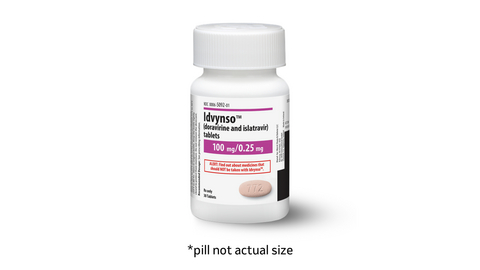
Merck (NYSE: MRK) announced FDA approval of IDVYNSO (doravirine 100 mg / islatravir 0.25 mg), a once-daily, two-drug single-tablet regimen for adults with virologically suppressed HIV-1 and no history of treatment failure or doravirine resistance.




IDVYNSO is approved for adults with virologically suppressed HIV-1 with no history of virologic treatment failure and no known substitutions associated with resistance to doravirine
IDVYNSO is the first and only non-INSTI, tenofovir-free, once-daily, complete two-drug regimen to demonstrate non-inferior efficacy in a head-to-head Phase 3 trial versus three-drug regimen BIKTARVY®i (BIC/FTC/TAF)
“Advances in HIV treatment mean more people living with HIV are living longer — a remarkable achievement,” said Carl Baloney, Jr., president and chief executive officer of AIDS United. “People aging with HIV face additional health challenges, including managing multiple chronic conditions and medications at the same time. It is essential that management of HIV considers these factors in addition to virologic suppression when choosing an HIV treatment regimen.”
“IDVYNSO combines islatravir, a next-generation NRTI with multiple mechanisms of action, including translocation inhibition, with doravirine, an NNRTI with an established efficacy and safety profile. As the only two-drug, non-INSTI, tenofovir-free regimen, IDVYNSO expands therapeutic diversity beyond the currently available oral treatment options,” said Dr. Eliav Barr, senior vice president and chief medical officer, Merck Research Laboratories. “As the health needs of adults living with HIV change over time, IDVYNSO gives clinicians a new choice for HIV treatment. This approval marks an important new chapter in Merck’s long-standing commitment to research and discovery for people living with HIV.”
IDVYNSO is a complete regimen; co-administration with other antiretroviral medications for treatment of HIV-1 infection is not recommended. Severe skin reactions, including Stevens-Johnson syndrome/toxic epidermal necrolysis, have been reported with doravirine-containing regimens. Drug Rash with Eosinophilia and Systemic Symptoms was reported with IDVYNSO. Concomitant use of IDVYNSO and certain other drugs may result in known or potentially significant drug interactions, some of which may lead to loss of therapeutic effect of IDVYNSO and possible development of resistance, or possible clinically significant adverse reactions from greater exposures of a component of IDVYNSO. See additional selected safety information on the following pages.
“IDVYNSO is the first non-INSTI, tenofovir-free, two-drug regimen to demonstrate non-inferior efficacy to standard oral antiretroviral regimens, including BIKTARVY. This makes IDVYNSO a potential alternative for people with virologically suppressed HIV who may need to switch their treatment,” said Dr. Amy Colson, director of research at Community Resource Initiative,
Phase 3 studies supporting approval of IDVYNSO
The efficacy and safety of IDVYNSO is supported by Week 48 data from two randomized, active-controlled, non-inferiority trials [Trial 052 (NCT05630755) and Trial 051 (NCT05631093)] in virologically-suppressed (HIV-1 RNA less than 50 copies per mL) adults living with HIV. Participants must have been stably suppressed on their baseline regimen for at least 3 months prior to trial entry and had no history of treatment failure. Across the two trials, a total of 708 participants received once-daily IDVYNSO; of these, 81 (
In the double-blind Trial 052, participants were switched from BIKTARVY [bictegravir/emtricitabine/tenofovir alafenamide (BIC/FTC/TAF)] to IDVYNSO. A total of 513 participants were randomized (2:1) and were switched to once-daily IDVYNSO (n=342) or remained on BIC/FTC/TAF (n=171). At baseline, participants had a mean age of 48 years (range: 19 to 77),
In the open-label Trial 051, participants were switched from an oral ART (antiretroviral therapy) regimen to IDVYNSO. A total of 551 participants were randomized (2:1) and were switched to once-daily IDVYNSO (n=366) or remained on their baseline ART (bART) (n=185). Randomization was stratified by bART. At baseline, participants had a mean age of 50 years (range: 18 to 83),
Efficacy profile of IDVYNSO
IDVYNSO was non-inferior to BIC/FTC/TAF (in Trial 052) and bART (in Trial 051) as assessed by the proportion of participants with HIV-1 RNA ≥50 copies/mL at Week 48.
-
In the double-blind Trial 052, results for the primary endpoint (HIV-1 RNA ≥50 copies/mL) showed that
1% of participants who were switched to IDVYNSO (n=342) had a viral load of ≥50 copies/mL at Week 48, compared to1% who continued on BIC/FTC/TAF (n=171; treatment difference0.9% ,95% CI, -1.9% ,2.9% ). At Week 48, results from the secondary endpoint showed that92% of participants who switched to IDVYNSO maintained viral suppression (HIV-1 RNA <50 copies/mL) compared to94% of participants who continued receiving BIC/FTC/TAF.
-
In the open-label Trial 051, results for the primary endpoint (HIV-1 RNA ≥50 copies/mL) showed that
1% of participants who were switched to IDVYNSO (n=366) had a viral load of ≥50 copies/mL at Week 48, compared to5% who continued on bART (n=185; treatment difference -3.6% ,95% CI, -7.8% , -0.8% ). At Week 48, results from the secondary endpoint showed that96% of participants who switched to IDVYNSO maintained viral suppression (HIV-1 RNA <50 copies/mL) compared to92% of participants who continued on bART.
In both trials, treatment outcomes between treatment groups were similar across subgroups by age, sex and race, and in Trial 051, also by bART regimens. In participants aged 65 years and older who received IDVYNSO in both trials, no overall differences in safety or effectiveness were observed between these participants and younger participants, but greater sensitivity of some older individuals cannot be ruled out.
Safety and tolerability profile of IDVYNSO
The safety profile of IDVYNSO was generally comparable to BIC/FTC/TAF in Trial 052 and to oral bART regimens in Trial 051. In Trial 052, by Week 48,
The most common adverse reactions (all grades) reported in greater than or equal to
-
In Trial 052 (IDVYNSO vs BIC/FTC/TAF, respectively): diarrhea (
1% vs1% ), dizziness (1% vs0% ), fatigue (1% vs1% ), abdominal distention (1% vs0% ), headache (1% vs0% ), weight increase (less than1% vs0% ). -
In Trial 051 (IDVYNSO vs bART, respectively): diarrhea (
3% vs0% ), dizziness (2% vs1% ), fatigue (2% vs1% ), abdominal distention (2% vs0% ), headache (2% vs1% ), weight increase (2% vs0% ).
Trial participants taking IDVYNSO had minimal change in weight from baseline. The mean change in weight from baseline at Week 48 was -0.03 kg in the IDVYNSO group vs. 0.28 kg in the BIC/FTC/TAF group in Trial 052 and 0.94 kg in the IDVYNSO group vs. -0.15 kg in the bART group in Trial 051. Four of the six participants with adverse reactions of weight increased switched from a bART regimen containing efavirenz and/or tenofovir disoproxil fumarate in Trial 051.
The Merck Access Program for IDVYNSO
Merck offers support to individuals who are prescribed IDVYNSO, including information about individual insurance coverage and out-of-pocket costs, co-pay assistance for eligible, commercially insured individuals, and how individuals may access IDVYNSO through The Merck Access Program. For additional information, healthcare providers and individuals can call 1-877-709-4455 or visit merckaccessprogram-IDVYNSO.com.
About IDVYNSO
IDVYNSO is a fixed-dose combination of two medicines, doravirine with islatravir. Doravirine is a non-nucleoside reverse transcriptase inhibitor (NNRTI) that inhibits HIV-1 replication by non-competitive inhibition of HIV-1 reverse transcriptase. Islatravir is a potent, next-generation nucleoside analog reverse transcriptase inhibitor (NRTI) that blocks HIV-1 replication by multiple mechanisms including:
- inhibition of reverse transcriptase translocation, resulting in immediate chain termination, and
- induction of structural changes in the viral DNA (delayed chain termination).
Selected Safety Information for IDVYNSO
Contraindications
IDVYNSO is contraindicated when co-administered with:
- drugs that are strong cytochrome P450 (CYP)3A enzyme inducers as significant decreases in doravirine plasma concentrations may occur, which may decrease the effectiveness of IDVYNSO.
- lamivudine (3TC) or emtricitabine (FTC) as significant decreases in islatravir-triphosphate (ISL-TP) concentrations may occur, which may decrease the effectiveness of IDVYNSO. (See Drug Interactions)
Warnings and Precautions
Severe skin reactions, including Stevens-Johnson syndrome (SJS)/toxic epidermal necrolysis (TEN), have been reported during postmarketing experience with doravirine-containing regimens. In addition, Drug Rash with Eosinophilia and Systemic Symptoms (DRESS syndrome) was reported with IDVYNSO in a clinical trial. Discontinue IDVYNSO, and other medications associated with these reactions, immediately if a painful rash with mucosal involvement, a progressive severe rash, or a rash with constitutional symptoms, eosinophilia, lymphadenopathy, or other organ involvement develops. Close clinical monitoring, and appropriate therapy should be initiated.
The concomitant use of IDVYNSO and certain other drugs may result in known or potentially significant drug interactions, some of which may lead to loss of therapeutic effect of IDVYNSO and possible development of resistance and possible clinically significant adverse reactions from greater exposures of a component of IDVYNSO.
Consider the potential for drug interactions prior to and during IDVYNSO therapy, review concomitant medications during IDVYNSO therapy, and monitor for adverse reactions. (See Drug Interactions)
Adverse Reactions
The most common adverse reactions (incidence ≥
A single case of severe immune thrombocytopenia (platelet count nadir of 2 x10⁹/L) characterized by abrupt onset of subcutaneous hematoma, petechiae, and hematuria was reported in a participant 32 days after initiating IDVYNSO. The case resolved with discontinuation of IDVYNSO, in conjunction with treatments including corticosteroids and IVIG. Among all participants in Trials 052 and 051, there were no patterns of platelet decreases over time with IDVYNSO and no differences between treatment arms in mean change from baseline in platelet count.
Drug Interactions
IDVYNSO is a complete regimen; co-administration with other antiretroviral medications for treatment of HIV-1 infection is not recommended.
Co-administration of IDVYNSO with a CYP3A inducer decreases doravirine plasma concentrations, which may reduce the efficacy of IDVYNSO. If IDVYNSO is co-administered with rifabutin, one tablet of doravirine should be taken approximately 12 hours after the dose of IDVYNSO. Co-administration of IDVYNSO with other moderate CYP3A inducers is not recommended.
Co-administration of IDVYNSO and drugs that are inhibitors of CYP3A may result in increased plasma concentrations of doravirine.
Co-administration of IDVYNSO is not recommended with deoxycytidine kinase (dCK) substrates (e.g., nucleoside antimetabolites) as they may reduce the exposure of islatravir-triphosphate or with adenosine deaminase (ADA) inhibitors (e.g., pentostatin) as they may increase the exposure of islatravir. (see Contraindications)
Use in Specific Populations
Clinical trials in virologically suppressed participants who received IDVYNSO included 81 (
IDVYNSO does not have activity against hepatitis B virus (HBV). Patients with HBV coinfection who switch to IDVYNSO from an antiretroviral regimen with activity against HBV, and patients on IDVYNSO who are newly diagnosed with HBV coinfection, should be closely monitored and specific anti-HBV therapy should be considered, as clinically appropriate.
Merck’s Commitment to HIV
For 40 years, Merck has been committed to scientific research and discovery in HIV leading to scientific breakthroughs that have helped change HIV treatment. Our work has helped pioneer the development of new options across multiple drug classes to help those impacted by HIV. Today, we are developing a series of antiviral options designed to help people manage HIV and protect people from HIV. We are researching for real life and want to ensure people are not defined by HIV. Our work focuses on transformational innovations, collaborations with others in the global HIV community and access initiatives aimed at helping to end the HIV epidemic for everyone.
About Merck’s HIV research
Islatravir is under evaluation in multiple ongoing early and late-stage clinical trials in combination with other antiretrovirals for potential once-weekly treatments for HIV-1, with islatravir serving as the anchor medicine in these two-drug regimens. Islatravir in combination with Gilead’s lenacapavir is in Phase 3 development as a novel oral once-weekly treatment for HIV-1 [ISLEND-1 (NCT06630286) and ISLEND-2 (NCT06630299)], and islatravir in combination with our company’s investigational non-nucleoside reverse transcriptase inhibitor (NNRTI) ulonivirine (MK-8507) is in Phase 2b development [MK-8591B-060 (NCT06891066) and MK-8591B-062 (NCT07266831)] as an oral once-weekly treatment.
MK-8527 is the company’s investigational, novel, once-monthly oral candidate for pre-exposure prophylaxis (PrEP) for HIV-1. In collaboration with the Gates Foundation, the Phase 3 EXPrESSIVE-10 trial (MK-8527-010, NCT07071623) is evaluating the safety and efficacy of MK-8527 as PrEP to reduce the risk of sexually acquired HIV-1 infection among women and adolescent girls in sub-Saharan Africa. The Phase 3 EXPrESSIVE-11 trial (MK-8527-011, NCT07044297) in 16 countries is evaluating the safety and efficacy of MK-8527 as PrEP to reduce the risk of sexually acquired HIV-1 infection among people likely to be exposed to HIV-1. Both trials are now enrolling.
For an overview of Merck’s HIV treatment and prevention clinical development program, please click here.
About Merck
At Merck, known as MSD outside of
Forward-Looking Statement of Merck & Co., Inc.,
This news release of Merck & Co., Inc.,
Risks and uncertainties include but are not limited to, general industry conditions and competition; general economic factors, including interest rate and currency exchange rate fluctuations; the impact of pharmaceutical industry regulation and health care legislation in
The company undertakes no obligation to publicly update any forward-looking statement, whether as a result of new information, future events or otherwise. Additional factors that could cause results to differ materially from those described in the forward-looking statements can be found in the company’s Annual Report on Form 10-K for the year ended December 31, 2025 and the company’s other filings with the Securities and Exchange Commission (SEC) available at the SEC’s Internet site (www.sec.gov).
Please see Prescribing Information for IDVYNSO™ (doravirine and islatravir) at https://www.merck.com/product/usa/pi_circulars/i/idvynso/idvynso_pi.pdf and Patient Information for IDVYNSO at https://www.merck.com/product/usa/pi_circulars/i/idvynso/idvynso_ppi.pdf.
i IDVYNSO™ is a trademark of Merck & Co., Inc. BIKTARVY is a registered trademark of Gilead Sciences Ireland UC.
View source version on businesswire.com: https://www.businesswire.com/news/home/20260421493721/en/
Media Contacts:
Melissa Moody
(215) 407-3536
Deb Wambold
(215) 779-2234
Investor Contacts:
Damini Chokshi
(732) 594-1577
Peter Dannenbaum
(732) 594-1579
Source: Merck & Co., Inc.