
Metalsource Mining Launches Major Step Out Program With 1.1 km Northern Target to Test Broader Scale of Silver Hill
The northern targets remain untested, and results from several completed drill holes are still pending.
Sentiment and the balance of points
Rhea-AI Sentiment reads the wording of the document, how positive or negative its language is on a 1 to 5 scale. The balance of points shown with the takes weighs what the document actually discloses, so the two can disagree, for example when a trial that missed its main goal is described in upbeat language.
Rhea-AI Summary
Metalsource Mining (MSMMF) has begun Phase 2 exploration drilling at Silver Hill to test previously undrilled targets beyond the known mineralization. Multiple targets identified by induced polarization (IP), an electrical survey used to locate potential mineralization, lie approximately 1,120 metres north of Silver Hill and are ready for drilling.
Hole SH26-34 visually intersected approximately 20 metres of mineralization in drill core, including multiple massive sulphide intervals; assays remain pending to determine grade and width. Near-mine drilling established mineralization continuity within a 100-square-metre block. Surface mineralization was also identified approximately 240 metres northeast of Silver Hill. Drilling production has tripled following the addition of a second rig and night shift. Metalsource plans larger step-outs north and south, with one rig focused on Silver Hill and the other testing targets along the broader trend.
How this balance works
Rhea-AI gives every point it takes from this document a weight. Minor counts 1, Moderate 3 and Major 9, so one Major point outweighs several Minor ones. The bar adds up the weights on each side, and when neither side holds more than 65% of the total the balance reads Mixed.
It reads the document as published, with the same rules for every company, and it does not look at what the market expected or at how the stock traded, so a point can be objectively good on a day the stock falls.
Rhea-AI Sentiment measures something else, the tone of the wording.
Hollow bars mark forward-looking points. How the balance works
Positive
- Moderate pointPhase 2 drilling has begun, expanding exploration to previously undrilled targets beyond Silver Hill.
- Moderate pointDrilling production tripled with a second rig and night shift supporting simultaneous near-mine and broader exploration.
- Minor pointNorthern IP targets approximately 1,120 metres away are ready for drill testing.
- Minor pointSH26-34 visually intersected approximately 20 metres of mineralization, including multiple massive sulphide intervals.
- Minor pointNear-mine drilling established mineralization continuity within a previously unexplored 100-square-metre block.
5 minor points
- Minor pointIP responses correlated with known mineralization, providing a targeting tool for exploration beyond the current footprint.
- Minor pointGold-silver-lead-zinc surface mineralization was identified approximately 240 metres northeast of Silver Hill; a drill pad is built.
- Minor pointSurface sample 1800N-2R returned 0.98 g/t gold, 61.10 g/t silver, 5,600 ppm lead and 8,390 ppm zinc.
- Minor pointSurface sample 1750N-3R returned 0.33 g/t gold, 21.40 g/t silver, 12,050 ppm lead and 16,050 ppm zinc.
- Minor point. Forward-looking: it has not happened yet and may not happen.Larger north and south step-outs are planned, alongside follow-up drilling around the northeastern surface mineralization.
Negative
- Minor point. Forward-looking: it has not happened yet and may not happen.Broader exploration targets remain untested; drilling is required to determine their significance.
- Minor pointAssays remain pending for several completed holes, including SH26-34, whose grade and width require analytical results.
- Minor point. Forward-looking: it has not happened yet and may not happen.Exploration results are preliminary and insufficient to define a mineral resource; further drilling must establish continuity, geometry and grade distribution.
AI-generated analysis. How Rhea-AI works. Not financial advice.




Phase 2 expands beyond Silver Hill proper while SH26-34 intersects approximately 20 metres of mineralization in drill core, including multiple massive sulphide intervals with assays pending. Surface mineralization and correlated IP anomalies strengthen the case for broader expansion.
Vancouver, British Columbia--(Newsfile Corp. - October 7, 2026) - Metalsource Mining Inc. (CSE: MSM) (OTCQB: MSMMF) (FSE: E9Z) ("Metalsource" or the "Company") is pleased to announce the commencement of Phase-2 Exploration Drilling at Silver Hill. Phase-2 exploration is designed to test a comprehensive dataset generated by the company from Q2 2026. Near-mine exploration drilling has associated an Induced Polarization (IP) response to massive sulfides and new anomalies have been generated via rock chip sampling of available subcrop. Together, these results provide Metalsource with an increasingly robust technical framework to step beyond Silver Hill proper and begin testing the broader scale of the system.
Key Highlights
- Major Exploration Expansion: Phase 2 marks a transition from predominantly near mine drilling toward increasingly larger step outs and the systematic testing of previously undrilled targets beyond Silver Hill proper.
- IP Signature Correlated with Known Mineralization: Near mine drilling has established a positive correlation between key IP responses and known Silver Hill mineralization, providing an important targeting tool as exploration expands beyond the current drilling footprint.
- Northern Targets Ready to Drill: Multiple high priority IP anomalies approximately 1,120 metres north of Silver Hill are ready for drill testing.
- Surface Mineralization Adds Another Vector: Gold, silver, lead and zinc mineralization identified in subcrop approximately 240 metres northeast of Silver Hill occurs on trend with northern IP anomalies, providing an additional geological vector for exploration.
- Expanded Drilling Capacity: Drilling production has tripled with the addition of a second rig and night shift, allowing one drill to continue expanding Silver Hill while the second tests targets along the broader trend.
Near-Mine IP Results Testing
Recent exploration drilling between SH26-05 and SH25-01 (near surface) established continuity of mineralization within a 100 square meter block of previously unexplored ground at Silver Hill. This work also tested IP data collected in the mine area. Results show there is a positive correlation between +25msec polarization and +2,000ohm-m conductivity with mineralization at Silver Hill. Polarization in this context represents the sulfides in the rock mass (Figure 1), while resistive rocks are interpreted to represent silicic alteration. This combination represents a meaningful target at Silver Hill, as demonstrated with the drilling results shown in Figure 2. SH26-34 (assay pending) intercepted approximately 20m of mineralization in drill core, including multiple intervals of massive sulfides (Figure 1).
Surface Mineralization
Project geologists have discovered gold-silver-lead-zinc mineralization in subcrop approximately 240m northeast of Silver Hill (Figure 4). The initial interpretation is the mineralization is in the footwall of the main Silver Hill mineralization, and potentially on trend with northern IP anomalies. A drill pad designed to test the near surface extent of this anomaly has been built, with drilling anticipated
Dale Moore, Head Geologist of Metalsource Mining, commented:
"The important development for us is that several independent datasets are beginning to converge. Drilling has established continuity within the known Silver Hill mineralization and has also helped us characterize the IP response associated with that mineralization. As we move outward, we are seeing prospective IP responses along trend, together with surface mineralization to the north, which gives us increasingly compelling targets to test. Historically, our drilling has concentrated primarily on areas where mineralization was already known. Phase 2 is fundamentally different. This next phase is designed to begin answering the larger question of just how extensive the Silver Hill system may be. We are now stepping beyond that footprint and testing previously undrilled targets to evaluate our current interpretation that the known Silver Hill mineralization may represent a smaller portion of a potentially broader mineralized system in late Q4 2026 or Q1 2027."
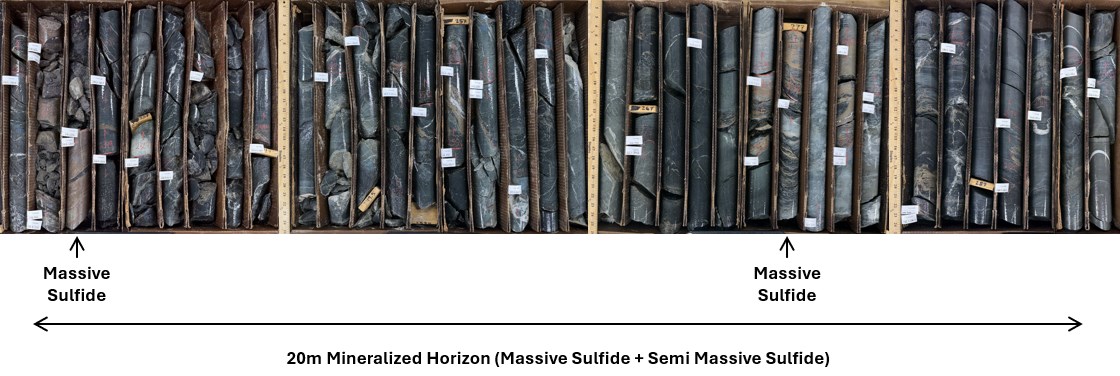
Figure 1: Panoramic view of mineralization intercepted in SH26-34
To view an enhanced version of this graphic, please visit:
https://images.newsfilecorp.com/files/12035/317833_338c5267948ca919_002full.jpg
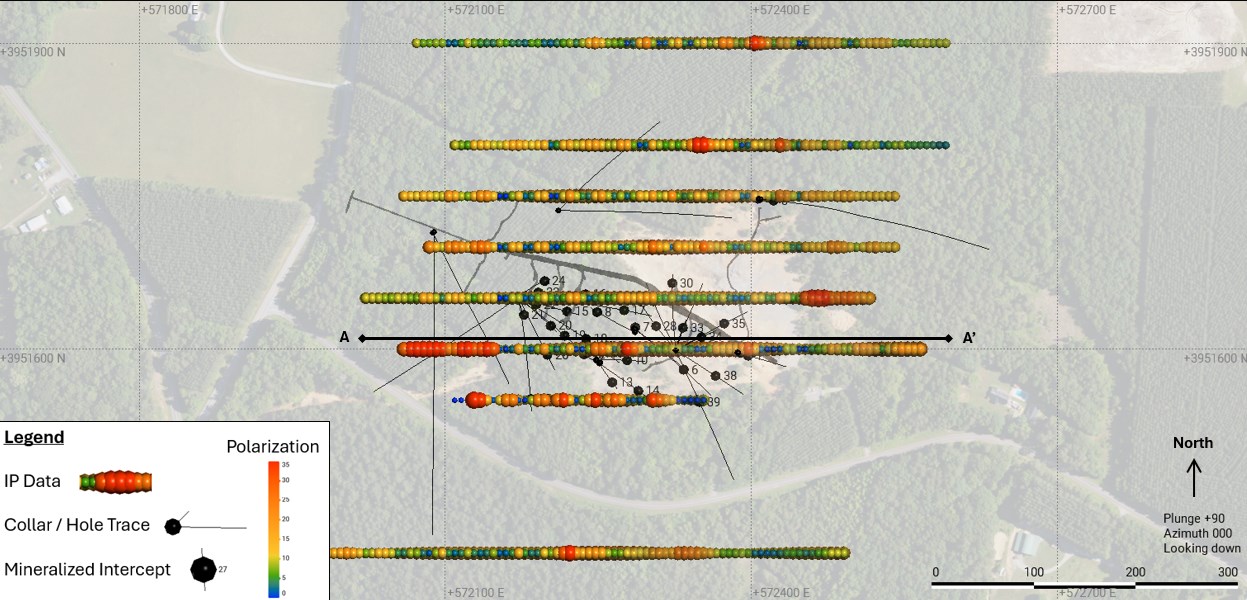
Figure 2: Plan view showing current drilling extent at Silver Hill.
To view an enhanced version of this graphic, please visit:
https://images.newsfilecorp.com/files/12035/317833_338c5267948ca919_003full.jpg
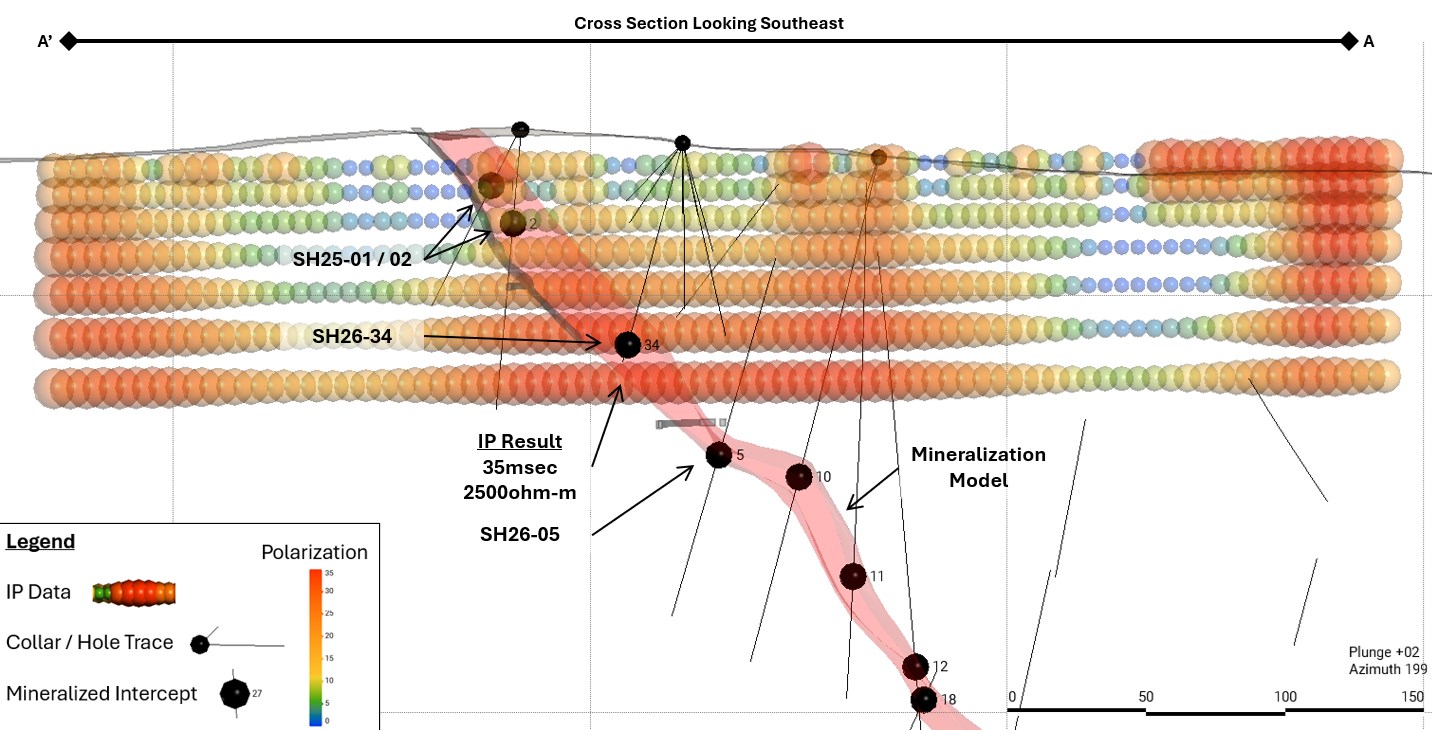
Figure 3: Cross section looking southeast (199°) showing mineralization relative to IP results. Note SH26-34 is adjacent IP result of 35msec (polarization) and 2500ohm-m (conductivity).
To view an enhanced version of this graphic, please visit:
https://images.newsfilecorp.com/files/12035/317833_338c5267948ca919_004full.jpg
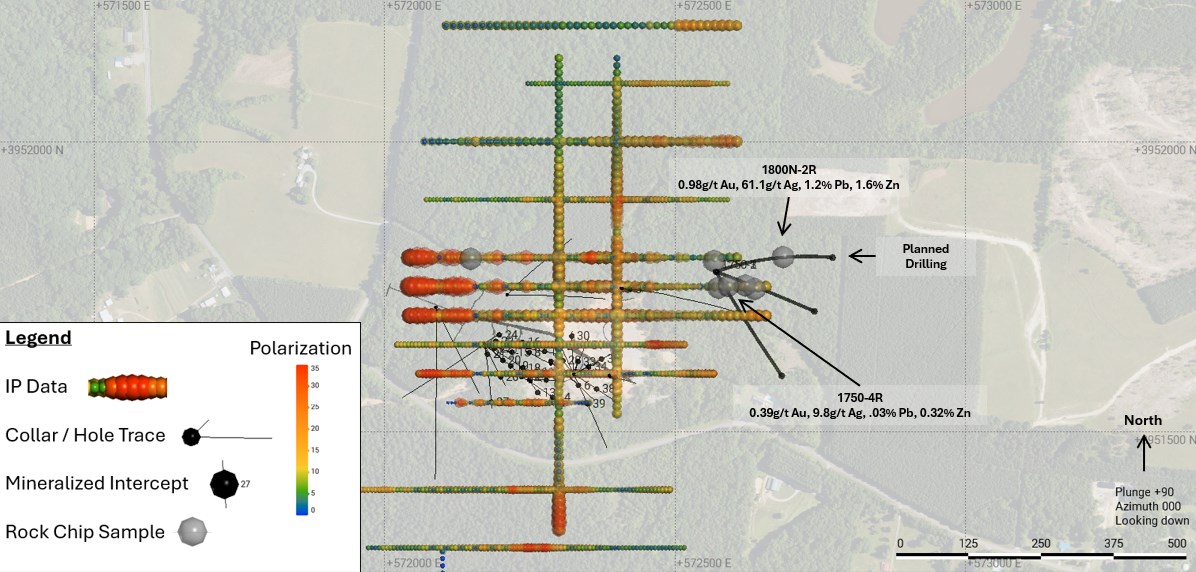
Figure 4: Plan view showing the location of surface mineralization relative to Silver Hill.
To view an enhanced version of this graphic, please visit:
https://images.newsfilecorp.com/files/12035/317833_338c5267948ca919_005full.jpg
| Easting | Northing | Elev. (m) | Sample ID | Au (g/t) | Ag (g/t) | Pb (ppm) | Zn (ppm) | Cu (ppm) |
| 572575 | 3951748 | 222 | 1750N-3R | 0.33 | 21.40 | 12,050 | 16,050 | 310 |
| 572591 | 3951751 | 231 | 1750N-4R | 0.39 | 9.75 | 253 | 3,200 | 588 |
| 572621 | 3951752 | 228 | 1750N-5R | 0.19 | 3.01 | 365 | 648 | 115.5 |
| 572637 | 3951746 | 223 | 1750N-6R | 0.12 | 4.23 | 557 | 2,550 | 284 |
| 572686 | 3951801 | 226 | 1800N-2R | 0.98 | 61.10 | 5,600 | 8,390 | 688 |
| 572567 | 3951794 | 213 | 1800N-6R | 0.03 | 12.35 | 6,820 | 12,600 | 6.4 |
| 572148 | 3951798 | 229 | 1800N-25R | 0.00 | 0.14 | 32 | 163 | 2.6 |
Table 1: Table of results showing rock chip assays from surface sampling of subcrop north of Silver Hill.
Northern IP Anomalies
Multiple prospective IP anomalies along the Silver Hill trend meet the threshold for targeting given the fingerprinting work discussed above. North of Silver Hill approximately 1,120m, multiple high-priority IP targets exist, and are ready to drill. Figure 5 shows the location of planned drilling relative to Silver Hill. Figure 6 shows a cross section of the anomaly with planned drill hole traces.
Increased Drill Production
Drilling production at Silver Hill has tripled, with the addition of a second drill rig, and a night shift. Drill 1 will remain focused on increasing the scale of mineralization at Silver Hill, while Drill 2 will focus on testing on trend targets.
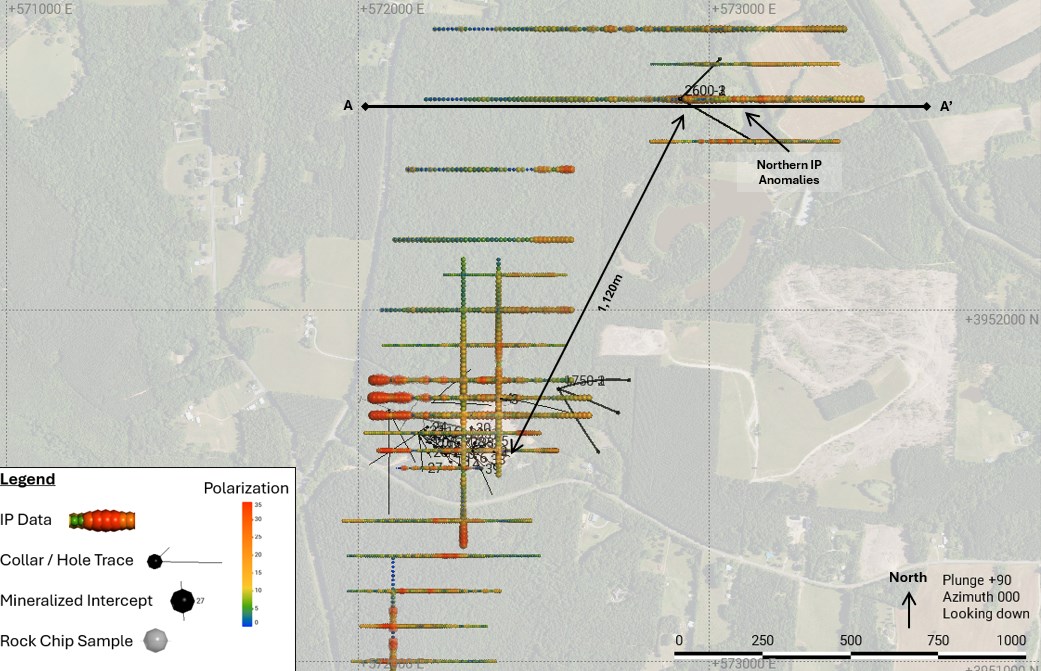
Figure 5: Plan view showing the location of planned exploration drilling designed to test northern IP anomalies.
To view an enhanced version of this graphic, please visit:
https://images.newsfilecorp.com/files/12035/317833_338c5267948ca919_006full.jpg
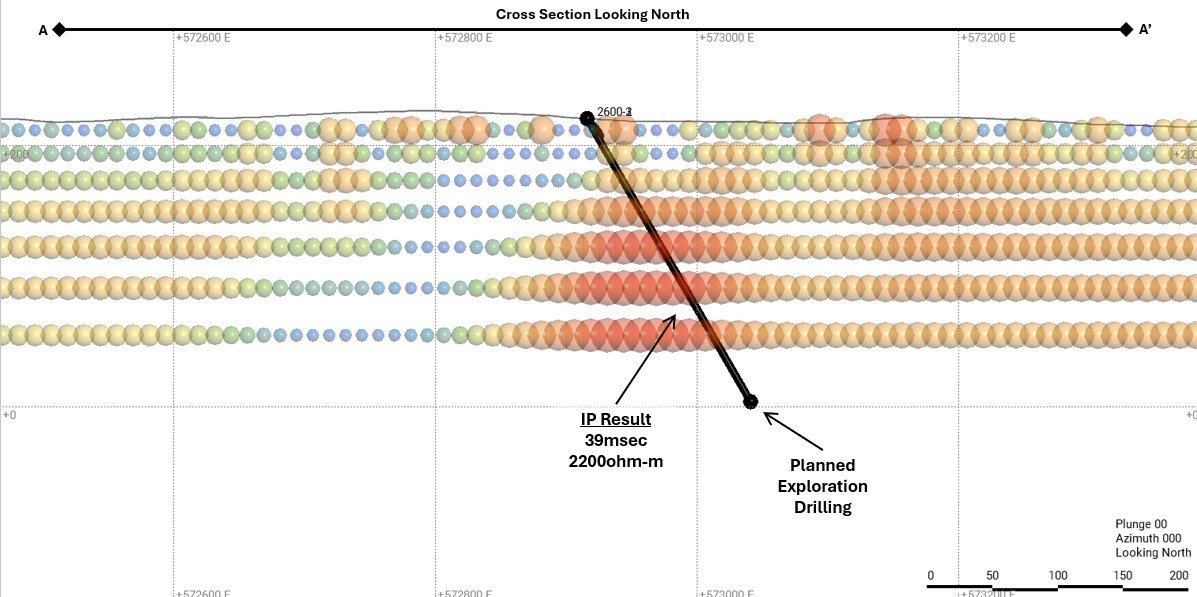
Figure 6: Cross section looking north showing IP anomaly relative to planned exploration drilling.
To view an enhanced version of this graphic, please visit:
https://images.newsfilecorp.com/files/12035/317833_338c5267948ca919_007full.jpg
Joe Cullen, CEO of Metalsource Mining, commented:
"This is the exploration phase we've been building toward all year. Drilling has given us increasing confidence in the grade and continuity at Silver Hill, while the convergence of drilling, surface mineralization and geophysics is giving us compelling targets well beyond the area explored to date. These targets remain untested, but the evidence gives us the confidence to become increasingly aggressive with our exploration.
"For nearly 200 years, Silver Hill has largely been understood through the historic mine and the mineralization immediately surrounding it. Phase 2 begins asking a much bigger question: what is the true scale of this system, and how far does it extend to the north and south? With two drills turning and multiple high priority targets ahead of us, we're now positioned to begin answering that question."
What's Next
- Increasingly Larger Step Outs: Metalsource plans to progressively increase the scale of step out drilling to the north and south, moving beyond the current footprint to test how far the Silver Hill system may extend.
- Testing the Broader Trend: Phase 2 will begin systematically testing high priority targets beyond Silver Hill proper, including previously undrilled IP anomalies farther along trend. The objective is to determine whether the known Silver Hill mineralization forms part of a broader mineralized system.
- Expanding the Northern Exploration Front: Follow up drilling is planned around the newly identified surface mineralization northeast of Silver Hill, while additional northern targets will be prioritized as geological, geophysical and drilling information continues to converge.
- Accelerating With Two Drills: Expanded drilling capacity allows Metalsource to pursue two objectives simultaneously: continue growing the known Silver Hill system while advancing increasingly aggressive exploration into new target areas.
- Multiple Assays Pending: Results remain outstanding from several completed holes, providing a continued pipeline of near term exploration data. This includes SH26-34, which visually intersected approximately 20 metres of mineralization containing multiple intervals of massive sulphides in drill core, with assays required to determine grade and width.
Why This Matters to Investors
Phase 2 marks a significant evolution in the Silver Hill story. Exploration to date has built confidence in the grade, continuity and geological character of the known system. That work has also established an increasingly strong geological and geophysical framework for targeting beyond the current drilling footprint, where surface mineralization and multiple high priority IP anomalies provide compelling targets across previously untested ground.
The opportunity now is scale. With drilling production tripled, Metalsource can continue expanding Silver Hill proper while simultaneously testing new targets farther along trend. These targets remain untested and only drilling will determine their significance, but the convergence of drilling, surface sampling and geophysics provides a strong technical basis for the next phase of exploration. We have built confidence in what we know at Silver Hill. Now it is time to test how much larger the system could become.
Metalsource QA/QC protocols are maintained through the insertion of certified reference material (standards), blanks, and duplicates within the sample stream. The drill core is cut in half with a diamond saw, with one half placed in sealed bags and shipped to the laboratory and the other half retained on site. Chain of custody is maintained from the drill to the submittal into the laboratory preparation facility.
Analytical testing is performed by ALS Geochemistry (Reno, NV) and ALS Canada (Vancouver, BC). The entire sample is crushed to
The exploration results described herein are preliminary in nature and are insufficient to define a mineral resource. Further drilling is required to determine the continuity, geometry, and grade distribution of mineralization. At the time of this release analytical results remain pending.
*Metal values used in AgEq calculations are from the 200-day moving average values from 2/6/2026, and all values are in USD. PAu=

To view an enhanced version of this graphic, please visit:
https://images.newsfilecorp.com/files/12035/317833_338c5267948ca919_008full.jpg
Qualified Person
All scientific and technical information has been reviewed and approved by Darcy Vis, B.Sc., P.Geo., President of Tripoint Geological Services Ltd., a contractor of the Company, and a Qualified Person as defined under National Instrument ("NI") 43-101 - Standards of Disclosure for Mineral Projects.
Silver Hill Project
Located in the Carolina Terrane, the property is underlain by volcaniclastic and volcano-sedimentary rocks predominantly of Neoproterozoic and Cambrian age. Current interpretations suggest this terrane is an extension of the Avalon Terrane. The property is 1,225 acres located in Davidson County, North Carolina. As the first significant discovery and first silver-producing mine in America, the property is supported by an extensive historic dataset, including drillhole data, underground mapping, historic dumps and underground chip samples. Currently known mineralization extends to 550m from surface, in a steeply trending series of lenses, which remain open in multiple directions.
Byrd-Pilot Mountain Project
The Byrd-Pilot Mountain Project is located in central North Carolina within the Carolina Terrane. Initial USGS surveys in the 1980s identified the area as a potential host for a porphyry gold-copper system. Subsequent exploration demonstrated broad gold mineralization in soils, trenches, and shallow RC drilling, coincident with strong self-potential anomalies. Geology shows intense quartz-sericite-pyrite alteration, high-sulfidation signatures, and high-alumina minerals (like Haile and Brewer deposits to the south), suggesting potential for a large epithermal or porphyry-related gold system. Geologic modelling of currently identified mineralization indicates an east-west trend open in multiple directions, with oxidation noted down to a depth of 30m. No drilling has tested the Meridian discovery zone since those 1980s campaigns, leaving potential for significant resource expansion through work commitments of the agreement.
About Metalsource Mining Inc.
Metalsource Mining Inc. is a U.S.-focused precious and critical metals exploration company advancing the Silver Hill Project in North Carolina, widely recognized as America's first silver mine. A historically producing mining district dating back to 1839, Silver Hill produced silver, gold, lead and zinc during the formative years of the American mining industry and remains one of the most historically significant mining assets in the United States.
The Company is focused on aggressively expanding known mineralization and testing the broader potential of the Silver Hill system through systematic drilling, geological modelling and modern exploration techniques.
Metalsource Mining
America's First Silver Mine. Modern Exploration. Historic Opportunity.
For further information, please contact:
Joe Cullen CEO - Metalsource Mining Inc.
Tel: (778) 919-8615
Email: jcullen@metalsourcemining.com

To view the source version of this press release, please visit https://www.newsfilecorp.com/release/317833
FAQ
AI-generated questions and answers. How Rhea-AI works. Not financial advice.
What is Metalsource Mining testing in Phase 2 at Silver Hill?
Metalsource is testing previously undrilled targets beyond Silver Hill, including IP anomalies approximately 1,120 metres north of the known mineralization. One rig will focus on expanding Silver Hill, while the second tests targets along the broader trend. The company plans progressively larger step-outs north and south.
What did Metalsource Mining's SH26-34 drill hole intersect?
SH26-34 visually intersected approximately 20 metres of mineralization in drill core, including multiple massive sulphide intervals. Assays remain pending and are required to determine grade and width.
What IP survey responses is Metalsource Mining using to target Silver Hill drilling?
Near-mine drilling associated mineralization with polarization above 25 milliseconds and a reported electrical response above 2,000 ohm-metres. Metalsource interprets the polarization as representing sulphides and the resistive rocks as representing silica alteration. Northern anomalies meeting the targeting threshold are ready for drilling but remain untested.