
Opera browsers now ship with a new generation of AI powered by Google
Opera (NASDAQ: OPRA) on Dec 1, 2025 announced a rollout of a new generation of Opera AI across Opera One, Opera GX and Opera Neon, reaching more than 80 million users.
Rhea-AI Summary
Opera (NASDAQ: OPRA) on Dec 1, 2025 announced a rollout of a new generation of Opera AI across Opera One, Opera GX and Opera Neon, reaching more than 80 million users. The update integrates Google's Gemini models into the browser AI, adds a side-panel that uses browsing context for answers, and supports voice I/O plus multi-file analysis including images and video.
The engine was rebuilt with an agentic architecture delivering 20% faster responses. Opera also reported a 17% annual increase in query revenue, reflecting growing monetization of AI-driven user actions.
Positive
- 80 million users now have access to Opera AI
- Integration of Google Gemini models into browser AI
- 20% faster response time from rebuilt agentic engine
- Support for voice input/output and multi-file analysis (image/video)
- Query revenue +17% year-over-year
Negative
- None.
Details
News Market Reaction – OPRA
In the Dec 1 session, OPRA declined 3.01%, reflecting a moderate negative market reaction.
Data tracked by StockTitan Argus on the day of publication.
Key Figures
- Opera AI users
- 80 million users
- Free access across Opera One, GX and Neon
- AI response speed
- 20% faster responses
- New agentic-based Opera AI engine
- Query revenue growth
- 17% annual increase
- Latest reported period, linked to AI tool usage
- Current price
- $14.57
- Prior to AI news publication
- 52-week range
- $12.622 – $22.50
- Pre-news trading range
- Quarterly revenue
- $152M
- Latest quarter from Nov 13, 2025 release
- Revenue growth
- 23% YoY
- Latest reported quarter
- Adjusted EBITDA margin
- 24%
- Latest reported quarter, Rule-of-40 streak
Historical Context
-
New Gemini-powered Opera AI across major browsers and faster agentic engine.
-
MiniPay connects USD₮ stablecoins to instant LATAM payment rails.
-
Strong iOS growth, $152M revenue, Rule-of-40 quarter highlighted.
-
CFO presentation scheduled at Wells Fargo TMT Summit with webcast.
-
AGM set with proposal to increase employee equity plan share reserve.
24h Move is the share-price change in the day after each event; other market factors may also have contributed.
Key Terms
agentic ai technical
browser ai technical
ai overviews technical
AI-generated analysis. How Rhea-AI works. Not financial advice.




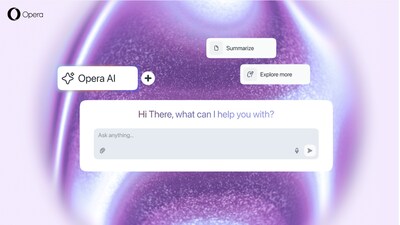
The new Opera AI exists as a side panel that users can interact with whenever they want, and in connection with any webpage, group of webpages and even videos. This allows it to give answers based on the browsing context – including easy research, content summaries, and even comparisons between different tabs. Opera AI enables voice input and output, as well as file analysis on multiple file types, including image and video. The engine has been rebuilt for speed with a new architecture, adopting an agentic-based engine from Opera Neon. Because of this, it is capable of delivering
"AI is reshaping how people interact with the web, and the browser is the natural entry point for those experiences," said Per Wetterdal, EVP Commercial at Opera. "Through our partnership with Google, we are able to offer users the experiences they really want through native search and AI features, for free, directly in their Opera One and Opera GX browsers while our most advanced users of the agentic Opera Neon browser are already getting access to Gemini 3 Pro."
AI has become a fundamental part of the browsing experience. This is also reflected in how browsing is monetized. In its latest earnings results, Opera reported a 17 percent annual increase in query revenue, representing the monetization of user-initiated actions in Opera's browsers beyond classic search as the measure also captures the increasing usage of AI tools. Opera AI is designed to natively support an expanding richness in the processing of user queries, representing an interface where users can identify products and services of interest and connect with e-commerce and other platforms of direct relevance to them. Opera's partnership with Google continues to play a key part in providing its browser users with the best possible search and AI experience.
"Our long-standing partnership with Opera is a testament to our shared vision for an innovative ecosystem." Per Gustafsson - Managing Director Nordics at Google. "By integrating the latest Gemini models, Opera is not just enhancing its browsers, but setting a new standard for AI-powered user experiences. We are proud to provide the cutting-edge AI capabilities that help partners like Opera thrive and continue to shape the future of browsing for millions of users worldwide"
The browser as the next AI frontier
The browser is emerging as one of the most important frontends for AI. Unlike a standalone chat interface, the browser has access to real-time context such as a user's open tabs, page content, and browsing flows. This enables more relevant and efficient assistance, supporting task completion directly within the browsing experience.
"We're seeing a clear and positive shift as AI-powered search becomes more widely adopted, including features such as Google's AI Overviews and emerging AI modes," continued Wetterdal. "These developments encourage users to explore more deeply, which aligns well with our long-term focus on building products that drive meaningful engagement. As an independent browser, we are excited about our ability to work with ecosystem partners and contribute to our users' experience whether they use Opera AI alone or in combination with any other AI platform of their choice."
About Opera
Opera is a user-centric and innovative software company focused on enabling the best possible internet browsing experience across devices. Hundreds of millions of people use Opera browsers for their unique features on mobile phones and desktop computers. Founded in 1995 and headquartered in
 View original content to download multimedia:https://www.prnewswire.com/news-releases/opera-browsers-now-ship-with-a-new-generation-of-ai-powered-by-google-302628949.html
SOURCE Opera Limited
FAQ
AI-generated questions and answers. How Rhea-AI works. Not financial advice.