
Oshkosh Corporation Brings Autonomy, AI, Connectivity and Electrification to the Frontlines of Tough Work at CES 2026
Oshkosh Corporation (NYSE: OSK) showcased autonomy, AI, connectivity and electrification solutions at CES 2026, targeting job sites, neighborhoods and airports.




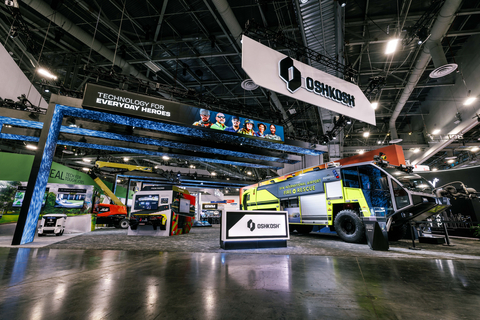
Today at CES in booth #4418, Oshkosh Corporation (NYSE: OSK), a leading innovator of purpose-built vehicles, equipment and services, showcased advanced technologies that empower those who do tough work — building, serving and protecting communities around the world. Shaping the future of job sites, neighborhoods and airports, these solutions bring together autonomy, AI, connectivity and electrification technologies to support everyday heroes — firefighters, airport ground crews, mail carriers, soldiers and construction workers.
The solutions feature:
- Autonomy, robotics and connectivity that are transforming how work at height on job sites is done by creating an intelligent ecosystem that connects people, equipment, tools and materials, and accelerates the shift from enabling jobs to executing jobs.
- AI-powered systems that anticipate potential roadside collision hazards and provide real-time warnings to everyone from firefighters to bus drivers.
- AI-enabled systems designed to transform recycling at the point of collection, helping keep recyclable materials out of landfills.
- Electrified vehicles delivering rapid response, maneuverability and power for airport emergency teams.
- Modular autonomous robot platform that helps turn aircraft quickly and safely, assisting ground crews and creating a smooth experience for travelers, airline and airport personnel.
“The future is taking shape, now. At CES, we are showcasing our vision of the job sites, neighborhoods and airports of the future and how Oshkosh’s advanced technology empowers everyday heroes with safe, intuitive, productive and clean solutions. Together with our customers, we’re transforming how we live, move and work,” said John Pfeifer, president and chief executive officer, Oshkosh Corporation.
Promoting worker safety at height on construction job sites
Construction job sites are dynamic, unpredictable and inherently complex. With most operations still manual and disconnected, workflows are fragmented, maintenance reactive and visibility inconsistent, driving potential inefficiency. Oshkosh Corporation’s JLG® brand is transforming job sites through an intelligent ecosystem that connects people, equipment, tools and materials to help address customer challenges. At CES,
- Next generation electric, articulated boom lift with autonomous end effector system: It turns a traditional boom lift into an industrial-scale robotic system that can be equipped with an autonomous tool to perform complex, repetitive tasks such as welding, painting, ductwork and material handling without an operator working at height. Electrification enables quiet operation in noise-sensitive and emissions-sensitive areas, expanding machine versatility.
The JLG® Boom Lift with Robotic End Effector received top honors in the Robotics category in the CES 2026 Innovation Awards, and was also recognized as an honoree in the Construction and Industrial Tech category.
- Micro-sized scissor lifts with leader-follower technology: This solution enables an operator in a lead scissor lift to guide multiple follower scissor lifts, moving equipment and materials efficiently across a job site. Multiple scissor lifts can also be configured to autonomously move and lift materials to a specified location. For example, two lifts can be used to move and lift an I-beam into position synchronously, then notify a nearby boom lift that the beam is in place and ready for welding through ClearSky™ Smart Fleet technology. These micro-sized scissor lifts are ideal for the growing data center markets and space-constrained sites that require compact lifts.
Oshkosh Corporation is advancing its vision for the job site of the future with the acquisition of the core technology developed by Canvas, a construction robotics company whose technologies accelerate the shift toward connected, autonomous and intelligent equipment. Canvas developed the world’s first robotic drywall finishing system, a flexible end-effector platform designed to promote safety, productivity and efficiency in one of construction’s most demanding trades. The relationship between the companies began six years ago when Canvas selected a JLG platform to develop its robot. Since then, the technology has advanced to automate repetitive tasks and enable consistent, high-quality results. This addition expands Oshkosh’s portfolio of intelligent technologies to address job site challenges and support those who do tough work.
Shaping the neighborhoods of the future
- AI-Powered Contamination Detection for Refuse Vehicles: A significant portion of materials placed in recycling bins are contaminated, meaning they ultimately end up in landfills rather than being recycled. When contamination occurs, otherwise recyclable materials are diverted from the recycling stream, undermining sustainability efforts and increasing landfill waste.
At CES 2026,
-
HARR-E (Hailable Autonomous Refuse Robot, Electric):
Oshkosh introduced HARR-E, the first autonomous, electric refuse robot designed specifically for on-demand collection, at CES in 2025. This innovative robot enables residents to request a pickup using a smartphone app or a virtual at-home assistant. Then, HARR-E makes its way to the designated pickup point.
This year, HARR-E technology is evolving. It now features a new, two-piece design that makes it easy to lift and transfer waste into a central dumpster or collection point. It measures the volume and weight of waste at each pickup, notifying waste companies when a dumpster or central container is approaching capacity, and uses AI-optimized routes to serve multiple requests efficiently. It is ideal for planned communities, campuses and corporate parks, event venues and stadiums, and even indoor environments like malls and senior living facilities.
-
Collision Avoidance Mitigation System (CAMS):
Oshkosh introduced the first purpose-built technology to anticipate collisions for firefighters and others working on active roadways inches away from traffic at CES 2025. Over the past year,Oshkosh field-tested this AI-powered solution with fire departments in large cities. The feedback has been powerful. Responders welcome a tool they can provide another layer of awareness working in the background.Oshkosh is now scaling this platform to EMS crews at accident scenes, police officers managing traffic or responding to calls and tow truck operators winching a disabled car. Future enhancements will include a mobile unit that can be set up on highways and dark shoulders upon arrival.
The advancements in contamination detection, HARR-E and CAMS technologies are three examples of how
Autonomy, AI, connectivity and electrification converge at next-generation airports
Airports are complex environments that demand high safety standards while still needing to move massive crowds of travelers to their destinations with efficiency and precision. Based on decades of expertise working in airport environments,
-
Oshkosh Striker® Volterra™ Electric Airport Rescue and Firefighting Vehicle (ARFF): This electrified vehicle is a lifeline for airport fire crews. It fuses electrification with world-class firefighting performance, while providing rapid acceleration and powerful response capability to deliver speed-to-scene and manage emissions on the airfield in a high-idle application. Built on Oshkosh’s proven Volterra electrification technology, this powerhouse vehicle accelerates a 45-ton vehicle from zero to fifty miles per hour in under 25 seconds — a
28% leap in performance over traditional internal-combustion ARFF vehicles — all while maintaining unwavering power.
The Volterra ARFF took top honors in the CES Innovation Awards’ Travel and Tourism category. CES attendees will be able to take selfies inside the Striker Volterra ARFF at CES, which the company expects will be one of the biggest vehicles at the show.
-
Autonomous Airport Robots:
Oshkosh is reimaging the “perfect turn” the time between aircraft touchdown to takeoff. Currently, ground crews rush in to navigate the plane to the gate, set wheel chocks, hook up ground power, unload/load baggage and more. Today,Oshkosh showed a fleet of modular, autonomous robots that stand ready to assist ground support equipment (GSE) workers on the tarmac. Each robot is equipped to handle multiple ramp and airfield operational tasks. These intelligent machines tackle repetitive jobs seamlessly in inclement weather, day or night, to aid the departure and arrival of flights and move passengers efficiently to their destination, while helping manage costs, uptime and performance for airlines.
Oshkosh’s modular, commercial robotic platform is purpose-built to take on multiple jobs across the tarmac. Originally designed and used in the defense industry, this proven system combines autonomous mobility, AI-driven perception and task-configurable hardware to promote flexibility, utilization and ROI in airport operations.
Travelers want airports to be safe while helping them get to their destinations quickly, and technology plays a pivotal role in achieving those goals.
See the airports, job sites and neighborhoods of the future at CES
Attendees can see demonstrations and learn more about
Additionally,
- Tuesday, January 6, 2026, at 11:30 a.m. PT: Racing Drives Innovation – Hand Control System
- Tuesday, January 6, at 2:30 p.m. PT: Purpose-Built Design in Last Mile Delivery
- Tuesday, January 6, 2026, at 3:30 p.m. PT: The Role of Robotics in Aviation and Refuse Settings
- Wednesday, January 7, 2026, at 11:30 a.m. PT: JLG® Boom Lift with Robotic End Effector
- Wednesday, January 7, 2026, at 2:30 p.m. PT: How Strategic Partnerships Accelerate Innovation
- Wednesday, January 7, 2026, at 3:30 p.m. PT: The Role of iOPS® Intelligent Management in Promoting the Perfect Turn
- Thursday, January 8, 2026, at 11:00 a.m. PT: CES Innovation Award Spotlight: Electric Technology in Airport Emergency Response
- Thursday, January 8, 2026, at 1:00 p.m. PT: Embracing Technology on the Ramp and at the Gate with United Airlines
- Thursday, January 8, 2026, at 2:00 p.m. PT: CES Innovation Award Spotlight: JLG Boom Lift with Robotic End Effector
- Thursday, January 8, 2026, at 3:30 p.m. PT: Fostering Quiet, Clean Communities with Electric Refuse and Recycling Collection
To learn more about Oshkosh’s CES presence and tech talks planned around various topics at its booth throughout the show, visit ces.oshkoshcorp.com.
About Oshkosh Corporation
At
®, ™ All brand names referred to in this news release are trademarks of Oshkosh Corporation or its subsidiary companies.
Forward Looking Statements
This news release contains statements that the Company believes to be “forward-looking statements” within the meaning of the Private Securities Litigation Reform Act of 1995. All statements other than statements of historical fact, including, without limitation, statements regarding the Company’s future financial position, business strategy, targets, projected sales, costs, earnings, capital expenditures, debt levels and cash flows, and plans and objectives of management for future operations, are forward-looking statements. When used in this news release, words such as “may,” “will,” “expect,” “intend,” “estimate,” “anticipate,” “believe,” “should,” “project” or “plan” or the negative thereof or variations thereon or similar terminology are generally intended to identify forward-looking statements. These forward-looking statements are not guarantees of future performance and are subject to risks, uncertainties, assumptions, and other factors, some of which are beyond the Company’s control, which could cause actual results to differ materially from those expressed or implied by such forward-looking statements. These factors include risks related to the Company’s ability to successfully execute on its strategic road map and meet its long-term financial goals. Additional information concerning these and other factors is contained in the Company’s filings with the Securities and Exchange Commission. All forward-looking statements speak only as of the date of this news release. The Company assumes no obligation, and disclaims any obligation, to update information contained in this news release. Investors should be aware that the Company may not update such information until the Company’s next quarterly earnings conference call, if at all.
View source version on businesswire.com: https://www.businesswire.com/news/home/20260106047317/en/
For more information, contact:
Financial:
Patrick Davidson
Senior Vice President, Investor Relations
920.502.3266
Media:
Tim Gilman
Senior Manager, Communications and Branding
920.509.0617
Source: Oshkosh Corporation