
Maas Energy Works Commissions Renewable Natural Gas (RNG) Interconnection in Collaboration with Pacific Gas and Electric Company
Maas Energy Works commissioned a new renewable natural gas (RNG) interconnection at Couco Creek Dairy in Turlock, California, enabling injection of both onsite and trucked‑in dairy biomethane into PG&E’s pipeline.




New facility expands access to dairy-derived biomethane across the region
PG&E’s eighth interconnection enables safe, reliable delivery of RNG and supports statewide methane-reduction goals
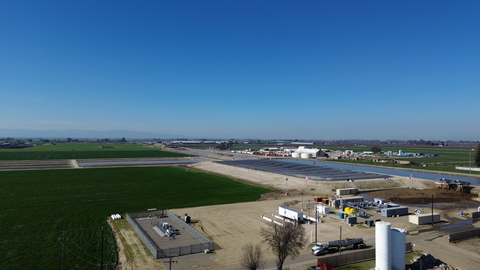
Couco Creek Dairy Digester and Biogas Clean-Up Facility,
The new RNG facility demonstrates the evolution in biomethane and RNG technology. This facility uniquely gathers RNG in two ways:
- Injecting RNG produced onsite from livestock waste that is converted to biomethane and ultimately clean, pipeline grade renewable natural gas
- Receiving RNG that is trucked in from offsite production facilities.
By capturing methane that would otherwise be released into the atmosphere and upgrading it into pipeline‑quality fuel, dairy-based RNG provides measurable climate benefits, while supporting local agricultural economies. California’s dairy industry continues to serve as an important producer of local RNG.
The Couco Creek hub-style configuration allows two distinct RNG supply pathways to converge. The site produces and conditions RNG from its own onsite dairy digester while also receiving trucked-in RNG from neighboring Blue Sky Dairy through a dedicated offloading and decompression facility. This “virtual pipeline” approach enables additional dairies to participate even when direct pipeline access is not available, increasing overall system efficiency and supply potential.
“This hub represents the next phase of innovation in California’s dairy RNG sector — flexible infrastructure that helps family farms participate in the clean‑energy economy,” said Daryl Maas, Founder and CEO of Maas Energy Works. “Couco Creek shows that if we design systems that work for both onsite production and trucked delivery, we unlock more opportunities for dairies and more progress toward the state’s clean-fuel priorities.”
All RNG delivered onsite undergoes PG&E’s required gas‑quality verification safety checks and metering before entering PG&E’s pipeline system. At full operation, the facility is expected to inject approximately 350 MMBtu/day of RNG, with room to expand as additional dairy digester projects qualify for delivery.
This is PG&E’s eighth RNG interconnection with an additional seven scheduled by the end of 2027. Since launching its first interconnection site in 2021, PG&E has expanded its RNG footprint across 50+ dairies, one landfill and one food waste facility, which are currently delivering pipeline quality biomethane through eight existing interconnections. New biogas sources include waste-water treatment plants, woody biomass, and agricultural waste.
Injecting renewable natural gas and supporting the scaling of
By the end of 2025, PG&E transported approximately 6.5 Billion cubic feet (Bcf) of RNG though its pipeline – enough energy to fuel more than 150,000 homes.
“Our collaboration with Maas Energy Works on this innovative interconnection point is an exciting step forward in expanding renewable gas options for our customers and our state,” said Austin Hastings, Vice President, Gas Engineering at PG&E. “Projects like this help us accelerate RNG production, strengthen reliability and move confidently toward PG&E’s 2040 Net‑Zero climate goals.”
By capturing biogas and upgrading it to pipeline quality, the project is expected to reduce greenhouse gas emissions by an estimated 54,000 metric tons of CO₂e per year — equivalent to the annual energy‑related emissions of 7,200
Commissioning timeline
December 30, 2025 — PG&E’s injection facilities completed readiness testing; Blue Sky Dairy began delivering RNG for injection.
December 31, 2025 — Couco Creek finalized its gas‑quality test. After PG&E approval, onsite RNG began flowing the same day.
About Maas Energy Works
Maas Energy Works is a family-owned renewable energy business with headquarters in
About PG&E
Pacific Gas and Electric Company, a subsidiary of PG&E Corporation (NYSE: PCG), is a combined natural gas and electric utility serving more than 16 million people across 70,000 square miles in Northern and
View source version on businesswire.com: https://www.businesswire.com/news/home/20260209415349/en/
Dallas Spiecker
(530) 710-8545
communications@maasenergy.com
Source: Maas Energy Works