
New Progyny Study Reveals Gap Between Perceptions and Realities in Women’s Health Benefits Coverage
Progyny (Nasdaq: PGNY), a leader in women's health and family building solutions, released a national study revealing significant disparities in workplace health benefits.
Sentiment and the balance of points
Rhea-AI Sentiment reads the wording of the document, how positive or negative its language is on a 1 to 5 scale. The balance of points shown with the takes weighs what the document actually discloses, so the two can disagree, for example when a trial that missed its main goal is described in upbeat language.
Rhea-AI Summary
Progyny (Nasdaq: PGNY), a leader in women's health and family building solutions, released a national study revealing significant disparities in workplace health benefits. While 81% of HR leaders claim commitment to women's health, only 52% of working women find their benefits make healthcare affordable.
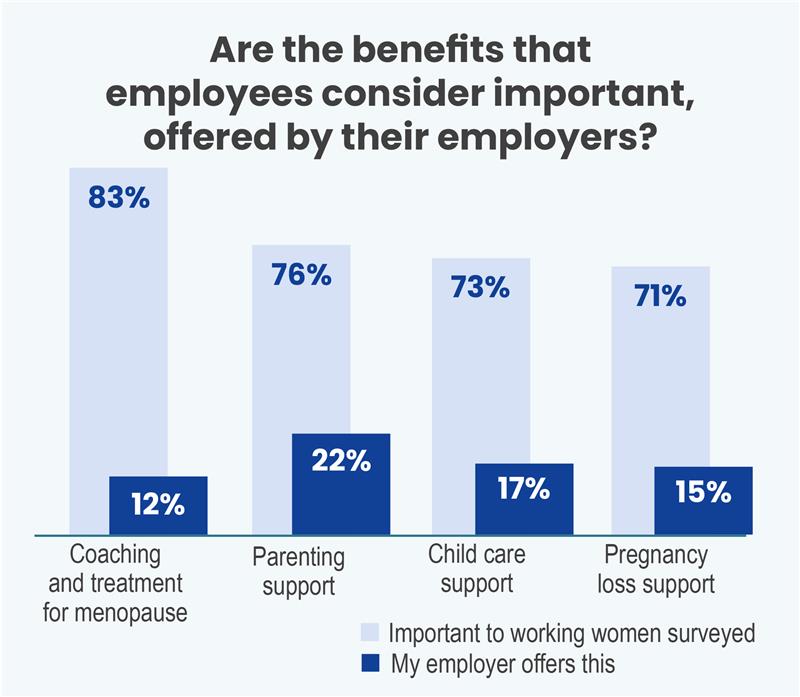
The research highlights critical gaps: while 83% of women prioritize menopause-related benefits, only 12% report adequate employer support. Additionally, 24% of women abandon using benefits due to complexity, and 83% of women and 88% of employers agree that centralized support would improve effectiveness. The study emphasizes the need for comprehensive women's health programs, as 69% of benefit managers consider these benefits crucial for attracting and retaining younger talent.
Positive
- Strong market opportunity identified with 81% of HR leaders committed to women's health benefits
- High demand validated with 83% of women seeking menopause-related benefits
- Clear business case with 69% of benefit managers viewing women's health benefits as crucial for talent retention
Negative
- Only 52% of women find current healthcare benefits affordable
- Significant service gap with only 12% of women satisfied with menopause benefit provisions
- 24% benefit abandonment rate due to complexity indicates operational inefficiencies
Details
News Market Reaction – PGNY
The recorded move for PGNY in the trading session of this news was +2.93%.
Data tracked by StockTitan Argus. Session date unavailable.
AI-generated analysis. How Rhea-AI works. Not financial advice.




Increased awareness of expanded women’s health and family building solutions has led to a growing disconnect between most wanted employee benefits and employer offerings
NEW YORK, July 30, 2025 (GLOBE NEWSWIRE) -- Progyny, Inc. (Nasdaq: PGNY), a global leader in women’s health and family building solutions, today announced the results of their new national Women in the Workplace research conducted in partnership with Dynata, the world’s largest first-party data company for insights, activation, and measurement. The study reveals a persistent gap between what employees want from their women’s health benefits, and what employers believe they are providing. Specifically, results show that
“The trend of women seeking out and even changing jobs for better benefits has been a persistent one the past few years. This study proves that women know what they want, and they are raising their voices. Simultaneously, HR leaders are aware of this trend and are eager to expand their women's health benefits to get ahead in talent recruitment and retention,” said Katie Higgins, Chief Commercial Officer, Progyny. “Where the mark in women’s health benefits may be missed is with the absence of a unified benefit that provides success to both sides – covers the continuum of care for women, increases engagement, results in clinical impact, and provides cost-control.”
According to the study, while most employers express a strong interest in supporting women’s health, they are unknowingly falling short in delivering access to specialized care, clear benefits navigation, and the personalization employees expect, particularly across critical life stages like fertility, pregnancy, and menopause. It’s not enough to simply offer a women’s health benefit or access to a digital tool – the benefit needs to be designed and implemented with intention.
This new research shows leading concerns among female employees include:
- A significant gap exists. While
83% of women say benefits that support coaching and treatment for menopause are important, only12% say their employer does a good job in providing them.
- Confusion limits impact. Nearly one in four women (
24% ) who wanted to use a benefit gave up because it was too complex to understand or access. - Integration matters.
83% of women and88% of employers agree that centralized support from one place would make women’s health benefits more effective. - The stakes are high.
69% of benefit managers said women’s health benefits are extremely important to their strategy of attracting and retaining younger employees.
One employer respondent summed it up: “I feel that the lack of dedicated resources, such as an internal women’s health advocate or specialist, prevents us from delivering a truly comprehensive women’s health program.”
The data shows that employers need a solution that brings it all together: personalized care from top-tier specialists, built-in education, connected services, and ongoing support.
“We speak with employers who are deeply committed to supporting their workforce, but many don’t know where to start and feel the goal post keeps moving, "said Higgins. “This research highlights where employee needs are greatest and shows that offering support across the full women’s health journey is now table stakes. Leading organizations aren’t just keeping up with trends – they’re investing strategically to improve outcomes, control costs, and retain talent.”
To view the full study results and learn how Progyny can help your organization bridge the gap in family building and women’s health benefits, visit progyny.com.
About this research:
1,202 women ages 18-65; US residents; with private health insurance, employed full-time at US employers with 250 or more employees were surveyed in September 2024 with a +/-
252 benefits-decision makers ages 25+ whose primary role is HR or Admin/Management, involved in health insurance or wellness benefits; work in US public/private/government businesses (excluding non-profits); company in business 1+ years) employed full-time at employers with 250 or more employees were surveyed in September 2024 with a +/-
About Progyny
Progyny (Nasdaq: PGNY) is a global leader in women’s health and family building solutions, trusted by the nation’s leading employers, health plans and benefit purchasers. We envision a world where everyone can realize their dreams of family and ideal health. Our outcomes prove that comprehensive, inclusive, and intentionally designed solutions simultaneously benefit employers, patients, and physicians.
Our benefits solution empowers patients with concierge support, coaching, education, and digital tools; provides access to a premier network of fertility and women's health specialists who use the latest science and technologies; drives optimal clinical outcomes; and reduces healthcare costs.
Headquartered in New York City, Progyny has been recognized for its leadership and growth as a TIME100 Most Influential Company, CNBC Disruptor 50, Modern Healthcare's Best Places to Work in Healthcare, Forbes' Best Employers, Financial Times Fastest Growing Companies, Inc. 5000, Inc. Power Partners, and Crain's Fast 50 for NYC. For more information, visit www.progyny.com.
About Dynata
Dynata is the world’s largest first-party data company for insights, activation and measurement. With a reach that encompasses nearly 70 million consumers and business professionals globally, and an extensive library of individual profile attributes collected through surveys, Dynata is the cornerstone for precise, trustworthy quality data. The company has built innovative data services and solutions around its robust first-party data offering to bring the voice of the customer to the entire marketing continuum — from uncovering insights to activating campaigns and measuring cross-channel marketing ROI. Dynata serves more than 6,000 market research, media and advertising agencies, publishers, consulting and investment firms and corporate customers in North America, South America, Europe and Asia-Pacific. Learn more at www.dynata.com.
For Further Information, Please Contact:
Media:
Alexis Ford
Investors:
James Hart
A photo accompanying this announcement is available at https://www.globenewswire.com/NewsRoom/AttachmentNg/f44b861f-ed3b-497d-8c32-82abbaa39eed

FAQ
AI-generated questions and answers. How Rhea-AI works. Not financial advice.