STOCK TITAN

Understanding and Addressing Syphilis Trends - and What's Being Missed

(Moderate)
(Neutral)
Tags

QuidelOrtho (Nasdaq: QDEL) released episode 57 of its Science Bytes podcast on April 23, 2026, examining U.S. syphilis trends and rising congenital syphilis.

Key facts: provisional data show a second consecutive year decline in early-stage syphilis, while congenital syphilis reached nearly 4,000 cases in 2024. The episode highlights missed or late prenatal screening and recommends repeat prenatal testing, EHR prompts, and broader screening opportunities to close gaps.

Loading...
Loading translation...

Positive

  • Congenital syphilis cases nearly 4,000 in 2024
  • Provisional second consecutive year decline in early-stage syphilis (primary/secondary)
  • Podcast episode offers specific screening actions: universal repeat testing and EHR prompts

Negative

  • Rising congenital syphilis in 2024 linked to missed or late prenatal screening
  • Single early prenatal test can miss infections acquired later in pregnancy

News Market Reaction – QDEL

-5.55%
5 alerts
-5.55% Session close to close
$755.71M Market Cap
0.3x Rel. Volume

In the Apr 23 session, QDEL declined 5.55%, reflecting a notable negative market reaction. Our momentum scanner triggered 5 alerts that day, indicating moderate trading interest and price volatility.

Data tracked by StockTitan Argus on the day of publication.

Market Context

The stock moved -5.5% in the session following this news. A negative reaction despite the educationa...
Analysis

The stock moved -5.5% in the session following this news. A negative reaction despite the educational nature of this podcast fits a pattern where non-financial updates have coincided with share pressure, as seen after earlier Science Bytes releases and leadership changes. A decline of 5%+ would likely reflect ongoing concern about recent preliminary revenue and cash flow trends rather than the podcast itself, highlighting sensitivity to fundamentals over awareness initiatives.

Key Figures

Congenital syphilis cases: nearly 4,000 cases
1 metrics
Congenital syphilis cases nearly 4,000 cases United States, 2024 CDC provisional data cited

Historical Context

5 past events · Latest: Apr 20 (Positive)
Pattern 5 events
Date Event Sentiment 24h Move Catalyst
Apr 20 Platform acquisition news Positive +1.4% LEX sale to QDEL highlighting VELO PCR platform clearance and speed.
Apr 20 Acquisition completion Positive +1.4% Completion of approximately $100M LEX Diagnostics acquisition adding VELO system.
Apr 15 Prelim revenue, guidance Negative -27.5% Weaker Q1 2026 revenue and negative free cash flow with external headwinds.
Mar 24 Leadership change Neutral -2.3% Appointment of new Chief Legal Officer and related retirement transition.
Feb 19 Clinical podcast release Positive -2.3% Science Bytes podcast on high-sensitivity troponin applications in acute care.

24h Move is the share-price change in the day after each event; other market factors may also have contributed.

Pattern Detected

Operational positives (podcasts, leadership hires) have at times coincided with modest share declines, while clearly negative revenue updates saw sharp selloffs and the recent LEX deal was received constructively.

Recent Company History

Over recent months, QuidelOrtho has mixed strategic expansion with financial headwinds. On Apr 20, it completed the roughly $100 million LEX Diagnostics acquisition, adding the FDA 510(k)-cleared, CLIA-waived VELO PCR platform, which previously coincided with a +1.42% move. On Apr 15, preliminary Q1 2026 revenue of $615–$620 million and negative free cash flow drove a -27.47% reaction. Leadership changes in legal and prior podcast content around high-sensitivity troponin drew modest negative moves. Today’s syphilis-focused podcast continues the pattern of educational outreach alongside a pressured share price.

Key Terms

in vitro diagnostics, congenital syphilis, treponemal, non‑treponemal, +2 more
6 terms
in vitro diagnostics medical
"QuidelOrtho Corporation (Nasdaq: QDEL), a global leader of in vitro diagnostics, has released"
In vitro diagnostics are medical tests performed on samples taken from the body—such as blood, urine or tissue—using instruments or kits outside the patient to detect disease, measure biomarkers or guide treatment decisions. They matter to investors because sales, regulatory approvals, reimbursement rules and adoption rates drive companies’ revenue and margins much like product launches and consumer demand in other industries; advances can create growth or disruption in healthcare markets.
congenital syphilis medical
"the rise of congenital syphilis cases despite declines in early-stage infections"
A birth infection transmitted from a pregnant person to their baby before or during delivery, caused by the bacterium that causes syphilis; it can lead to serious, lifelong health problems or death for the newborn. Investors should care because outbreaks or rising rates can drive higher healthcare costs, product and liability demand, regulatory scrutiny, and reputational risk for hospitals, drugmakers, insurers and public-health contractors—similar to how a recurring safety problem can raise costs and legal exposure for a company.
treponemal medical
"Understanding testing strategies: How treponemal and non‑treponemal tests work together"
Treponemal describes anything related to Treponema bacteria, most commonly the species that causes syphilis, or to tests and antibodies that specifically detect that bacterium. Think of treponemal tests as fingerprint checks that confirm exposure to this specific germ rather than general signs of infection. For investors, treponemal diagnostics, treatments or regulatory updates matter because they affect product demand, clinical approval pathways and potential revenue for companies in diagnostics and therapeutics.
non‑treponemal medical
"How treponemal and non‑treponemal tests work together to identify active infection"
Non-treponemal describes a class of medical tests that look for general immune signals produced when body tissues are damaged by an infection, rather than detecting the specific bacteria that cause the disease. Think of it as a smoke detector that senses signs of a fire instead of identifying the exact arsonist; these tests are useful for initial screening and for tracking treatment response but can give false positives, so their accuracy and regulatory status matter to investors in diagnostic companies and health services.
prenatal medical
"Why repeat testing matters: A single early prenatal test misses infections"
Relating to the period before birth, 'prenatal' covers medical care, tests, treatments and products used during pregnancy to monitor and protect the developing fetus and the pregnant person. Investors track prenatal developments because changes in safety data, regulatory approvals, clinical results, product demand or insurance coverage can quickly affect sales and valuations—like checking and servicing a car before a long trip to avoid costly breakdowns later.
EHR technical
"Actionable steps for health systems: Universal repeat testing in pregnancy, EHR prompts"
EHR stands for electronic health record, a digital version of a patient’s complete medical file that replaces paper charts and collects diagnoses, medications, test results and treatment history in one place. For investors, EHR systems matter because they drive recurring revenue for software and services, affect healthcare providers’ costs and efficiency, and create data assets and integration opportunities that can influence a company’s growth and regulatory risk.

AI-generated analysis. How Rhea-AI works. Not financial advice.

See more from StockTitan in Google Search and AI answers. Adds StockTitan as a preferred source · opens Google
Add on Google

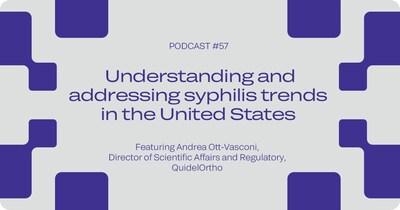
SAN DIEGO, April 23, 2026 /PRNewswire/ -- QuidelOrtho Corporation (Nasdaq: QDEL), a global leader of in vitro diagnostics, has released episode 57 of its Science Bytes podcast, focusing on evolving syphilis trends in the United States and the rise of congenital syphilis cases despite declines in early-stage infections.

Hosted by Josh Casey, the episode features Andrea Ott‑Vasconi, Director of Scientific Affairs and Regulatory at QuidelOrtho, who breaks down what CDC data reveals, why congenital syphilis continues to rise and how diagnostic strategies and healthcare workflows can close critical screening gaps, especially during pregnancy.

While provisional data show a second consecutive year of decline in primary and secondary syphilis cases, congenital syphilis cases reached nearly 4,000 in 2024. Because congenital syphilis is completely preventable with timely diagnosis and treatment during pregnancy, the episode highlights missed screening opportunities and actionable steps health systems can take now.

Key Insights:

  • Diverging trends in syphilis: Early-stage syphilis is declining, but congenital syphilis continues to rise due to missed or late screening
  • Why repeat testing matters: A single early prenatal test misses infections acquired later in pregnancy
  • Understanding testing strategies: How treponemal and non‑treponemal tests work together to identify active infection
  • Screening beyond prenatal care: Emergency departments and opt‑out screening play a critical role in identifying asymptomatic infections
  • Actionable steps for health systems: Universal repeat testing in pregnancy, EHR prompts and treating every pregnancy-related encounter as a screening opportunity

Listen to the latest episode of the QuidelOrtho Science Bytes podcast on major streaming platforms or at: https://www.quidelortho.com/global/en/resources/podcasts/quidelortho-science-bytes.

About QuidelOrtho Corporation
With expertise spanning clinical chemistry, immunoassay, immunohematology and molecular testing, QuidelOrtho Corporation (Nasdaq: QDEL) is a leading global provider of diagnostic solutions, dedicated to advancing fast, accurate and reliable results that help improve patient outcomes – from the point of care to hospital, lab to clinic. Building on a legacy of innovation, QuidelOrtho works with healthcare providers to advance diagnostics that connect insights with solutions, defining a clearer path for informed decisions and better care.

Investor Contact:
Juliet Cunningham
Vice President, Investor Relations
IR@QuidelOrtho.com  

Media Contact:
Stephanie Kleewein
Senior Corporate Communications and PR Manager
media@QuidelOrtho.com

Cision View original content to download multimedia:https://www.prnewswire.com/news-releases/understanding-and-addressing-syphilis-trends--and-whats-being-missed-302751067.html

SOURCE QuidelOrtho Corporation

FAQ

What did QuidelOrtho (QDEL) report about congenital syphilis in 2024?

According to the company, congenital syphilis reached nearly 4,000 cases in 2024. The podcast notes these cases persisted despite declines in early-stage infections and highlights missed prenatal screening opportunities leading to preventable infections.

Why does QuidelOrtho (QDEL) recommend repeat prenatal testing for syphilis?

Repeat testing catches infections acquired later in pregnancy that a single early test misses. According to the company, universal repeat testing and EHR prompts are actionable steps to reduce congenital syphilis.

How does QuidelOrtho (QDEL) describe the current syphilis trend in the U.S.?

According to the company, early-stage syphilis (primary/secondary) shows a provisional decline for a second consecutive year. At the same time, congenital syphilis cases increased, indicating divergent trends and screening gaps.

What screening settings does QuidelOrtho (QDEL) suggest beyond prenatal clinics?

The company highlights emergency departments and opt-out screening as important sites to identify asymptomatic infections. These settings can capture missed cases and support broader public-health screening efforts during pregnancy.