
374Water to Present New Supercritical Water Oxidation Destruction Data at WEFTEC 2026
New WEFTEC 2026 data highlight AirSCWO’s high destruction efficiencies for PFAS, 6PPD-Q and pharmaceutical wastes across multiple scales and waste types.
Rhea-AI Summary
374Water (SCWO) will present new destruction-efficiency data for its AirSCWO supercritical water oxidation technology at WEFTEC 2026 in New Orleans.
The 30-minute talk on September 30, 2026 will detail treatment of PFAS, 6PPD‑Q and mixed pharmaceutical wastes, showing >98% PFAS destruction in sludge, >99.99% destruction of 6PPD‑Q, and >99% reduction in chemical oxygen demand for blended pharmaceutical waste streams. The data span commercial-, bench- and lab-scale systems and emphasize that SCWO differs from incineration in reaction environment, emissions, effluent quality and monitoring. Earlier 2026 federal project results showed >99.9% PFAS destruction in AFFF, supporting a procurement pathway 374Water is pursuing with Arcadis.
Positive
- PFAS in sludge: commercial-scale SCWO demonstration achieved >98% destruction and removal efficiency across detected PFAS compounds.
- 6PPD-Q removal: bench-scale SCWO cut 18 µg/L influent to non-detect, implying >99.99% destruction efficiency.
- Mixed pharmaceutical waste: SCWO delivered >99% COD removal under varying blends and conditions, meeting existing site effluent limits.
- Federal AFFF project: AirSCWO destroyed >99.9% PFAS in a Department of Defense-backed study, supporting a federal procurement pathway.
Negative
- None.
Key Figures
- PFAS destruction and removal efficiency
- >99.4%
- Commercial-scale biosolids demonstration; every detected PFAS compound
- 6PPD-Q destruction and removal efficiency
- >99.99%
- Bench-scale SCWO system; inlet concentration of 18 µg/L reduced to non-detect
- COD reduction
- >99%
- Mixed pharmaceutical waste across variable feedstock blends
- Presentation duration
- 30 minutes
- WEFTEC 2026 podium presentation
- Presentation date and time
- September 30, 2026, 2:30–3:00 p.m. CT
- WEFTEC 2026 session
Historical Context
-
Completed four-feedstock mobile AirSCWO campaign; detailed PFAS destruction results remained pending.
-
Reported >99.9% PFAS destruction in U.S. Department of Defense AirSCWO testing.
24h Move is the share-price change in the day after each event; other market factors may also have contributed.
Key Terms
supercritical water oxidation technical
pfas technical
destruction and removal efficiency technical
chemical oxygen demand technical
tsca regulatory
AI-generated analysis. How Rhea-AI works. Not financial advice.




MORRISVILLE, NC / ACCESS Newswire / September 22, 2026 / 374Water Inc. (NASDAQ:SCWO) ("374Water" or the "Company"), a leading cleantech and environmental services company developing supercritical water oxidation technology for the permanent destruction of organic waste streams, today announced that it will present new destruction-efficiency data for its AirSCWO technology at WEFTEC 2026, the Water Environment Federation's annual technical exhibition and conference, in New Orleans. In addition to the presentation, the Company will be at booth #2254 with several Executives and team members in attendance.
The 30-minute podium presentation, "Application of Supercritical Water Oxidation for Treating Wastes Contaminated with PFAS, 6PPD-Q, and Other Emerging Pollutants," will be delivered by David Garb, 374Water's Technical Solutions Manager, as part of the session "Fighting PFAS With Fire: Advanced Thermal Conversion for Biosolids Management." [Full abstract below.]
Presentation Details
- Title: Application of Supercritical Water Oxidation for Treating Wastes Contaminated with PFAS, 6PPD-Q, and Other Emerging Pollutants
- Session: Fighting PFAS With Fire: Advanced Thermal Conversion for Biosolids Management
- Date & Time: Wednesday, September 30, 2026, 2:30 - 3:00 p.m. CT
- Location: New Orleans Convention Center, New Orleans, LA
- 374Water Presenter: David Garb, Technical Solutions Manager
- Co-authors: Sudhakar "Sunny" Viswanathan, Vice President of Solutions, 374Water; David Garb Technical Solutions Manager, 374Water; Naomi Senehi, Regional Sales Manager, Aerzen USA
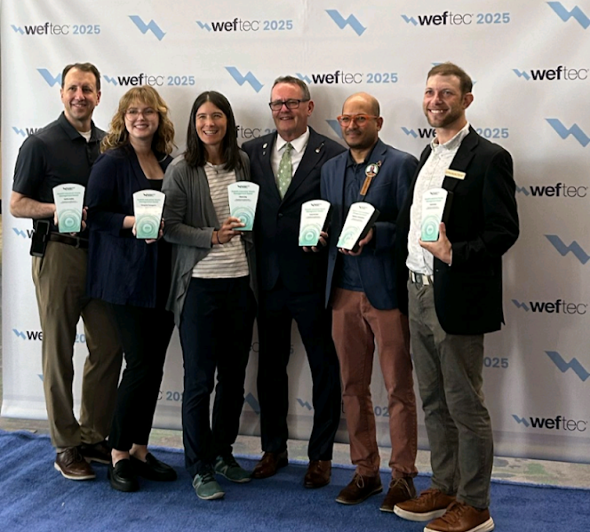
Broad-Spectrum Destruction Across Waste Types
The presentation draws on commercial-, bench-, and laboratory-scale studies to show how a single AirSCWO platform can treat a broad spectrum of contaminants of emerging concern ("CECs") with only moderate adjustments to operating conditions - and clarifies why supercritical water oxidation ("SCWO") is fundamentally distinct from incineration and other thermal methods in its reaction environment, emissions profile, effluent quality, and monitoring requirements. Highlights include:
- PFAS in biosolids: greater than
99.4% destruction and removal efficiency ("DRE") for every PFAS compound detected in a commercial-scale demonstration. - 6PPD-Q: reduction of the tire-derived contaminant from an inlet concentration of 18 µg/L to non-detect - a DRE greater than
99.99% . - Mixed pharmaceutical waste: greater than
99% reduction of chemical oxygen demand ("COD") across variable feedstock blends, producing an effluent compliant with the existing industrial site.
A primer on 6PPD-Q:
6PPD-Q forms when tires degrade and chemicals react with ozone in the air. The particles wash off roads into waterways through stormwater runoff. It's extraordinarily toxic in small quantities. It is acutely lethal to salmon and was confirmed as the cause of large scale die-offs in the Pacific Northwest. Human exposure is confirmed, having been found in urine, blood, and cerebrospinal fluid, with possible neurotoxic signals and widespread fatality identified in animal studies. Regulatory momentum is building, with EPA investigating it under the Toxic Substances Control Act ("TSCA").
6PPD-Q is in the runoff from driveways and roads, it enters our drinking water systems from rivers, groundwater, and reservoirs, and current water infrastructure does not manage for it. We destroy it.
Building on Federal Destruction Results
The WEFTEC data extends a series of milestones for 374Water's PFAS destruction program. Earlier in 2026, the Company publicly released results from a U.S. Department of Defense project led by the Defense Innovation Unit ("DIU") and the Environmental Security Technology Certification Program ("ESTCP"), in which AirSCWO destroyed more than
"Demand for permanent destruction is accelerating across every market we serve," said Sunny Viswanathan, Vice President of Solutions at 374Water. "Municipalities, federal agencies, and industrial generators are no longer asking whether supercritical water oxidation works - they are asking how quickly we can put it to work on their waste streams. What makes AirSCWO compelling is that one platform can destroy PFAS, 6PPD-q, pharmaceuticals, and other emerging contaminants without simply transferring the problem elsewhere. WEFTEC is where we put the data behind that versatility in front of the people who need it."
About 374Water
374Water Inc. (NASDAQ:SCWO) is a cleantech environmental services company providing innovative solutions addressing wastewater treatment and waste management issues within the industrial, municipal, and federal markets. 374Water's AirSCWO technology is designed to efficiently destroy and mineralize a broad spectrum of nonhazardous and hazardous organic wastes, producing safe dischargeable water streams, safe mineral effluent, safe vent gas, and recoverable heat energy. 374Water's AirSCWO technology has the potential to assist its customers to meet discharge requirements, reduce or eliminate disposal costs, remove bottlenecks, and reduce litigation and other risks. 374Water continues to be a leader in innovative waste treatment solutions, dedicated to creating a greener future and eradicating harmful pollutants. Learn more by visiting www.374water.com and follow us on LinkedIn.
Forward-Looking Statements
This press release contains forward-looking statements within the meaning of Section 27A of the Securities Act of 1933 and Section 21E of the Securities Exchange Act of 1934. Forward-looking statements include, without limitation, statements regarding 374Water's technology and its destruction and removal efficiencies, its participation in and the anticipated content of its WEFTEC 2026 presentation, demand for its solutions across municipal, federal, and industrial markets, its federal market opportunities and procurement pathway, and its partnership with Arcadis. These statements are based on management's current expectations and are subject to risks and uncertainties that could cause actual results to differ materially from those expressed or implied. Factors that could cause such differences include, but are not limited to, the Company's ability to commercialize and scale its technology, the timing and outcome of federal procurement processes, the performance of its partnerships, market adoption, and other risks described in the Company's filings with the U.S. Securities and Exchange Commission, including its Annual Report on Form 10-K and subsequent reports. 374Water undertakes no obligation to update any forward-looking statements except as required by law.
Investor Relations Contact
Belton Copp
Vice President
Direct: 401-419-1545
Belton.Copp@374water.com
www.374Water.com
PRESENTATION ABSTRACT
Application of Supercritical Water Oxidation for Treating Wastes Contaminated with PFAS, 6PPD-Q, and Other Emerging Pollutants
The rapid emergence of contaminants of emerging concern (CECs) in municipal and industrial waste streams has accelerated the need for treatment technologies capable of achieving verifiable destruction across a broad chemical spectrum. Supercritical Water Oxidation (SCWO) has increasingly been positioned within the landscape of "thermal technologies," yet is often compared-sometimes inappropriately-to systems that differ fundamentally in chemistry, operating mechanisms, monitoring requirements, and achievable performance. Current technology comparison studies typically fall into two categories: (1) comparisons to broad-treatment thermal technologies capable of addressing many or most CEC classes, and (2) comparisons to highly specialized technologies designed to target only one or a small subset of contaminants. In both cases, economic or performance comparisons often lack the foundational data needed to be meaningful.
For technologies in the first bucket, comparisons are limited because regulatory monitoring and verification requirements differ widely across platforms. Many systems do not require, or are not capable of, collecting mass balance data that confirms true destruction rather than transformation or transfer of contaminants. As a result, economic comparisons fail to reflect the cost of achieving verified destruction. For the second bucket-specialized solutions developed in response to accelerated PFAS regulatory pressure-economic analyses are typically framed around PFAS alone. This narrow focus does not account for the longer-term value of a technology capable of treating diverse CECs such as pharmaceuticals, tire-derived contaminants (e.g., 6PPD-q), industrial organics, and complex waste matrices. Consequently, technology selection is often made without considering the operational and financial advantages of broad applicability.
This presentation addresses the gap created by these incomplete comparisons by providing new data that illustrates how SCWO performance varies across waste types and CEC classes with only moderate adjustments to system operating parameters. Because SCWO is frequently and incorrectly grouped with incineration and other thermal destruction methods, this work clarifies the fundamental distinctions in reaction environment, destruction mechanisms, emissions profiles, effluent quality, and monitoring requirements. A detailed overview of SCWO's flexibility is presented through data generated from municipal sludges, controlled laboratory studies using spiked CEC solutions, and blended industrial waste streams.
Methods: A series of waste matrices were evaluated to assess the performance of SCWO on eliminating various CECs. The contaminants tested include PFAS compounds in wastewater sludge, analytical grade 6PPD-q, and a pharmaceutical waste blend containing various solvents and organic contaminants. Variables examined include alkaline addition, reactor temperature, operating pressure, mixing intensity, and influent water content. Performance was measured using process indicators-pressure drop behavior, temperature stability, CO emissions, metals content in the liquid effluent-and by assessing physical characteristics of the resulting effluent streams. Analytical measurements of contaminant concentrations in the SCWO influent and effluent were used to determine destruction efficiency.
Results:
PFAS in Sludge: Multiple datasets were generated by treating sludges with various concentrations of PFAS (variations on both a diurnal and seasonal level) via SCWO to determine a range of typical PFAS destruction and removal efficiencies (Figure 1). This commercial scale demonstration which showed >
6PPD-q: This project was conducted using a bench-scale SCWO system. The main benefits from first conducting this research at bench scale were (1) resource efficiency and (2) cost-effective identification of conditions to be scaled up to commercial SCWO systems. Analytical results showed a reduction from an inlet 6PPD-q concentration of 18 ug/L to non-detect in both of the two effluent grab samples. Considering the method detection limits of 0.64 and 0.58 ng/L (0.00064 and 0.00058 ug/L), a DRE of >
Mixed Pharmaceutical Waste: Two variables were tested - the feedstock blend and the SCWO operating temperature and pressure - to determine how versatile the SCWO system is in treating the waste should the blend vary from batch to batch. The results, using COD as a surrogate for all organic constituents, illustrated that the impact of waste blend and/or SCWO operating conditions was marginal. In all instances, >
Significance: The ability of SCWO technology to treat a wide range of contaminants with minimal operating adjustments suggests that the benefits of investing in the technology may outweigh the higher OPEX of SCWO as compared to traditional waste disposal techniques such as landfilling.
Authors: Naomi Senehi, Regional Sales Manager, Aerzen USA; David Garb, Technical Solutions Manager - Industrial Applications & Emerging Contaminants, 374Water Inc.; Sudhakar Viswanathan, VP, Solutions, 374Water Inc.
Speaker: David Garb
Session: Fighting PFAS With Fire: Advanced Thermal Conversion for Biosolids Management
When: Wednesday, September 30, 2026, 2:30 PM to 3:00 PM - New Orleans Convention Center
Moderated by: Stephanie Spalding, HDR; Julia Ann Funk, Jacobs Engineering
SOURCE: 374Water Inc.
View the original press release on ACCESS Newswire
FAQ
AI-generated questions and answers. How Rhea-AI works. Not financial advice.
When and where will 374Water present its AirSCWO data at WEFTEC 2026?
The presentation, titled “Application of Supercritical Water Oxidation for Treating Wastes Contaminated with PFAS, 6PPD-Q, and Other Emerging Pollutants”, is scheduled for Wednesday, September 30, 2026, from 2:30 to 3:00 p.m. Central Time at the New Orleans Convention Center during the WEFTEC 2026 conference.
Who is presenting and who are the co-authors for the WEFTEC 2026 AirSCWO study?
The speaker is David Garb, Technical Solutions Manager at 374Water. Co-authors are Sudhakar “Sunny” Viswanathan, Vice President of Solutions at 374Water; David Garb; and Naomi Senehi, Regional Sales Manager at Aerzen USA.
What contaminants of emerging concern are covered in the new SCWO data set?
The data address multiple CECs, including PFAS compounds in wastewater sludge, 6PPD‑Q (a tire-derived contaminant), and a mixed pharmaceutical waste blend containing various solvents and organic contaminants.
How does 374Water describe the differences between SCWO and incineration or other thermal methods?
The company states that supercritical water oxidation is fundamentally distinct from incineration and other thermal methods in reaction environment, destruction mechanisms, emissions profiles, effluent quality, and monitoring requirements, and that the presentation aims to clarify these distinctions.
What operational variables were evaluated in the SCWO studies presented for WEFTEC 2026?
The studies examined alkaline addition, reactor temperature, operating pressure, mixing intensity, and influent water content. Performance indicators included pressure drop behavior, temperature stability, CO emissions, metals content in the liquid effluent, effluent physical characteristics, and analytical measurements of contaminant concentrations to calculate destruction efficiency.
What potential applications does 374Water see for AirSCWO based on recent federal PFAS work?
Building on the Department of Defense project in which AirSCWO destroyed more than 99.9% of PFAS in AFFF, 374Water is pursuing a federal procurement pathway with Arcadis for PFAS destruction in applications such as sludge and biosolids in remote locations and other emerging contaminants.