
Soluna Announces Monthly Business Update
Soluna (NASDAQ: SLNH) provided its January 2026 monthly business update covering site operations, partnerships, construction milestones, and pipeline progress.
Sentiment and the balance of points
Rhea-AI Sentiment reads the wording of the document, how positive or negative its language is on a 1 to 5 scale. The balance of points shown with the takes weighs what the document actually discloses, so the two can disagree, for example when a trial that missed its main goal is described in upbeat language.




Engineering a 350MW AI campus for Project Kati 2
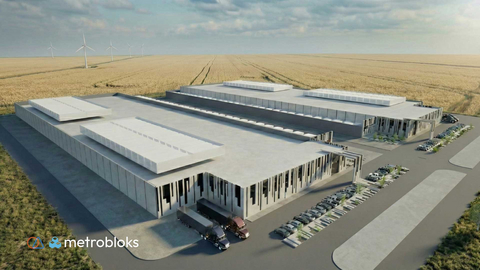
Rendering of Soluna x Metrobloks 100MW AI Data Center
The Company has provided the following Corporate and Site Updates.
Key Company Metrics:
The monthly metrics are now available here.
Corporate Highlights:
- Soluna and Siemens collaborate to address GPU power volatility in behind-the-meter AI deployments.
- Soluna and Metrobloks partner to unlock 100+ MW of AI and HPC capacity at Project Kati 2.
- Michael Picchi appointed Chief Financial Officer of Soluna, effective April 1, 2026.
- Soluna featured in Tech Brew: “The ‘greener’ the data center, the greater the potential savings,” by Tricia Crimmins.
- CEO John Belizaire joins Currents, a Norton Rose Fulbright podcast, to discuss curtailed power and data center design.
- CEO John Belizaire discusses Soluna’s AI expansion plans at Project Kati 2 on the Power Mining Analysis podcast.
Key Project Updates:
Project Dorothy 1A (25 MW, Bitcoin Hosting) / Project Dorothy 1B (25 MW, Bitcoin Prop-Mining):
- Customer deployments are underway at D1A for a 20 MW fleet upgrade, which is expected to be completed by the end of February.
- D1A and D1B experienced increased curtailment time due to recent winter storms and the resulting grid demand.
Project Dorothy 2 (48 MW, Bitcoin Hosting):
- Operations remained strong for the month, with all customers at full capacity.
- D2 experienced increased curtailment time due to the recent winter storms and the resulting grid demand.
Project Sophie (25 MW, Bitcoin Hosting):
- The site has continued to operate at a steady state despite the challenging wintry conditions, with impacts throughout the month.
Project Kati 1 (83 MW Under Construction, Bitcoin Hosting):
- Energization approval from ERCOT has been obtained, and power commissioning for K1A Galaxy Phase 1 (24 MW) has been initiated and is expected to be completed in February.
- K1A Galaxy Phase 2 (12 MW) is on track to begin power commissioning in March, and K1A Phase 3 (12 MW) is on track to begin power commissioning in April.
- Construction of K1B (35 MW, Soluna MDCs / Cormint) continues to progress with MDC framing underway.
- A new partnership has been announced to install and pilot Cormint's proprietary container design at K1B (12 MW) for the balance of capacity, with equipment delivery expected in Q2.
Project Kati 2 (Under Development, AI/HPC Hosting):
- Announced a joint venture with Metrobloks and an AI plan for Project Kati 2.
- Engineering a plan to deliver a 350MW Critical IT Tier 3 AI campus, spread across 7 buildings.
- Secured over 500 acres of additional land to support a larger campus plan.
- Launched the Request for Proposals (RFP) process to 10 construction management firms, which is expected to be completed by the end of February.
- Actively engaged in negotiations with 3 potential single-tenants to pre-lease the full campus.
Project Grace (2 MW Under Development, AI/HPC Hosting):
- Advancing design optimization and technical validation for Project Grace’s microgrid electrical architecture for AI load integration.
Pipeline Highlights:
- Finalizing Power Purchase Agreements (PPAs) and Retail Electric Provider (REP) agreements for the Ellen, Hedy, and Rosa projects.
- Project Annie has entered the Transmission/Distribution Service Provider (TDSP) planning queue and will not require the ERCOT Large Flexible Load process. A Definitive Purchase and Sale Agreement has been executed for the acquisition of 18 acres of land.
- PPA negotiations are advancing for projects Annie, Gladys, and Fei.
Customer Success:
- Deploying 20 MW at Dorothy 1A from a current customer expansion.
View Soluna’s recent AMA here.
Soluna’s updated glossary of terms is available here.
Safe Harbor Statement
This announcement contains forward-looking statements. These statements are made under the “safe harbor” provisions of the
About Soluna Holdings, Inc. (Nasdaq: SLNH)
Soluna is on a mission to make renewable energy a global superpower, using computing as a catalyst. The company designs, develops, and operates digital infrastructure that transforms surplus renewable energy into global computing resources. Soluna’s pioneering data centers are strategically co-located with wind, solar, or hydroelectric power plants to support high-performance computing applications, including Bitcoin Mining, Generative AI, and other compute-intensive applications. Soluna’s proprietary software MaestroOS(™) helps energize a greener grid while delivering cost-effective and sustainable computing solutions and superior returns. To learn more, visit solunacomputing.com and follow us on:
LinkedIn: https://www.linkedin.com/company/solunaholdings/
X (formerly Twitter): x.com/solunaholdings
YouTube: youtube.com/c/solunacomputing
Newsletter: bit.ly/solunasubscribe
Resource Center: solunacomputing.com/resources
Soluna regularly posts important information on its website and encourages investors and potential investors to consult the Soluna investor relations and investor resources sections of its website regularly.
View source version on businesswire.com: https://www.businesswire.com/news/home/20260212269143/en/
Public Relations
West of Fairfax for Soluna
Soluna@westof.co
Source: Soluna Holdings, Inc.