
Stratasys Launches Post Processing Partnership Program to Improve the Customer Experience by Simplifying Additive Manufacturing Workflows
Stratasys (NASDAQ: SSYS) launched a Post Processing Partnership Program on January 27, 2026 to simplify customer access to validated post-processing solutions and integrate finishing into end-to-end additive manufacturing workflows.




PostProcess Technologies named first partner under new program, expanding customer access to validated post-processing solutions
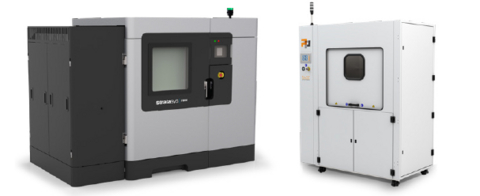
From left, Stratasys F900™ industrial printer and PostProcess® BASE Automated FDM Support Removal System.
Post-processing involves cleaning, resin removal, support removal, smoothing, curing, or finishing printed parts, which can be complicated, manual, and time‑consuming. Customers often must research vendors on their own, make separate purchases, and hope everything works well together. The Post Processing Partnership Program is intended to reduce the complexity customers face when researching, selecting, and purchasing post-processing technologies.
Through the program, Stratasys curates and validates third-party solutions that are guaranteed to work with its systems, allowing customers to purchase post-processing equipment alongside Stratasys software, materials, printers, and services through Stratasys channels. This approach simplifies procurement, reduces risk, and helps customers deploy optimized workflows more efficiently.
“Customers are increasingly focused on optimizing the entire additive manufacturing workflow, not just individual steps, and the Post Processing Partnership Program is designed to make post-processing easier to adopt and better integrated into production environments,” said Rich Garrity, Chief Industrial Business Officer at Stratasys. “PostProcess Technologies is a great fit for this program because they are a well-established partner with a strong reputation, and many of our customers already rely on their solutions today. This agreement builds on that foundation and brings unique value to the market.”
Under the commercial agreement, Stratasys will offer validated post-processing solutions from PostProcess Technologies through its global sales channels, enabling customers to purchase post-processing equipment under a single Stratasys purchase order alongside their Stratasys systems. Installation, service, and ongoing support will be provided directly by PostProcess Technologies, helping ensure solutions are optimized for use with Stratasys platforms while easing the operational and procurement burden for customers.
“Our solutions are widely used across prototyping and production environments where operator safety, consistency, and throughput are critical. As part complexity and volumes continue to grow, traditional tools and manual finishing methods do not scale,” said Jeff Mize, CEO of PostProcess Technologies. “This agreement deepens our alignment with the clear industry leader, extending our commercial reach and making it easier for customers to deploy proven post-processing solutions as part of a unified additive manufacturing workflow.”
PostProcess Technologies’ portfolio supports multiple Stratasys technologies, including FDM®, PolyJet™, SLA, and P3™, providing automated post-processing solutions designed to improve consistency, throughput, and part quality across both prototyping and production environments. These capabilities are particularly valuable for customers in industries such as automotive, aerospace, dental, and consumer goods, where post-processing can represent a significant portion of overall additive manufacturing time and cost.
The Post Processing Partnership Program, including the initial post-processing offerings from PostProcess Technologies, is available now: https://support.stratasys.com/en/Printers/Post-Processing-Partnership-Program.
About Stratasys
Stratasys is leading the global shift to additive manufacturing with innovative 3D printing solutions for industries such as aerospace, automotive, consumer products, and healthcare. Through smart and connected 3D printers, polymer materials, a software ecosystem, and parts on demand, Stratasys solutions deliver competitive advantages at every stage in the product value chain. The world’s leading organizations turn to Stratasys to transform product design, bring agility to manufacturing and supply chains, and improve patient care.
To learn more about Stratasys, visit www.stratasys.com, the Stratasys blog, X/Twitter, LinkedIn, or Facebook. Stratasys reserves the right to utilize any of the foregoing social media platforms, including Stratasys’ websites, to share material, non-public information pursuant to the SEC’s Regulation FD. To the extent necessary and mandated by applicable law, Stratasys will also include such information in its public disclosure filings.
View source version on businesswire.com: https://www.businesswire.com/news/home/20260127489554/en/
Media and Investor contacts:
Stratasys Corporate,
Chris Reese
chris.reese@stratasys.com
+1 651 357 0877
Stratasys Corporate,
Erik Snider
Erik.Snider@stratasys.com
+972 74 745 6053
Investor Relations
Yonah Lloyd
Yonah.Lloyd@stratasys.com
+972 74 745 4919
Source: Stratasys