Teledyne FLIR OEM Announces Upgraded Prism SKR Software, Boosting Automatic Target Recognition Capabilities for the Defense Industry
Teledyne FLIR OEM Announces Upgraded Prism SKR Software, Boosting Automatic Target Recognition Capabilities for the Defense Industry
Teledyne FLIR OEM (NYSE:TDY) announced an upgraded Prism SKR seeker software on April 7, 2026, evolving it into a unified, closed-loop autonomy platform for guided weapon systems.
Rhea-AI Sentiment reads the wording of the document, how positive or negative its language is on a 1 to 5 scale. The balance of points shown with the takes weighs what the document actually discloses, so the two can disagree, for example when a trial that missed its main goal is described in upbeat language.
Software update unifies mission execution and intelligent supervision in a single, closed-loop autonomy platform for guided weapon systems
GOLETA, Calif.--(BUSINESS WIRE)--
Teledyne FLIR OEM, part of Teledyne Technologies Incorporated (NYSE:TDY), today announced an upgrade to Prism™ SKR (pronounced “seeker”), evolving the software from automated targeting into a unified, closed-loop autonomy platform. The milestone update sets a new defense industry standard by unifying mission execution and intelligent supervision into a single platform for guided weapon systems, including smart, loitering munitions, air-launched effects (ALE), counter-UAS platforms, attritables, interceptors, and first-person view (FPV) drones.
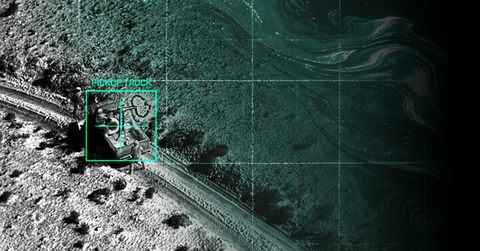
Prism SKR Perception Based Automatic Target Recognition (ATR) and Supervised Autonomy Software
Teledyne FLIR OEM’s upgraded Prism SKR software manages the entire mission lifecycle, from tasking through execution by delivering perception-based automatic target recognition (ATR) and autonomy with advanced features designed for precision in contested environments. Prism SKR’s pixel-lock targeting also addresses the critical final meters of FPV drone missions, ensuring precision autonomy in the terminal phase where manual control often fails due to signal interference.
“The upgraded Prism SKR represents a significant leap forward by unifying execution and intelligent supervision to provide operators with greater mission confidence,” said Jared Faraudo, Vice President of Product Management, Teledyne FLIR OEM. “By integrating advanced mission scripting with support for AI-accelerated development and execution compatible with large language model (LLM) tools like GitHub Copilot, we are enabling developers to plan and task systems at the speed of intent, while the QgroundControl plugin ensures these capabilities fit naturally into existing operator workflows.”
Key enhancements include 3D interactive aimpoint selection, terrain-aware operations, and pixel-lock targeting, which ensures precise, persistent re‑identification (ReID) tracking through signal degradation or loss, scaling from assisted AI during FPV handoff to fully autonomous mission execution. These capabilities support a wide range of mission scenarios, including air-to-ground, ground-to-air, air-to-air, and ground-to-ground operations.
Built for rapid OEM deployment, Prism SKR operates at the edge on low‑power embedded platforms, including NVIDIA® Orin™ and Teledyne FLIR OEM’s AVP system‑on‑module (SOM) based on the Qualcomm Dragonwing™ QCS8550. The Weapon Open Systems Architecture (WOSA) compliant software integrates seamlessly with Boson® and Neutrino® IR cameras, as well as integrator‑selected visible sensors, delivering real‑time target tracking and system state. A comprehensive application programming interface (API) and software development kit (SDK) accelerate deployment speed and reduce development risk while enabling performance optimization and customization.
Teledyne FLIR OEM, a Teledyne Technologies company, is the world’s largest volume manufacturer of ITAR-free and NDAA-compliant infrared (IR) sensor and camera modules. As a vertically integrated supplier, Teledyne FLIR OEM delivers thousands of thermal imaging modules and related software tools daily for defense, automotive, uncrewed, professional, and artificial intelligence applications designed to improve decision support and situational awareness. Teledyne FLIR OEM enables life-changing thermal sensing so the world can do and see more. For more information, please visit oem.flir.com or follow @flir.
Automatic target recognition is a technology that uses sensors and software to identify and classify objects or points of interest without human intervention, like a camera that not only sees a car but also tells you its make and whether it’s moving. Investors care because ATR can drive sales and competitive advantage in markets such as defense, surveillance, and medical imaging, influence recurring-contract revenue, and raise regulatory and liability considerations that affect valuation.
loitering munitionstechnical
A loitering munition is a weapon that combines a small, guided aircraft and its explosive warhead into a single system that can fly over an area, wait while searching for a target, then dive in to destroy it — think of it as a drone with a built‑in bomb that can loiter like a hawk before striking. Investors care because demand, production, export rules, and ethical or regulatory restrictions can sharply affect defense company revenues, supply chains, and share prices.
air-launched effectstechnical
Air-launched effects are weapons, sensors or unmanned systems that are released from an aircraft to perform a mission, such as striking a target, gathering intelligence or jamming signals. Think of them like tools a delivery truck drops off to do a job on its own: they extend the aircraft’s reach and capabilities without risking the crew. Investors watch them because demand, government contracts, export rules and battlefield performance can drive revenue, regulatory scrutiny and stock volatility for defense suppliers.
counter-uastechnical
Counter-UAS (counter-unmanned aircraft systems) are tools and tactics used to detect, track, and disable or divert drones that pose a threat to people, property, or operations. Think of them as a combination of a security camera, alarm system, and net that can find an unwanted flying device and stop it before it causes harm. Investors care because demand, regulation, and deployment of these systems affect revenue, contract opportunities, legal risk, and the valuation of companies that build or use them.
first-person viewtechnical
First-person view describes a visual perspective that shows what auser or operator would see from their own eyes or camera mounted on them or their device, like watching through a pair of goggles or a dash-mounted camera. For investors, it signals how compelling or practical a product is for customers, affecting user experience, safety and regulatory scrutiny, and therefore potential adoption, sales and long-term value.
system-on-moduletechnical
A system-on-module (SoM) is a compact, ready-made circuit board that bundles a processor, memory, power management and essential interfaces into a single plug-in unit — think of it as the engine and control system of an electronic product that you can drop into different designs. Investors care because using SoMs speeds product development, reduces engineering costs and supply-chain complexity, and shifts value toward the module supplier, all of which affect time-to-market, margins and business risk.
weapon open systems architecturetechnical
A weapon open systems architecture is a design approach for military weapon systems that uses common standards and plug-and-play interfaces so parts and software from different suppliers can work together like interchangeable pieces of a puzzle. For investors, it matters because it lowers long-term costs, speeds upgrades, reduces reliance on a single vendor, and creates ongoing opportunities for multiple suppliers and service contracts throughout a system’s life.
application programming interfacetechnical
A set of rules and tools that lets different software systems talk to one another, like a menu and waiter connecting diners to a kitchen so requests are understood and fulfilled. For investors, APIs matter because they enable companies to share data, add features, partner quickly, scale software without rebuilding everything, and create new revenue streams or efficiencies—advantages that can affect growth, costs, and competitive position.