
Correcting and Replacing: Theralase(R) Releases Q2 2026 Financial Statements
Theralase narrows its half‑year loss, strengthens cash via financing, and reports durable response data from its Phase II bladder cancer Study II.
Rhea-AI Summary
Theralase (TLTFF) reported Q2 2026 interim results and updated Phase II bladder cancer clinical data for its Ruvidar-based Study II.
For the six months ended June 30, 2026, total revenue was $296,927, down 5% from 2025, with gross margin rising to 50% of revenue versus 42% a year earlier. Net loss narrowed 14% to $2,093,926, driven mainly by a 25% reduction in net R&D expenses to $1,101,126. Cash increased to $5,260,832 at June 30, 2026, and a subsequent August 24, 2026 private placement raised $3,555,000 in gross proceeds.
In Study II Cohort 1, 58 of 89 patients (65.2%) achieved complete response at any time, with 40.4% of responders maintaining complete response for 450 days. Kaplan‑Meier analysis estimated cancer‑free probabilities of 48.6%, 34.5% and 25.4% at 1, 2 and 3 years, respectively. Theralase plans NDS/NDA submissions for Ruvidar starting in 4Q 2026, with marketing decisions anticipated in 2027, and is preparing a combinational study with Adstiladrin subject to FDA approval.
Positive
- Revenue $296,927 for six months ended June 30, 2026, with gross margin improving to 50% of revenue from 42% in 2025
- Net loss reduced 14% year over year to $2,093,926 for the six‑month period
- Net R&D expense decreased 25% to $1,101,126, representing 49% of operating expenses
- Cash balance $5,260,832 at June 30, 2026, plus $3,555,000 gross proceeds from an August 24, 2026 private placement
- Clinical efficacy: 65.2% (58/89) complete response rate in Study II primary endpoint analysis
- Durability: 40.4% (21/52) maintained complete response for 450 days; estimated 1‑year cancer‑free probability 48.6%
- Regulatory path: plans to begin NDS/NDA submissions for Ruvidar in 4Q 2026 with marketing decisions anticipated in 2027
Negative
- Revenue declined 5% year over year to $296,927 for the six‑month period
- Continuing losses: $2,093,926 net loss for six months, with the Drug Division representing 80% ($1,684,924)
- TEAEs and SAEs: 24 serious adverse events reported in Study II, including Grade III and IV events, though Grade V events were deemed unrelated
AI-generated analysis. How Rhea-AI works. Not financial advice.




Theralase® Provides Updates on its Phase II Bladder Cancer Clinical Study and Oncology Pipeline
This Press Release adds omitted safety and prescribing information about Adstiladrin® (nadofaragene firadenovec-vncg)
Toronto, Ontario--(Newsfile Corp. - September 18, 2026) - Theralase® Technologies Inc. (TSXV: TLT) (OTCQB: TLTFF) ("Theralase®" or the "Company"), a clinical-stage pharmaceutical company dedicated to the research and development of energy-activated small molecules for the safe and effective destruction of various cancers, bacteria and viruses, has released its unaudited interim consolidated financial statements for the six-month period ended June 30th, 2026 ("Financial Statements").
Theralase® will be hosting a conference call on September 3rd at 11:00 am ET, which will include a presentation of the financial and operational results for the quarter ended June 30th, 2026. To ensure Theralase® has time to address questions during the call, please e-mail them in advance to mperraton@theralase.com.
| Zoom Meeting Link: | https://us02web.zoom.us/j/89698954744 |
| Conference Call in: | Webinar ID: 896 9895 4744 - 1-647-558-0588 (Canada) / 1-646-558-8656 (US) - not required for those attending by Zoom. |
An archived version will be available on the website following the conference call.
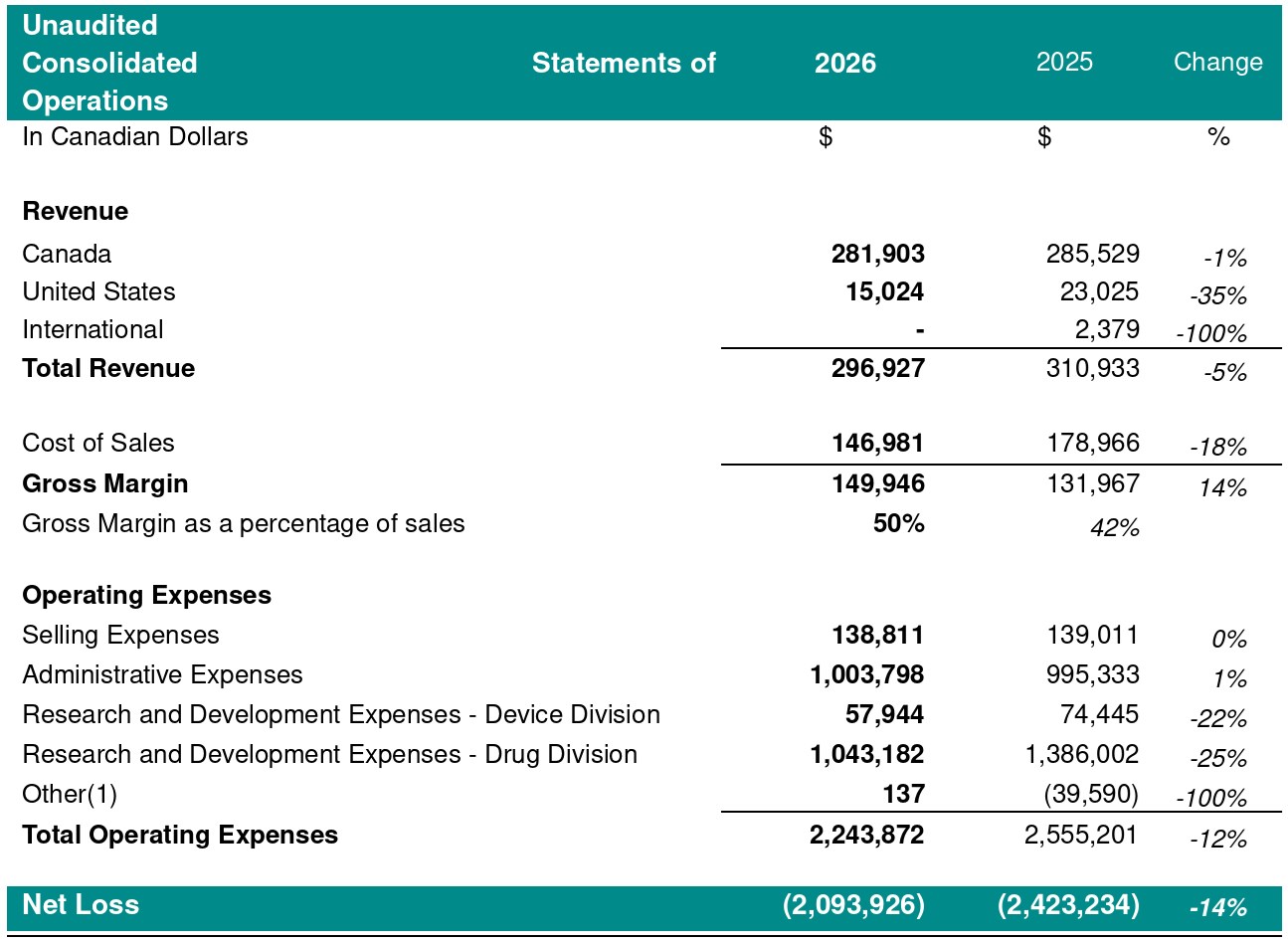
Table 1: Financial Summary for the Six-Month Period Ended June 30th
To view an enhanced version of this graphic, please visit:
https://images.newsfilecorp.com/files/2786/314778_78ca58d6f4c3f869_001full.jpg
1 Other represents foreign exchange, interest accretion on lease liabilities and / or interest income
Financial Highlights:
For the six-month period ended June 30th, 2026 (All funds in Canadian Dollars):
- Total revenue decreased to
$296,927 from$310,933 for the same period in 2025, a5% decrease.
- Cost of sales for the six-month period ended June 30th, 2026, was
$146,981 (50% of revenue), resulting in a gross margin of$149,946 (50% of revenue). In comparison, cost of sales for the same period in 2025 was$178,966 (58% of revenue), resulting in a gross margin of$131,967 (42% of revenue).
- Selling expenses remained essentially unchanged at
$138,811 , compared with$139,011 for the same period in 2025.
- Administrative expenses for the six-month period ended June 30th, 2026 increased to
$1,003,798 from$995,333 for the same period in 2025, a1% increase. The increase was primarily attributable to higher professional fees, investor relations costs, administrative salaries, amortization and depreciation allocation, partially offset by lower stock-based compensation.
Net research and development expenses for the six-month period ended June 30th, 2026 decreased to
$1,101,126 from$1,460,447 for the same period in 2025, a25% decrease. The decrease was primarily attributable to lower Study II patient enrollment and treatment costs. Research and development expenses represented49% of the Company's operating expenses and reflect continued investment in the research and development of the Company's Drug Division.The net loss for the six-month period ended June 30th, 2026 was
$2,093,926 , which included$287,146 of net non-cash expenses (amortization, stock-based compensation and interest accretion on lease liabilities). This compared with a net loss of$2,423,234 for the same period in 2025, which included$485,865 of net non-cash expenses. The Drug Division represented$1,684,924 (80% ) of the loss. The14% decrease in net loss was primarily due to reduced research and development spending on Study II.Cash was
$5,260,832 as of June 30th, 2026, compared with$182,914 as of December 31st, 2025. Subsequent to quarter-end, on August 24th, 2026, the Company closed a brokered private placement under the listed issuer financing exemption for aggregate gross proceeds of$3,555,000 .
Operational Highlights:
Collaborative Clinical Development Agreement
On January 12th, 2026, the Company announced that it had entered into a collaborative clinical development agreement, dated January 9th, 2026 with Ferring Pharmaceuticals, expanding the Company's existing Phase II NMIBC clinical program (NCT03945162) through the addition of a new cohort evaluating Ruvidar® (TLD-1433) in combination with Adstiladrin® (nadofaragene firadenovec-vncg) for adult patients diagnosed with high-risk Bacillus Calmette-Guérin ("BCG")-Unresponsive Non-Muscle Invasive Bladder Cancer ("NMIBC") Carcinoma In-Situ ("CIS") with or without papillary disease (±Ta/T1) ("Study II"). Under the terms of the agreement, the Company will remain the sponsor of the study, with both parties providing clinical oversight through a joint development committee. The new cohort is expected to be enrolled and treated initially in the United States and, subject to written agreement, may expand into Canada or other jurisdictions.
Study II Interim Clinical Data
Cohort 1
Theralase® has completed enrollment in Study II, with the Clinical Study Sites ("CSSs") enrolling and providing the primary Study Procedure to 95 patients, of whom 82 have completed Study II and 13 remain on study pending clinical data. The median number of BCG instillations was 15.3.
As of August 28th, 2026, 89 patients have been assessed for response outcomes, evaluable for the primary endpoint analysis.
| Primary Endpoint Performance (CR at any Point in Time) | |||
| # | % | Confidence Interval ( | |
| Complete Response ("CR") | 58/89 | [49.4, 80.9] | |
| Total Response (CR and IR) | 65/89 | [56.4, 89.7] | |
Table 2: Primary Endpoint Performance
Approximately 2 out of 3 patients diagnosed with BCG-Unresponsive NMIBC CIS (with or without Ta/T1) achieved a CR following treatment with the Theralase® Study Procedure.
| Secondary Endpoint Performance (Duration of CR) (450 Days) | |||
| # | % | Confidence Interval ( | |
| Complete Response (CR) | 21/52 | [24.0, 56.7] | |
| Total Response (CR and IR) | 22/52 | [26.5, 58.1] | |
Table 3: Secondary Endpoint Performance
Approximately 2 out of 5 patients who responded to the Theralase® treatment maintained their complete response for 15 months, post treatment.
| Tertiary Endpoint Performance (Safety) (450 Days) | ||
| # | % | |
| Safety | 82/82 | |
Table 4: Tertiary Endpoint Performance
Treatment Emergent Adverse Events ("TEAEs") were noted, but did not meet the SAE criteria. TEAEs included urinary frequency (
There have been 24 SAEs reported: 1 x Grade I, 3 x Grade II, 13 x Grade III, 5 x Grade IV (all resolved between 1 to 82 days) and 2 x Grade V (unrelated to the Study Drug, Study Device or Study Procedure).
| Duration of CR | |||
| Time | # | % | Confidence Interval ( |
| 2 Years | 10/52 | [7.9, 30.5] | |
| 3 Years | 10/52 | [7.9, 30.5] | |
Table 5: Duration of CR at Extended Time Points
Patients who have completed the study were followed for up to 3 years after initial treatment at extended time points. One patient demonstrated CR for 7 years, after one Study Procedure.
On Kaplan-Meier analysis, if CR is obtained, the long term estimated probability of remaining cancer free at 1, 2 and 3 years is
Cohort 2
Theralase®, in conjunction with Ferring Pharmaceuticals, subject to FDA approval, is preparing to launch a combinational clinical study to investigate the safety and efficacy of combining light-activated Ruvidar® with Adstiladrin.
It is anticipated that the complementary mechanisms of action (Ruvidar® targets bladder cancer cells directly, Adstiladrin targets healthy bladder cells to produce Interferon to stimulate the innate and adaptive immune system) will provide a strong additive effect in the treatment of patients being treated for BCG-Unresponsive NMIBC CIS.
In the Study Procedure, patients will be treated with Ruvidar® (1 hour of drug instillation, 1 hour of light activation), then at another visit, they will be instilled with Adstiladrin® (1 hour procedure), both in outpatient procedures. Under the clinical protocol, the patient may receive up to 4 treatments of Adstiladrin.
The presiding uro-oncologist will have the option to deliver an additional re-induction Study Procedure, if the patient recurs.
The patient will be followed for 15 months after initial Study Procedure and up to 3 years for post-study follow-up.
Regulatory Pathway, Commercialization Strategy and FDA Guidance
Following the completion of patient follow-up and final clinical data analysis, Theralase® intends to commence submission of a New Drug Submission ("NDS") to Health Canada and a New Drug Application ("NDA") to the United States Food and Drug Administration ("FDA") in 4Q2026, under a rolling review, with marketing decisions anticipated in 2027.
In parallel with the finalization of Study II, Theralase® is pursuing commercialization opportunities and strategic partnerships to support the global marketing and distribution of Ruvidar®. The Company is interested in engaging in discussions with pharmaceutical companies across multiple geographic regions regarding:
Licensing arrangements for Ruvidar® in the treatment of BCG-Unresponsive NMIBC CIS in various geographic territories
Collaborative clinical research initiatives focused on the application of light-activated Ruvidar® for broader NMIBC indications
Collaborative clinical research combining Ruvidar® with other FDA-approved drugs to enhance treatment efficacy
Rutherrin® GLP Toxicology and Pipeline Expansion
Theralase® plans to complete Good Laboratory Practices ("GLP") toxicology studies for Rutherrin® by 4Q2026, allowing determination of the Maximum Tolerated Dose ("MTD") and corresponding Human Equivalent Dose ("HED"). Subject to regulatory approval, the Company intends to commence Phase 0/I/II adaptive clinical studies in 2027.
Target indications under investigation; include: Glioblastoma Multiforme ("GBM"), Non-Small Cell Lung Cancer ("NSCLC"), Muscle Invasive Bladder Cancer ("MIBC"), pancreatic cancer, colorectal cancer and Herpes Simplex Virus-1 ("HSV-1").
About Study II
Study II utilizes the therapeutic dose of the patented drug, Ruvidar® (TLD-1433), activated by the study device, the TLC-3200 Medical Laser System. Study II has enrolled and treated 95 BCG-Unresponsive NMIBC CIS patients across clinical study sites located in Canada and the United States.
About Theralase® Technologies Inc.
Theralase® is a clinical-stage pharmaceutical company dedicated to the research and development of energy-activated small molecules for the safe and effective destruction of cancer, bacteria and viruses.
Additional information is available at www.theralase.com and www.sedarplus.ca
About Adstiladrin
Adstiladrin® (nadofaragene firadenovec-vncg) is an FDA-approved intravesical non-replicating gene therapy for the treatment of adult patients with high-risk BCG-unresponsive NMIBC CIS with or without papillary tumors (±Ta/T1). It is a non-replicating adenovirus vector-based therapy containing the gene interferon alfa-2b, administered locally as a monotherapy by catheter directly into the bladder once every three months. The vector enters the cells of the bladder wall, releasing the active gene and causing the bladder's cell walls to secrete high and transient local expression of interferon alfa-2b protein, a naturally occurring protein the body uses to fight cancer. This approach essentially turns the bladder wall cells into interferon micro factories, enhancing the body's own natural defenses against the cancer.
Please click to see the full Prescribing Information.
Neither TSX Venture Exchange nor its Regulation Services Provider (as that term is defined in the policies of the TSX Venture Exchange) accepts responsibility for the adequacy or accuracy of this release.
Forward Looking Statements
This news release contains forward-looking statements and forward-looking information (collectively, "FLS") within the meaning of applicable Canadian securities laws. Such statements; include, but are not limited to statements regarding the Company's proposed development plans with respect to small molecules and their drug formulations. FLS may be identified by the use of the words "may, "should", "will", "anticipates", "believes", "plans", "expects", "estimate", "potential for" and similar expressions; including, statements related to the current expectations of the Company's management regarding future research, development and commercialization of the Company's small molecules; their drug formulations; preclinical research; clinical studies and regulatory approvals.
These statements involve significant risks, uncertainties and assumptions; including, the ability of the Company to fund and secure regulatory approvals to successfully complete various clinical studies in a timely fashion and implement its development plans. Other risks to the Company include: successful commercialization of its energy-activated small molecules and drug formulations; access to sufficient capital to fund the Company's operations on terms that are commercially favorable to the Company or at all; the safety and effectiveness of the Company's small molecules and formulations against the diseases tested in its clinical studies; the failure to comply with the terms of license agreements with third parties and as a result lose the right to use key intellectual property in its business; the ability to protect its intellectual property; the timing and success of submission, acceptance and approval of regulatory filings. Many of these factors that will determine actual results are beyond the Company's ability to control or predict.
Readers should not unduly rely on these FLS, which are not a guarantee of future performance. There can be no assurance that FLS will prove to be accurate as such FLS involve known and unknown risks, uncertainties and other factors which may cause actual results or future events to differ materially from the FLS.
Although the FLS contained in the press release are based upon what management currently believes to be reasonable assumptions, the Company cannot assure prospective investors that actual results, performance or achievements will be consistent with these FLS.
All FLS are made as of the date hereof and are subject to change. Except as required by law, the Company assumes no obligation to update such FLS.
For investor information on the Company, please feel to reach out Investor Inquiries - Theralase Technologies.
For More Information:
1.866.THE.LASE (843.5273)
416.699.LASE (5273)
www.theralase.com
Kristina Hachey, CPA
Chief Financial Officer X 224
khachey@theralase.com
To view the source version of this press release, please visit https://www.newsfilecorp.com/release/314778
FAQ
AI-generated questions and answers. How Rhea-AI works. Not financial advice.
How can investors access Theralase’s Q2 2026 financial results conference call?
The conference call is scheduled for September 3 at 11:00 am ET. Participants can join via Zoom at https://us02web.zoom.us/j/89698954744 or by phone using Webinar ID 896 9895 4744 at 1‑647‑558‑0588 (Canada) or 1‑646‑558‑8656 (US). Dial‑in is not required for those joining by Zoom. An archived version will be available on Theralase’s website after the call. Questions for the call can be emailed in advance to mperraton@theralase.com.
What are the key efficacy and safety outcomes from Study II Cohort 1?
In Cohort 1, 58 of 89 patients (65.2%) achieved a complete response at any point, and total response (complete plus incomplete response) was 73.0% (65/89). Among 52 evaluable responders, 40.4% (21/52) maintained complete response and 42.3% (22/52) maintained total response at 450 days. Kaplan‑Meier analysis estimated remaining cancer‑free probabilities of 48.6%, 34.5% and 25.4% at 1, 2 and 3 years, respectively. TEAEs such as urinary frequency, hematuria and urgency were common but resolved within one month. There were 24 SAEs (Grades I–V), with the two Grade V events reported as unrelated to the study drug, device or procedure.
What is planned for the combinational Cohort 2 using Ruvidar and Adstiladrin?
Theralase, with Ferring Pharmaceuticals and subject to FDA approval, is preparing a combinational clinical study to evaluate light‑activated Ruvidar with Adstiladrin in BCG‑unresponsive NMIBC CIS. Patients will receive Ruvidar (1 hour instillation plus 1 hour light activation) and, at another visit, Adstiladrin (1 hour instillation), both as outpatient procedures. Under the protocol, a patient may receive up to four Adstiladrin treatments, and the uro‑oncologist may deliver an additional re‑induction Study Procedure upon recurrence. Patients will be followed for 15 months after initial treatment and up to 3 years in post‑study follow‑up.
What regulatory and commercialization steps is Theralase planning for Ruvidar?
Following completion of patient follow‑up and final data analysis for Study II, Theralase intends to begin a rolling New Drug Submission to Health Canada and a New Drug Application to the FDA in 4Q 2026, with marketing decisions anticipated in 2027. In parallel, the company is pursuing licensing and partnership opportunities for Ruvidar in BCG‑unresponsive NMIBC CIS across multiple territories, as well as collaborative clinical research for broader NMIBC indications and combination regimens with other FDA‑approved drugs.
What are Theralase’s plans for Rutherrin and its broader oncology pipeline?
Theralase plans to complete GLP toxicology studies for Rutherrin by 4Q 2026 to determine the maximum tolerated dose and corresponding human equivalent dose. Subject to regulatory approval, the company intends to start Phase 0/I/II adaptive clinical studies in 2027. Target indications under investigation include glioblastoma multiforme, non‑small cell lung cancer, muscle invasive bladder cancer, pancreatic cancer, colorectal cancer and Herpes Simplex Virus‑1.