
Teako Commences Field Program at Tynset Copper-Zinc-Silver Project and Secures Contractor for Induced Polarization Survey
Teako Minerals (CSE:TMIN, OTC:TMINF) has commenced its 2026 field program at the 100%-owned Tynset Cu-Zn-Ag VMS project in central Norway.
Sentiment and the balance of points
Rhea-AI Sentiment reads the wording of the document, how positive or negative its language is on a 1 to 5 scale. The balance of points shown with the takes weighs what the document actually discloses, so the two can disagree, for example when a trial that missed its main goal is described in upbeat language.
Rhea-AI Summary
Teako Minerals (CSE:TMIN, OTC:TMINF) has commenced its 2026 field program at the 100%-owned Tynset Cu-Zn-Ag VMS project in central Norway. Work includes detailed geological and structural mapping, systematic sampling and an Induced Polarization (IP) geophysical survey at the Storbekken Priority 1 target to refine high-priority drill targets.
Teako expects first diamond drilling of priority targets in Q4 2026–Q1 2027. The company has also expanded Tynset by staking and being granted four additional exploration licences covering the Nonsvola and Vingelen target areas, increasing the prospective strike length of the volcanic belt.
Geovisor Oy has been contracted to complete about 10 line km of IP across Storbekken from mid-October 2026, aiming to define anomalies to depths of roughly 200–350 metres and integrate results with surface geology, geochemistry and historical data to optimize drill targeting.
Positive
- 2026 field program launched to refine high-priority drill targets at Tynset
- Four additional exploration licences added at Nonsvola and Vingelen target areas
- ~10 line km IP survey at Storbekken contracted to Geovisor Oy for mid-October 2026
- First diamond drilling of priority Tynset targets expected in Q4 2026–Q1 2027
- 121 km² land package with ~29 km of prospective strike in the Hersjø volcanic belt
- Historical sampling shows up to 2.44% Cu, 30.93% Zn, 14.94% Pb and 197.1 g/t Ag in rock chips
Negative
- None.
AI-generated analysis. How Rhea-AI works. Not financial advice.




Vancouver, British Columbia--(Newsfile Corp. - August 18, 2026) - Teako Minerals Corp. (CSE: TMIN) (the "Company" or "Teako") is pleased to announce the commencement of its 2026 field program at the Tynset copper-zinc-silver ("Cu-Zn-Ag") volcanogenic massive sulphide ("VMS") project in central Norway. The current field program will include additional geological mapping and sampling, together with an Induced Polarization ("IP") geophysical survey, designed to build upon the Company's existing datasets and produce refined and high-priority drill targets within the Storbekken Priority 1 target area. The Company currently expects first diamond drill testing of priority targets at Tynset in Q4 2026-Q1 2027.
The Company also announces that it has expanded the Tynset Project through the staking and granting of four additional exploration licences covering the high-priority Nonsvola and Vingelen target areas (see Figure 1) thus expanding the strike length of the prospective volcanic belt.
Highlights
Teako commences field program at the high-grade Tynset copper-zinc-silver ("Cu-Zn-Ag") volcanogenic massive sulphide ("VMS") project in central Norway. The current work program is designed to refine drill targets for testing on a priority basis in Q4 2026-Q1 2027.
Tynset Project has been expanded through the staking and granting of four additional exploration licences covering the high-priority Nonsvola and Vingelen target areas (see Figure 1) thus expanding the strike length of the prospective volcanic belt.
Geovisor Oy has been engaged to complete approximately 10 line kilometres of IP surveying across the Storbekken Priority 1 target area (see Figure 1) commencing mid October 2026.
About Field Program and Induced Polarization Survey
The 2026 field program at the Tynset Project will consist of i) detailed geological and structural mapping, together with systematic outcrop sampling for geochemical and spectral laboratory analysis (the "Field Program"), and ii) an IP geophysical survey covering the most prospective stratigraphy for high-grade VMS-style mineralization. The Field Program is designed to refine the positions of key lithological contacts and better characterize known mineralized and altered outcrops through geochemistry and spectral data. The collection of structural data along the planned IP survey lines will also improve the interpretation of the geophysical results. The Company will prioritize the resistivity and chargeability features which can be tied to the most promising surface geology, to improve the probability of successfully drilling a copper-rich VMS system.
Geological and structural mapping will be completed along the IP survey lines (see Figure 1), around known mineral occurrences and across areas of historical soil anomalism. Structural measurements will be collected using a consistent methodology to support the development of an improved three-dimensional geological interpretation and assist with the interpretation of geophysical data, historical drilling and future drill results.
Sampling will include mineralized material, representative whole-rock characterization samples and samples selected for spectral analysis. The resulting geological, structural, geochemical and spectral datasets are intended to improve the Company's understanding of alteration patterns, mineralized trends and subsurface geometry.
A critical outcome for the IP survey can be directly linked to the known geology at Storbekken, where thick packages of felsic volcanic rocks, interpreted to have been altered to quartz-sericite schists, contain variable quantities of disseminated pyrite. The IP survey is expected to help delineate the subsurface geometry and electrical response of these zones, with elevated resistivity potentially associated with the high quartz content and chargeability responses potentially reflecting disseminated sulphides. Comparing surface geological, geochemical and alteration data on these zones with the IP profiles will assist with identifying areas where favourable geophysical responses coincide with the most intense and prospective alteration, helping to vector towards a potential prospective core of the hydrothermal system and guide drill targeting. Contact zones between felsic volcanic rocks and graphitic schists could be highly prospective target horizons, marking a sea-floor interface on which exhalative VMS mineralization may have originally formed. An example is seen at the Stekenjokk deposit in Sweden, a key analogue for the Tynset project. Priority drill targets will be defined where promising IP responses correlate with prospective surface geology, combining geophysical, geological and geochemical datasets to ensure that drilling tests the most promising areas of the Storbekken target.
Details of the IP Survey
The Company has engaged Geovisor Oy to complete approximately 10 line kilometers of IP surveying across the Storbekken Priority 1 target area (see Figure 1) scheduled for mid October 2026. The resulting IP dataset is expected to provide the principal three-dimensional geophysical framework for refined drill targeting to an anticipated depth of 200-350 metres, with priority anomalies identified and interpreted from each surveyed profile.
Surface geological observations and laboratory results from the Field Program will be incorporated into the IP sections, allowing the inverted geophysical responses to be compared directly with mapped lithological contacts, alteration, mineralization and structural features. This integrated interpretation is intended to improve the geological context of identified IP anomalies and support the refinement of high-priority drill targets.
About the Tynset Project
The Tynset Project is
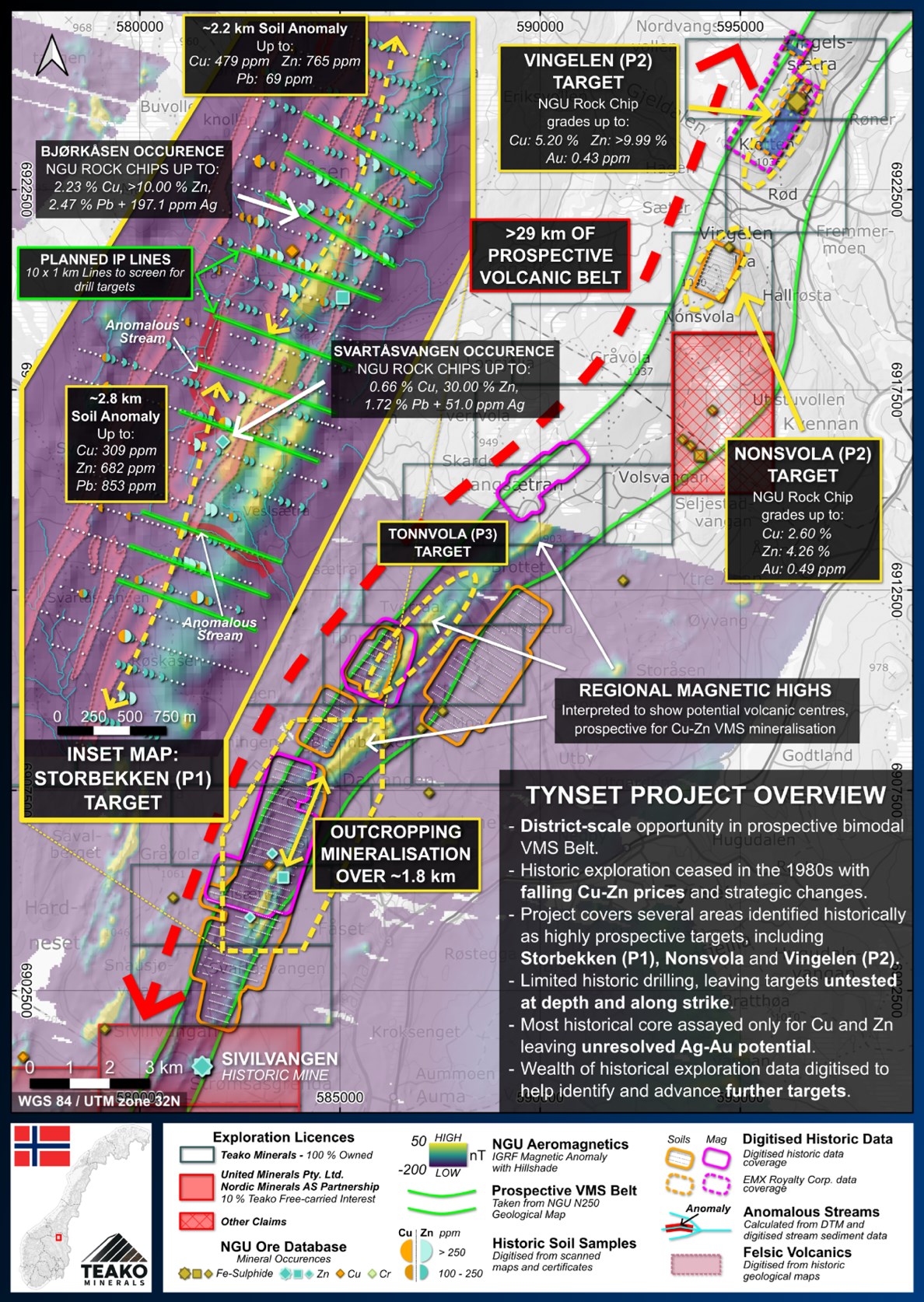
Figure 1: Overview of the Tynset Project including planned IP lines
To view an enhanced version of this graphic, please visit:
https://images.newsfilecorp.com/files/8258/310221_544d4fe424d739ee_003full.jpg
From a geological perspective, the Tynset belt consists of a bimodal volcanic sequence (both mafic and felsic volcanic rocks), together with intercalated metasedimentary rocks (including graphitic phyllites), and local sulfide occurrences. The Company has digitized a significant amount of historical exploration data1,2 collected across the belt including i) over 1,400 soil samples (with results returning up to 470 ppm Cu and 765 ppm Zn) (Folldal Verk A/S, 1981, 1982) ii) 335 stream sediment samples (returning up to 335 ppm Cu, 1,323 ppm Zn and 47 ppm Pb) (Krog, 1968), iii) over 1,800 ground magnetometer measurements (Cuttle, 1982) and iv) 23 rock chip samples reaching up to
With prospective geology, extensive soil anomalism, and surficial indications of both hydrothermal alteration and mineralization, Teako believes that this target has significant potential to host a new Cu-Zn-Ag VMS discovery. Outside this Storbekken priority 1 target, the Company has identified further prospective target areas within the Tynset Project. The Nonsvola target, found toward the north-east end of the project area, shows clear similarities to the Storbekken target. Base metal mineralization is recorded both in outcrop (NGU rock chip grades up to 2.60 % Cu, 4.26 % Zn and 0.49 g/t Au (NGU, 2015)) 2 and in historic drill core, in a sequence of altered felsic volcanics and mixed volcaniclastics that been altered to quartz-sericite and quartz-chlorite schists. Targeting is supported by strong soil anomalies (up to 1,700 ppm Zn, 200 ppm Cu and 26 ppm Pb)(Bakke and Wilberg, 1984)2, contributing to a highly prospective target ready for follow-up investigations.
Adding to the potential of the north-east end of the project area is the historic Vingelen Mine, which sits ~4.5 km north-east and along strike of the Nonsvola target. The NGU report that the mine produced an estimated 30 Kt of sulphide ore at a grade of 1.30 % Cu, with historical drilling indicating mineralization down to a depth below surface of ~210 m (NGU, 2024)3. Two subparallel 'plates' of sulphide mineralization were historically found at the deposit, separated by 10 m of host rock. The north plate was the thicker of the two (up to 4 m) and was the focus of historic production. In 1983 Folldal Verk AS attempted to drill through both plates at depth with a single hole, intersecting the upper plate (1.70 m at 0.81 % Cu & 2.35 % Zn from 208.80 m) but was stopped short of the lower plate as the hole was abandoned due to unusually challenging winter drilling conditions (i.e. -30 °C) (Bakke and Wilberg, 1984). The deposit is interpreted as a fold repetition of the same sulphide horizon across a tight isoclinal fold (Bjerkgård, 1989), making the potential hinge zone a priority target for the discovery of a thickened and potentially economic sulphide body. The project also covers multiple untested greenfields areas where strong aeromagnetic anomalies are interpreted by the Company to represent potential volcanic centres that may host VMS mineralization.
1,2 Teako has not performed sufficient work to verify the published data reported above, but the Company believes this information to be considered reliable and relevant. Results reported are maximum values and may not be representative of all samples collected within the area being evaluated
3 References made to nearby mines and analogous deposits provide context for the regional targets but are not necessarily indicative that these targets host similar tonnages or grades of copper mineralization.
Qualified Persons and Disclosure Statement
The technical information presented in this news release has been prepared in accordance with Canadian regulatory requirements as set out in National Instrument 43-101 ("NI 43-101") and approved by Eric Roth, a Director of the Company and a Qualified Person under NI 43-101. Mr. Roth holds a Ph.D. in Economic Geology from the University of Western Australia, is a Fellow of the Australian Institute of Mining and Metallurgy (AusIMM) and is a Fellow of the Society of Economic Geologists (SEG). Mr. Roth has over 35 years of experience in international minerals exploration and mining project evaluation.
References:
Bjerkgård, T. (1990) BV5641 - The Nord-Østerdalen Project 1990. Folldal Verk A/S, p. 27.
Cuttle, J. (1982) BV3093 - Folldal Project 1982 Maps. Map Appendices N-81-1. FolldalVerk A/S, Amoco Norway Oil Company.
Folldal Verk A/S (1981) BV3091 - Folldal Project 1981 Maps. Map Appendices N-81-1. Folldal Verk A/S, Amoco Norway Oil Company.
Folldal Verk A/S (1982) 'BV4176 - Geokjemi 1982, Folldal prosjekt.' Folldal Verk A/S.
Krog, R. (1968) BV2925 - Geokjemiske undersokelser: Grimsdalen III, Savalen IV. NGU Report 760. Trondheim: NGU, Folldal Verk AS.
Bakke, O. and Wilberg, R. (1984) FOLLDAL PROJECT (N-81-1): 1983 Summary. Annual Report BV3096. Folldal Verk A/S, Amoco Norway Oil Company, p. 66.ix)
Bjerkgård, T. (1989) Regionalgeologiske Undersøkelser i Vingelenfeltet, Nord-Østerdalen, i det sørlige Trondheimsfeltet, med henblikk på sulfidmineraliseringene. Cand. scient. oppgave. Universitetet i Oslo.
Grenne, T., Vokes, F.M. and Ihlen, P.M. (1999) 'Scandinavian Caledonide Metallogeny in a plate tectonic perspective', Mineralium Deposita, 34, pp. 422-471.
References to the NGU Resource Database are consolidated under this citation for simplicity. For all data sourced from this resource, please refer to: https://geo.ngu.no/kart/mineralressurser_mobil/?lang=eng
About Teako Minerals Corp.:
Teako Minerals Corp. is a Vancouver-based mineral exploration company committed to acquiring, exploring, and developing mineral properties in Norway, focusing on critical metals such as copper and zinc in massive sulfides. By leveraging leading-edge exploration technologies and strategic partnerships, Teako aims to address the growing demand for essential minerals while generating value for shareholders and stakeholders alike.
Teako, within its Norwegian Project Hub owns over 60 projects
Teako's Project Hub, including the Tynset, Venna and Løkken main projects, covers an extensive land package prospective for copper, cobalt, zinc, gold, silver, platinum group elements (or "PGE"), uranium, antimony, molybdenum, tungsten and rare-earth-elements. The Project Hub strategy was initially developed from the Company's first-mover advantage in-country, leveraging both technical skill and strong local community engagement to acquire and advance groups of both core and non-core assets. Core assets such as the Løkken, Venna and Tynset projects remain integral to the Company's self- funded exploration programs, whereas the Company aims to retain exposure to exploration success on non-core assets through securing deals with strong partners. These deals, if secured, are intended to potentially bring in capital and/or ongoing cash flow, retain upside exposure, and reduce overall risk, thereby strengthening Teako's foundation.
Contact Information:
Sven Gollan - CEO
T: +1 (604)-871-4301
Email: sven.gollan@teakominerals.com
Forward-Looking Information:
This press release may include forward-looking information within the meaning of Canadian securities legislation, concerning the business of Teako. Forward-looking information is based on certain key expectations and assumptions made by the management of Teako. In some cases, you can identify forward-looking statements by the use of words such as "will," "may," "would," "expect," "intend," "plan," "seek," "anticipate," "believe," "estimate," "predict," "potential," "continue," "likely," "could" and variations of these terms and similar expressions, or the negative of these terms or similar expressions. Forward-looking statements in this press release include statements related to timing of the expected drill program and IP survey at the Tynset project and the Company's business plans and operations and other matters. Although Teako believes that the expectations and assumptions on which such forward-looking information is based are reasonable, undue reliance should not be placed on the forward-looking information because Teako can give no assurance that they will prove to be correct. Since forward-looking statements address future events and conditions, by their very nature, they involve inherent risks and uncertainties. Actual results could differ materially from those currently anticipated due to a number of factors and risks. These include but are not limited to, risks associated with the mineral exploration industry in general (e.g., operational risks in development, exploration and production; the uncertainty of mineral resource estimates; the uncertainty of estimates and projections relating to production, costs and expenses, and health, safety and environmental risks), constraint in the availability of services, commodity price and exchange rate fluctuations, changes in legislation impacting the mining industry, adverse weather conditions and uncertainties resulting from potential delays or changes in plans with respect to exploration or development projects or capital expenditures. These and other risks are set out in more detail in Teako's interim Management's Discussion and Analysis, for the period ended January 31, 2026.
All dollar figures included herein are presented in Canadian dollars, unless otherwise noted. Neither the CSE nor its market regulator accepts responsibility for the adequacy or accuracy of this press release.
To view the source version of this press release, please visit https://www.newsfilecorp.com/release/310221
FAQ
AI-generated questions and answers. How Rhea-AI works. Not financial advice.