
Bullion Gold Intersects 2.49 g/t Au Over 8.4 Metres Including 13.40 g/t Au Over 1.0 Metre in DDH TG-05 at Terragold
Early drilling at Terragold has delivered shallow high-grade gold intercepts, with only a fraction of the planned holes assayed so far.
Rhea-AI Summary
Bullion Gold Discoveries (TTEXF) reported initial assay results from the first four diamond drill holes of its validation campaign at the 100%-owned Terragold gold project in Quebec.
Highlight intercepts include 2.49 g/t Au over 8.4 m, including 13.40 g/t Au over 1.0 m in hole TG-05, and 0.43 g/t Au over 44.5 m, including 0.75 g/t Au over 14.5 m and 2.57 g/t Au over 1.0 m in TGNO-03. All four holes returned multiple gold intercepts above 1.00 g/t Au over 1.0 m, for a 100% hit rate so far. These shallow results come from the JJ Zone along a major Archean structural corridor in the Abitibi Greenstone Belt. Assays for the remaining 28 of 32 planned drill holes are pending and will be released in batches.
Positive
- TG-05 intercept: 2.49 g/t Au over 8.4 m including 13.40 g/t Au over 1.0 m in the JJ Zone.
- TGNO-03 broad interval: 0.43 g/t Au over 44.5 m including 0.75 g/t Au over 14.5 m and 2.57 g/t Au over 1.0 m.
- Validation campaign hit rate: all 4 reported DDH returned multiple gold intercepts above 1.00 g/t Au over 1.0 m.
- Project scale indicators: historical drilling traced the Terragold showing over >2 km strike and ~250 m depth; corridor remains open.
- Surface potential: historical 245 kg bulk sample graded 4.84 g/t Au, confirming gold mineralization at surface.
Negative
- None.
AI-generated analysis. How Rhea-AI works. Not financial advice.




Montreal, Quebec--(Newsfile Corp. - September 23, 2026) - Bullion Gold Discoveries Corp. (TSXV: BGD) ("Bullion" or the "Company") is pleased to announce the assay results of the first 4 diamond drill holes ("DDH") of its validation drilling campaign at its
Simon Britt, president and CEO of Bullion, to present at the Emerging Growth Virtual Conference at 11:25 a.m. ET today. Shareholders and interested investors are invited to participate by registering at the following link: Register to BGD.V Live Stream.
DDH Assay Results Highlights:
- 1.19 g/t Au over 5.3 m, including 3.43 g/t Au over 1.3 m (TGNO-03)
- 0.43 g/t Au over 44.5 m, including 0.75 g/t Au over 14.5 m, including 2.57 g/t Au over 1.0 m (TGNO-03)
- 2.49 g/t Au over 8.4 m, including 13.40 g/t Au over 1.0 m (TG-05);
100% success rate: All 4 DDH returned multiple gold intercepts greater than 1.00 g/t Au over 1.0 m;- Multi-element suites, including silver (Ag), assay results are still pending.
Table 1: DDH Assay Results
| DDH | From (m) | To (m) | Width1 (m) | Au (g/t) | Zone |
| TG-01 | 35.4 | 41.5 | 6.1 | 0.63 | JJ Zone |
| 52.5 | 62.5 | 10.0 | 0.58 | ||
| including 59.7 | 62.0 | 2.3 | 1.28 | ||
| 66.2 | 84.5 | 18.3 | 0.38 | ||
| 90.0 | 92.7 | 2.7 | 0.83 | ||
| including 90.0 | 91.4 | 1.4 | 1.31 | ||
| TG-02 | 110.5 | 128.6 | 18.1 | 0.32 | JJ Zone |
| including 110.5 | 111.6 | 1.1 | 1.32 | ||
| including 127.5 | 128.6 | 1.1 | 1.20 | ||
| TGNO-03 | 31.0 | 46.3 | 15.3 | 0.58 | JJ Zone |
| including 39.0 | 44.3 | 5.3 | 1.19 | ||
| including 39.0 | 40.3 | 1.3 | 3.43 | ||
| 54 | 98.5 | 44.5 | 0.43 | ||
| including 54.5 | 69.0 | 14.5 | 0.75 | ||
| including 68.0 | 69.0 | 1.0 | 2.57 | ||
| TG-05 | 29.0 | 37.4 | 8.4 | 2.49 | JJ Zone |
| including 32.5 | 33.5 | 1.0 | 13.40 | ||
| 51.5 | 56.5 | 5.0 | 0.60 |
1. The reported widths correspond to core lengths. At this stage of the program, true thicknesses remain unknown.
Simon Britt, president and CEO of Bullion, commented: "Great start to the validation campaign with a shallow (vertical depth of 24 m) high-grade intercept in TG-05 further west on strike than the historical high-grade intercepts drilled in 1964. The presence of shallow high-grade gold mineralization in a quartz-feldspar porphyry system, hosted within a major, deeply rooted Archean-age structural corridor of the Abitibi Greenstone Belt, bodes well for depth continuation. With only 4 of 32 DDH assayed and the corridor open along strike and at depth, these results highlight the scale of Terragold's unexplored potential. We are just getting started: assay results of the remaining 28 DDH will be disclosed in batches in the upcoming weeks."
The shallow, tight-spaced drill pattern of the validation campaign started under the West Outcrop and extends approximately 400 metres East, passing the Terragold Showing and directly under the East Outcrop, which returned 2.80 g/t Au over 9.6 m, including 22.20 g/t Au over 1.0 m in channel sample R21 (see September 9, 2026 news release).
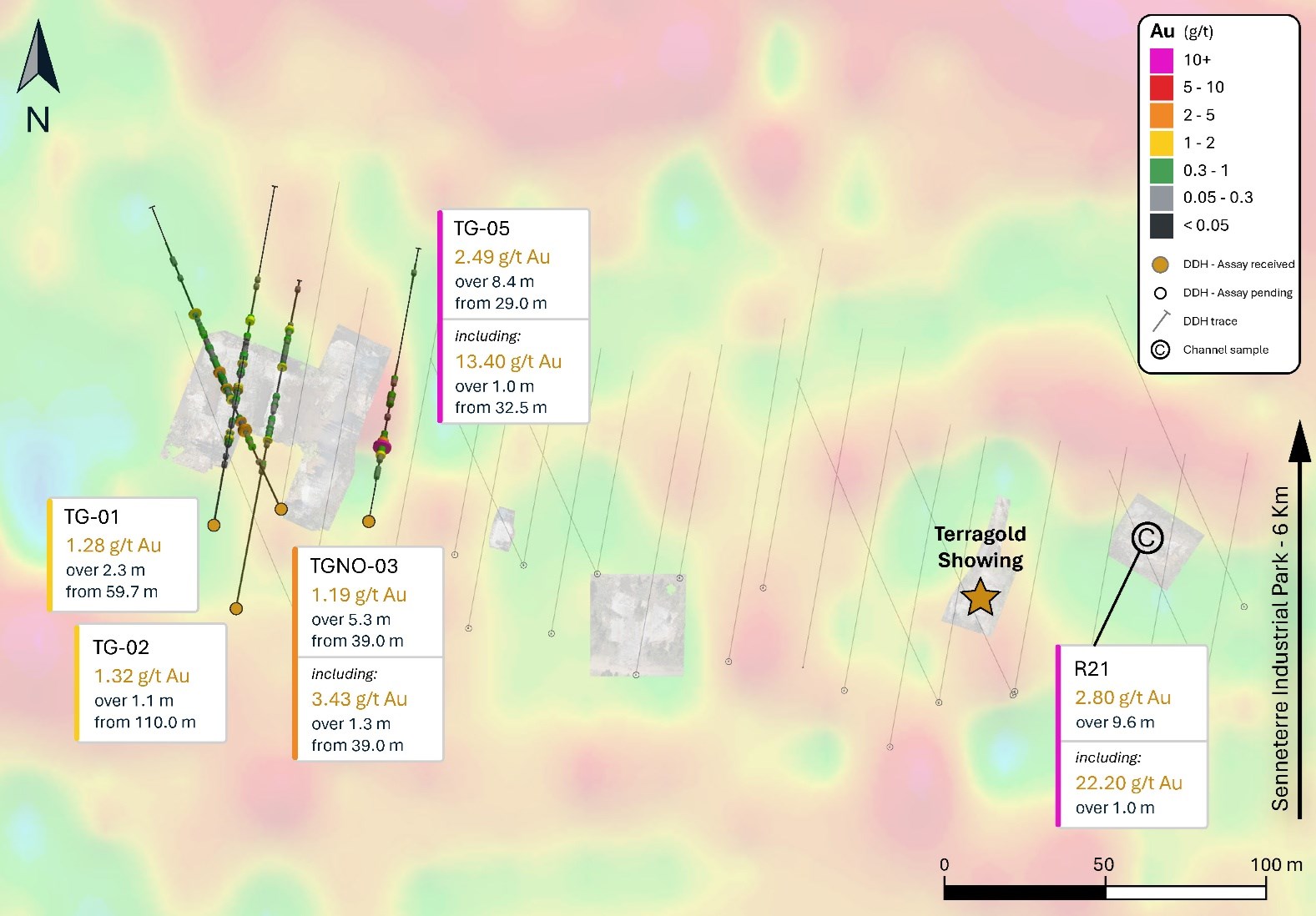
Figure 1: Plan View of Terragold DDH and Outcrops
To view an enhanced version of this graphic, please visit:
https://images.newsfilecorp.com/files/10471/315640_d1a87080a42ffbfa_002full.jpg
Table 2: DDH Collars
| DDH | Azimuth ° | Dip ° | Length (m) | UTM - East | UTM - North | Elevation (m) |
| TG-01 | 10 | -45 | 111 | 335804 | 5351750 | +320 |
| TG-02 | 10 | -45 | 150 | 335811 | 5351724 | +321 |
| TGNO-03 | 335 | -47 | 132 | 335825 | 5351755 | +320 |
| TG-05 | 10 | -45 | 120 | 335852 | 5351751 | +321 |
Geological Setting and Mineralization
The Terragold project is situated within a major Archean sheared structural corridor crosscutting the prolific Abitibi Greenstone Belt. The local geology is dominated by an aphanitic to fine-grained andesitic basalt volcanic sequence displaying widespread chlorite and carbonate alteration, crosscut by mafic to intermediate gabbro and diorite dykes. This volcanic pile is intruded by a network of felsic intrusions consisting of massive to moderately foliated quartz-feldspar porphyry (QFP) dykes. Ductile to brittle-ductile deformation is manifested by intense foliation/schistosity (ranging from 35° to 70° to core axis), mylonitic shearing, and micro-folding.
The rheological competence contrasts between the rigid siliceous porphyry dykes and the surrounding ductile volcanics focused hydrothermal fluids directly along structural contact zones ("Contact Zones"). The hydrothermal alteration footprint is marked by strong silicification, sericitization, albitization, and distinctive fuchsite (green chrome mica) alteration strongly correlated with higher-grade gold zones. Gold mineralization occurs as disseminated euhedral pyrite (
In DDH TG-01, mineralization is primarily hosted in a sheared andesitic basalt (90.0 m to 92.7 m) with disseminated sulphides (
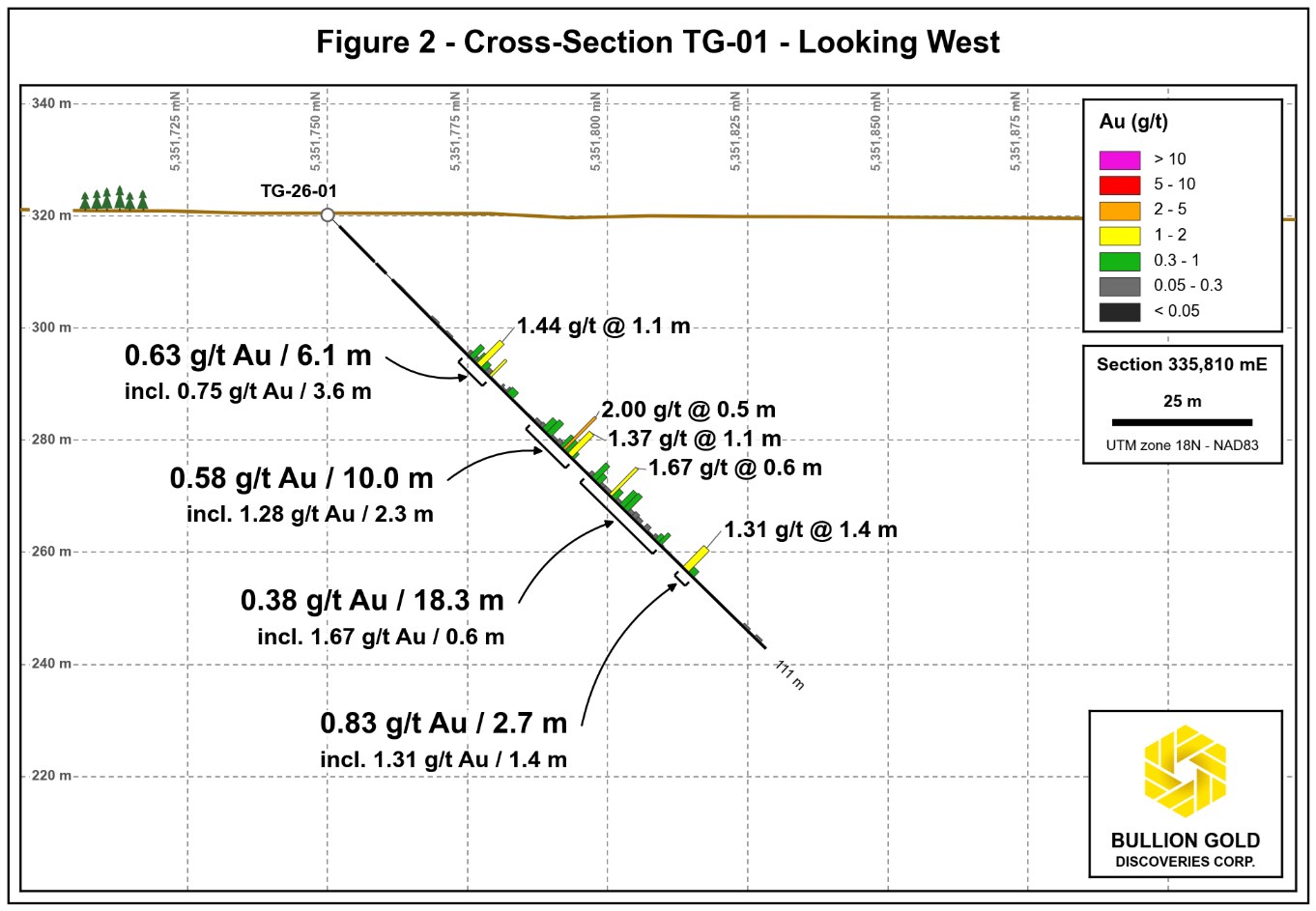
Figure 2 - Cross Section TG-01 - Looking West
To view an enhanced version of this graphic, please visit:
https://images.newsfilecorp.com/files/10471/315640_d1a87080a42ffbfa_003full.jpg
In DDH TG-02, mineralization is primarily hosted in a shear zone within an andesitic basalt (110.5 m to 128.6 m) with disseminated or veinlet sulphides (
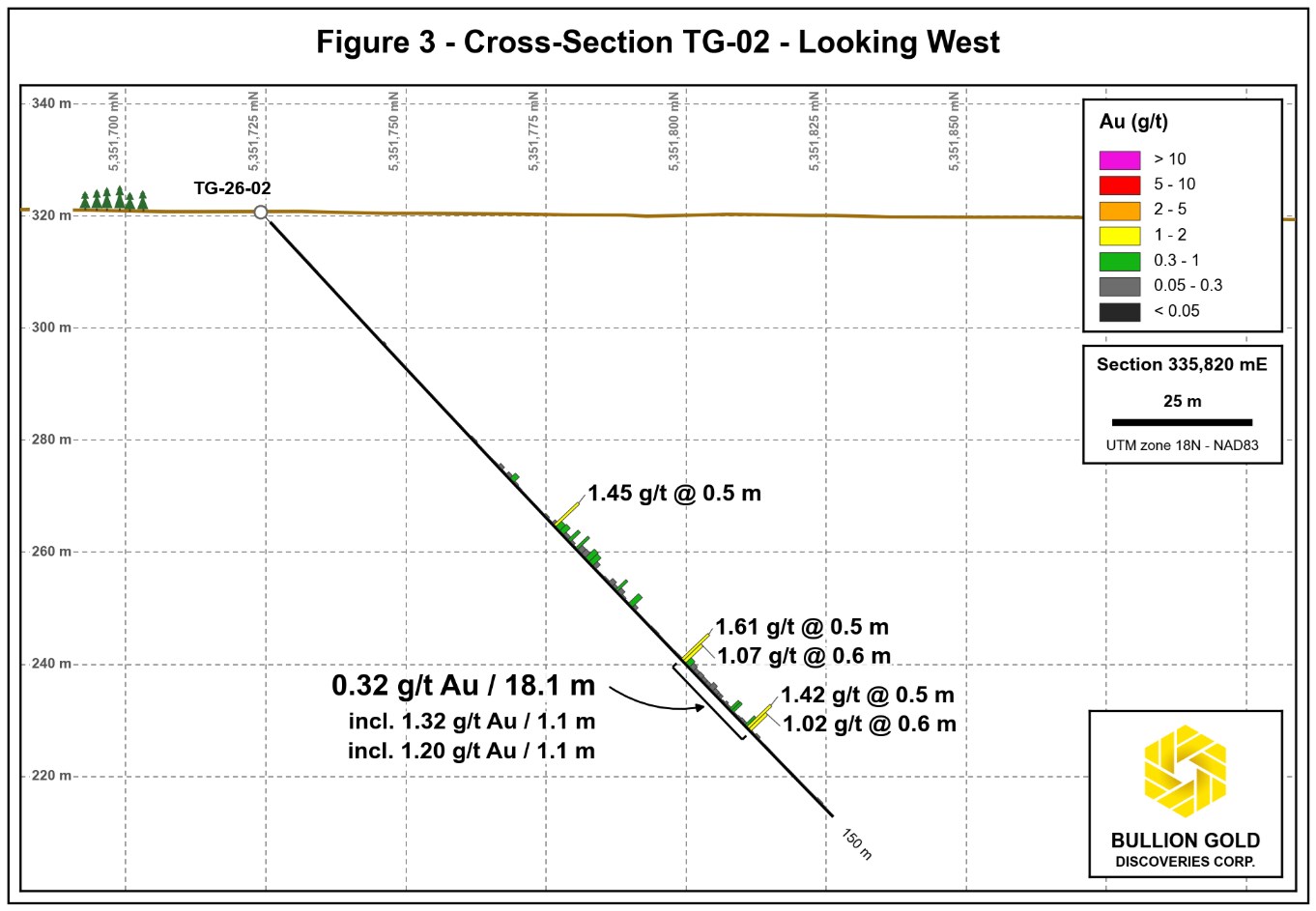
Figure 3 - Cross Section TG-02 - Looking West
To view an enhanced version of this graphic, please visit:
https://images.newsfilecorp.com/files/10471/315640_d1a87080a42ffbfa_004full.jpg
In DDH TGNO-03, mineralization is primarily hosted at a contact with a quartz-feldspar porphyry dyke (39.0 m to 44.3 m) with semi-massive to disseminated sulphides (
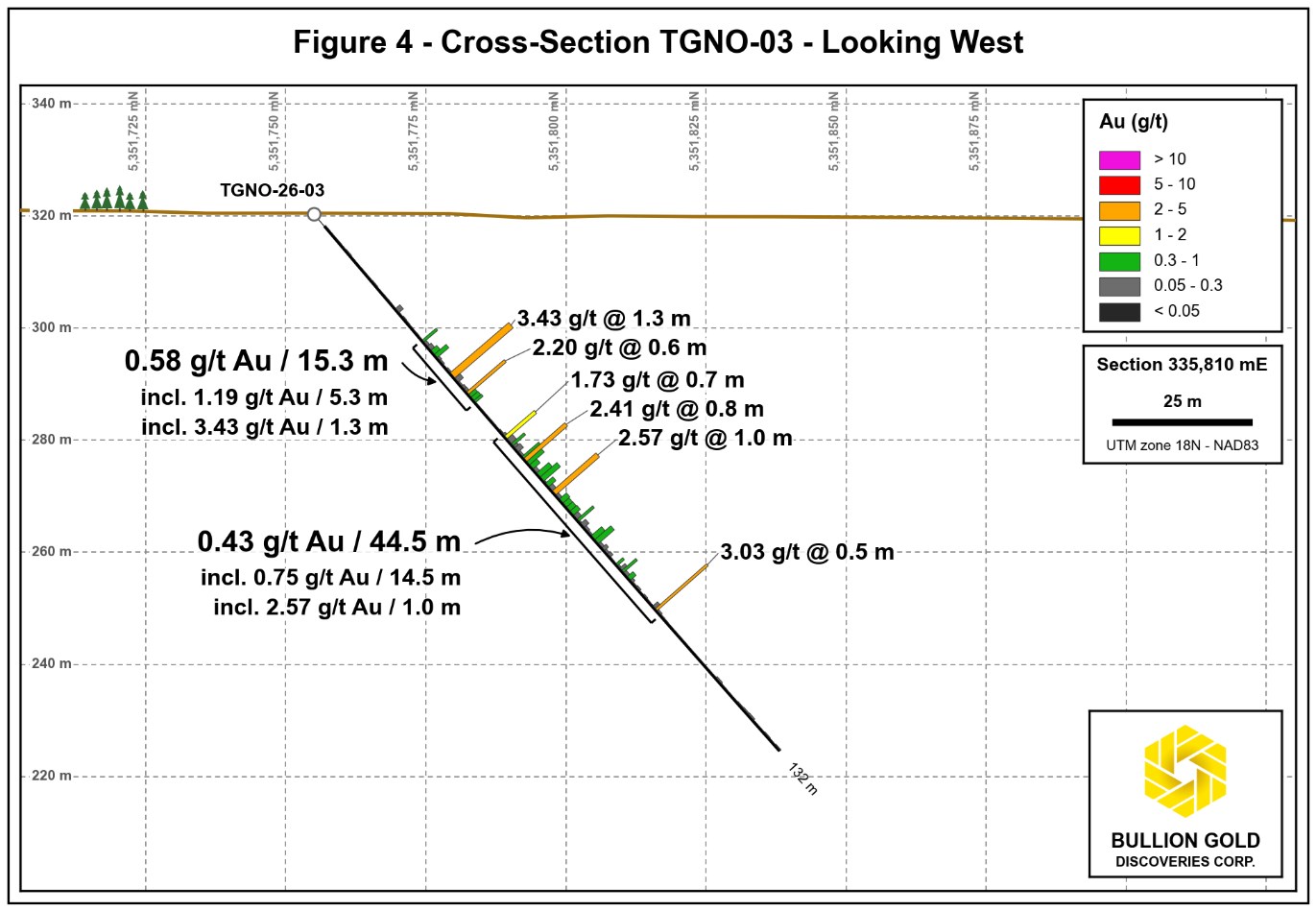
Figure 4 - Cross Section TGNO-03 - Looking West
To view an enhanced version of this graphic, please visit:
https://images.newsfilecorp.com/files/10471/315640_d1a87080a42ffbfa_005full.jpg
In DDH TG-05, mineralization is primarily hosted in a quartz-feldspar porphyry and sheared mafic intrusive (29.0 m to 37.4 m) with disseminated sulphides (
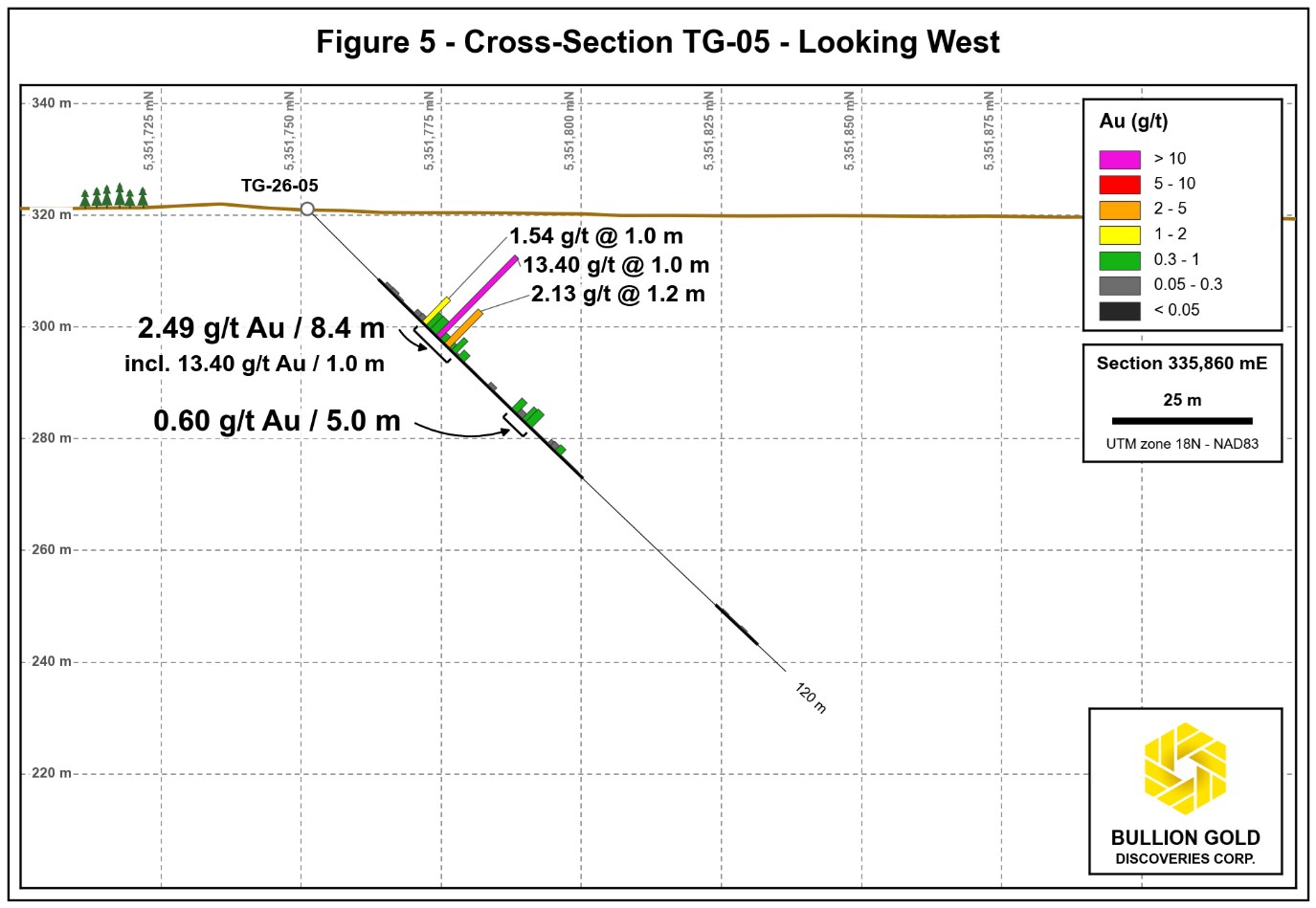
Figure 5 - Cross Section TG-05 - Looking West
To view an enhanced version of this graphic, please visit:
https://images.newsfilecorp.com/files/10471/315640_d1a87080a42ffbfa_006full.jpg
About the Terragold Project
The Terragold project (38 claims - 2,058 ha) is located approximately 12 km south of the municipality of Senneterre in Abitibi (Québec, Canada) within a major, deeply rooted Archean-age structural corridor of the prolific Abitibi Greenstone Belt. The Terragold showing, discovered in the early 1960s, has been intersected by drilling over a strike length exceeding 2 kilometres and to a depth of approximately 250 metres and has seen very limited exploration activity since 1984. The gold mineralized corridor, associated with a quartz-feldspar porphyry system, remains open along strike and at depth. The potential of the system is supported by a historical 245 kg bulk sample grading 4.84 g/t Au, confirming the presence of gold mineralization at surface.
About the Emerging Growth Virtual Conference
The Emerging Growth conference is an effective way for public companies to present and communicate their new products, services and other major announcements to the investment community from the convenience of their office, in a time efficient manner.
The Conference focus and coverage includes companies in a wide range of growth sectors, with strong management teams, innovative products & services, focused strategy, execution, and the overall potential for long term growth. Its audience includes potentially tens of thousands of Individual and Institutional investors, as well as Investment advisors and analysts.
Technical Disclosure
The drilling program was managed by Explo-Logik of Val-d'Or, Québec. Core samples were split in half, and one half was sent for analysis to AGAT Laboratories in Val-d'Or, Québec, an independent commercial laboratory certified under ISO/IEC 17025 standards. Sample preparation includes crushing to
Qualified Person
The scientific and technical information disclosed in this news release has been reviewed and approved by Ms. Suzie Tremblay, a member in good standing of the Ordre des géologues du Québec (OGQ No. 10664), who is a "Qualified Person" within the meaning of National Instrument 43-101 - Standards of Disclosure for Mineral Projects. All geoscientific activities related to the Terragold Project are carried out under the supervision of Ms. Suzie Tremblay, Vice-President of Explo-Logik.
About Bullion Gold Discoveries Corp.
Bullion Gold Discoveries Corp. (TSXV: BGD) is a Québec-focused mineral exploration company advancing a portfolio of gold and polymetallic projects located in some of the province's most prospective mining districts. The Company's strategy is centered on creating shareholder value through discovery success by applying modern geological interpretation, disciplined exploration practices and strategic partnerships.
The Company holds a
Additional information is available on the Company's website bulliongold.ca.
For further information, please contact:
Simon Britt
President and CEO
Bullion Gold Discoveries Corp.
sbritt@bulliongold.ca
Cautionary Note Regarding Forward-Looking Statements
This news release includes certain information and statements that may constitute "forward-looking information". Forward-looking statements are statements that are not historical facts and are generally, but not always, identified by the use of words such as "plans", "expects", "is expected", "budget", "scheduled", "estimates", "continues", "forecasts", "projects", "predicts", "intends", "anticipates", "aims", "targets" or "believes", or variations of, or the negatives of, such words and phrases or state that certain actions, events or results "may", "could", "would", "should", "might" or "will" be taken, occur or be achieved. Inherent in forward-looking statements are risks, uncertainties and other factors beyond the Company's ability to predict or control. All statements, other than statements of historical facts, included in this news release that address future events, developments or performance that Bullion expects to occur are forward-looking statements.
Neither TSX Venture Exchange nor its Regulation Services Provider (as that term is defined in the policies of the TSX Venture Exchange) accepts responsibility for the adequacy or accuracy of this release.

To view the source version of this press release, please visit https://www.newsfilecorp.com/release/315640
FAQ
AI-generated questions and answers. How Rhea-AI works. Not financial advice.
Where is the Terragold project located and what is Bullion Gold's interest?
The Terragold project comprises 38 claims covering 2,058 hectares, located about 12 km south of Senneterre in Abitibi, Quebec, within a major Archean structural corridor of the Abitibi Greenstone Belt. Bullion Gold holds a 100% interest in the property.
How many drill holes are in the current Terragold validation campaign and how many have been assayed?
The validation drilling campaign consists of 32 diamond drill holes (DDH). Assay results disclosed so far cover the first 4 holes, with 28 DDH still pending. The company indicated that remaining assays will be released in batches in the coming weeks.
What is known about the geometry and true thickness of the reported mineralized intervals?
The company reports that the stated widths correspond to core lengths. At this stage of the program, the true thicknesses are unknown and the reported widths may not represent the true width or overall grade of mineralization across the Terragold project.
How were the drill core samples prepared and analyzed for gold at Terragold?
Core samples were split and one half sent to AGAT Laboratories in Val-d'Or, Quebec, an ISO/IEC 17025 certified lab. Samples were crushed to 90% passing 2 mm and pulverized to 90% passing 75 μm. Gold was analyzed by 50 g fire assay with AAS finish, with samples over 10 g/t Au re-analyzed by fire assay with gravimetric finish and screened material analyzed by fire assay with ICP-OES finish.
What QA/QC procedures were used in the Terragold drilling program?
Bullion Gold states it follows industry-standard QA/QC procedures. Certified reference materials (standards), blanks, and field or laboratory duplicates were systematically inserted into the sample stream to monitor analytical precision and accuracy.
Who is the Qualified Person responsible for the technical information on Terragold?
The scientific and technical information for Terragold was reviewed and approved by Suzie Tremblay, Vice-President of Explo-Logik and a member in good standing of the Ordre des géologues du Québec (OGQ No. 10664). She is identified as a Qualified Person under National Instrument 43-101.
What is the broader geological setting hosting the Terragold mineralization?
Terragold lies in a major Archean sheared structural corridor within the Abitibi Greenstone Belt. Local geology includes andesitic basalt volcanics with chlorite and carbonate alteration, cut by gabbro and diorite dykes and intruded by quartz-feldspar porphyry dykes. Gold mineralization is associated with silicification, sericitization, albitization and fuchsite alteration, and occurs with disseminated pyrite and quartz-carbonate-ankerite-chlorite vein networks.