
Viscount Identifies Three Near-Surface Gold-Copper Porphyry Targets at Passiflora Above 843.9-Metre Mineralized Intercept; Rosor High-Resolution Drone Survey Confirms District-Scale System
Sentiment and the balance of points
Rhea-AI Sentiment reads the wording of the document, how positive or negative its language is on a 1 to 5 scale. The balance of points shown with the takes weighs what the document actually discloses, so the two can disagree, for example when a trial that missed its main goal is described in upbeat language.
Rhea-AI Summary
Viscount Mining (VLMGF) identified three near-surface gold-copper exploration targets at Passiflora within its Silver Cliff Project near Westcliffe, Colorado.
Rosor’s drone survey mapped zones of low electrical resistance within approximately 500 metres of the surface. It independently detected the broader conductive system that Quantec mapped across 6 square kilometres, from approximately 400 metres to more than 1,500 metres below surface. The central zone sits directly above a previously reported 843.9-metre interval of continuous gold-copper mineralization grading 0.2143% copper-equivalent in hole PF-23-03A, starting approximately 400 metres downhole.
Viscount plans a fully funded Phase Two program of three diamond drill holes, each approximately 5,000 feet (about 1,500 metres). The drilling will test whether mineralization continues toward the interpreted centre of the system.
Positive
- Minor pointThree conductive targets within approximately 500 metres of surface give Viscount more focused areas for follow-up drilling
- Minor point. Forward-looking: it has not happened yet and may not happen.Phase Two drilling is fully funded, with three holes planned to approximately 5,000 feet each
- Minor pointRosor’s drone survey independently detected the broader system Quantec mapped across 6 square kilometres
- Minor pointPassiflora Central directly overlies the previously reported 843.9-metre gold-copper interval grading 0.2143% copper-equivalent
Negative
- Minor pointSurvey interpretation is preliminary; Rosor and Quantec have yet to complete their combined analysis
- Minor pointPassiflora West remains untested along the western caldera boundary fault
AI-generated analysis. How Rhea-AI works. Not financial advice.


Rosor high-resolution airborne geophysics reveals continuous structural corridors connecting historic shallow silver to the broader Quantec MT-defined gold-copper porphyry system over 6 square kilometres, with anomalies remaining open along strike and depth.
Dr. Johannes Stoll of Mobile Geophysical Technologies (MGT) concludes that the alteration and sulfide mineralogy in drill holes PF-23-03A and K26-08, together with the Rosor SAEM and Quantec MT resistivity models, provides significant evidence supportive of a porphyry exploration model.
- Identifies three high-priority conductive target zones within approximately 500 metres of surface, above and around Viscount's previously reported 843.9-metre continuous gold-copper mineralized interval at Passiflora.
Vancouver, British Columbia--(Newsfile Corp. - November 18, 2026) - Viscount Mining Corp. (TSXV: VML) (OTCQX: VLMGF) ("Viscount" or the "Company") is pleased to report initial observations from a newly completed high-resolution semi-airborne electromagnetic ("SAEM") survey conducted by Rosor Exploration Corp. ("Rosor") over the Passiflora target at its Silver Cliff Project near Westcliffe, Colorado, within the historic Silver Cliff mining district. The survey is the third separate line of evidence, after drilling and an earlier survey by Quantec Geoscience, pointing to the same large gold-copper system at Passiflora. Further technical details will be provided in a follow-up release once Rosor and Quantec complete their integrated interpretation.
The Rosor high-density, drone-based survey provides a second, independently derived geophysical dataset that confirms the broader conductive system previously identified by Quantec Geoscience's magnetotelluric ("MT") survey. Importantly, the new SAEM data further refines the upper portion of that system, resolving three distinct low-resistivity zones within approximately 500 metres of surface. The results add an important new layer of definition to the Passiflora target, where Viscount previously reported 843.9 metres of continuous gold-copper mineralization grading
In simple terms, Viscount now has three separate lines of evidence pointing to the same place: drilling, which intersected 843.9 metres of continuous gold-copper mineralization in hole PF-23-03A; Quantec's deep survey, which mapped a large anomaly extending from approximately 400 metres to more than 1,500 metres below surface over an area of 6 square kilometres; and Rosor's detailed survey, which independently detected the same system and sharpened its upper 500 metres into three distinct conductive zones. These zones will be combined with geology and existing drilling to select the locations of the next drill holes.
Table 1: Passiflora Upper Conductive Targets Defined by Rosor Drone SAEM Survey
| Target Zone | Geophysical | Interpreted | Structural & | Exploration Drill |
| Passiflora West | Distinct low-resistivity / high conductivity | Surface to ~500 m | Western caldera margin fault boundary; untested | High (Planned Phase 2 Collar) |
| Passiflora Central | Prominent conductive core anomaly | Surface to ~500 m | Directly caps 843.9 m mineralized intercept in PF-23-03A | Immediate deep porphyry test (~1,500 m) |
| Passiflora East | Continuous low-resistivity conductive trend | Surface to ~500 m | Eastern caldera boundary corridor; open along strike | High (Planned Phase 2 Step-Out) |
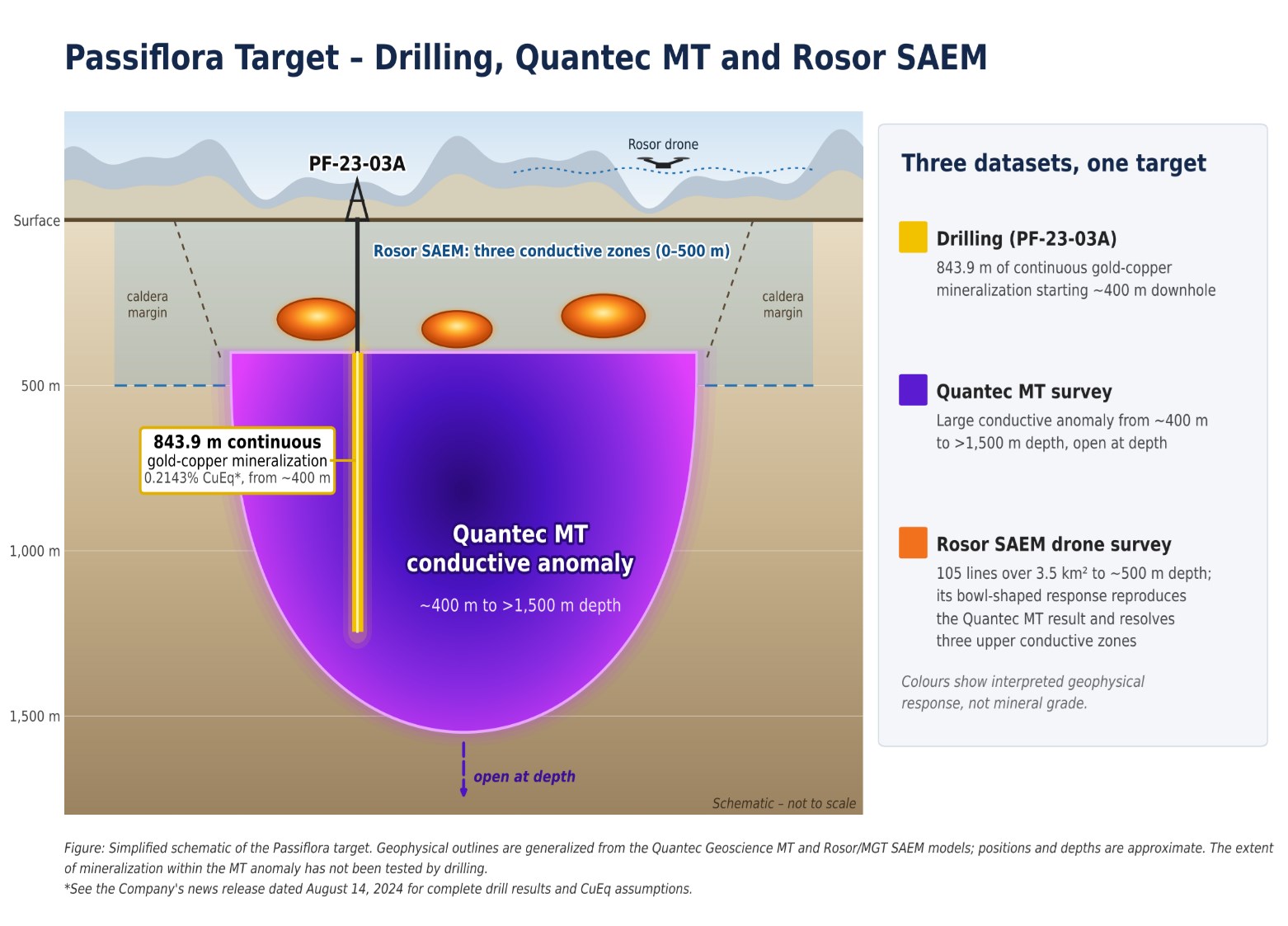
Figure 1: Simplified Schematic Cross-Section of the Passiflora Tar
To view an enhanced version of this graphic, please visit:
https://images.newsfilecorp.com/files/2736/324496_98b9de20c4eeb8f9_002full.jpg
Key Highlights
Independent confirmation of the Passiflora geophysical system: The Rosor SAEM survey, using a different geophysical methodology from the earlier Quantec MT program, independently confirms the broader conductive system previously identified at Passiflora.
Three distinct high-priority zones identified: Rosor's high-density SAEM program resolves three distinct low-resistivity zones within the upper approximately 500 metres of the Passiflora target area. These features provide substantially more focused areas for geological evaluation and drill targeting within the broader Quantec MT footprint.
Strong spatial relationship with existing drilling: The Rosor SAEM response is spatially consistent with Viscount's previously reported 843.9-metre drill interval grading
0.2143% copper-equivalent ("CuEq") *, beginning at approximately 400 metres downhole - near the interpreted top of the broader resistivity anomaly.Supports the porphyry exploration model: Together with historical and modern drilling demonstrating extensive hydrothermal alteration and gold-copper mineralization, the new geophysical results further support Viscount's interpretation of Passiflora as part of a potentially extensive gold-copper porphyry system.
Large system remains open at depth: Quantec's prior MT interpretation extends the deeper conductive system from approximately 400 metres to more than 1,500 metres below surface, substantially below the base of PF-23-03A. The SAEM model extends to approximately 500 metres depth and provides greater definition of the upper portion of the target.
Next-stage targeting: The Rosor SAEM interpretation will be integrated with the Quantec MT program as the two companies are working in tandem to rank the three newly identified zones and work with Viscount geologists to prioritize follow-up drilling at Passiflora.
*Copper-equivalent grade as previously reported by the Company on August 14, 2024. Metal prices were set at 2024 averages: Cu
Significance of the Passiflora Drill Program
Passiflora is one of the two principal exploration areas at Silver Cliff, alongside the Kate silver resource area. The target has emerged as an important component of the broader Silver Cliff opportunity following Viscount's drilling of PF-23-03A, which intersected 843.9 metres of continuous gold-copper mineralization. Viscount interprets that hole as having tested the peripheral portion of a potentially larger intrusive centre, with mineralization remaining open in multiple directions. Quantec's subsequent MT survey identified a large resistivity anomaly extending from approximately 400 metres to greater than 1,500 metres depth over 6 square kilometres.
"Independent confirmation from the Rosor SAEM survey is an important technical milestone for Passiflora," said Mark Abrams, Director and Vice President of Exploration for Viscount Mining. "We now have drilling, the Quantec MT and Rosor SAEM data pointing to a large system at Passiflora. With three discrete zones resolved in the upper portion of that target and 843.9 metres of continuous gold-copper mineralization already intersected at PF-23-03A, our next phase of targeting is much more focused. This is an exciting step forward for Passiflora."
The newly completed Rosor SAEM survey provides an independent geophysical test of that interpretation. Rather than simply reproducing the broader response, the higher-density survey has resolved three discrete low-resistivity zones within the upper approximately 500 metres, giving Viscount more specific features to evaluate within the larger system.
Management views the convergence of drilling, MT and SAEM data as a meaningful step in advancing and de-risking the Passiflora exploration model. The Company's immediate focus will be to integrate these datasets with geological observations and existing drill information to determine the highest-priority locations for follow-up drilling.
Next Steps: Fully Funded Phase Two Diamond Drilling Campaign
Viscount is planning a fully funded Phase Two diamond core drilling campaign comprising three deep holes at Passiflora, each planned to approximately 5,000 feet (about 1,500 metres). To optimize drill collar locations, the Company is combining Rosor's three targets with Quantec's 3D MT resistivity inversion model, results from drill hole PF-23-03A, multi-element soil geochemistry, and surface geological mapping.
The drilling will test promising areas and help determine whether the gold and copper found in PF-23-03A continues toward the interpreted centre of the larger porphyry intrusive complex. Viscount will announce specific drill targets and mobilization schedule once planning is complete.
About the Rosor SAEM Drone Survey
Viscount retained Rosor Exploration Corp. to undertake the high-resolution airborne electromagnetic and magnetic survey at Silver Cliff. The SAEM component reported here combines a ground-based transmitter with a drone-borne receiver to collect closely spaced resistivity data. Between June 4 and June 16, 2026, Mobile Geophysical Technologies GmbH ("MGT") operated the SAEM receiver along north-south and east-west flight lines, while Rosor provided drone operations and managed the transmitter dipoles.
The Rosor survey program comprised 105 flight lines totaling approximately 190 line-kilometres over 3.5 km². The resulting SAEM data were inverted into 2D sections and a 3D resistivity model extending to approximately 500 metres depth.
The Rosor SAEM survey therefore provides detailed definition of the upper portion of the Passiflora target, while Quantec's earlier MT survey provides a deeper geophysical context extending to more than 1,500 metres below surface. The two datasets, together with existing geological and drilling information, will form the basis for ranking the next generation of drill targets at Passiflora.
Dr. Johannes Stoll, CEO of Mobile Geophysical Technologies, commented: "In both models, the caldera appears as a high-resistance body within the top 500 metres below the Earth's surface diameter. The caldera is surrounded by zones with moderate to low electrical resistivities. The size of the high resistivity inner core of the caldera corresponds well with the circular shape of the caldera. It appears our model indicates the top part of the gold-copper porphyry system, with the massive system indicated by the Quantec MT Titan model continuing beneath 500 metres."
Alex Coutu, CEO of Rosor, said: "We were very pleased with the execution and results of the semi-airborne electromagnetic survey at Silver Cliff. The program produced a high-density dataset that resolves coherent resistivity patterns across the Passiflora area and provides Viscount with another valuable layer of information to integrate with its geology, drilling and other geophysical datasets. From a survey-performance standpoint, the program achieved what we set out to accomplish. It was a pleasure working on this project and our team looks forward to the upcoming drill program and results."
Qualified Person
The scientific and technical information contained in this news release has been reviewed and approved by Harald Hoegberg, C.P.G., an independent consulting geologist who is a "Qualified Person" as such term is defined under National Instrument 43-101 - Standards of Disclosure for Mineral Projects ("NI 43-101").
About Viscount Mining Corp.
Viscount Mining Corp. (TSXV: VML) (OTCQX: VLMGF) is a mineral exploration company focused on advancing silver, gold and copper projects in the western United States. The Company's portfolio includes the Silver Cliff Project in Colorado, which hosts the NI 43-101 Kate Silver Resource and the Passiflora copper-gold porphyry target, and the
For additional information, please visit www.viscountmining.com.
On Behalf of the Board of Directors
Jim MacKenzie, President, Chief Executive Officer and Director
For further information, please contact:
Viscount Investor Relations
Email: info@viscountmining.com
Website: www.viscountmining.com
Neither TSX Venture Exchange nor its Regulation Services Provider (as that term is defined in the policies of the TSX Venture Exchange) accepts responsibility for the adequacy or accuracy of this release.
Cautionary Note Regarding Forward-Looking Statements
This news release includes certain statements that may be deemed "forward-looking statements" within the meaning of applicable Canadian securities legislation. Forward-looking statements include, but are not limited to, statements with respect to Viscount Mining's operations, exploration and development plans, expansion plans, estimates, expectations, forecasts, objectives, predictions and projections of the future. Specifically, this news release contains forward-looking statements with respect to the actual size of the anomaly, feasibility, grade of mineralization and the content of the mineralization. Conductive anomalies may be caused by sulfides, clay or fluids and are not necessarily indicative of economic mineralization. Generally, forward-looking statements can be identified by the forward-looking terminology such as "plans", "expects" or "does not expect", "is expected", "budget", "scheduled", "estimates", "projects", "intends", "anticipates", or "does not anticipate", or "believes", or variations of such words and phrases or state that certain actions, events or results "may", "can", "could", "would", "might", or "will" be taken, occur or be achieved. Forward-looking statements are subject to known and unknown risks, uncertainties and other factors that may cause the actual results, level of activity, performance or achievements of Viscount Mining to be materially different from those expressed or implied by such forward-looking statements, including but not limited to: risks related to the exploration and development and operation of Viscount Mining's projects, the actual results of current exploration, development activities, conclusions of economic evaluations, changes in project parameters as plans continue to be refined, future precious metals prices, as well as those factors discussed in the sections relating to risk factors of our business filed in Viscount Mining's required securities filings on SEDARPlus. Although Viscount Mining has attempted to identify important factors that could cause results to differ materially from those contained in forward-looking statements, there may be other factors that cause results to be materially different from those anticipated, described, estimated, assessed or intended. There can be no assurance that any forward-looking statements will prove accurate, as actual results and future events could differ materially from those anticipated in such statements. Accordingly, readers should not place undue reliance on forward-looking statements. Viscount Mining does not undertake to update any forward-looking statements that are incorporated by reference herein, except in accordance with applicable securities laws.

To view the source version of this press release, please visit https://www.newsfilecorp.com/release/324496
FAQ
AI-generated questions and answers. How Rhea-AI works. Not financial advice.
What targets did Viscount Mining identify in its Passiflora drone survey?
The survey identified Passiflora West, Central and East within approximately 500 metres of the surface. Central is the immediate deep-drilling priority. West is a planned Phase Two drill site, and East is a planned Phase Two step-out, a hole drilled farther along the target.
How is Viscount Mining choosing Phase Two drill locations at Passiflora?
Viscount is combining Rosor’s targets with Quantec’s 3D electrical resistivity model, results from hole PF-23-03A, soil chemistry and surface geological mapping. The company plans to announce the specific targets and mobilization schedule once planning is complete.
How did Viscount Mining’s Passiflora drone survey collect its data?
The Rosor survey used a ground-based transmitter and a drone-mounted receiver to map electrical resistance below the surface. The program covered 105 flight lines totaling approximately 190 line-kilometres over 3.5 square kilometres.