
Volta Completes Inaugural Drill Program at Springer REE Project in Ontario, Canada
Volta Metals (OTC: VOLMF) reported results from its 2025 Springer drill program near Sudbury, Ontario, showing expanded rare earth mineralization that remains open at depth.
Rhea-AI Summary
Volta Metals (OTC: VOLMF) reported results from its 2025 Springer drill program near Sudbury, Ontario, showing expanded rare earth mineralization that remains open at depth.
Key highlights include 0.95% TREO over 438.9m in SL25-24, 0.89% TREO over 383.5m in SL25-23, and a very high-grade heavy rare earth interval of 184.04 g/t Dy2O3+Tb2O3 over 27.1m. The program shows an average HREO contribution of 10.9% to TREO value and multiple high-grade LREE and HREE intervals. Results will be used toward an updated NI 43-101 resource estimate planned for early 2026.
Positive
- SL25-24: 0.95% TREO over 438.9m (26.1m–465.0m)
- SL25-23: 0.89% TREO over 383.5m (44.0m–427.5m)
- High-grade HREO: 184.04 g/t Dy2O3+Tb2O3 over 27.1m (124.4m–151.5m)
- HREO = 10.9% average of TREO basket value in latest results
- Multiple high-grade LREE intercepts (e.g., Nd2O3 up to 4,910.3 g/t in SL25-24)
Negative
- Several holes average below historical 0.9% TREO cutoff (e.g., SL25-25: 0.38% TREO, SL25-26: 0.65% TREO)
- Gallium assays remain outstanding on all four boreholes
- True widths unknown; drill intercepts reported are downhole lengths
Details
News Market Reaction – VOLMF
In the Dec 11 session, VOLMF gained 45.00%, reflecting a significant positive market reaction.
Data tracked by StockTitan Argus on the day of publication.
Key Figures
- TREO intercept
- 0.95% TREO over 438.9m
- Borehole SL25-24, from 26.1m to 465.0m
- TREO intercept
- 0.89% TREO over 383.5m
- Borehole SL25-23, from 44.0m to 427.5m
- Dysprosium grade
- 157.8 g/t Dysprosium oxide
- SL25-24 high-grade interval over 27.1m
- Terbium grade
- 26.2 g/t Terbium oxide
- SL25-24 high-grade interval over 27.1m
- Dy oxide spot price
- US$180,000/tonne
- Shanghai Metals Market, December 3, 2025
- Tb oxide spot price
- US$802,000/tonne
- Shanghai Metals Market, December 3, 2025
- Indicated resource
- 4.167 Mt at 1.073% TREO
- Historical NI 43-101 resource, May 4, 2012
- Inferred resource
- 12.73 Mt at 1.119% TREO
- Historical NI 43-101 resource, May 4, 2012
Key Terms
heavy rare earth elements technical
light rare earth elements technical
ni 43-101 regulatory
cut-off grade technical
carbonatite technical
permanent magnets technical
resource estimate technical
AI-generated analysis. How Rhea-AI works. Not financial advice.




Expands mineralization - intersects significant Heavy Rare Earths - all boreholes end in mineralization
DRILL PROGRAM HIGHLIGHTS
- Borehole SL25-24 is one of the widest drill intercepts for rare earths globally:
0.95% TREO over 438.9m (from 26.1m to 465.0m, end of hole)- Including
1.09% TREO over 351.1m (from 106.4m to 457.5 m) - 157.8 g/t Dysprosium oxide and 26.2 g/t Terbium oxide over 27.1m (from 124.4m to 151.5m)
- Borehole SL25-23 is TREO mineralized over the entire hole:
0.89% TREO over 383.5m (from 44.0m to 427.5m, end of hole)- Includes
1.71% TREO over 69.5m of - Multiple intervals of high-grade HREO and LREO
- Borehole SL25-26 is TREO mineralized over the entire hole:
0.65% TREO over 283.8m (7.5m to 291.3m, end of hole).0.94% TREO over 100m (from 12.5m to 112.5m)
- Mineralization remains open at depth and along strike
- Gallium assays are still outstanding on all four boreholes
Toronto, Ontario--(Newsfile Corp. - December 11, 2025) - Volta Metals Ltd. (CSE: VLTA) (FSE: D0W) (OTC Pink: VOLMF) ("Volta" or the "Company") announces assay results from the remaining boreholes drilled at its Springer Rare Earth Deposit (the "Property"), located near Sudbury, Ontario, Canada (Figure 1). Drill results continue to expand known mineralization that remains open at depth in all boreholes to date.
All boreholes reported continuous mineralization, extending below the 2012 mineral resource estimate shell. Additionally, there have been increased heavy rare earth intercepts over wide intervals. Specifically, borehole SL25-24 returned a very high-grade Dysprosium and Terbium oxide interval of 184.04 g/t Dysprosium oxide + Terbium oxide (157.8 g/t Dy₂O₃ and 26.22 g/t Tb2O3) over 27.1m (from 124.4m to 151.5m) (Table 2). Dysprosium (Dy) and Terbium (Tb) are high-value, heavy rare earth elements critical for making high-performance permanent magnets used in electric vehicle motors, wind turbine generators, and industrial robotics. Current average quoted spot prices for Dy oxide and Tb oxide are US
Results from this drill campaign confirm a significant Heavy Rare Earth Oxides ("HREO") component within the Total Rare Earth Oxides ("TREO"). HREOs constitute an average of
Table 1. Select REO Assay Results from 2025 Drill Program
| Hole | TREO % | From (m) | To (m) | Width* (m) | Premium Magnet | Premium Magnet | ||||||
| Heavy Rare Earth Oxides | Light Rare Earth Oxides | |||||||||||
| g/t | g/t | |||||||||||
| Terbium oxide (Tb2O3) | Dysprosium oxide (Dy₂O₃) | Yttrium oxide (Y₂O₃) | Gadolinium oxide (Gd₂O₃) | Neodymium oxide (Nd₂O₃) | Praseodymium oxide (Pr₂O₃) | Lanthanum oxide (La₂O₃) | Cerium oxide (Ce₂O₃) | |||||
| SL25-23 | 0.89 | 44.0 | 427.5 | 383.5 | 8.18 | 34.29 | 129.63 | 76.61 | 1,294.38 | 400.23 | 2,462.36 | 4,077.75 |
| 1.11 | 44.0 | 241.5 | 197.5 | 8.64 | 35.68 | 131.36 | 81.78 | 1,599.59 | 515.96 | 3,359.15 | 5,373.81 | |
| 3.01 | 81.0 | 88.0 | 7.0 | 10.30 | 37.75 | 112.84 | 113.54 | 4,042.40 | 1,389.81 | 9,407.53 | 14,943.28 | |
| 1.64 | 123.0 | 192.5 | 69.5 | 11.16 | 44.92 | 158.97 | 105.87 | 2,287.59 | 751.72 | 5,087.49 | 7,956.47 | |
| 3.82 | 183.5 | 189.0 | 5.5 | 32.72 | 130.99 | 466.28 | 307.72 | 5,536.15 | 1,746.94 | 11,636.31 | 18,278.66 | |
| 1.99 | 169.5 | 192.5 | 23 | 17.12 | 68.32 | 241.57 | 161.66 | 2,912.84 | 915.02 | 6,030.34 | 9,523.58 | |
| 5.12 | 304.5 | 305.7 | 1.2 | 36.72 | 138.87 | 513.04 | 386.09 | 6,298.56 | 1,989.51 | 12,900.80 | 23,871.82 | |
| 1.48 | 270.0 | 271.0 | 1.0 | 13.93 | 61.06 | 260.33 | 136.00 | 1,924.56 | 519.61 | 2,462.88 | 4,591.50 | |
| 8.67 | 186.0 | 187.5 | 1.5 | 44.89 | 176.75 | 634.95 | 429.88 | 8,258.11 | 2,633.18 | 18,530.24 | 28,345.46 | |
| SL25-24 | 0.95 | 26.1 | 465.0 | 438.9 | 9.90 | 47.06 | 217.03 | 84.13 | 1,441.79 | 424.47 | 2,270.78 | 4,092.99 |
| 1.09 | 106.4 | 465.0 | 358.6 | 10.70 | 51.30 | 240.65 | 88.74 | 1,530.20 | 459.93 | 2,559.75 | 4,521.45 | |
| 1.42 | 106.4 | 214.5 | 108.1 | 16.46 | 89.06 | 461.10 | 120.44 | 2,003.99 | 613.24 | 3,505.15 | 6,158.34 | |
| 2.19 | 155.5 | 175.5 | 20.0 | 12.20 | 57.61 | 273.92 | 112.25 | 3,039.87 | 965.85 | 5,816.38 | 9,951.13 | |
| SL25-25 | 0.38 | 5.2 | 423.0 | 417.8 | 5.13 | 21.81 | 80.18 | 45.94 | 668.60 | 190.58 | 947.24 | 1,806.20 |
| 3.41 | 88.2 | 90.4 | 2.2 | 25.44 | 95.76 | 337.20 | 259.01 | 3,986.23 | 1228.53 | 6,395.89 | 8,760.00 | |
| SL24-26 | 0.65 | 7.5 | 291.3 | 283.8 | 5.57 | 20.57 | 65.67 | 60.45 | 1,228.39 | 335.88 | 1,404.62 | 2,937.95 |
| 1.70 | 12.5 | 25.5 | 13.0 | 14.55 | 56.39 | 199.06 | 147.22 | 3,140.12 | 901.19 | 3,881.16 | 8,040.88 | |
* Drill intercept, not true width. True widths are unknown and will be determined with geological modelling.
Table 2. Select High-Grade Heavy Rare Earth Intercepts (g/t)
| Borehole | Terbium oxide (Tb2O3) g/t | Dysprosium oxide (Dy₂O₃) g/t | Yttrium oxide (Y₂O₃) g/t | Erbium oxide (Er₂O₃) g/t | Gadolinium oxide (Gd₂O₃) g/t | Width (m) | From (m) | To (m) |
| SL25-23 | 11.2 | 33.6 | 120.5 | 10.4 | 76.7 | 69.5 | 123.0 | 192.5 |
| SL25-24 | 26.2 | 157.8 | 875.2 | 68.6 | 162.9 | 27.1 | 124.4 | 151.5 |
| SL25-25 | 16.4 | 61.8 | 192.8 | 17.6 | 167.6 | 2.2 | 88.2 | 90.4 |
| SL25-26 | 21.0 | 83.6 | 295.4 | 24.1 | 210.5 | 4.8 | 12.5 | 17.3 |
Table 3. Select High-Grade Light Rare Earth Intercepts (g/t)
| Borehole | Neodymium oxide (Nd₂O₃) g/t | Praseodymium oxide (Pr₂O₃) g/t | Lanthanum oxide (La₂O₃) g/t | Cerium oxide (Ce₂O₃) g/t | Samarium oxide (Sm₂O₃) g/t | Width (m) | From (m) | To (m) |
| SL25-23 | 3,222.8 | 1,060.3 | 7,039.1 | 6,931.8 | 206.6 | 69.5 | 123.0 | 192.5 |
| SL25-24 | 4,910.3 | 1,467.0 | 8,442.1 | 14,237.4 | 273.5 | 5.8 | 345.1 | 350.9 |
| SL25-25 | 3,986.2 | 1,228.5 | 6,395.9 | 8,760.0 | 462.9 | 2.2 | 88.2 | 90.4 |
| SL25-26 | 4,316.0 | 1,203.8 | 4,477.7 | 10,071.2 | 533.4 | 4.8 | 12.5 | 17.3 |
Table 4. Heavy and Light Rare Earth within TREO over entire borehole
| Borehole | TREO % | LREE % | HREE % |
| SL25-23 | 0.89 | 92 | 8 |
| SL25-24 | 0.95 | 95 | 5 |
| SL25-25 | 0.38 | 94 | 6 |
| SL25-26 | 0.65 | 93 | 7 |
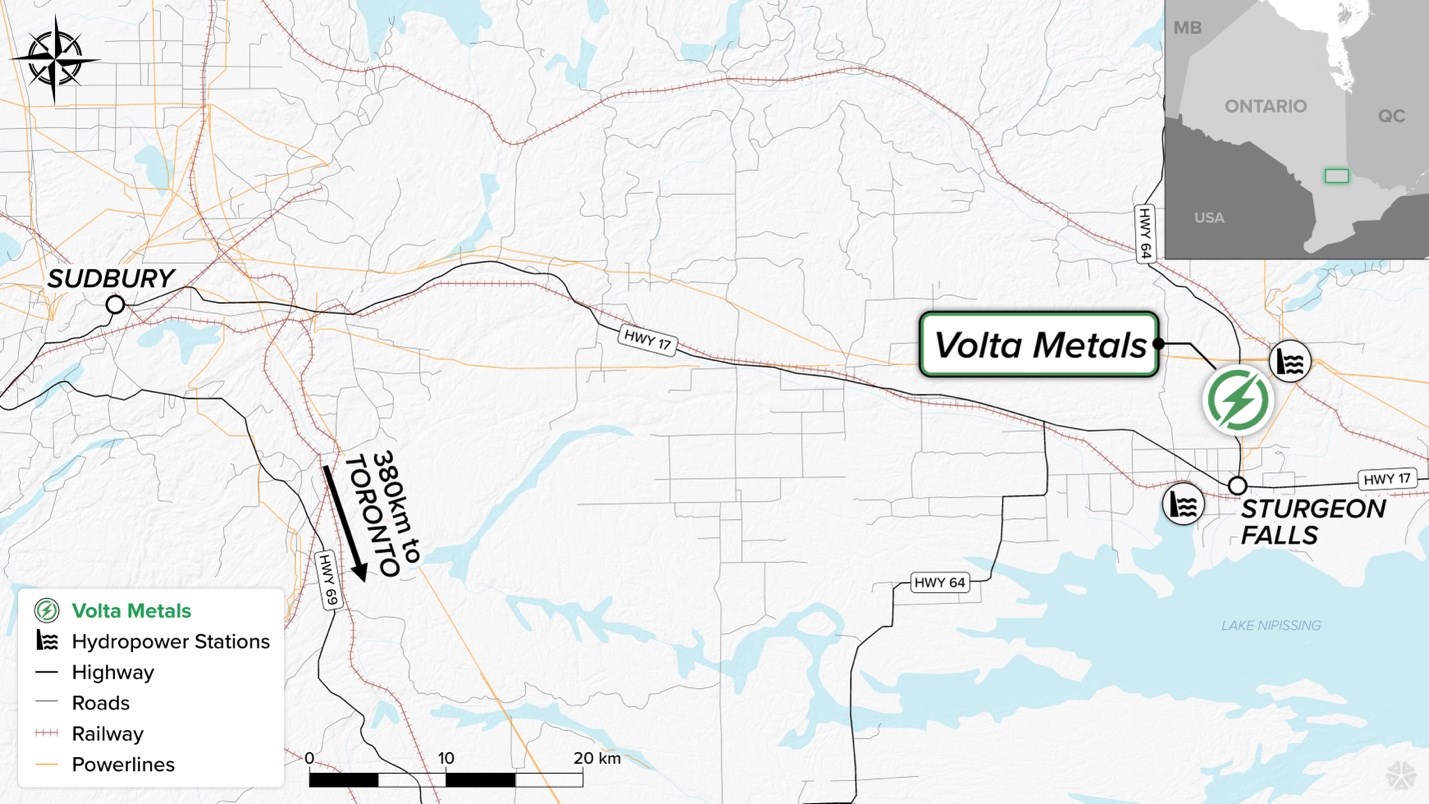
Figure 1. Location of the Springer Rare Earth Element Deposit
To view an enhanced version of this graphic, please visit:
https://images.newsfilecorp.com/files/9598/277695_1f57260534ea8b1a_001full.jpg
Kerem Usenmez, CEO, was quoted, "These drill results validate our view that the Springer deposit represents a rare convergence of location, grade, scale, and mineralogy-an increasingly scarce combination globally. The expansion of high-grade TREO at depth, together with a confirmed strong proportion of heavy rare earths, marks an important step forward as we move toward updating the mineral resource estimate in early 2026. This level of growth has the potential to fundamentally reshape the project's trajectory ahead of the upcoming NI 43-101 resource update."
DETAILS
Borehole SL25-23
Borehole SL25-23 was drilled at a -45° angle to test the extension of mineralization along dip as a twin to drill hole SL11-03 as part of a due diligence confirmation of both historical assays and recorded geological data (Figure 4). SL25-23 went significantly straighter than SL11-03 and is essentially a new hole for the mineral resource after 190m to the end of the hole at 453m. The planned depth for the borehole was 350m; however, due to continued mineralization, drilling continued and eventually terminated at 453m downhole.
The thick TREO intercept, within which multiple higher-grade zones occur, is predominantly comprised of the Light Rare Earth Elements ("LREEs"), including Neodymium, Praseodymium, Lanthanum, and Cerium. These LREEs are all used in a wide range of high-tech products, including powerful permanent magnets for specialty technology and electronics applications. Current quoted average spot prices for Neodymium oxide and Praseodymium oxide are approximately US
Additionally, significant amounts of Heavy Rare Earth Elements ("HREE") such as Dysprosium, Terbium, and Yttrium, which are used in permanent magnets, LED, fluorescent lighting, and lasers, were also encountered (Table 2).
Borehole SL25-24
Borehole SL25-24 was drilled sub-vertical (at -85°), to test the mineralization at depth below the historical resource estimate. The borehole returned significant mineralization,
Planned as a 400m hole, drilling was extended to 465m after visual core inspection confirmed strong, continuous mineralization beyond the initial target depth. This marks the deepest borehole completed on the project to date.
Borehole SL25-25
Borehole SL25-25 was drilled sub-vertical (at -85°) beneath borehole SL12-22 along the southeast margin of the historical resource, to test the mineralization at depth below the historical resource estimate (Figure 6). A mix of dolomitic carbonatite and brecciated syenite was present to the end-of-hole at 423m.
The borehole is weakly mineralized over its entire 417.8m, averaging
Borehole SL25-26
Borehole SL25-26 was drilled at -70° extending 150m outside of the historical Mineral Resource shell to test the potential of expanding the mineral resource at depth (Figure 7). Planned as a 250m hole, drilling was extended to 297m after visual core inspection confirmed strong, continuous mineralization beyond the initial target depth. The drill hole cut a mix of dolomitic carbonatite and brecciated syenite until 202m, where faulting was encountered, and pervasive silicification of the carbonatite breccia followed to the end-of-hole at 297 m.
The entire borehole was mineralized at
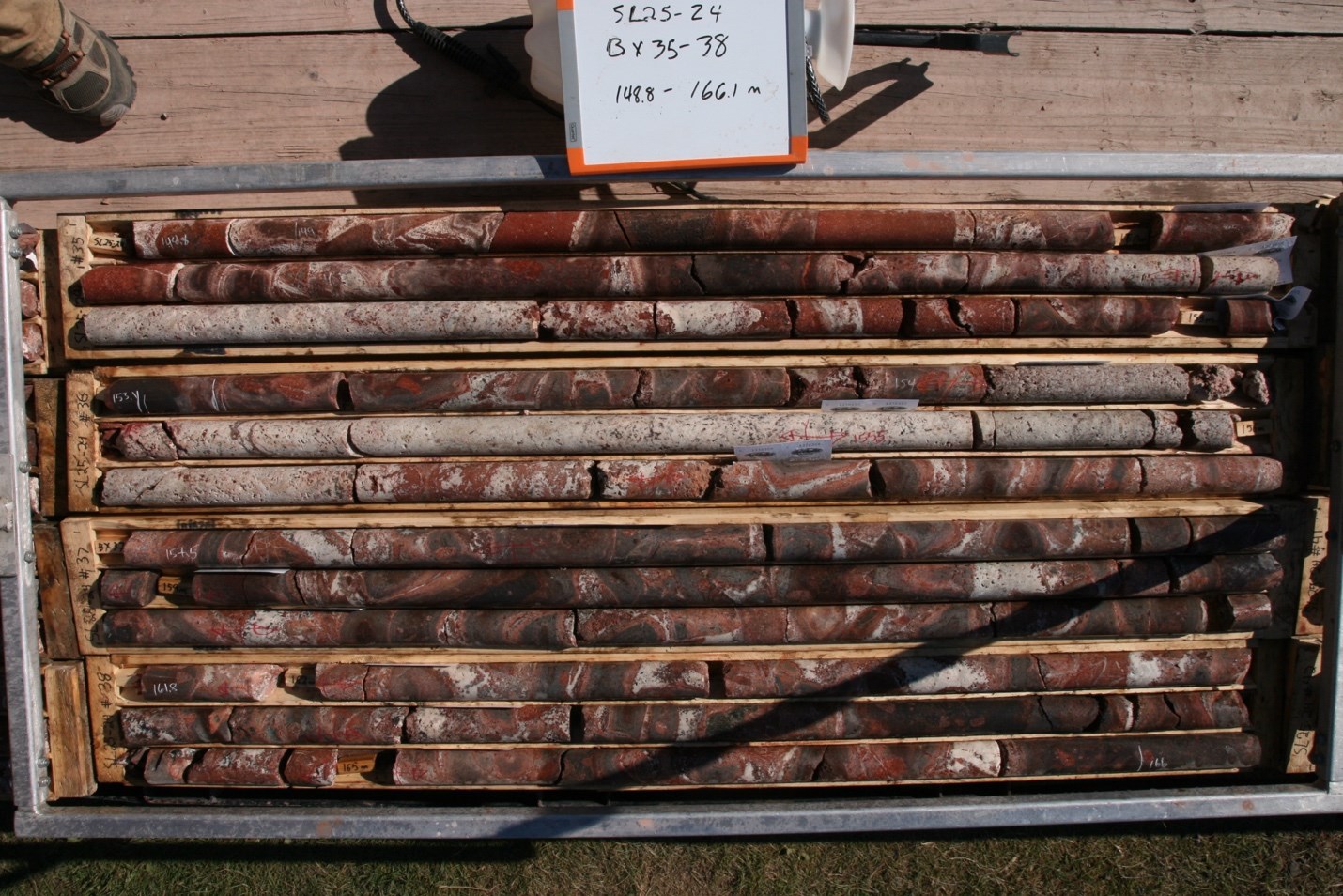
Figure 2. High-grade carbonatite mineralization with grades up to
To view an enhanced version of this graphic, please visit:
https://images.newsfilecorp.com/files/9598/277695_1f57260534ea8b1a_002full.jpg
The assay results continue to verify and extend the host carbonatite complex at depth and will be incorporated in the planned update to the historical NI 43-101 resource estimate (indicated 4.167 million tonnes ("Mt") at
Table 5. Borehole Collar Information
| Project | Hole ID | Azimuth (°) | Dip (°) | End of Hole (m) |
| LavergneSpringer25 | SL25-23 | 270 | -45 | 453 |
| LavergneSpringer25 | SL25-24 | 270 | -85 | 465 |
| LavergneSpringer25 | SL25-25 | 268 | -80 | 423 |
| LavergneSpringer25 | SL25-26 | 290 | -70 | 297 |
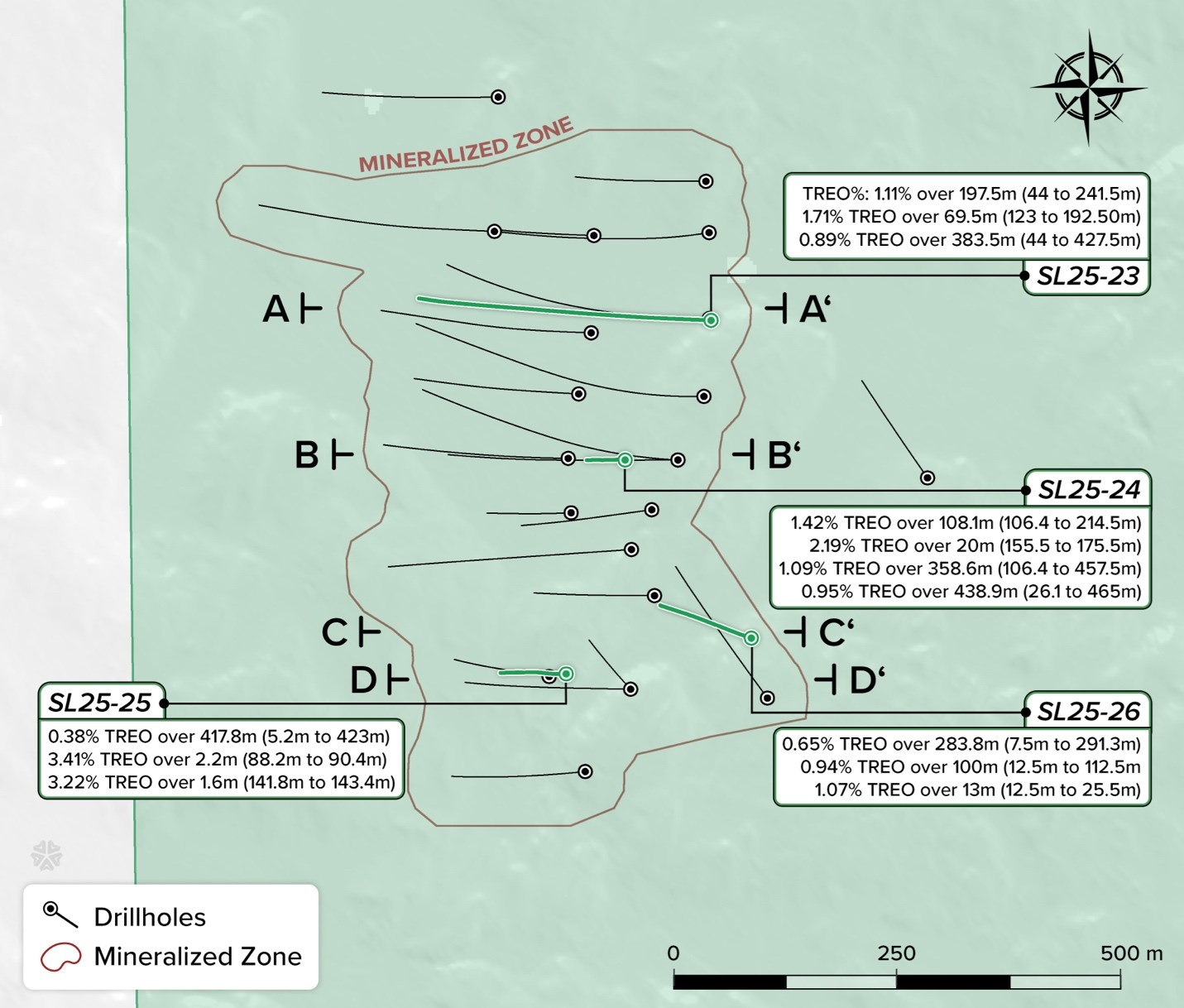
Figure 3. Borehole collars with the historical Mineral Resource outlined
To view an enhanced version of this graphic, please visit:
https://images.newsfilecorp.com/files/9598/277695_1f57260534ea8b1a_003full.jpg
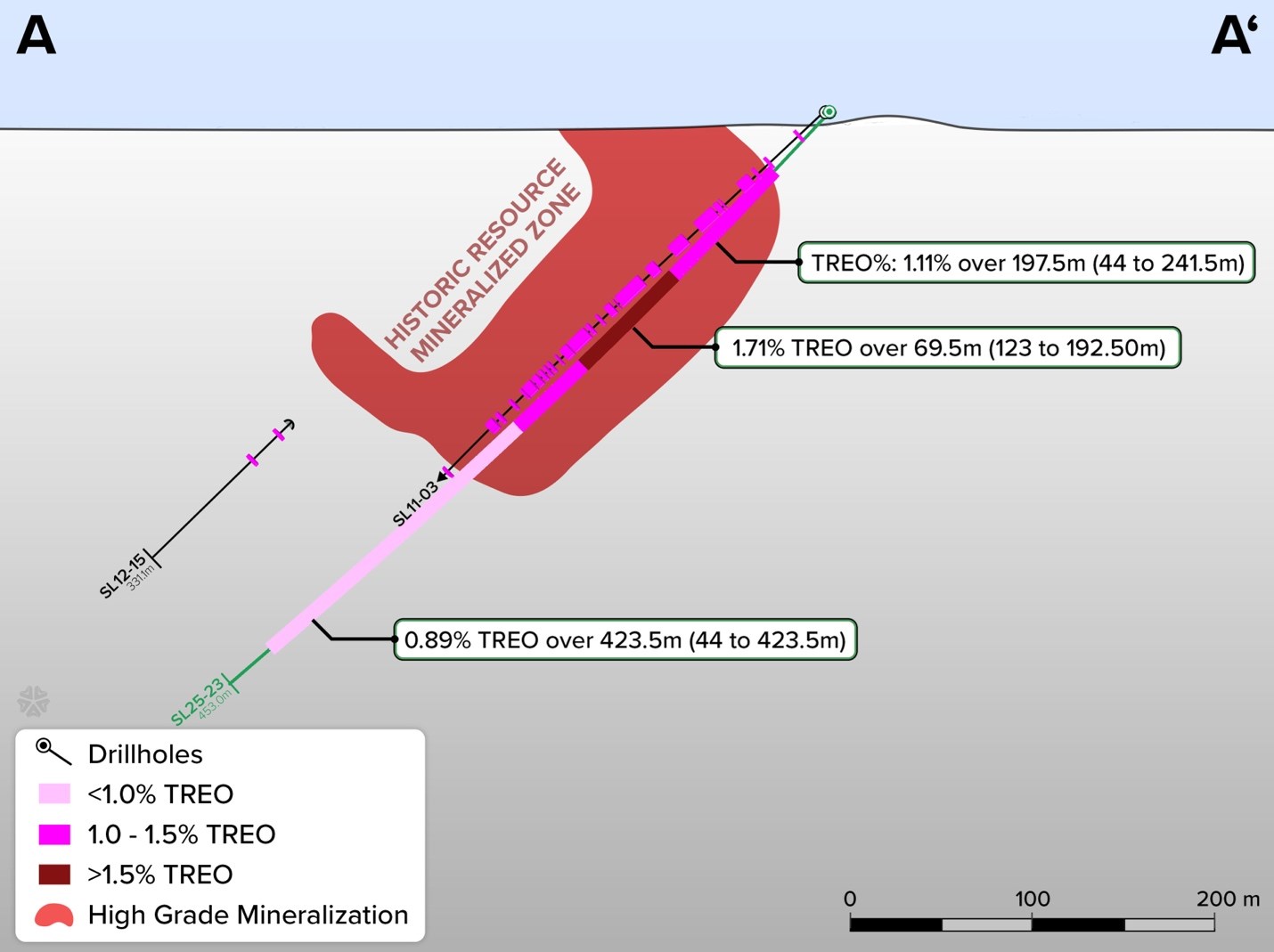
Figure 4. Cross-section highlighting REE intercepts in borehole SL25-23
To view an enhanced version of this graphic, please visit:
https://images.newsfilecorp.com/files/9598/277695_1f57260534ea8b1a_004full.jpg
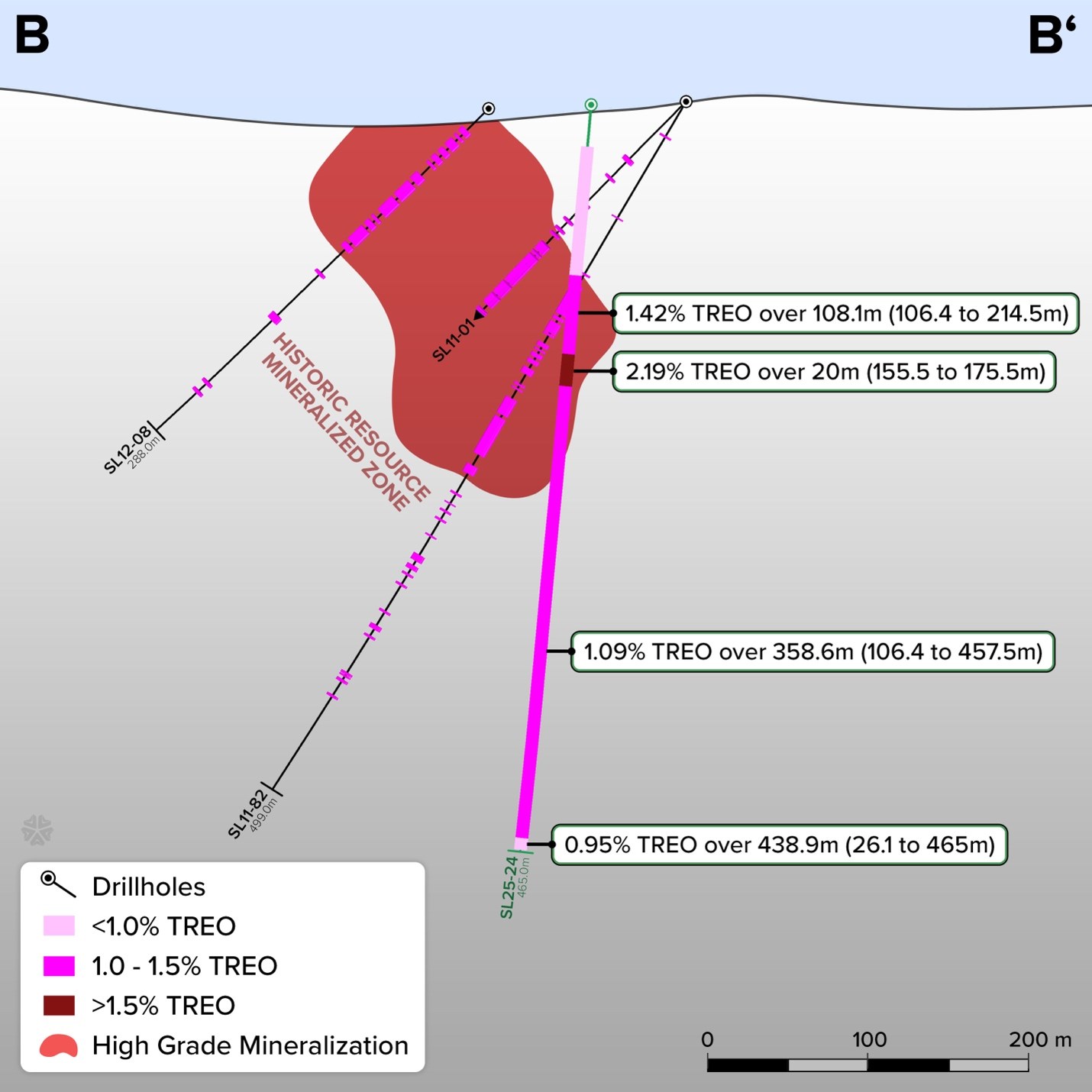
Figure 5. Cross-section highlighting REE intercepts in borehole SL25-24
To view an enhanced version of this graphic, please visit:
https://images.newsfilecorp.com/files/9598/277695_1f57260534ea8b1a_005full.jpg
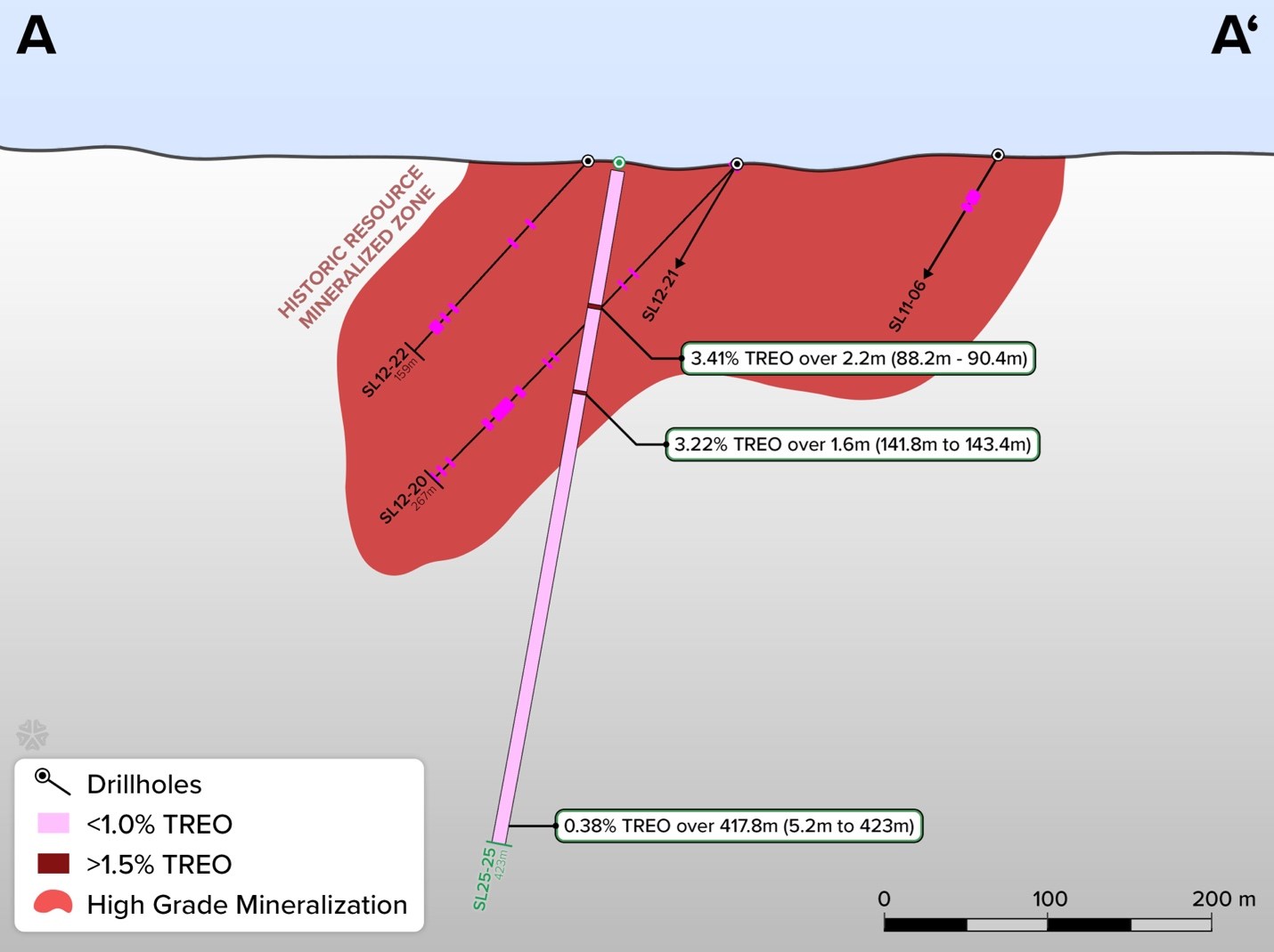
Figure 6. Cross-section highlighting REE intercepts in borehole SL25-25
To view an enhanced version of this graphic, please visit:
https://images.newsfilecorp.com/files/9598/277695_1f57260534ea8b1a_006full.jpg
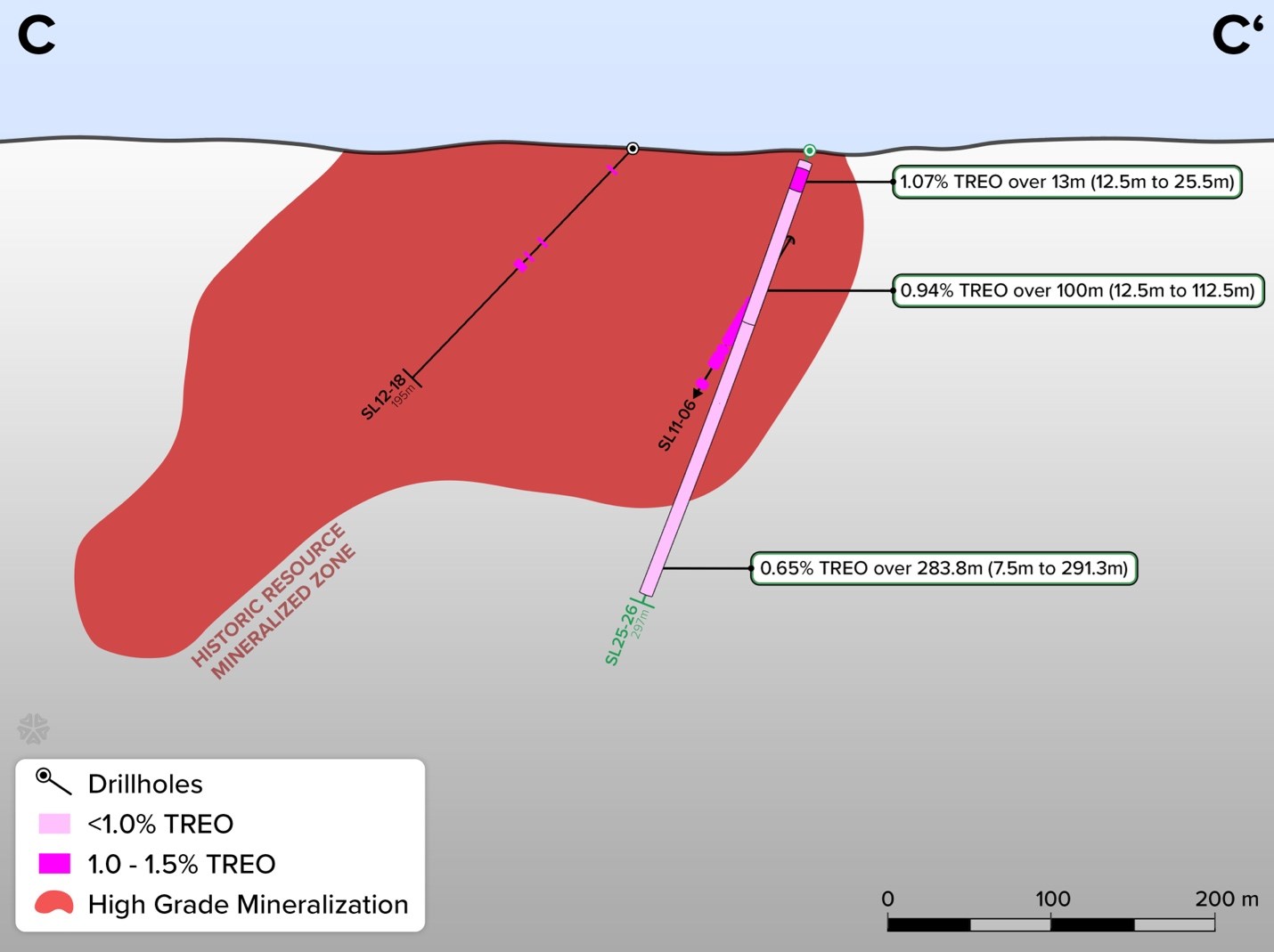
Figure 7. Cross-section highlighting REE intercepts in borehole SL25-26
To view an enhanced version of this graphic, please visit:
https://images.newsfilecorp.com/files/9598/277695_1f57260534ea8b1a_007full.jpg
About the Springer Rare Earth Deposit
The 2012 resource estimate presented for the Springer Rare Earth Project is historical in nature. Volta's qualified person has not completed sufficient work to confirm the results of the historical resource. Volta does not treat this as a current mineral resource but considers it relevant as a guide to future exploration and includes it for reference purposes only. The historical resource was estimated by Tetra Tech Wardrop in 2012.
The block model and mineral resource for the Springer Rare Earth Project is classified as having both Indicated and Inferred Mineral Resources based on the number of boreholes, borehole spacing and sample data populations used in the estimation of the blocks. The mineral resource estimate for the deposit, at a
The 2012 mineral resource, based on 22 diamond boreholes, was estimated by Ordinary Kriging interpolation on uncapped grades for all 15 REOs and thorium dioxide. The TREO% is a sum of the 15 individual interpolations of the REOs. No recoveries have been applied to the interpolated estimates.
The 2012 resource estimate categories are not compliant with the current CIM Definition Standards. No other resource estimates have been undertaken since the 2012 Tetra Tech Wardrop report. Further drilling will be required by Volta to verify the historical estimate as a current mineral resource.
QA/QC Protocol
All drilling was completed by a diamond drill rig producing NQ-size core. Volta implemented a strict QA/QC protocol in processing all rock samples collected from the diamond core samples obtained from the Springer REE property. The protocol included inserting reference materials, in this case, high-concentration and low-concentration certified rare earth elements standards, blanks, and drill core duplicates, to validate the accuracy and precision of the assay results. All collected rock core samples were cut in half by a rock saw, placed in sturdy plastic bags and zip-tied shut while under the supervision of a professional geologist. The remaining half core was returned to the core box, which is stored on the property. Sample bags were then put in rice bags and kept secure before being sent by road transport to Activation Laboratories Ltd.'s preparation facility in North Bay, Ontario. Sample preparation (code RX1) consists of drying and crush (< 7 kg) up to
Qualified Person
The technical content of this news release has been reviewed and approved by Andrew Tims, P.Geo., who is an independent Qualified Person ("QP") as defined in National Instrument 43-101, Standards of Disclosure for Mineral Projects. The QP and the Company have not completed sufficient work to verify the historical information on the Springer deposit, and it is considered as "historical", particularly regarding historical exploration and government geological work.
For more information about the Company, view Volta's website at www.voltametals.ca.
ABOUT VOLTA METALS LTD.
Volta Metals Ltd. (CSE: VLTA) (FSE: D0W) (OTC Pink: VOLMF) is a mineral exploration company based in Toronto, Ontario, focused on rare earths, gallium, lithium, cesium, and tantalum. It owns, has optioned and is currently exploring a critical minerals portfolio of rare earths, gallium, lithium, cesium, and tantalum projects in Ontario, one of the world's most prolific and emerging hard-rock critical mineral districts. To learn more about Volta and its Springer and Aki Projects, please visit www.voltametals.ca.
ON BEHALF OF THE BOARD
For further information, contact:
Kerem Usenmez, President & CEO
Tel: 416.919.9060
Email: info@voltametals.ca
Website: www.voltametals.ca
Neither the CSE nor the Canadian Investment Regulatory Organization (CIRO) accepts responsibility for the adequacy or accuracy of this release.
This news release contains forward-looking statements relating to product development, plans, strategies, and other statements that are not historical facts. Forward-looking statements are often identified by terms such as "will", "may", "should", "anticipate", "expects" and similar expressions. All statements other than statements of historical fact included in this news release are forward-looking statements that involve risks and uncertainties. Forward-looking information in this news release includes, but is not limited to, that the newly designed drill program will provide sufficient data for an updated resource estimate, which is scheduled to be completed in the first quarter of 2026. There can be no assurance that such statements will prove to be accurate, and actual results and future events could differ materially from those anticipated in such statements. Important factors that could cause actual results to differ materially from the Company's expectations include: the risks detailed from time to time in the filings made by the Company with securities regulators; the fact that Volta's interests in its mineral properties are options only and there are no guarantee that such interest, if earned, will be certain; the future prices and demand for lithium, rare earth elements, and gallium; and delays or the inability of the Company to obtain any necessary approvals, permits and authorizations required to carry out its business plans. The reader is cautioned that assumptions used in the preparation of any forward-looking statements may prove to be incorrect. Events or circumstances may cause actual results to differ materially from those predicted, as a result of numerous known and unknown risks, uncertainties, and other factors, many of which are beyond the control of the Company. The reader is cautioned not to place undue reliance on any forward-looking statements. Such information, although considered reasonable by management at the time of preparation, may prove to be incorrect and actual results may differ materially from those anticipated. Forward-looking statements contained in this news release are expressly qualified by this cautionary statement. The forward-looking statements contained in this news release are made as of the date of this news release, and the Company disclaims any intention or obligation to update or revise any forward-looking statements, whether as a result of new information, future events, or otherwise, other than as required by law.

To view the source version of this press release, please visit https://www.newsfilecorp.com/release/277695
FAQ
AI-generated questions and answers. How Rhea-AI works. Not financial advice.