STOCK TITAN

Waters Unveils Cyclic IMS P20 MS: The New Benchmark in Structural and Spatial Omics

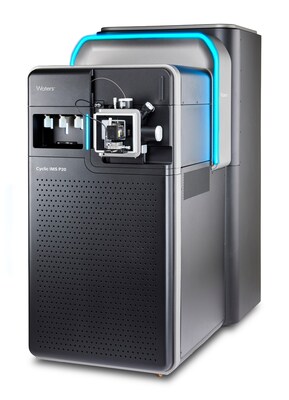
Waters (NYSE: WAT) launched the Cyclic IMS P20 Mass Spectrometer, a high-resolution structural and spatial omics platform unveiled at ASMS 2026.

(Neutral)

Sentiment and the balance of points

Rhea-AI Sentiment reads the wording of the document, how positive or negative its language is on a 1 to 5 scale. The balance of points shown with the takes weighs what the document actually discloses, so the two can disagree, for example when a trial that missed its main goal is described in upbeat language.

Tags

Waters (NYSE: WAT) launched the Cyclic IMS P20 Mass Spectrometer, a high-resolution structural and spatial omics platform unveiled at ASMS 2026. It combines multipass Cyclic Ion Mobility Spectrometry with advanced fragmentation, probing, and imaging to enhance early disease signal detection and biotherapeutic development.

The system delivers >10x higher MS/MS sensitivity than its predecessor, a >50% extended upper mass range to >100 kDa, and integrates MALDI XS and DESI XS imaging. Global availability is expected from September 2026.

Loading...
Loading translation...
Argus Jun 1 session
-1.41% close to close Open Argus
Details

News Market Reaction – WAT

On Jun 1, the day this news came out, WAT closed 1.41% below the previous close.

Data tracked by StockTitan Argus for the Jun 1 session.

Key Figures

MS/MS sensitivity increase: >10x Upper mass range extension: 50% Upper mass range: over 100 kDa +3 more
MS/MS sensitivity increase
>10x
Improvement vs predecessor Cyclic IMS platform
Upper mass range extension
50%
Upper mass range extended by more than 50%
Upper mass range
over 100 kDa
New upper mass range capability of Cyclic IMS P20 MS
Availability date
September 2026
Expected global availability of Cyclic IMS P20 MS
Conference edition
74th
ASMS Conference on Mass Spectrometry and Allied Topics
Order of magnitude acceleration
10x
Potential acceleration of analyses noted by academic user

Historical Context

5 past events · Latest: May 18
5 events
  1. May 18

    Conference participation

    24h Move
    +1.2%

    Announcement of CEO fireside chat at Jefferies Global Healthcare Conference.

  2. May 05

    Earnings results

    24h Move
    +13.5%

    Q1 2026 revenue beat guidance and company raised full‑year growth and EPS outlook.

  3. Apr 20

    Earnings call schedule

    24h Move
    -0.1%

    Set date and time for Q1 2026 earnings release and conference call.

  4. Apr 14

    Product launch

    24h Move
    +1.9%

    Introduced omniDAWN MALS detector offering faster runs and extended sizing.

  5. Apr 08

    FDA clearance

    24h Move
    +3.6%

    FDA cleared Onclarity HPV self‑collection kit and approved at‑home HPV assay.

24h Move is the share-price change in the day after each event; other market factors may also have contributed.

Key Terms

ion mobility spectrometry, mass spectrometer, post-translational modifications, tandem ion mobility spectrometry, +4 more
8 terms
ion mobility spectrometry technical
"multipass Cyclic™ Ion Mobility Spectrometry (IMS) reveals subtle biological differences"
Ion mobility spectrometry is a laboratory technique that separates charged particles (ions) by how fast they travel through a gas under an electric field, similar to watching different-sized boats cross a channel and timing which arrive first. Investors care because the method is used in portable detectors and lab instruments for chemical identification, quality control and safety screening, so advances or contracts can affect sales, recurring service revenue and regulatory adoption in industries like pharmaceuticals, security and environmental monitoring.
mass spectrometer technical
"announced the launch of the Waters Cyclic IMS P20 Mass Spectrometer, a high-resolution"
A mass spectrometer is a laboratory instrument that identifies and measures chemicals by breaking them into charged pieces and sorting those pieces by weight, like a highly sensitive scale that separates and reads fingerprints of molecules. Investors care because these devices are essential for drug development, quality control and environmental testing, driving sales for equipment makers and signaling progress or regulatory compliance in companies that rely on precise chemical analysis.
post-translational modifications medical
"from protein misfolding to post-translational modifications."
Chemical changes made to a protein after a cell builds it, acting like finishing touches that alter the protein’s shape, location, or activity. For investors, these changes matter because they control how biological targets behave, influence drug effectiveness and safety, affect biomarkers used to track diseases, and can change manufacturing or regulatory risk—similar to how tailoring can turn a basic garment into something that fits and functions differently.
tandem ion mobility spectrometry technical
"including tandem ion mobility spectrometry (IMSn), electron-capture dissociation (ECD)"
Tandem ion mobility spectrometry is a lab technique that separates charged molecules by their shape and size as they move through gas, using two linked stages to give a much clearer ‘shape fingerprint’ than a single pass. For investors, it matters because it improves detection of impurities, breakdown products, or biomarkers in drug and biotech work, speeding development, strengthening quality control, and reducing regulatory risk—similar to running a product through two fine filters instead of one.
electron-capture dissociation technical
"including tandem ion mobility spectrometry (IMSn), electron-capture dissociation (ECD),"
Electron-capture dissociation is a laboratory technique used in mass spectrometry where charged molecules capture low-energy electrons and break apart at predictable spots, revealing the building blocks and structure of proteins and other biomolecules. For investors, it matters because this level of molecular detail improves how companies identify drug targets, verify biologic medicines, develop diagnostics, and meet regulatory quality standards—similar to reconstructing a shredded document one clear strip at a time.
surface-induced dissociation technical
"electron-capture dissociation (ECD), surface-induced dissociation (SID), and collision-induced"
Surface-induced dissociation is an analytical method used inside mass spectrometers to break apart large molecular assemblies, like protein complexes, by smashing them into a surface so their pieces fly apart cleanly. Investors should care because it reveals how biological drugs and protein-based products are built and held together—critical information for development, quality control and regulatory approval—much like examining the broken pieces of a machine to understand its design and reliability.
collision-induced unfolding technical
"surface-induced dissociation (SID), and collision-induced unfolding (CIU) – delivering"
Collision-induced unfolding is a laboratory technique that uses controlled collisions inside a mass spectrometer to make ionized proteins or complexes partially unfold, revealing how their shapes change under stress. For investors, it provides a window into the structural stability and quality of drug candidates, biologics, or diagnostic proteins—similar to checking whether a folded object keeps its shape after being bumped—which informs development risk, manufacturing consistency, and product differentiation.
matrix-assisted laser desorption/ionization technical
"brings Matrix-Assisted Laser Desorption/Ionization (MALDI) and Desorption Electrospray"
A laboratory method that uses a light pulse and a supporting chemical 'matrix' to gently vaporize and give an electric charge to large, delicate molecules (like proteins or polymers) so a detector can measure their mass and composition. Think of the matrix as a soft cradle that helps lift fragile items with a flashlight so they can be weighed without breaking. Investors care because this technique underpins diagnostic tests, drug research, and analytical instruments—areas that drive biotech and instrument sales, regulatory milestones, and recurring revenue.

AI-generated analysis. How Rhea-AI works. Not financial advice.

See more from StockTitan in Google Search and AI answers. Adds StockTitan as a preferred source · opens Google
Add on Google
  • >10x step-change in MS/MS sensitivity paired with multipass Cyclic™ Ion Mobility Spectrometry (IMS) reveals subtle biological differences for earlier, previously unattainable detection of disease signals.
  • 50% extended upper mass range and comprehensive suite of structural tools advance the development of next-generation biotherapeutics.
  • Integrated MALDI XS and DESI XS imaging with high-resolution ion mobility enables direct visualization of molecules in tissue, improving understanding of how disease develops at the cellular level.

MILFORD, Mass., June 1, 2026 /PRNewswire/ -- 74th ASMS Conference on Mass Spectrometry and Allied Topics— Waters Corporation (NYSE: WAT) today announced the launch of the Waters Cyclic IMS P20 Mass Spectrometer, a high-resolution structural and spatial omics platform designed to help scientists see biology more clearly, and act on it faster. Combining multipass Cyclic Ion Mobility Spectrometry with an enhanced suite of fragmentation, probing, and imaging capabilities, this unique and powerful instrument delivers confident insights for the early detection of disease signals, from protein misfolding to post-translational modifications. The system's full‑spectrum molecular imaging unlocks unparalleled visualization within a single experiment1 to accelerate discovery and development, and power deeper understanding of complex biology.

"Waters recognizes that advanced tools for structural and spatial omics play a critical role in delivering therapeutic breakthroughs," said James Hallam, Vice President & General Manager, Liquid Chromatography-Mass Spectrometry, Waters Analytical Sciences, Waters Corporation. "With its powerful fusion of capabilities, the Cyclic IMS P20 MS delivers a previously unattainable view into subtle molecular differences, unlocking a new level of understanding of the mechanisms that drive disease and advancing next‑generation discovery."

As researchers pursue larger and more heterogeneous therapeutic targets, analytical workflows need higher sensitivity, higher structural resolution, and easier-to-adopt methods. The Cyclic IMS P20 Mass Spectrometer meets that need with a more than a 10-fold increase in MS/MS sensitivity compared to its predecessor,2 an upper mass range extended by more than 50% to over 100 kDa,3 and a set of complementary structural probing approaches, including tandem ion mobility spectrometry (IMSn), electron-capture dissociation (ECD), surface-induced dissociation (SID), and collision-induced unfolding (CIU) – delivering the most comprehensive spatial and structural molecular view within a single platform.

"My lab studies proteins involved in misfoldings that drive human disease, which are notoriously difficult to characterize. We leverage the advanced capabilities of Cyclic IMS P20 MS to perform complex tandem ion mobility experiments on low‑abundance forms of a key molecule involved in the pathogenesis of Type II diabetes," said Kostas Thalassinos, Ph.D., Professor of Mass Spectrometry and Academic Lead, Institute of Structural and Molecular Biology, University College London. "The increase in sensitivity delivered by the new functionality is truly remarkable. It stands to significantly accelerate our analyses, potentially by an order of magnitude, and enables us to probe critical low‑abundance species in far greater detail. These rare molecular populations are essential for delineating the mechanisms that drive human disease."

The Cyclic IMS P20 Mass Spectrometer also brings Matrix-Assisted Laser Desorption/Ionization (MALDI) and Desorption Electrospray Ionization (DESI) imaging sources together in one system, pioneering their combination with advanced multipass cyclic ion mobility and IMS separation to help researchers see more, with greater clarity, directly in their samples. This unique approach broadens coverage across small molecules, lipids, peptides, and proteins, while separating isobaric and stereoisomeric compounds. Additionally, the system delivers multi-dimensional insights that elucidate links between molecular composition and the tissue microenvironment, supporting biomarker identification directly from tissue. These rich, easily-interpreted molecular maps provide increased confidence in lipidomics, drug and metabolite localization, translational research, and other experiments requiring visualization.

The Waters Cyclic IMS P20 Mass Spectrometer will be showcased at ASMS 2026 and is expected to be available globally beginning September 2026. For more information or to request a demo, visit product page.

Additional Resources:

Waters and Cyclic are trademarks of Waters Corporation or its affiliates. All other trademarks are the property of their respective owners.

The P in Cyclic IMS P20 denotes Premium, the highest performance tier from Waters, and 20 reflects the platform's evolution from the SELECT SERIES lineage under Waters' new product naming convention.

About Waters Corporation:

Waters Corporation (NYSE: WAT) is a global leader in life sciences and diagnostics, dedicated to accelerating the benefits of pioneering science through analytical technologies, informatics, and service. With a focus on regulated, high-volume testing environments, our innovative portfolio harnesses deep scientific expertise across chemistry, physics, and biology. We collaborate with customers around the world to advance the release of effective, high-quality medicines, ensure the safety of food and water, and drive better patient outcomes by detecting diseases earlier, managing routine infections, and combating antibiotic resistance. Through a shared culture of relentless innovation, our passionate team of ~16,000 colleagues turn scientific challenges into breakthroughs that improve lives worldwide. For more information, please visit www.waters.com/about.

References:

  1. Imaging modality performance and ion mobility separation examples in tissue; based on internal Waters testing, protocol and sample details on file.
  2. Up to 10x MS/MS sensitivity comparison (Cyclic IMS P20 vs prior generation instrument) based on internal Waters testing; protocol and sample details on file.
  3. Upper mass range specification and representative analytes; based on internal Waters testing; see Cyclic IMS P20 Specification sheet.

Contact:

Molly Gluck  
Head of External Communications
Waters Corporation  
508.498.9732
molly_gluck@waters.com   

Cision View original content to download multimedia:https://www.prnewswire.com/news-releases/waters-unveils-cyclic-ims-p20-ms-the-new-benchmark-in-structural-and-spatial-omics-302786888.html

SOURCE Waters Corporation

FAQ

AI-generated questions and answers. How Rhea-AI works. Not financial advice.

What is the Waters (NYSE: WAT) Cyclic IMS P20 Mass Spectrometer launched in June 2026?

The Cyclic IMS P20 Mass Spectrometer is a high-resolution structural and spatial omics platform for advanced molecular analysis. According to Waters, it combines multipass cyclic ion mobility with enhanced fragmentation and imaging to support early disease signal detection and next-generation biotherapeutic development.

What key performance improvements does the Cyclic IMS P20 MS from Waters (WAT) offer?

Cyclic IMS P20 MS offers more than a 10-fold increase in MS/MS sensitivity versus its predecessor. According to Waters, it also extends the upper mass range by over 50% to above 100 kDa and adds complementary structural probing tools like ECD, SID, CIU, and tandem ion mobility.

How does Waters’ Cyclic IMS P20 Mass Spectrometer enhance structural and spatial omics imaging?

The Cyclic IMS P20 integrates MALDI XS and DESI XS imaging sources in one system. According to Waters, pairing these with advanced multipass ion mobility enables high-resolution molecular imaging in tissue, separating isobaric and stereoisomeric compounds and linking molecular composition to the tissue microenvironment.

When will the Waters (WAT) Cyclic IMS P20 Mass Spectrometer be commercially available?

Waters expects the Cyclic IMS P20 Mass Spectrometer to be available globally beginning September 2026. According to Waters, the system will be showcased at ASMS 2026, with interested researchers able to request demonstrations through the product page ahead of general availability.

What research applications does the Waters Cyclic IMS P20 MS support for disease studies?

Cyclic IMS P20 MS supports studies of protein misfolding, post-translational modifications, and low-abundance disease-related species. According to Waters, its sensitivity and ion mobility capabilities help delineate mechanisms driving human diseases such as Type II diabetes by enabling complex tandem ion mobility experiments on challenging targets.

How does the Cyclic IMS P20 platform benefit biotherapeutic development for Waters (WAT) customers?

The platform provides extended mass range and comprehensive structural tools to characterize larger, heterogeneous therapeutic molecules. According to Waters, this supports development of next-generation biotherapeutics by delivering multidimensional structural insights, improving confidence in analyzing proteins, lipids, peptides, and other biomolecules relevant to drug discovery and translational research.

Keep reading