STOCK TITAN

Robo.ai Subsidiary Neurovia AI Launches NeuroStream™ Technology Platform to Build Physical AI Visual Data Infrastructure

Rhea-AI Impact
(High)
Rhea-AI Sentiment
(Positive)
Tags
AI

Robo.ai (Nasdaq: AIIO) announced that subsidiary Neurovia AI has launched its NeuroStream™ physical AI visual data platform. Internal tests show a 5.5GB 4K 60fps video compressed to 278MB, about a 95% reduction, while retaining resolution and frame rate for machine vision and AI workloads.

The AI-native compression and edge-ready architecture aim to cut storage, bandwidth, energy use, and latency across applications such as autonomous driving, robotics, smart cities, industrial AI, and global intelligent networks.

Loading...
Loading translation...

AI-generated analysis. Not financial advice.

Positive

  • NeuroStream compresses 5.5GB 4K 60fps video to 278MB (~95% reduction)
  • Potential $1,000–$1,500 annual savings per terabyte of storage for AI users
  • Edge-ready architecture processes hundreds of terabytes on standard commercial devices
  • Native-format output removes decompression costs and reduces integration friction
  • Offline, lossless operation supports data compliance in sensitive industries

Negative

  • None.

News Market Reaction – AIIO

+116.09% 5.1x vol
128 alerts
+116.09% News Effect
+182.7% Peak in 9 hr 15 min
+$97M Valuation Impact
$180.62M Market Cap
5.1x Rel. Volume

On the day this news was published, AIIO gained 116.09%, reflecting a significant positive market reaction. Argus tracked a peak move of +182.7% during that session. Our momentum scanner triggered 128 alerts that day, indicating very high trading interest and price volatility. This price movement added approximately $97M to the company's valuation, bringing the market cap to $180.62M at that time. Trading volume was exceptionally heavy at 5.1x the daily average, suggesting very strong buying interest.

Data tracked by StockTitan Argus on the day of publication.

Key Figures

Original video size: 5.5GB Compressed size: 278MB Storage reduction: 95% +5 more
8 metrics
Original video size 5.5GB 4K 60fps source video used in NeuroStream™ internal testing
Compressed size 278MB Output size after NeuroStream™ processing of 5.5GB 4K 60fps video
Storage reduction 95% Approximate reduction in storage space usage in internal NeuroStream™ tests
Video resolution 4K 60fps Resolution and frame rate preserved after NeuroStream™ compression
Storage price increase fourfold Global unit data storage prices increase since 2026 cited by CTO
Annual benefit per TB (low) $1,000 Estimated annual direct economic benefit per terabyte of storage saved
Annual benefit per TB (high) $1,500 Upper range of estimated direct annual benefit per terabyte saved
Edge capacity hundreds of terabytes Data volume standard commercial devices can process using NeuroStream™ edge architecture

Market Reality Check

Price: $2.94 Vol: Volume 79,546,411 is 3.9x...
high vol
$2.94 Last Close
Volume Volume 79,546,411 is 3.9x the 20-day average of 20,379,308, signaling heavy pre-news positioning. high
Technical Shares at $2.575 are trading below the 200-day MA of $12.01, despite a 103.91% daily gain.

Peers on Argus

AIIO gained 103.91% while peers were mixed: NIU up 4.35%, LVWR down 2.78%. The m...
1 Up 1 Down

AIIO gained 103.91% while peers were mixed: NIU up 4.35%, LVWR down 2.78%. The magnitude and direction suggest a company-specific reaction to the NeuroStream™ launch, not a broad auto/EV sector move.

Previous AI Reports

5 past events · Latest: Apr 10 (Positive)
Same Type Pattern 5 events
Date Event Sentiment Move Catalyst
Apr 10 Prototype deliveries Positive +0.2% Robus subsidiary began delivering initial commercial prototype vehicles in Pakistan.
Apr 01 Investor letter, split Negative -15.1% Letter outlined 1-for-20 reverse split and restructuring to optimize capital structure.
Mar 24 Data revenue start Positive +4.0% Began revenue recognition for intelligent data business and set capacity targets.
Mar 09 Strategy commentary Positive +1.5% CEO highlighted UAE as launchpad for machine economy and AI infrastructure.
Feb 26 Data delivery milestone Positive -5.7% Completed initial intelligent data collection deliveries validating commercial model.
Pattern Detected

AI-tagged news has produced mixed reactions, with most events modestly aligned to sentiment but one notable negative divergence on otherwise positive operational progress.

Recent Company History

Over recent months, Robo.ai’s AI-related news has centered on building an embodied AI and data infrastructure stack. Events include initial intelligent data deliveries on Feb 26, CEO commentary on the UAE machine-economy strategy on Mar 9, revenue recognition and capacity targets on Mar 24, an investor letter with a 1-for-20 reverse split on Apr 1, and Robus prototype deliveries on Apr 10. The NeuroStream™ platform launch extends this progression from data collection and vehicle deployment to core visual data infrastructure for physical AI.

Historical Comparison

-3.0% avg move · Prior AI-tagged announcements averaged a -3.03% move, mostly modest. Today’s +103.91% jump on NeuroS...
AI
-3.0%
Average Historical Move AI

Prior AI-tagged announcements averaged a -3.03% move, mostly modest. Today’s +103.91% jump on NeuroStream™ far exceeds typical reactions to similar AI-focused updates.

AI news has progressed from validating data delivery and GCC capacity to launching NeuroStream™, a core visual data infrastructure platform for physical AI.

Market Pulse Summary

The stock surged +116.1% in the session following this news. A strong positive reaction aligns with ...
Analysis

The stock surged +116.1% in the session following this news. A strong positive reaction aligns with the significance of NeuroStream™, given its 95% compression while maintaining 4K 60fps quality. Historically, AI-tagged news averaged a -3.03% move, so the latest +103.91% gain stands out versus prior modest reactions. Investors have also digested recent reverse split and large resale registration filings, which may temper longer-term enthusiasm if supply overhang concerns re-emerge.

Key Terms

bitmap vectorization algorithm, machine vision, edge computing, signal-to-noise ratio, +4 more
8 terms
bitmap vectorization algorithm technical
"the platform utilizes a bitmap vectorization algorithm to provide high-fidelity, low-bandwidth"
A bitmap vectorization algorithm is a computer method that converts pixel-based images (made of colored dots) into a set of clean, scalable shapes and lines that can be resized without losing quality. For investors, it matters because this conversion underpins products and services like logo rendering, digital printing, map and design tools, and efficient file storage—areas that affect user experience, operational costs, software capability, and potential revenue streams.
machine vision technical
"complete data source for subsequent machine vision and AI computations."
Machine vision is technology that allows computers and machines to see, interpret, and analyze visual information from the world, much like how human eyes and brains work together. It enables automated systems to recognize objects, read signs, or inspect products without human help. For investors, machine vision is important because it drives advancements in automation and artificial intelligence, influencing industries and business efficiency.
edge computing technical
"ai-native compression, intelligent visual optimization, and edge computing adaptation, neurostream™ converts"
Edge computing is a technology that processes data close to where it is generated, such as sensors or devices, rather than sending it all to a distant central location. This allows for faster decision-making and reduces delays, much like having a local office handle urgent matters instead of waiting for instructions from a main headquarters. For investors, it signifies improved efficiency and real-time insights, which can enhance the performance of technology-dependent industries.
signal-to-noise ratio technical
"recognition accuracy by intelligently improving the data signal-to-noise ratio during processing."
The signal-to-noise ratio measures how much useful information (the signal) stands out from irrelevant or random data (the noise). For investors, a high ratio means price moves, earnings reports or research reliably reflect real value or trends, while a low ratio means it's harder to separate meaningful signals from meaningless fluctuations—like trying to hear a single voice in a crowded room or tune a radio to a clear station, which affects confidence in decisions.
autonomous driving technical
"neurovia plans to progressively introduce the neurostream™ platform to core application scenarios including autonomous driving, robotics"
Autonomous driving is technology that allows a vehicle to navigate and control itself without a human constantly steering, braking or accelerating, acting like a robotic chauffeur that perceives the road, makes decisions and responds to traffic and obstacles. Investors care because it can change who makes money and how much—by cutting labor and operating costs, creating new software and data businesses, and shifting regulatory and liability risks that affect future revenue, adoption speed and company valuations.
smart cities technical
"core application scenarios including autonomous driving, robotics, smart cities, industrial ai"
Urban areas that use sensors, data and connected systems to improve how public services like transportation, energy, water and safety operate—think of a city using a network of smart devices and software to run more smoothly, like a smartphone helping a household coordinate chores. For investors, smart cities create sustained demand for technology, infrastructure and services, influence operating costs and property values, and shift regulatory and revenue risks across sectors, so they can reshape long-term returns and growth prospects.
machine economy technical
"designed for the machine economy era, the platform utilizes a bitmap"
A machine economy is an economic system where automated devices, software agents and connected machines buy, sell, and perform services with little or no human intervention. Think of it as a marketplace run by machines that trade data, compute power, or services the way people trade goods. For investors it matters because it can create new revenue streams, change cost structures and shift which companies capture value as automation and machine-to-machine transactions scale up.
physical artificial intelligence technical
"massive visual data generated by physical artificial intelligence. mansoor ali khan"
Physical artificial intelligence is AI built into machines and devices that directly sense and act in the real world—robots, drones, factory equipment, or smart sensors that learn from feedback and make decisions without constant human control. Like giving a piece of equipment a brain so it can adjust itself on the fly, it can boost efficiency, lower labor or error costs, enable new products and services, and therefore influence revenue, capital spending and competitive position for investors.

AI-generated analysis. Not financial advice.

See more from StockTitan in Google Search and AI answers. Adds StockTitan as a preferred source · opens Google
Add on Google

DUBAI, UAE, May 14, 2026 /PRNewswire/ -- Robo.ai Inc. (Nasdaq: AIIO), announced today that its wholly-owned AI data processing and compression technology subsidiary, Neurovia AI, has officially released its core technology platform, NeuroStream™. Designed for the machine economy era, the platform utilizes a bitmap vectorization algorithm to provide high-fidelity, low-bandwidth, and low-power infrastructure support for the massive visual data generated by physical artificial intelligence. Mansoor Ali Khan, Chief Technology Officer of Neurovia AI, detailed the platform's technical architecture and application cases.

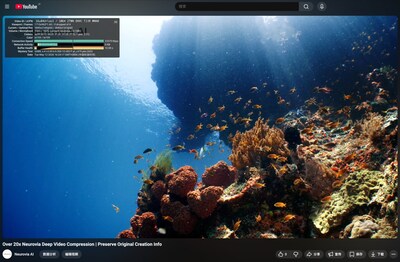
To demonstrate the practical performance of NeuroStream™, Neurovia AI has published comparative case studies on its official website (https://www.neuroviaai.ae/). According to internal testing, a 5.5GB 4K 60fps original video processed through NeuroStream™ can be compressed to a file size of 278MB, reducing storage space usage by approximately 95%.

These tests indicate that NeuroStream™ significantly reduces file size while fully retaining core visual information such as the original video's resolution and frame rate. This visually lossless characteristic ensures that the substantially compressed data continues to provide a clean and complete data source for subsequent machine vision and AI computations. This capability meets the strict data authenticity requirements of industrial, sovereign, and specific legal application scenarios, while also generating clear economic benefits for enterprises in terms of energy consumption, storage space, and processing latency.

Chief Technology Officer Mansoor Ali Khan noted that global unit data storage prices have increased approximately fourfold since 2026. According to industry estimates, every terabyte of data storage saved generates a direct economic benefit of $1,000 to $1,500 annually for an AI customer, in addition to indirect benefits related to transmission efficiency, energy consumption, data integrity, and security.

Through AI-native compression, intelligent visual optimization, and edge computing adaptation, NeuroStream™ converts traditional bitmap logic into a vectorized mathematical expression. This approach lowers transmission and storage costs while precisely preserving the critical visual information necessary for AI computation, offering an effective solution to rising storage expenses.

The platform provides native format compatibility with zero decompression usage costs, as processed images and videos maintain their original formats and can be directly accessed by systems without specific decompression software. This full compatibility with existing conventional video workflows substantially reduces system integration and friction costs for enterprises.

Furthermore, NeuroStream™ optimizes data quality and enhances machine vision recognition accuracy by intelligently improving the data signal-to-noise ratio during processing. This process aids in increasing the computational efficiency of AI algorithms and ensures that machines maintain high recognition accuracy on the compressed data.

The platform features an architecture adapted for low-computing edge deployment, enabling standard commercial computing devices to efficiently process hundreds of terabytes of data. This characteristic makes the platform suitable for deployment on edge sensors, drones, and mobile terminal nodes with limited computing resources. Additionally, the product ensures data security and privacy protection through lossless offline operation, allowing it to function independently in disconnected environments to meet the data compliance requirements of highly sensitive industries such as aerospace, medical imaging, and energy.

Moving forward, Neurovia plans to progressively introduce the NeuroStream™ platform to core application scenarios including autonomous driving, robotics, smart cities, industrial AI, and global intelligent networks. As the deployment scale of global edge computing nodes expands, NeuroStream™ is expected to effectively reduce network bandwidth pressure and overall energy consumption in data centers. This will enable global machine vision networks to become more efficient, real-time, and intelligent, providing solid infrastructure support for the large-scale commercial deployment of the machine economy.

About Neurovia AI Limited
Neurovia AI (www.neuroviaai.ae) provides AI data processing and visual infrastructure through its NeuroStream™ platform. Dedicated to transitioning visual data from human viewing to machine understanding, the company utilizes AI-native compression and edge computing to address data bottlenecks in Physical AI. Its technology serves autonomous driving, smart cities, and intelligent manufacturing, providing a foundational layer for global machine perception and collaboration.

About Robo.ai Inc.
Robo.ai Inc. (NASDAQ: AIIO) is a technology company dedicated to building an artificial intelligence machine economy platform. Its mission is to integrate smart terminals through AI software, intelligent hardware, and smart assets to construct a unified artificial intelligence operating system and a blockchain-empowered ecosystem to pioneer an intelligent future.

Safe Harbor Statement
This press release contains forward-looking statements as defined in the Private Securities Litigation Reform Act of 1995. Actual results may differ from expectations; for further details, please refer to the documents the company has filed with the U.S. Securities and Exchange Commission.

Media Contacts
Neurovia AI Corporate Communications
Email: info@neuroviaai.ae
Website: www.neuroviaai.ae 
Robo.ai Inc. Corporate Communications
Email: pr@roboai.io
Website: www.roboai.io

Cision View original content to download multimedia:https://www.prnewswire.com/news-releases/roboai-subsidiary-neurovia-ai-launches-neurostream-technology-platform-to-build-physical-ai-visual-data-infrastructure-302771367.html

SOURCE Robo.ai Inc.

FAQ

What did Robo.ai (NASDAQ: AIIO) announce about the NeuroStream platform on May 14, 2026?

Robo.ai announced the launch of Neurovia AI’s NeuroStream™ visual data platform for physical AI. According to Robo.ai, NeuroStream provides high-fidelity, low-bandwidth infrastructure to handle massive machine-vision video, targeting use in autonomous driving, robotics, smart cities, industrial AI, and global intelligent networks.

How much can Robo.ai’s NeuroStream technology reduce 4K video file size for AIIO customers?

NeuroStream can compress a 5.5GB 4K 60fps video down to about 278MB. According to Neurovia AI, this roughly 95% reduction maintains the original resolution and frame rate, enabling visually lossless compression suitable for demanding machine vision and AI computation scenarios.

How does NeuroStream support edge computing and physical AI applications for Robo.ai (AIIO)?

NeuroStream is architected for low-computing edge deployment on standard commercial hardware. According to Neurovia AI, the platform lets devices like sensors, drones, and mobile nodes process hundreds of terabytes efficiently, reducing bandwidth pressure and enabling real-time machine vision in disconnected or resource-constrained environments.

What economic benefits could NeuroStream offer Robo.ai (AIIO) enterprise customers in data storage costs?

NeuroStream’s compression can significantly cut storage requirements for visual data. According to Neurovia AI, industry estimates suggest each terabyte of storage saved may yield $1,000–$1,500 in annual direct economic benefit, plus indirect gains from lower energy use, improved transmission efficiency, and reduced latency.

How does Robo.ai’s NeuroStream platform improve machine vision accuracy and data quality?

NeuroStream enhances the signal-to-noise ratio of visual data during processing. According to Neurovia AI, this optimization helps improve machine vision recognition accuracy and computational efficiency, while preserving critical visual information needed for AI algorithms on compressed, visually lossless image and video streams.

Which industries can use the NeuroStream physical AI visual data infrastructure from Robo.ai (AIIO)?

NeuroStream targets sectors that rely on intensive machine vision workloads. According to Neurovia AI, potential application areas include autonomous driving, robotics, smart cities, industrial AI, aerospace, medical imaging, energy, and other highly sensitive fields requiring compliant, offline-capable and secure visual data processing.