
Cannabix Marijuana Breath Test Clears Key Regulatory Milestone: Handheld Breath Collection Unit (BCU) Passes FCC Electronic Emissions Testing
Cannabix Technologies (OTCID: BLOZF) announced that its handheld Breath Collection Unit (BCU) passed electronic emissions testing required by the US Federal Communications Commission (FCC) and Canada’s ISED standard ICES-003 Issue 7.
Sentiment and the balance of points
Rhea-AI Sentiment reads the wording of the document, how positive or negative its language is on a 1 to 5 scale. The balance of points shown with the takes weighs what the document actually discloses, so the two can disagree, for example when a trial that missed its main goal is described in upbeat language.
Rhea-AI Summary
Cannabix Technologies (OTCID: BLOZF) announced that its handheld Breath Collection Unit (BCU) passed electronic emissions testing required by the US Federal Communications Commission (FCC) and Canada’s ISED standard ICES-003 Issue 7. Cannabix received an ISO/IEC 17025 accredited test report after testing at QAI Laboratories in British Columbia. The BCU and proprietary Breath Cartridges form the core of the Marijuana Breath Test (MBT) system, which aims to collect stable breath samples for analysis by LC-MS. Cannabix said this emissions clearance is a key regulatory milestone toward commercialization in the US and Canada.
Positive
- BCU passed FCC Part 15 electronic emissions testing
- Testing completed to ICES-003 Issue 7 Canadian standard
- Received ISO/IEC 17025 accredited test report
- Testing performed at QAI Laboratories (FCC TCB-designated lab)
Negative
- Additional regulatory steps remain before full commercialization
- No market authorization date or sales approval announced
Details
News Market Reaction – BLOZF
On Dec 9, the day this news came out, BLOZF closed 0.03% below the previous close.
Data tracked by StockTitan Argus for the Dec 9 session.
Key Figures
- FCC standard
- CFR Title 47 FCC Part 15
- Electronic emissions testing standard for U.S. market
- Canadian standard
- ICES-003 Issue 7
- Electronic device emissions standard in Canada
- Lab accreditation
- ISO/IEC 17025
- Accredited test report for emissions compliance
- Omega experience
- 25 years
- Omega Laboratories’ history in forensic drug testing
Historical Context
-
FCC and Canadian emissions testing clearance for Marijuana Breath Test BCU.
-
Second BreathLogix alcohol screening unit order from existing maritime customer.
-
USPTO patent for contact-free breath analysis device and method.
-
Delivery of BreathLogix alcohol screening device to oilfield transport firm.
-
First sale of BreathLogix unmanned alcohol screening to European maritime customer.
24h Move is the share-price change in the day after each event; other market factors may also have contributed.
Key Terms
federal communications commission (fcc) regulatory
radio frequency (rf) energy technical
iso/iec 17025 technical
cfr title 47 fcc part 15 regulatory
ices-003 regulatory
innovation, science and economic development canada (ised) regulatory
liquid chromatography-mass spectrometry (lc-ms) medical
telecommunication certification body (tcb) regulatory
AI-generated analysis. How Rhea-AI works. Not financial advice.


VANCOUVER, British Columbia, Dec. 09, 2025 (GLOBE NEWSWIRE) -- Cannabix Technologies Inc. (CSE: BLO) (OTCID: BLOZF) (Frankfurt: 8CT) (the “Company or Cannabix”) is pleased to announce that the Cannabix Breath Collection Unit (BCU) has successfully passed electronic emissions testing required by the Federal Communications Commission (FCC). The handheld BCU (Figures 1 and 2) along with Cannabix’s proprietary Breath Cartridges, forms the core hardware of the Marijuana Breath Test (MBT) system. Cannabix is completing the necessary regulatory steps required for the US and Canadian markets. Completion of emissions testing is a key milestone towards commercialization.
Highlights:
- The BCU has achieved a key step by passing US and Canadian electronic emissions testing standards for this innovative device.
- Cannabix MBT provides the ability to collect a stable breath sample to test for the recent use of marijuana.
- Engineering work over recent months and device design updates have focussed on meeting compliance requirements for anticipated commercialization.
Electronic emissions testing is required by the FCC for certain electronic devices—primarily those that emit radio frequency (RF) energy—before they can be marketed or sold in the United States. Cannabix has received an ISO/IEC 17025 accredited test report confirming compliance with electronic emissions standards.
The electronic emissions testing for the Cannabix BCU was conducted in accordance with CFR Title 47 FCC Part 15 for the U.S. market. Additionally, testing was completed in conformance with ICES-003 Issue 7, the Canadian standard for electronic devices published by Innovation, Science and Economic Development Canada (ISED). Similar to the FCC in the United States, ISED sets limits and measurement methods for RF emissions and administrative requirements for electronic devices sold or used in Canada.
Testing was performed at QAI Laboratories in British Columbia. QAI has Telecommunication Certification Body (TCB) designation by the FCC and is an ISO/IEC 17025 accredited lab recognized in both the U.S. and Canada for electrical safety evaluations and certification.
The Marijuana Breath Test (MBT) system incorporates Cannabix’s proprietary Breath Collection Unit and Breath Cartridge technologies, designed to collect and preserve breath samples for analysis using gold-standard liquid chromatography-mass spectrometry (LC-MS) methods. Cannabix has a strategic partnership with Omega Laboratories Inc, a global leader in forensic drug testing for over 25 years. Omega holds multiple federal and international certifications and operates a world-class facility with extensive experience in novel drug detection technologies. Together, Cannabix and Omega are advancing the commercialization of the MBT system for customers in the U.S. and Canada.
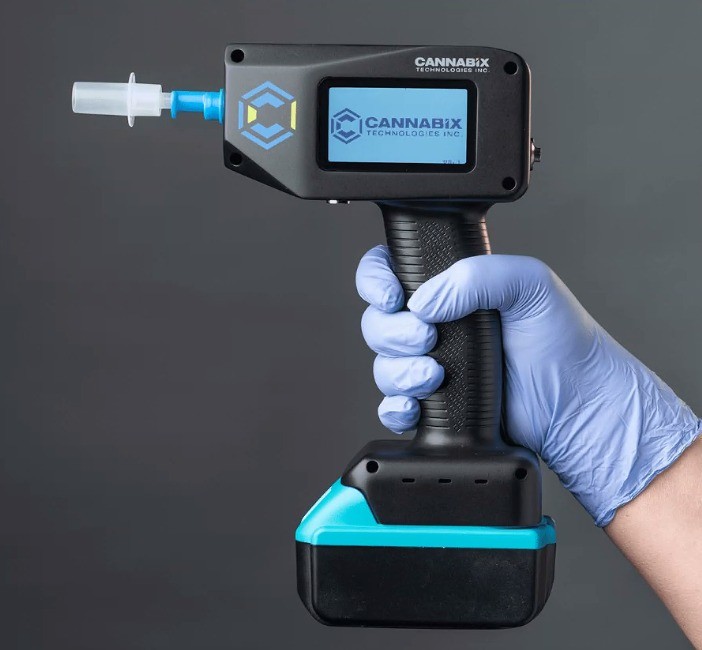
Figure 1. Cannabix Marijuana Breath Test hardware including Breath Collection Unit (BCU) and Breath Cartridge (BC) technologies.
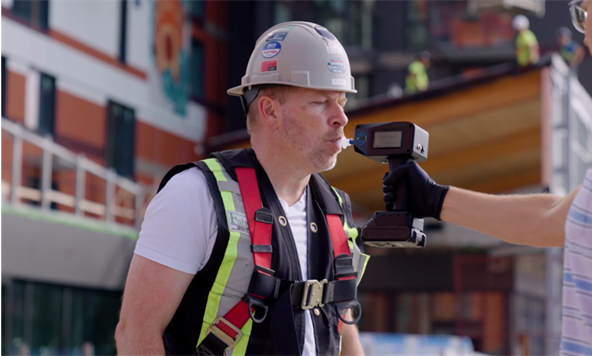
Figure 2. Cannabix Marijuana Breath Test hardware with Breath Collection Unit (BCU) taking a breath sample.
About Cannabix Technologies Inc.
Cannabix Technologies Inc. is a developer of marijuana and alcohol breath technologies for workplaces, law enforcement and other settings. Breath testing for delta-9 THC (the primary psychoactive ingredient in cannabis) focuses on recent marijuana use. Cannabix is the developer of the BreathLogix autonomous alcohol screening device for organizations who strive to improve alcohol safety and monitoring
We seek Safe Harbor.
On behalf of the Board of Directors
“Rav Mlait”
CEO
Cannabix Technologies Inc.
For further information, contact the Company at info@cannabixtechnologies.com
The CSE has not reviewed and does not accept responsibility for the adequacy or accuracy of this release.
Cautionary Statement Regarding Forward-Looking Statements
This news release contains certain "forward-looking statements" within the meaning of such statements under applicable securities law. Forward-looking statements are frequently characterized by words such as "anticipates," "plan," "continue," "expect," "project," "intend," "believe," "anticipate," "estimate," "may," "will," "potential," "proposed," "positioned" and other similar words, or statements that certain events or conditions "may" or "will" occur. Forward-looking statements in this news release include, but are not limited to, statements relating to regulatory testing described in this news release; final development of a commercial or prototype product(s); the successful trial or pilot of company technologies; the commercialization of the Company's products; the negotiation and potential entry into additional agreements with distributors; and the completion of future financings. There are numerous risks and uncertainties that could cause actual results and the Company’s plans and objectives to differ materially from those expressed in the forward-looking information. Important factors that could cause actual results to differ materially from those expressed in the forward-looking information include (but are note limited to): adverse market conditions; risks regarding protection of proprietary technology; the ability of the Company to complete future financings; the ability of the Company to develop and market its future product; risks regarding government regulation, managing and maintaining growth, the effect of adverse publicity, litigation, competition; that patent applications are not awarded by regulatory authorities; that the CSE may not approve the issuance of the securities; that the Company’s development of breathalyzer technology will provide any benefit to the Company; there is no assurance that any proposed new products will be built, will be successful in beta testing or clinical trials; there is no assurance that the Company will enter into any partnerships to advance any of its corporate initiatives or technologies; there is no assurance that any “patent pending” or “provisional patents” technologies licensed by the Company or owned by the Company will receive patent status by regulatory authorities; the Company is not currently selling the “MBT” and there is no assurance that the Company ever will; and other factors beyond the control of the Company. Actual results and future events could differ materially from those anticipated in such information. These and all subsequent written and oral forward-looking information are based on estimates and opinions of management on the dates they are made and are expressly qualified in their entirety by this notice. Except as required by law, the Company does not intend to update these forward-looking statements.
Photos accompanying this announcement are available at:
https://www.globenewswire.com/NewsRoom/AttachmentNg/df3ae734-47fb-4ce2-9bc3-a809f997ed51
https://www.globenewswire.com/NewsRoom/AttachmentNg/32b6af10-2937-4e2d-a57d-0e12aad1d358

FAQ
AI-generated questions and answers. How Rhea-AI works. Not financial advice.