
Bristol Myers Squibb’s Breyanzi Approved by the U.S. FDA as the First and Only CAR T Cell Therapy for Adults with Relapsed or Refractory Marginal Zone Lymphoma (MZL)
Bristol Myers Squibb (NYSE: BMY) announced FDA approval of Breyanzi (lisocabtagene maraleucel) on December 5, 2025, as the first and only CAR T therapy for adults with relapsed or refractory marginal zone lymphoma (MZL) after ≥2 prior systemic therapies.
Sentiment and the balance of points
Rhea-AI Sentiment reads the wording of the document, how positive or negative its language is on a 1 to 5 scale. The balance of points shown with the takes weighs what the document actually discloses, so the two can disagree, for example when a trial that missed its main goal is described in upbeat language.




In the MZL cohort of TRANSCEND FL, Breyanzi delivered deep and durable responses in
Breyanzi is now the only CAR T cell therapy approved by the FDA for five cancer types, the most of any CD19-directed CAR T cell therapy
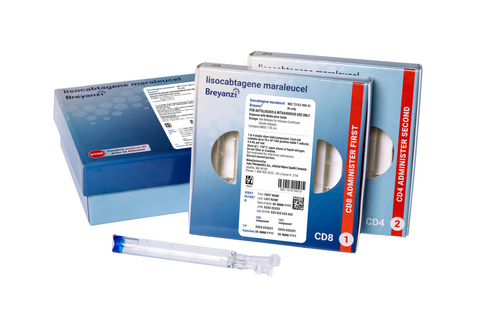
Product image for download (Photo: Bristol Myers Squibb)
“The FDA approval of Breyanzi for relapsed or refractory marginal zone lymphoma further solidifies it as the leading CD19-directed CAR T cell therapy covering the broadest range of B-cell malignancies. This approval in a fifth cancer type reflects our bold vision to bring the transformational potential of cell therapy to more patients," said Lynelle B. Hoch, president, Cell Therapy Organization, Bristol Myers Squibb. “Breyanzi is the first and only CAR T cell therapy approved for this patient population, demonstrating Bristol Myers Squibb’s deep commitment to expanding access and reaching as many patients as possible with this innovative, practice-changing treatment.”
This approval of Breyanzi is based on results from the MZL cohort in TRANSCEND FL, an open-label, multicenter, multi-cohort, single-arm study. Based on the
“Patients living with marginal zone lymphoma, a subtype of indolent non-Hodgkin lymphoma, generally see success with initial therapy, but a subset of patients ultimately experience multiple relapses over the course of many years, creating a pressing need for new treatment options with durable outcomes,” said M. Lia Palomba, M.D., TRANSCEND FL study investigator and lymphoma and cell therapy specialist, Memorial Sloan Kettering Cancer Center. “The FDA approval of liso-cel in relapsed or refractory marginal zone lymphoma is a significant advancement in redefining the treatment landscape and providing patients with an option that has demonstrated high rates of responses with an established safety profile.”
The safety profile of Breyanzi in R/R MZL was consistent with prior reports from trials in other indications. In the MZL cohort of the TRANSCEND FL study, any grade cytokine release syndrome (CRS) occurred in
Breyanzi is broadly covered by commercial and government insurance programs in the
*The treatment process includes blood collection, CAR T cell creation, potential bridging therapy, lymphodepletion, administration, and side-effect monitoring.
About TRANSCEND FL
TRANSCEND FL (NCT04245839) is an open-label, global, multicenter, Phase 2, single-arm study to determine the efficacy and safety of Breyanzi in patients with relapsed or refractory indolent B-cell non-Hodgkin lymphoma, including follicular lymphoma and marginal zone lymphoma. The primary outcome measure is overall response rate. Secondary outcome measures include complete response rate, duration of response, and progression-free survival.
About MZL
Marginal zone lymphoma (MZL) is a subtype of non-Hodgkin lymphoma (NHL), accounting for about
About Breyanzi
Breyanzi is a CD19-directed CAR T cell therapy with a 4-1BB costimulatory domain, which enhances the expansion and persistence of the CAR T cells. Breyanzi is made from a patient’s own T cells, which are collected and genetically reengineered to become CAR T cells that are then delivered via infusion as a one-time treatment. The treatment process includes blood collection, CAR T cell creation, potential bridging therapy, lymphodepletion, administration, and side-effect monitoring.
Breyanzi is approved in the
Bristol Myers Squibb’s clinical development program for Breyanzi includes clinical studies in several types of lymphoma. For more information, visit clinicaltrials.gov.
Breyanzi
BREYANZI is a CD19-directed genetically modified autologous T cell immunotherapy indicated for the treatment of:
-
adult patients with large B-cell lymphoma (LBCL), including diffuse large B-cell lymphoma (DLBCL) not otherwise specified (including DLBCL arising from indolent lymphoma), high-grade B cell lymphoma, primary mediastinal large B-cell lymphoma, and follicular lymphoma grade 3B, who have:
- refractory disease to first-line chemoimmunotherapy or relapse within 12 months of first-line chemoimmunotherapy; or
- refractory disease to first-line chemoimmunotherapy or relapse after first-line chemoimmunotherapy and are not eligible for hematopoietic stem cell transplantation (HSCT) due to comorbidities or age; or
- relapsed or refractory disease after two or more lines of systemic therapy.
Limitations of Use: BREYANZI is not indicated for the treatment of patients with primary central nervous system lymphoma.
- adult patients with relapsed or refractory chronic lymphocytic leukemia (CLL) or small lymphocytic lymphoma (SLL) who have received at least 2 prior lines of therapy, including a Bruton tyrosine kinase (BTK) inhibitor and a B-cell lymphoma 2 (BCL-2) inhibitor. This indication is approved under accelerated approval based on response rate and duration of response. Continued approval for this indication may be contingent upon verification and description of clinical benefit in confirmatory trial(s).
- adult patients with relapsed or refractory follicular lymphoma (FL) who have received 2 or more prior lines of systemic therapy. This indication is approved under accelerated approval based on response rate and duration of response. Continued approval for this indication may be contingent upon verification and description of clinical benefit in confirmatory trial(s).
- adult patients with relapsed or refractory mantle cell lymphoma (MCL) who have received at least 2 prior lines of systemic therapy, including a Bruton tyrosine kinase (BTK) inhibitor.
- adult patients with relapsed or refractory marginal zone lymphoma (MZL) who have received at least 2 prior lines of systemic therapy.
Breyanzi
WARNING: CYTOKINE RELEASE SYNDROME, NEUROLOGIC TOXICITIES, AND SECONDARY HEMATOLOGICAL MALIGNANCIES
- Cytokine Release Syndrome (CRS), including fatal or life-threatening reactions, occurred in patients receiving BREYANZI. Do not administer BREYANZI to patients with active infection or inflammatory disorders. Treat severe or life-threatening CRS with tocilizumab with or without corticosteroids.
- Neurologic toxicities, including fatal or life-threatening reactions, occurred in patients receiving BREYANZI, including concurrently with CRS, after CRS resolution, or in the absence of CRS. Monitor for neurologic events after treatment with BREYANZI. Provide supportive care and/or corticosteroids as needed.
- T cell malignancies have occurred following treatment of hematologic malignancies with BCMA- and CD19-directed genetically modified autologous T cell immunotherapies, including BREYANZI.
Cytokine Release Syndrome
Cytokine release syndrome (CRS), including fatal or life-threatening reactions, occurred following treatment with BREYANZI. In clinical trials of BREYANZI, which enrolled a total of 769 patients with non-Hodgkin lymphoma (NHL), CRS occurred in
Serious events that may be associated with CRS include cardiac arrhythmias (including atrial fibrillation and ventricular tachycardia), cardiac arrest, cardiac failure, diffuse alveolar damage, renal insufficiency, capillary leak syndrome, hypotension, hypoxia, and hemophagocytic lymphohistiocytosis/macrophage activation syndrome (HLH/MAS).
Ensure that 2 doses of tocilizumab are available prior to infusion of BREYANZI.
Neurologic Toxicities
Neurologic toxicities that were fatal or life-threatening, including immune effector cell-associated neurotoxicity syndrome (ICANS), occurred following treatment with BREYANZI. Serious events including cerebral edema and seizures occurred with BREYANZI. Fatal and serious cases of leukoencephalopathy, some attributable to fludarabine, also occurred.
In clinical trials of BREYANZI, CAR T cell-associated neurologic toxicities occurred in
The most common neurologic toxicities (≥
CRS and Neurologic Toxicities Monitoring
Monitor patients daily for at least 7 days following BREYANZI infusion for signs and symptoms of CRS and neurologic toxicities and assess for other causes of neurological symptoms. Continue to monitor patients for signs and symptoms of CRS and neurologic toxicities for at least 2 weeks after infusion and treat promptly. At the first sign of CRS, institute treatment with supportive care, tocilizumab, or tocilizumab and corticosteroids as indicated. Manage neurologic toxicity with supportive care and/or corticosteroid as needed. Advise patients to avoid driving for at least 2 weeks following infusion. Counsel patients to seek immediate medical attention should signs or symptoms of CRS or neurologic toxicity occur at any time.
Hypersensitivity Reactions
Allergic reactions may occur with the infusion of BREYANZI. Serious hypersensitivity reactions, including anaphylaxis, may be due to dimethyl sulfoxide (DMSO).
Serious Infections
Severe infections, including life-threatening or fatal infections, have occurred in patients after BREYANZI infusion. In clinical trials of BREYANZI, infections of any grade occurred in
Febrile neutropenia developed after BREYANZI infusion in
Monitor patients for signs and symptoms of infection before and after BREYANZI administration and treat appropriately. Administer prophylactic antimicrobials according to standard institutional guidelines. Avoid administration of BREYANZI in patients with clinically significant, active systemic infections.
Viral reactivation: Hepatitis B virus (HBV) reactivation, in some cases resulting in fulminant hepatitis, hepatic failure, and death, can occur in patients treated with drugs directed against B cells. In clinical trials of BREYANZI, 35 of 38 patients with a prior history of HBV were treated with concurrent antiviral suppressive therapy. Perform screening for HBV, HCV, and HIV in accordance with clinical guidelines before collection of cells for manufacturing. In patients with prior history of HBV, consider concurrent antiviral suppressive therapy to prevent HBV reactivation per standard guidelines.
Prolonged Cytopenias
Patients may exhibit cytopenias not resolved for several weeks following lymphodepleting chemotherapy and BREYANZI infusion. In clinical trials of BREYANZI, Grade 3 or higher cytopenias persisted at Day 29 following BREYANZI infusion in
Hypogammaglobulinemia
B-cell aplasia and hypogammaglobulinemia can occur in patients receiving BREYANZI. In clinical trials of BREYANZI, hypogammaglobulinemia was reported as an adverse reaction in
Live vaccines: The safety of immunization with live viral vaccines during or following BREYANZI treatment has not been studied. Vaccination with live virus vaccines is not recommended for at least 6 weeks prior to the start of lymphodepleting chemotherapy, during BREYANZI treatment, and until immune recovery following treatment with BREYANZI.
Secondary Malignancies
Patients treated with BREYANZI may develop secondary malignancies. T cell malignancies have occurred following treatment of hematologic malignancies with BCMA- and CD19-directed genetically modified autologous T cell immunotherapies, including BREYANZI. Mature T cell malignancies, including CAR-positive tumors, may present as soon as weeks following infusion, and may include fatal outcomes. Monitor lifelong for secondary malignancies. In the event that a secondary malignancy occurs, contact Bristol-Myers Squibb at 1-888-805-4555 for reporting and to obtain instructions on collection of patient samples for testing.
Immune Effector Cell-Associated Hemophagocytic Lymphohistiocytosis-Like Syndrome (IEC-HS)
Immune Effector Cell-Associated Hemophagocytic Lymphohistiocytosis-Like Syndrome (IEC-HS), including fatal or life-threatening reactions, occurred following treatment with BREYANZI. Seven out of 769 (
Adverse Reactions
The most common adverse reaction(s) (incidence ≥
- LBCL are fever, CRS, fatigue, musculoskeletal pain, and nausea. The most common Grade 3-4 laboratory abnormalities include lymphocyte count decrease, neutrophil count decrease, platelet count decrease, and hemoglobin decrease.
- CLL/SLL are CRS, encephalopathy, fatigue, musculoskeletal pain, nausea, edema, and diarrhea. The most common Grade 3-4 laboratory abnormalities include neutrophil count decrease, white blood cell decrease, hemoglobin decrease, platelet count decrease, and lymphocyte count decrease.
- FL is CRS. The most common Grade 3-4 laboratory abnormalities include lymphocyte count decrease, neutrophil count decrease, and white blood cell decrease.
- MCL are CRS, fatigue, musculoskeletal pain, and encephalopathy. The most common Grade 3-4 laboratory abnormalities include neutrophil count decrease, white blood cell decrease, and platelet count decrease.
- MZL is CRS. The most common Grade 3-4 laboratory abnormalities include lymphocyte count decrease, neutrophil count decrease, and white blood cell decrease.
Please see full Prescribing Information, including Boxed WARNINGS and Medication Guide.
Bristol Myers Squibb: Unlocking the Full Potential of Cell Therapy
A pioneer in harnessing the immune system to fight cancer and an established leader in cell therapy, Bristol Myers Squibb is uniquely positioned to unlock the full potential of this technology across blood cancers and within new frontiers, including autoimmune disease.
Bristol Myers Squibb is currently the only company with two approved CAR T cell therapies with two distinct targets, available in major markets around the world. Our bold vision for the future is one in which hundreds of thousands of patients can be treated with cell therapy’s transformational potential.
The building blocks to realize this ambition—a promising and differentiated pipeline, extensive translational and clinical data sets, a deep bench of talent, and robust manufacturing capabilities—are in our cells. We are laser-focused on advancing the field of cell therapy toward a true revolution for patients. Learn more about the science behind cell therapy and ongoing progress at Bristol Myers Squibb here.
About Bristol Myers Squibb
Bristol Myers Squibb is a global biopharmaceutical company whose mission is to discover, develop and deliver innovative medicines that help patients prevail over serious diseases. For more information about Bristol Myers Squibb, visit us at BMS.com or follow us on LinkedIn, X, YouTube, Facebook and Instagram.
Cautionary Statement Regarding Forward-Looking Statements
This press release contains “forward-looking statements” within the meaning of the Private Securities Litigation Reform Act of 1995 regarding, among other things, the research, development and commercialization of pharmaceutical products. All statements that are not statements of historical facts are, or may be deemed to be, forward-looking statements. Such forward-looking statements are based on current expectations and projections about our future financial results, goals, plans and objectives and involve inherent risks, assumptions and uncertainties, including internal or external factors that could delay, divert or change any of them in the next several years, that are difficult to predict, may be beyond our control and could cause our future financial results, goals, plans and objectives to differ materially from those expressed in, or implied by, the statements. These risks, assumptions, uncertainties and other factors include, among others, whether Breyanzi (lisocabtagene maraleucel) for the additional indication described in this release will be commercially successful, any marketing approvals, if granted, may have significant limitations on their use, and, that continued approval of, Breyanzi for such indication may be contingent upon verification and description of clinical benefit in confirmatory trials. No forward-looking statement can be guaranteed. Forward-looking statements in this press release should be evaluated together with the many risks and uncertainties that affect Bristol Myers Squibb’s business and market, particularly those identified in the cautionary statement and risk factors discussion in Bristol Myers Squibb’s Annual Report on Form 10-K for the year ended December 31, 2024, as updated by our subsequent Quarterly Reports on Form 10-Q, Current Reports on Form 8-K and other filings with the Securities and Exchange Commission. The forward-looking statements included in this document are made only as of the date of this document and except as otherwise required by applicable law, Bristol Myers Squibb undertakes no obligation to publicly update or revise any forward-looking statement, whether as a result of new information, future events, changed circumstances or otherwise.
corporatefinancial-news
View source version on businesswire.com: https://www.businesswire.com/news/home/20251203055321/en/
Bristol Myers Squibb
Media Inquiries:
media@bms.com
Investors:
investor.relations@bms.com
Source: Bristol Myers Squibb