CEC Facilities Secures 379,009 SF Industrial Lease in Grand Prairie, Texas
CEC Facilities Secures 379,009 SF Industrial Lease in Grand Prairie, Texas
CEC Facilities leased 379,009 square feet at 2051 MacArthur Boulevard in Grand Prairie, Texas, to establish a next-generation prefabrication and modular manufacturing hub for mission-critical electrical systems.
GRAND PRAIRIE, Texas--(BUSINESS WIRE)--
Davidson Bogel Real Estate (DB2RE) is pleased to announce that CEC Facilities (“CEC”) has leased 379,009 square feet at 2051 MacArthur Boulevard in Grand Prairie, establishing a larger, next-generation prefabrication and modular manufacturing hub to support the continued expansion of its mission-critical and large-scale industrial infrastructure business.
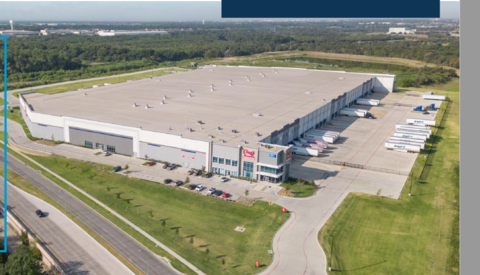
Aerial view of 2051 MacArthur Boulevard in Grand Prairie, Texas, where CEC Facilities leased 379,009 square feet to support its expanding data center and industrial infrastructure operations. March 24, 2026.
“This facility marks the next phase in scaling our Integrated Modular Solutions platform. We’ve proven the model, and this investment positions us to meet accelerating demand for mission-critical infrastructure while strengthening a key differentiator in how we execute at scale,” said Daniel Williams, President of CEC Facilities.
The new facility will enable CEC to further scale its Integrated Modular Solutions platform, building on its existing prefabrication, modular assembly, and multi-trade integration capabilities. Demand continues to accelerate for faster, higher-quality, and more labor-efficient delivery of mission-critical electrical systems supporting data center development and complex industrial projects across Texas and the United States.
Headquartered in Irving, Texas, CEC has experienced significant growth over the past several years, driven by expansion within its existing customer base and increasing demand tied to digital infrastructure and advanced manufacturing. CEC is a subsidiary of Sterling Infrastructure, Inc. (NASDAQ: STRL). This facility represents a strategic expansion of CEC’s prefabrication and modular capabilities, improving schedule certainty, safety, and workforce efficiency. The Grand Prairie location provides the scale and positioning to support continued growth while maintaining proximity to CEC’s core North Texas operations.
David Davidson, Jr., David Guinn, and Colt Power of Davidson Bogel Real Estate (DB2RE) represented CEC Facilities in the transaction. The landlord, Brookfield Properties, was represented by Nathan Lawrence, Krista Raymond, and Will Carney of KBC Advisors.
“CEC Facilities continues to see strong demand from clients in the data center and industrial sectors,” said David Guinn of Davidson Bogel Real Estate (DB2RE). “This facility positions them to efficiently scale their operations while continuing to serve projects throughout the region and nationally.”
About CEC Facilities
CEC Facilities (https://cecfg.com/) is a leader in electrical infrastructure and specialty trade solutions headquartered in Irving, Texas. The company provides integrated design, engineering, installation, and maintenance solutions for mission-critical infrastructure across data center, semiconductor, industrial, and commercial sectors, with operations throughout the United States. CEC is a subsidiary of Sterling Infrastructure, Inc. (NASDAQ: STRL), a U.S. based provider of high value infrastructure services across three operating segments specializing in E-Infrastructure, Transportation and Building Solutions.
Brookfield Properties (https://www.brookfieldproperties.com/) is a global real estate operating company and part of Brookfield Asset Management (NYSE: BAM), one of the world’s largest alternative asset managers. The firm owns, operates, and develops high-quality real estate assets across office, retail, industrial, logistics, and multifamily sectors worldwide.
About DB2RE
Davidson Bogel Real Estate (DB2RE) is a boutique land investment advisory group and brokerage firm headquartered in the Dallas-Fort Worth Metroplex. Founded by David Davidson, Jr., and Edward Bogel in 2015, the base principle of the company is exceptional client service, with investment and development of land throughout Texas and Oklahoma as the focus. DB2RE concentrates on land acquisitions, dispositions, and investment sales for families, trusts, and developers of retail, multi-family, industrial/mixed-use, and single-family communities.
Prefabrication is the process of manufacturing building components or modules in a factory or controlled facility and then transporting and assembling them at the final site. For investors, it matters because factory-made parts can speed project completion, reduce on-site labor and weather risks, improve quality and predictability, and shift where and when a company spends cash—affecting timelines, costs, margins and project risk.
modular manufacturingtechnical
A production approach that assembles goods from prebuilt, standardized units or “modules,” like using Lego blocks instead of building each item from raw materials. It matters to investors because it can cut setup time and cost, make scaling faster, and reduce disruption when changing products—which can improve profit margins, speed to market and lower operational risk compared with traditional, custom-built factories.
integrated modular solutionstechnical
A set of products or services made from prebuilt, interchangeable parts that are designed to work together as a complete system. Like building with Lego blocks, these modular pieces can be combined, upgraded or replaced without redoing the whole setup, which speeds deployment, reduces cost and lets customers scale or customize as needs change. Investors watch this because modular offerings can drive repeat sales, lower customer switching costs and improve margins and predictability.
data centertechnical
A data center is a secure facility that houses large numbers of computers, storage devices and networking gear that run, store and move digital information for businesses and online services. Investors treat data centers like modern warehouses: their occupancy, energy efficiency, connectivity and long-term service contracts drive steady revenue and capital needs, so changes in demand or costs can directly affect profitability and growth prospects.
industrial infrastructuretechnical
Industrial infrastructure is the network of physical systems and facilities—such as factories, power plants, roads, railways, ports, pipelines, water and waste systems, and industrial-grade broadband—that enable goods to be produced, moved and processed. For investors it matters because these long-lived, capital-heavy assets set a company or region’s production capacity, operating costs and reliability; like a city’s backbone or highway system, strong infrastructure reduces risk and can support steady, predictable returns.
modular assemblytechnical
Modular assembly is a way of building products or systems by combining standardized, interchangeable parts or 'modules' much like snapping together Lego pieces. For investors, it matters because this approach speeds production, cuts development and maintenance costs, and makes it easier to upgrade or scale a product without redesigning everything, which can improve profit margins, shorten time to market, and reduce operational risk.
multi-trade integrationtechnical
Multi-trade integration is the process of combining and coordinating multiple buy and sell orders, execution systems, and post-trade steps into a single, unified workflow so trades across different markets, instruments, or accounts are processed together. It matters to investors because it reduces errors, cuts transaction and settlement costs, speeds up clearing, and improves reporting transparency—like merging several shopping carts into one checkout to save time and avoid duplicate charges.
mission-critical electrical systemstechnical
Systems that provide and manage the power needed for essential operations—such as lighting, communications, control equipment, backup generators and uninterruptible power supplies—so critical processes keep running without interruption. Investors care because failures or inadequate design can halt production, trigger safety or regulatory problems, and force costly repairs or downtime, while reliable systems protect revenue and reduce operational risk, much like a car’s engine and brakes keep it moving safely.