
STOCK TITAN

New Study Reveals How Self-Service is Reshaping Retail in Australia

Rhea-AI Impact
(Neutral)
Rhea-AI Sentiment
(Neutral)
Tags

Diebold Nixdorf (NYSE: DBD) shared an IDC-sponsored study (Jan 29, 2026) on self-service checkout in Australia, based on surveys of 1,000 consumers and 180+ retailers. Key findings: over two-thirds of consumers prefer self-checkout and 95% satisfaction with current self-service technology.

Report highlights demand for speed, intuitive help, diverse payments, AI-driven engagement, hybrid lanes, and security features to reduce shrink and checkout friction.

Loading...
Loading translation...

Positive

  • Over two-thirds of Australian consumers prefer self-checkout
  • 95% satisfaction with current self-service technology
  • Retailers prioritizing AI-driven engagement and faster payments
  • Hybrid checkout models enable flexible self-service and attended lanes

Negative

  • Checkout delays, trust concerns and inflexible systems frustrate shoppers
  • Retailers face increasing difficulty attracting and retaining store staff

Key Figures

Consumer survey size: 1,000 consumers Retailer survey size: more than 180 retailers Self-checkout preference: more than two-thirds of consumers +1 more
4 metrics
Consumer survey size 1,000 consumers IDC online survey in Australia, early 2025
Retailer survey size more than 180 retailers IDC online survey in Australia, early 2025
Self-checkout preference more than two-thirds of consumers Australian consumers preferring self-checkout
Retailer satisfaction 95% satisfaction Satisfaction with self-service technology among Australian retailers

Market Reality Check

Price: $69.35 Vol: Volume 263,641 is 19% abo...
normal vol
$69.35 Last Close
Volume Volume 263,641 is 19% above the 20-day average of 220,834. normal
Technical Trading above the 200-day MA at 58.04, with price at 69.45 and 4.25% below the 52-week high.

Peers on Argus

DBD was up 2.13% while most tracked peers were flat to down (e.g., SPNS -0.02%, ...

DBD was up 2.13% while most tracked peers were flat to down (e.g., SPNS -0.02%, ALIT -4.35%, DV -0.09%, NATL -0.19%), with only ALKT notably higher at 6.31%, suggesting a stock-specific move.

Historical Context

5 past events · Latest: Jan 22 (Neutral)
Pattern 5 events
Date Event Sentiment Move Catalyst
Jan 22 Earnings call notice Neutral +3.1% Announcement of date and details for Q4 and full-year 2025 call.
Dec 17 Credit rating upgrade Positive -0.3% Moody’s upgrade to B1 with stable outlook citing stronger financials.
Dec 16 Retail partnership expansion Positive +0.3% Expanded Autogrill services and deployment of DN Series POS solutions.
Dec 11 Bank tech deployment Positive +0.8% Capital Bank rollout of VCP-Pro 7 and Vynamic middleware on ATMs.
Dec 04 ESG recognition award Positive -3.0% Named one of America’s Most Responsible Companies 2026 by Newsweek.
Pattern Detected

Operational and partnership news has often aligned with modest positive moves, while credit upgrades and ESG recognition previously saw negative price reactions, indicating occasional sell-the-good-news behavior.

Recent Company History

Over the past few months, Diebold Nixdorf has reported multiple business updates. An investor call announcement on Jan 22, 2026 preceded a 3.07% gain. A Moody’s upgrade to B1 with a stable outlook on Dec 17, 2025 coincided with a small -0.3% move. New deployments with Autogrill and Capital Bank in December 2025 produced modest gains of 0.34% and 0.8%, while Newsweek ESG recognition on Dec 4, 2025 saw a -2.98% reaction. Today’s AI-focused retail self-service study fits the ongoing narrative around self-service and efficiency.

Market Pulse Summary

This announcement highlights strong Australian consumer preference for self-checkout and high retail...
Analysis

This announcement highlights strong Australian consumer preference for self-checkout and high retailer satisfaction with self-service technology, underscoring demand for AI-powered and hybrid checkout solutions. It complements recent operational updates, including new deployments and partnerships, by reinforcing Diebold Nixdorf’s positioning in self-service retail and automation. Investors may monitor how these usage trends and AI-focused investments flow through future earnings updates and customer wins, particularly around upcoming results and implementation milestones.

Key Terms

self-checkout, AI-driven engagement, Smart Vision, hybrid models
4 terms
self-checkout technical
"more than two-thirds of Australian consumers prefer self-checkout, mainly when"
A self-checkout is a store station that lets customers scan, bag and pay for items themselves using a kiosk, much like using an ATM instead of talking to a teller. For investors, it signals trade-offs between lower ongoing labor costs and higher up-front equipment and maintenance expenses, while also affecting sales speed, customer satisfaction and theft risk—factors that can change a retailer’s profitability and operating efficiency.
AI-driven engagement technical
"they are looking for ways to further innovate, prioritizing AI-driven engagement,"
AI-driven engagement uses computer programs that learn from user behavior to personalize interactions—such as which messages people see, when they see them, and what content is suggested—so each person gets a more relevant experience. For investors, it matters because better-tailored interactions can raise customer retention, increase sales or ad revenue, and cut marketing costs, while also creating operational and data-privacy risks that can affect growth and profit.
Smart Vision technical
"Modern Smart Vision solutions are designed to help retailers to combat shrink,"
Smart vision is technology that combines cameras and software to let machines 'see' and interpret the world, using pattern recognition and artificial intelligence to identify objects, read text, or detect motion much like an eye plus a brain. For investors, it matters because smart vision can unlock new revenue streams and efficiency gains across industries (retail, cars, manufacturing, healthcare) while also carrying competitive, regulatory and privacy risks that affect a company’s future profits.
hybrid models technical
"innovative checkout concepts like hybrid models allow an "all lanes open,"
Hybrid models are forecasting or decision tools that combine two or more different methods—such as traditional statistics and machine learning, or quantitative data and expert judgement—to produce a single result. They matter to investors because blending approaches can improve accuracy and reduce blind spots in estimates of revenue, risk, or valuation, much like combining ingredients from two recipes can yield a more reliable dish than either recipe alone.

AI-generated analysis. Not financial advice.

Key findings include self-service as preferred checkout option for consumers, valuing speed, simplicity and control, but also point out what should be improved
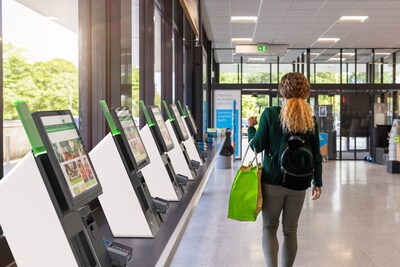
NORTH CANTON, Ohio, Jan. 29, 2026 /PRNewswire/ -- A recent study titled "The Evolution of Self-Checkout in Australia: Insights from Retailers and Consumers" from IDC and sponsored by Diebold Nixdorf (NYSE: DBD)*, reveals how self-service is reshaping customer experience in retail stores and why retailers' concepts are moving beyond speed and convenience to drive customer experience, efficiency and revenue growth.

These insights are largely based on two IDC online surveys conducted across Australia in early 2025: one with 1,000 consumers and another with more than 180 retailers from various segments, including Food and Beverage, Grocery, Fashion and Apparel, and Fuel and Convenience.

The study states that more than two-thirds of Australian consumers prefer self-checkout, mainly when they are shopping alone, in a hurry, or want to avoid long queues. On the other hand, checkout delays, trust concerns and inflexible systems can frustrate Australian shoppers. They expect better in-store experience, including intuitive help when needed, support for diverse payment methods and more choice when shaping their own shopping process.

Stephanie Krishnan, associate vice president at IDC Asia/Pacific, said: "For today's shoppers, speed, privacy and control are non-negotiable. This means that retailers are at a point where they must eliminate delays, build trust and offer flexible, seamless checkout experiences, or risk losing customers at the final step of the journey."

The good news is that Australian retailers are on the right track. Self-service checkout is central to their strategy, and despite the high satisfaction with self-service technology (95%), they are looking for ways to further innovate, prioritizing AI-driven engagement, faster payments and enhanced security in their next phase of investment. AI technology, in particular, is a game changer. Modern Smart Vision solutions are designed to help retailers to combat shrink, reduce common friction points at the checkout – especially when buying age-restricted items or non-barcoded products like fresh produce – and improve in-store safety by using cameras mounted on top of checkout devices and the existing video surveillance network to analyze behavior and activities in real time.

Additionally, innovative checkout concepts like hybrid models allow an "all lanes open, all of the time" approach based on flexible checkout systems that can easily switch between self-service and attended modes.

Kristie Longhurst, general manager, Retail for Australia and New Zealand at Diebold Nixdorf, said: "We see more retailers investing in AI technology and hybrid checkout models. This has been resonating well with consumers and also helps combat additional key challenges retailers are currently facing, like improving in-store process efficiency and increasing workplace attractiveness, as it is becoming harder and harder to attract and retain store staff. AI-powered checkout solutions that are reliable and easy to service combined with hybrid checkout lane concepts enable them to focus on consumer service and more value-added tasks."

The full study can be downloaded here.

* IDC InfoBrief, sponsored by Diebold Nixdorf, The Evolution of Self-Service in Australia: Insights from Retailers and Consumers, #AP242535IB, January 2026

About Diebold Nixdorf
Diebold Nixdorf, Incorporated (NYSE: DBD) automates, digitizes and transforms the way people bank and shop. As a leading global technology and services partner to many of the world's top financial institutions and retailers, our integrated solutions connect digital and physical channels for consumers conveniently, securely and efficiently. The company has a presence in more than 100 countries with approximately 20,000 employees worldwide. Visit www.DieboldNixdorf.com for more information.

X: @DieboldNixdorf
LinkedIn: www.linkedin.com/company/diebold
Facebook: www.facebook.com/DieboldNixdorf
YouTube: www.youtube.com/dieboldnixdorf
 

Cision View original content to download multimedia:https://www.prnewswire.com/news-releases/new-study-reveals-how-self-service-is-reshaping-retail-in-australia-302673742.html

SOURCE Diebold Nixdorf, Incorporated

FAQ

What did the Diebold Nixdorf (DBD) study find about Australian consumer preference for self-checkout in January 2026?

Most Australian shoppers prefer self-checkout for speed and control. According to Diebold Nixdorf, over two-thirds of surveyed consumers favored self-service, especially when shopping alone or in a hurry, but they also reported frustrations with delays, trust and inflexible systems.

How satisfied are Australian retailers and consumers with self-service technology per the DBD-sponsored IDC study?

Overall satisfaction with self-service technology is very high. According to Diebold Nixdorf, the study reports a 95% satisfaction rate, while retailers still seek upgrades in AI, payments speed, and security to further improve experiences.

What role does AI play in Diebold Nixdorf's January 29, 2026 findings on retail checkout (DBD)?

AI is highlighted as a key next-phase investment for checkout. According to Diebold Nixdorf, AI-driven smart vision and analytics aim to reduce shrink, ease age-restricted checks and streamline non-barcoded item handling at checkout.

What are hybrid checkout models and why are Australian retailers adopting them according to DBD's study?

Hybrid models let lanes switch between self-service and attended modes. According to Diebold Nixdorf, this 'all lanes open' approach improves flexibility, reduces queues and supports staff redeployment to customer-facing tasks.

What consumer issues should retailers address from the DBD/IDC January 2026 study to improve checkout?

Retailers should tackle delays, trust and payment flexibility immediately. According to Diebold Nixdorf, consumers expect intuitive in-store help, diverse payment options and systems that reduce friction at the final step of purchase.

How might the DBD study affect retailer investment priorities in 2026 in Australia?

Expect greater investment in AI, payment speed and security at checkout. According to Diebold Nixdorf, retailers plan to prioritize AI engagement, faster payments and enhanced security to boost efficiency, reduce shrink and improve customer experience.
Diebold Nixdorf

NYSE:DBD

DBD Rankings

DBD Latest News

DBD Latest SEC Filings

DBD Stock Data

2.49B
35.21M
1.77%
105.27%
2.01%
Software - Application
Calculating & Accounting Machines (no Electronic Computers)
Link
United States
NORTH CANTON
