
Duke Energy Electrifies Its First Supply Chain Logistics Route
Rhea-AI Summary
Duke Energy has launched a pioneering pilot project in North Carolina, testing an electric semitruck for supply chain logistics. The initiative, started in 2024, focuses on electrifying a vehicle that helps transport $1.5 billion worth of cargo annually. The EV semitruck covers approximately 500 miles weekly for the Garner Distribution Center, serving the Raleigh area. Initial results show significant benefits: from January to mid-August, the EV tractor drove 14,000 miles, saving nearly 1,947 gallons of diesel fuel and approximately $7,500 in fuel costs, while reducing CO2 emissions by 19.6 metric tons. The project demonstrates the viability of electric vehicles for commercial transportation within the 250-mile range limit.
Positive
- Achieved $7,500 in fuel cost savings during pilot period
- Reduced CO2 emissions by 19.6 metric tons
- Demonstrated operational viability with 14,000 miles covered
- Lower maintenance costs due to fewer mechanical repairs needed
- Successfully electrified route handling $1.5B worth of annual cargo
Negative
- 250-mile range constraint for EV semitruck operations
- Requires 2-hour charging time between routes
News Market Reaction – DUK
In the trading session that priced this news, DUK gained 0.98%, reflecting a mild positive market reaction.
Data tracked by StockTitan Argus on the day of publication.
AI-generated analysis. How Rhea-AI works. Not financial advice.




North Carolina pilot project seeks to determine if electrification is a viable option for commercial vehicles used for essential work
NORTHAMPTON, MA / ACCESSWIRE / November 21, 2024 / Duke Energy
By Liz Rothaus Bertrand | illumination Contributor
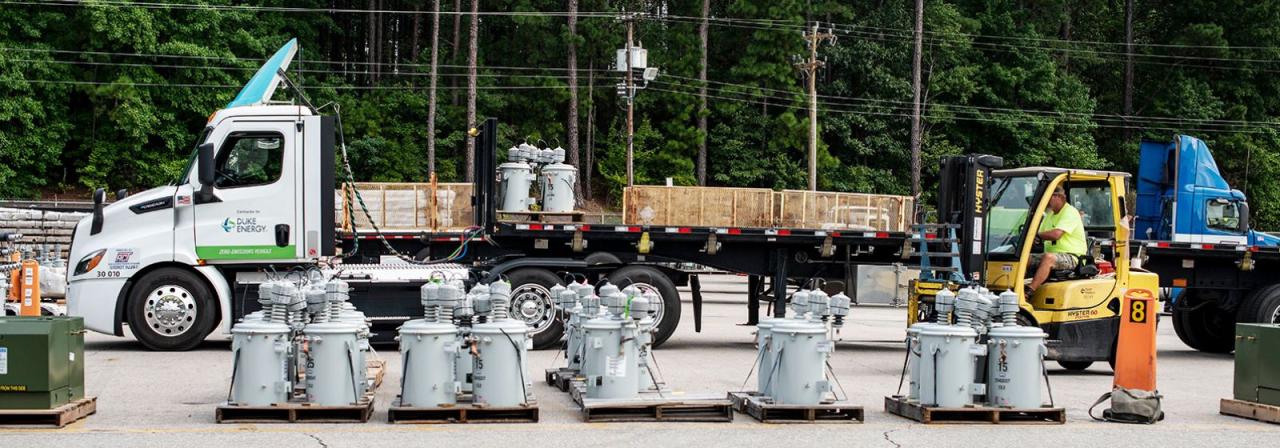
Duke Energy is road testing an electric semitruck in North Carolina - a first-of-its-kind pilot project at the company that is reducing air pollution from transportation, the largest domestic contributorof greenhouse gases.
By replacing a traditional semitruck with a zero-emissions vehicle, Duke Energy found it can electrify a supply chain logistics route, efficiently moving materials to its operations centers without burning gasoline or diesel.
Launched in 2024, the pilot focused on electrifying one of the commercial vehicles that transport
Duke Energy's Supply Chain Management team worked with contractor AAA Cooper to procure an EV semitruck for distribution routes covering about 500 miles weekly for the Garner Distribution Center, which serves several sites in the Raleigh, N.C., area.
"We move materials to the right place, at the right time, and in the right quantity," said Logistics Manager Brad Withers. "Think of our role as the link between each node, transporting materials so that our teams can maintain, repair and build new infrastructure efficiently."
Meighan Read, manager of products and services at Duke Energy, said the team identified routes within the vehicle's 250-mile range (on a full charge) to ensure equipment and supplies were delivered on time.
"EVs can be a challenge," Read said, "but with the right application - whether it's an electric vehicle or another alternative fuel - they can meet operational needs. That's one of the biggest learnings from this pilot project: Electric can work in the right application."
Also promising, Withers said, is the speed at which the zero-emissions truck could be charged and redeployed to continue delivering materials.
"We've learned that an EV semitruck can haul and perform like a diesel truck. If necessary, the vehicle can come back, get a healthy charge in about two hours, and deliver the remaining materials to be on time to those locations."
This flexibility is vital as Duke Energy invests in major electric grid upgrades and cleaner energy sources, including expanded storage, renewables, natural gas and nuclear.
"I'm incredibly proud of my team for advocating for new ideas like this," said Dwight Jacobs, senior vice president, supply chain, real estate and chief procurement officer. "We're not just leading one of the largest clean energy transitions in North America - we're literally driving it forward."
Between January and mid-August, the pilot project's EV tractor drove 14,000 miles, saving nearly 1,947 gallons of diesel fuel and approximately
Electric vehicles also require less maintenancethan conventional vehicles. Without a diesel engine, an EV tractor doesn't need oil changes or as many mechanical repairs.
As the company works toward net-zero carbon emissions by 2050, Duke Energy is exploring other ways to cut carbon, some of which have already been implemented - like the Electric Power Take Off (ePTO) systems for material handling bucket trucks. The ePTO system uses a traditional chassis but operates the truck's boom and auxiliary functions entirely off a battery once on-site, saving fuel and reducing greenhouse gas emissions.
"It also has safety benefits by making job sites quieter," Read added. "People in the bucket can talk to folks on the ground and hear them more clearly."
It's one more example, she said, of finding the right technology to match the application.
These pilot projects, including the one that electrified Duke Energy's first supply chain route, continue to provide valuable data. "These projects demonstrate our commitment to cleaner energy," Withers said. "Electrification is new for larger commercial vehicles at the company, but it's a step we're evaluating as part of our long-term strategy."
We're working to increase access to EV charging, research how it affects the grid and help electrify fleets
Over the next 26 years, energy consumption is predicted to grow at an average annual rate of nearly
Duke Energy has been preparing for this transition - monitoring and implementing EV load management, and managing charging programs and pilots to help customers save money while lessening the impacts of EVs to system peaks.
You can help play a part, too. If your business is considering adding EVs to its fleet, reach out to Duke Energy so we can help assure a smooth transition. Residential customers can also benefit from Duke Energy EV rebate programs and other resources.
View original content here.
View additional multimedia and more ESG storytelling from Duke Energy on 3blmedia.com.
Contact Info:
Spokesperson: Duke Energy
Website: https://www.3blmedia.com/profiles/duke-energy
Email: info@3blmedia.com
SOURCE: Duke Energy
View the original press release on accesswire.com