
First Atlantic Nickel Acquires Ophiolite-X Project Targeting White and Orange Geologic Hydrogen, Carbon Capture, and Critical Minerals in Western Newfoundland
Sentiment and the balance of points
Rhea-AI Sentiment reads the wording of the document, how positive or negative its language is on a 1 to 5 scale. The balance of points shown with the takes weighs what the document actually discloses, so the two can disagree, for example when a trial that missed its main goal is described in upbeat language.
Rhea-AI Summary
First Atlantic Nickel (OTCQB: FANCF) has agreed to acquire 100% of 18 mineral licences (500 claims; 12,500 ha / 125 km2) in the Bay of Islands Ophiolite Complex, western Newfoundland, branding the holding Ophiolite-X. The package targets multi‑commodity potential: natural and stimulated geologic hydrogen, CO₂ capture and storage, awaruite (Ni₃Fe) nickel‑iron‑cobalt, chromite, cobalt, copper and PGEs.
Peer‑reviewed studies cited estimate a theoretical BOIC CO₂ capacity of 5.1×10¹¹ tonnes and document active serpentinization with ultra‑basic springs discharging dissolved hydrogen and brucite-bearing rocks favorable for mineral carbonation.
Positive
- Acquisition of 12,500 ha (500 claims) in BOIC
- Targets both geologic hydrogen and CO₂ sequestration
- Peer‑reviewed estimate: 5.1×10¹¹ tonnes theoretical CO₂ capacity
- Documented active serpentinization with hydrogen‑bearing springs
- Exploration indicator: awaruite as nickel‑iron‑cobalt target
Negative
- None.
Details
News Market Reaction – FANCF
On Dec 11, the day this news came out, FANCF closed 1.92% below the previous close.
Data tracked by StockTitan Argus for the Dec 11 session.
Key Figures
- Mineral claims acquired
- 500 mineral claims
- Ophiolite-X project within Blow Me Down and Lewis Hills massifs
- Project area
- 12,500 hectares (125 km2)
- Land position for Ophiolite-X in western Newfoundland
- CO2 storage capacity
- 5.1 × 10^11 tonnes CO2
- Theoretical capacity for entire Bay of Islands Ophiolite Complex
- Global emissions comparator
- 36.8 Gt CO2 in 2022
- Used to relate BOIC storage to over 13 years of emissions
- Natural hydrogen cost
- $0.54/kg
- Estimated production cost for natural geological hydrogen
- Stimulated hydrogen cost
- $0.92/kg
- Estimated production cost for stimulated geological hydrogen
- Hydrogen venting rate
- 200 tonnes per year
- Hydrogen flow estimated at Albania’s Bulqiza analogue site
- Brucite for CO2 capture
- 2.5 tonnes mineral per 1 tonne CO2
- Mineral mass required for CO2 sequestration via brucite
Historical Context
-
Expanded Phase 2X drilling at RPM Zone to larger 1.4 km by 850 m area.
-
Reported highest DTR nickel grades and recoveries from RPM Zone drilling.
-
Presented awaruite and Pipestone XL at Benchmark Week critical minerals conference.
-
Showcased smelter-free awaruite processing and chromium byproduct potential in Nashville.
-
Phase 2X drilling expanded RPM Zone width with long awaruite-bearing intercepts.
24h Move is the share-price change in the day after each event; other market factors may also have contributed.
Key Terms
ophiolite technical
serpentinization medical
brucite technical
ultramafic technical
geologic hydrogen technical
stimulated geological hydrogen technical
abiotic hydrogen technical
carbon sequestration technical
AI-generated analysis. How Rhea-AI works. Not financial advice.




GRAND FALLS-WINDSOR, Newfoundland and Labrador, Dec. 11, 2025 (GLOBE NEWSWIRE) -- First Atlantic Nickel Corp. (TSXV: FAN) (OTCQB: FANCF) (FSE: P21) ("First Atlantic" or the "Company") is pleased to announce it has entered into agreements to acquire a
The BOIC comprises four large-scale ophiolite massifs, Table Mountain (Tablelands), North Arm Mountain, Blow Me Down Mountain, and Lewis Hills, representing one of the world's best-preserved and most complete ophiolite sequences. A recent study with funding from the Ministère de l'Économie, de l'Innovation et de l'Énergie (MEIE) of Quebec, evaluating natural hydrogen potential across Quebec (Séjourné et al., 2024), noted that the "potential for natural hydrogen in southern Quebec is not necessarily limited to these areas. Key areas of interest include: 1) ophiolite complexes, which are correlative with the Bay of Islands complex in Newfoundland where Szponar et al. (2013) sampled strongly alkaline and highly reducing water sources containing dissolved hydrogen4."
In the Stanford University study Techno-economic analysis of natural and stimulated geological hydrogen (Mathur et al., 20245), researchers concluded that "While both natural and stimulated geological hydrogen present viable options for contributing to a sustainable energy future, practical considerations such as resource availability, production control, and scalability make SGH a particularly attractive option for long-term hydrogen production, especially when co-located with demand centers." The study estimates production costs of approximately
KEY HIGHLIGHTS:
- Optimal Geological Hydrogen Source Rock: A 2024 study, with funding from the Government of Quebec, evaluating 27 potential natural hydrogen source rocks, identified ophiolite complexes as the first key area of interest for geologic hydrogen exploration, with the BOIC as the reference analogue. Documented occurrences include "strongly alkaline and highly reducing water sources containing dissolved hydrogen7", positioning the BOIC as the type locality for hydrogen-prospective ophiolites in eastern Canada.
- Active Geologic Hydrogen Generation: Active serpentinization within the BOIC produces dissolved hydrogen (H₂) in ultrabasic springs, where highly reducing conditions and pH values up to 12.3 are conducive to ongoing abiotic natural hydrogen production8.
- Bulqiza Chromite Mine Hydrogen Discovery Analogue: Historic podiform chromite mineralization at Blow Me Down (32
-40% Cr₂O₃, mined in 1918)9 and Springers Hill (up to53% Cr₂O₃ in harzburgite)10 occur within serpentinized dunite-harzburgite sequences similar to Albania's Bulqiza mine in the Mirdita Ophiolite, where chromite (33-54% Cr₂O₃) is hosted in serpentinized harzburgite-dunite. A 2024 Science publication documented hydrogen with a purity of84% venting at an estimated 200 tonnes per year from Bulqiza, one of the largest flows ever recorded, and noted that "places with similar geology should be good targets for finding other natural sources of hydrogen11." - Samail Ophiolite Stimulated Hydrogen Analogue: The BOIC shares similar geological characteristics with Oman's Samail Ophiolite, including serpentinized peridotite sequences, brucite-bearing alteration assemblages and hyperalkaline, hydrogen-producing springs. In 2023, Eden GeoPower signed the world's first agreement with Oman's Ministry of Energy and Minerals to pilot stimulated geological hydrogen production in the Samail Ophiolite, positioning ophiolite complexes as optimal targets for both natural hydrogen exploration and stimulated production.
- CO₂ Capture Industrialization Potential: Memorial University researchers conclude that, by "injecting CO₂-enriched waters into the subsurface, this process could likely be industrialized and require little energy input beyond drilling and pumping waters into the subsurface12."
- Massive Carbon Capture Capacity: Research by Memorial University on the Project calculated a theoretical "total CO₂ storage capacity of 5.1 × 10¹¹ tonnes for the entire BOIC¹¹", equivalent to more than 13 years of global CO₂ emissions (based on 2022 global emissions of 36.8 Gt) and over 700 times Canada's annual emissions. Even
1% carbonation could account for more than 7 years of Canada's national CO₂ output13. - Most Efficient Carbon Capture Mineral: Brucite formed during serpentinization exhibits the highest CO₂ reactivity among ultramafic alteration products, requiring only ~2.5 tonnes of mineral to sequester 1 tonne of CO₂, compared with ~4 tonnes of forsterite, ~6 tonnes of serpentine, and >10 tonnes of basaltic glass. This positions brucite-bearing serpentinites as optimal targets for carbon capture operations14.
- Awaruite (Ni₃Fe) Perspective Environment: Hydrogen is a required precursor for the formation of awaruite nickel (Ni₃Fe), a natural nickel alloy that commonly contains cobalt. The highly reducing conditions created by serpentinization generate the hydrogen needed for awaruite to form, providing direct mineralogical evidence of hydrogen-rich conditions15 16.
Please call 844-592-6337 or email rob@fanickel.com to connect with Rob Guzman, First Atlantic Nickel's Investor Relations, for questions or more information.

Figure 01: Images of natural springs containing dissolved hydrogen from Tablelands Ophiolite, BOIC (Modified from Szponar et al. 2012) 17.

Figure 02: Hydrogen (H2) concentration in the 58 investigated 58 rock samples from various different ultramafic systems (modified from Giuseppe et al., 2024)18.
ACADEMIC RESEARCH DOCUMENTS CARBON CAPTURE CAPACITY, GEOLOGIC HYDROGEN PRESENCE, AND NEW GEOLOGICAL INTERPRETATIONS
The Company recently staked claims in the BOIC area following the publication of "Ultramafic rocks in the Bay of Islands Ophiolite complex, Newfoundland Appalachians" in LITHOS by researchers from the University of Ottawa and Geological Survey of Canada (Hattori et al., 2025). The research documents that the Blow Me Down Mountain massif contains an anomalously thick dunite layer, up to 5 km, separating the gabbroic unit from harzburgitic mantle tectonites. This thickness is significantly greater than in typical ophiolite sequences and indicates exceptional targets for hydrogen generation, carbon sequestration, and nickel, chromium and PGE mineralization.
Peer-reviewed research conducted on the Blow Me Down massif by Memorial University, with funding from the Natural Sciences and Engineering Research Council of Canada (NSERC) and Nalcor Energy (Newfoundland and Labrador Hydro), demonstrated that these ultramafic rocks host exceptional carbon sequestration capacity while simultaneously generating natural hydrogen through active serpentinization. During serpentinization, brucite (Mg(OH)₂), a highly reactive magnesium hydroxide mineral, forms and represents the most efficient mineral for CO₂ capture, requiring only ~2.5 tonnes of mineral to sequester 1 tonne of CO₂. Critically, iron-bearing brucite (Fe-brucite) formed during serpentinization can undergo later-stage oxidation to generate molecular hydrogen (H₂), creating a dual-function mineral system capable of both carbon capture and hydrogen production19.
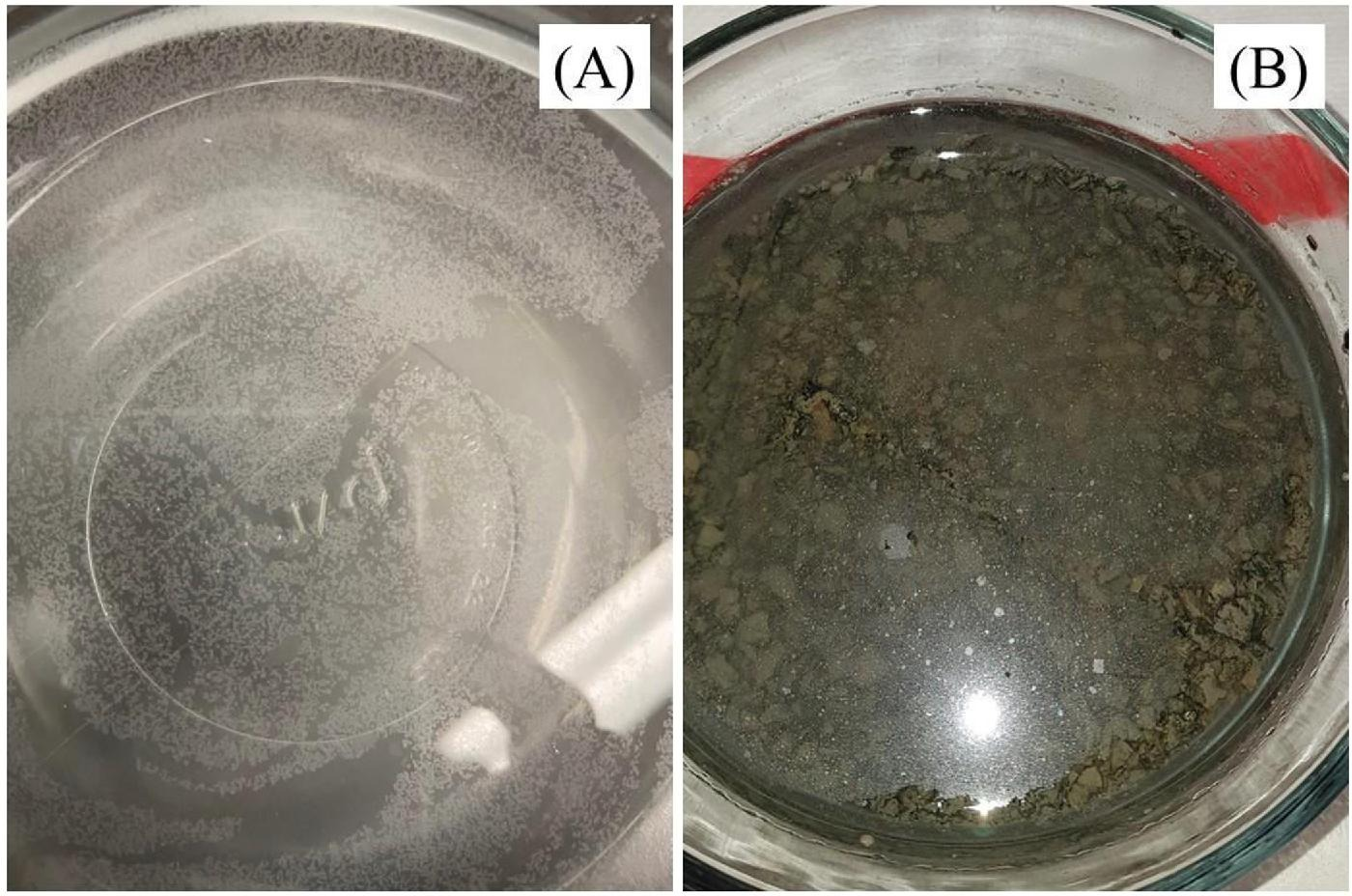
Figure 03: Carbon Sequestration Experiment from First Atlantic’s Newly Acquired Ophiolite-X Property (Blow Me Down Massif); Photographs of white films on calcium hydroxide rich waters after the 4 hours, ultra-basic carbon sequestration experiments. (A) Without the addition of crushed peridotite and (B) with the addition of crushed peridotite.20
BAY OF ISLANDS OPHIOLITE: ACTIVE SERPENTINIZATION AND ABIOTIC HYDROGEN GENERATION
The Tablelands massif within the BOIC has been the subject of extensive scientific research documenting active serpentinization and hydrogen generation. The site has been designated as a Mars analogue by researchers for studying present-day serpentinization, contributing to the scientific goals of the Mars Science Laboratory (MSL), the ExoMars Rover mission, and the Mars Exploration Program Analysis Group (MEPAG)21.
Research published by Szponar et al. (2013) characterized ultrabasic, reducing springs at the Tablelands, reporting highly alkaline conditions with pH values up to 12.3 and highly reducing redox potentials. These geochemical signatures are characteristic of "Type II" waters associated with active serpentinization at depth and indicate an environment where hydrogen is actively generated through water-rock reactions.
The Tablelands springs represent surface expressions of a deeper serpentinization system, providing direct evidence that hydrogen-generating reactions are ongoing within the BOIC. This active system offers a natural laboratory for understanding hydrogen generation, migration and potential accumulation in ophiolite-hosted settings.
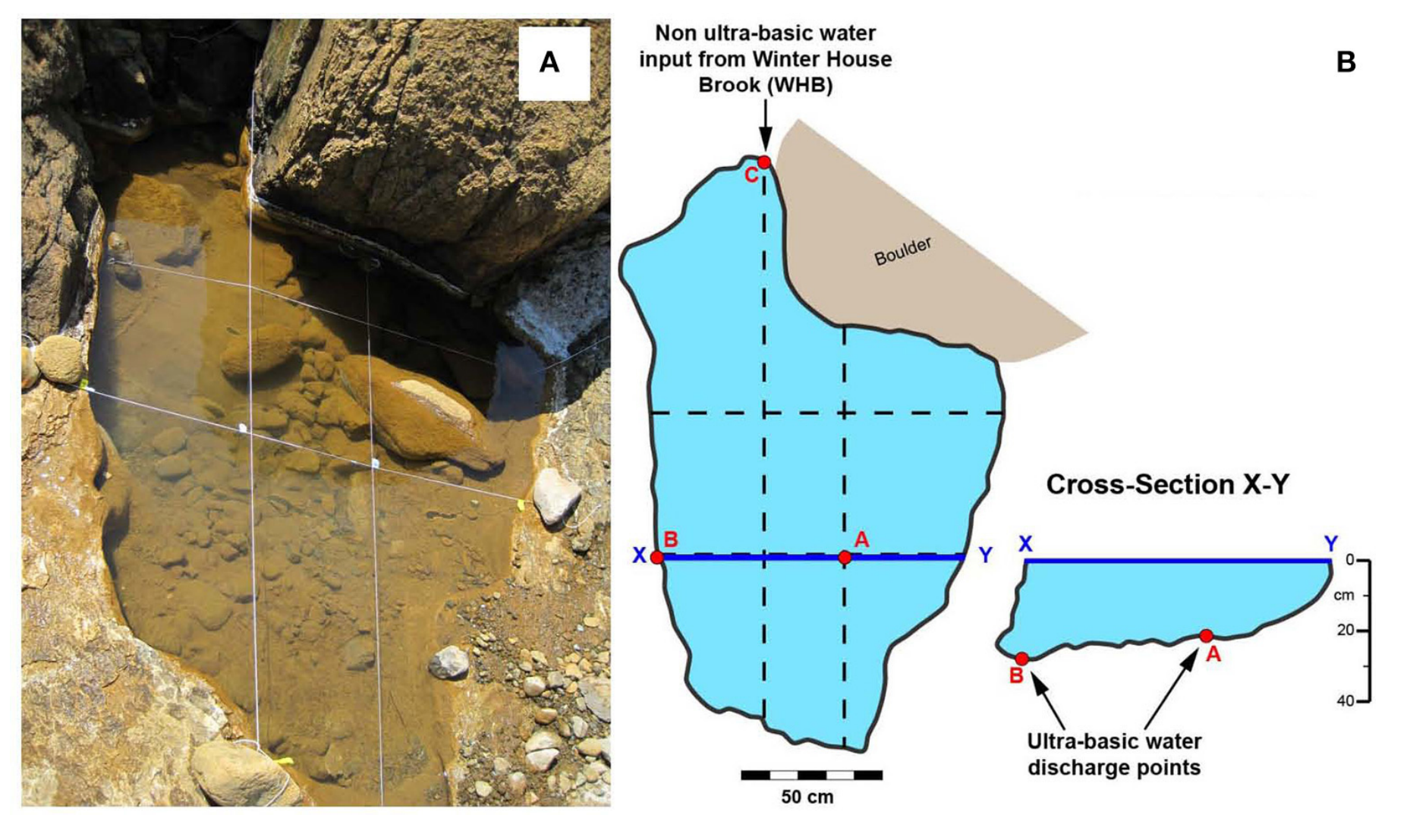
Figure 04: Photograph of Winterhouse ultra-basic pool. (B) Schematic planar and cross-sectional sketches depicting the various water inputs into the WHC2 pool — A and B are locations of ultra-basic reducing water discharging into the bottom of the pool, C is the location of overland flow that trickles into WHC2. (modified from Morrill, 2014)22
WHITE VERSUS ORANGE HYDROGEN: GEOLOGIC HYDROGEN EXPLAINED
Orange hydrogen (also termed "stimulated geological hydrogen") is an engineering approach in which fluids are injected into Fe(II)-rich rock formations to accelerate natural hydrogen-generating reactions.
Geologic (or "white") hydrogen refers to naturally occurring molecular hydrogen generated through subsurface geological processes, primarily the oxidation of iron-bearing minerals during serpentinization of ultramafic rocks. Unlike hydrogen produced from fossil fuels (grey/blue) or electrolysis (green), geologic hydrogen forms continuously through water-rock reactions and has a minimal carbon footprint.
The best targets for stimulated hydrogen production are ultramafic rocks such as peridotites, which can produce 2 - 4 kg hydrogen per cubic meter of rock, up to four orders of magnitude more hydrogen than mafic rocks such as basalts23 (Templeton et al., 2024). The BOIC, with its extensive serpentinized peridotite sequences, brucite-bearing alteration assemblages and documented hydrogen-producing springs, represents an optimal geological setting for both natural hydrogen exploration and potential future stimulated production.
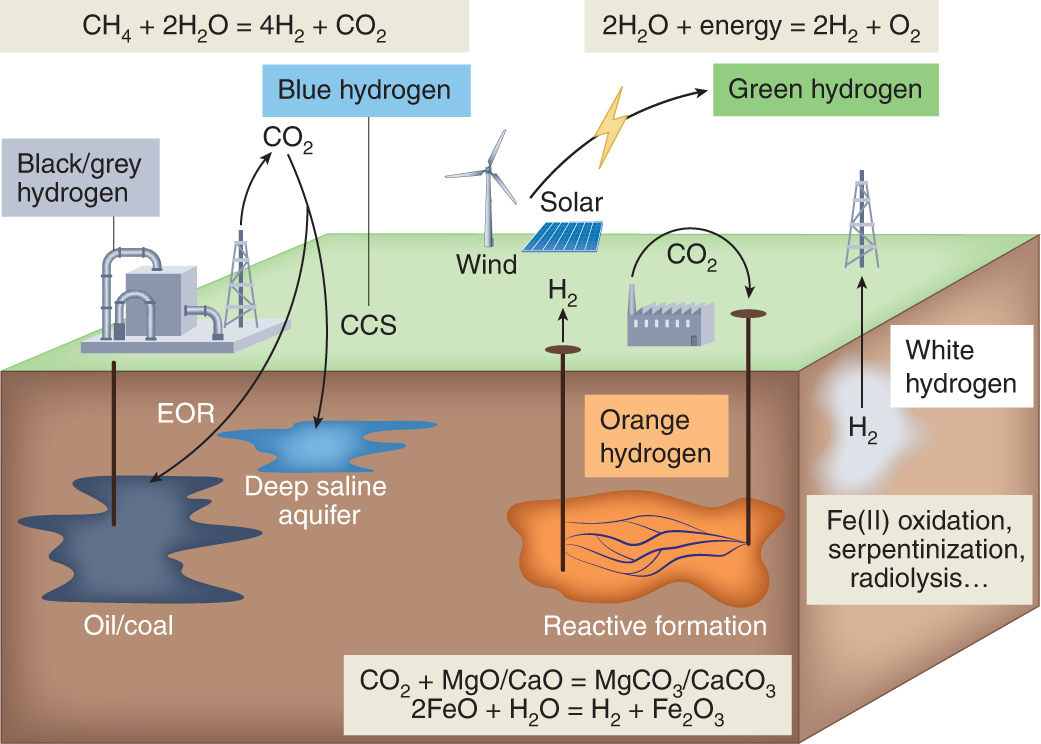
Figure 05: Schematic block diagram highlights the different types of hydrogen generated by natural processes and as industrial byproducts.24
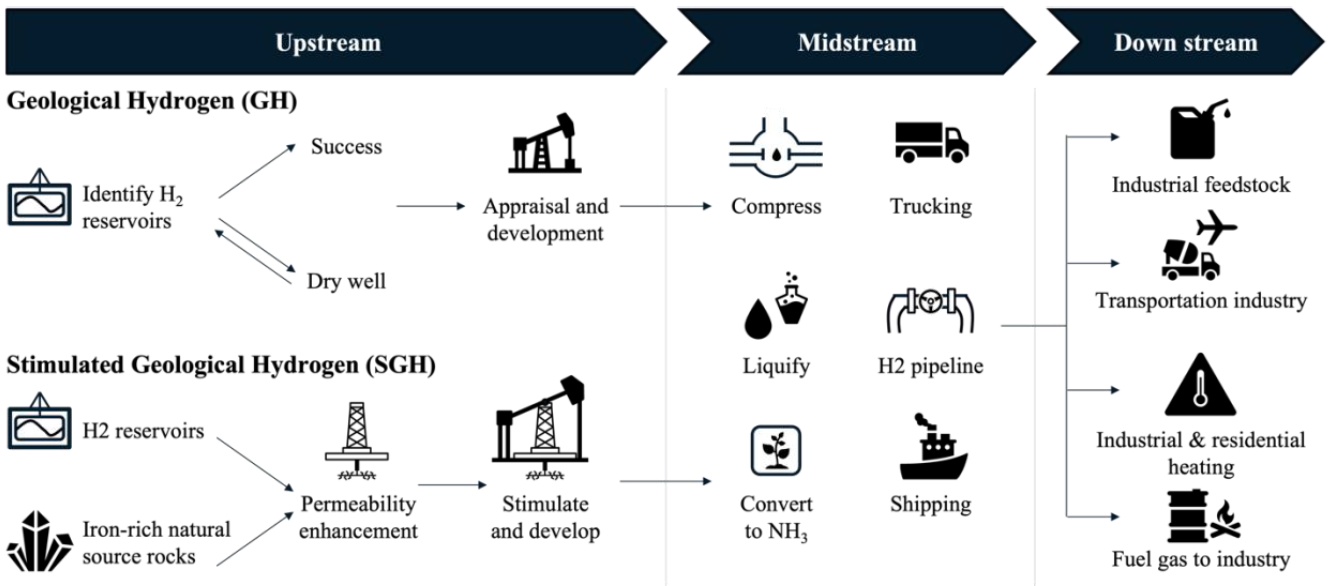
Figure 06: The geological hydrogen value chain comprising upstream, midstream and downstream components (from Mathur et al. 2024).25
BRUCITE’S ROLE IN CARBON CAPTURE AND HYDROGEN GENERATION
Recent research published in Carbon Capture Science & Technology (Leila et al., 2025) highlights that brucite-bearing ultramafic lithologies represent optimal geological "sweet spots" for simultaneous CO₂ mineralization and H₂ production. Among ultramafic alteration products, brucite exhibits the highest CO₂ reactivity, requiring only approximately 2.5 tonnes of mineral to sequester 1 tonne of CO₂ (Kelemen et al., 2020)26.
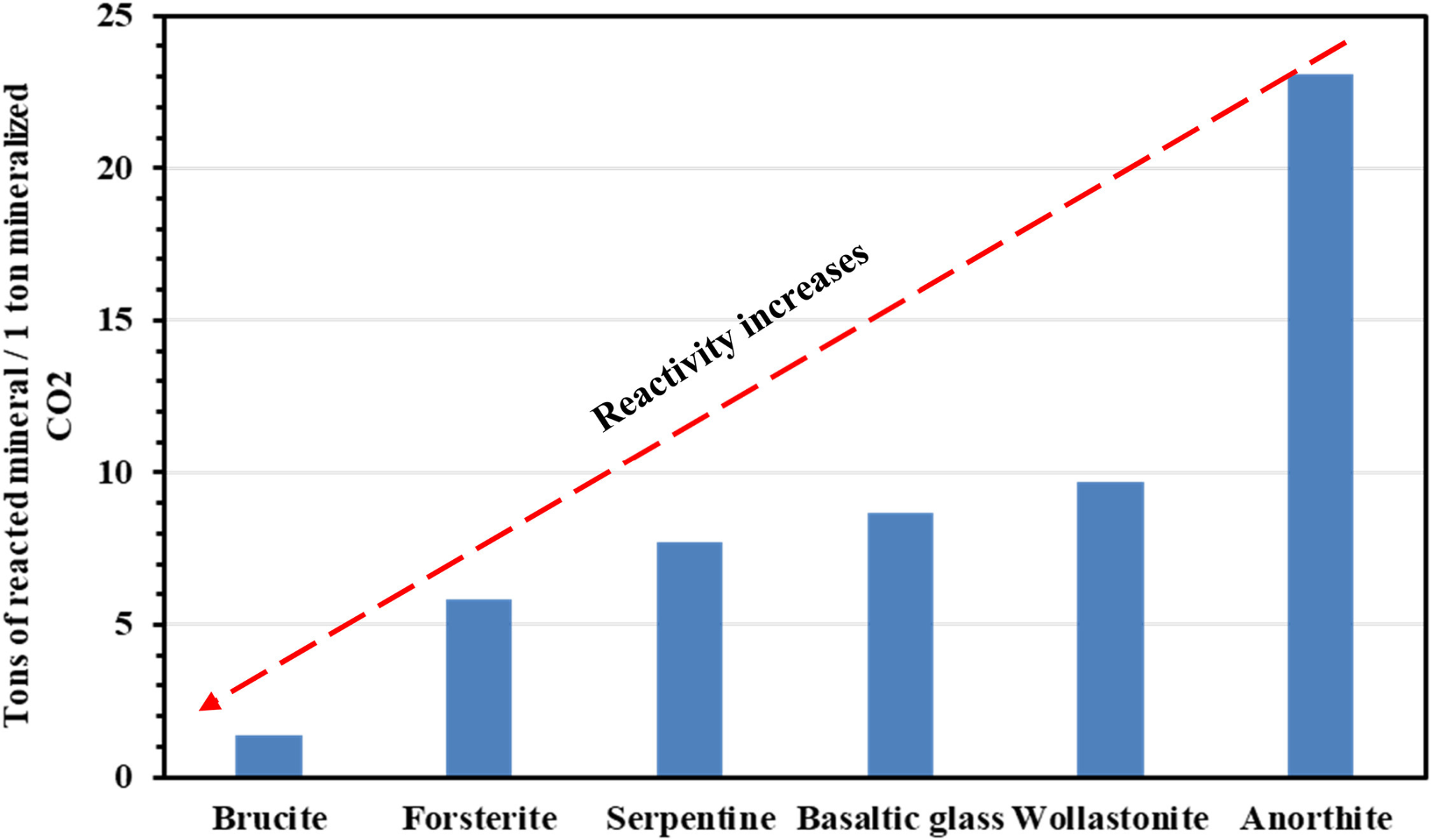
Figure 07: Weight of reacted minerals required for sequestering 1 ton of CO2 via mineral trapping at same reaction conditions27 (data from Kelemen et al., 2020; Oelkers et al., 2008).
The serpentinization process at the BOIC produces brucite, serpentine and magnetite as primary alteration products. Peer-reviewed research by Memorial University (Gill et al., 2024) calculated a theoretical "total CO₂ storage capacity of 5.1 × 10¹¹ tonnes for the entire BOIC," a figure representing more than 13 years of total global CO₂ emissions based on 2022 output of 36.8 billion tonnes, and over 700 times Canada's annual emissions of approximately 670 million tonnes28.
The study notes that brucite exhibits the highest CO₂ conversion efficiency among ultramafic minerals: brucite converts 0.63 metric tonnes of CO₂ per tonne of mineral (highest reactivity), olivine converts 0.51 metric tonnes of CO₂ per tonne of mineral, and serpentine/pyroxene converts 0.41 metric tonnes of CO₂ per tonne of mineral.
Laboratory experiments conducted by Memorial University on Blow Me Down peridotite demonstrated carbonation flux rates of −1.40 × 10⁻³ mol/m²min under controlled conditions, while field measurements at the Tablelands springs recorded flux rates of 1.9 × 10⁻⁵ mol/m²min-confirming that natural carbonation is actively occurring within the complex. The researchers conclude that the process is "kinetically favourable even at ambient conditions" and could be industrialized with "little energy input beyond drilling and pumping waters into the subsurface29."
The 408 km² surface exposure of the BOIC, extending to an estimated depth of 1 km (408 km³ rock volume, comprising approximately 1.3 × 10¹² tonnes of ultramafic material), provides an exceptional target for both research and potential future carbon sequestration operations.
AWARUITE: HYDROGEN AS A REQUIRED PRECURSOR FOR NICKEL-IRON ALLOY FORMATION
Awaruite (Ni₃Fe) is a naturally occurring nickel-iron alloy that forms under extremely reducing conditions during serpentinization, conditions that require hydrogen. Research by Sleep et al. (2004) established that awaruite formation requires hydrogen partial pressures exceeding 50 bars at low temperatures, increasing to more than 320 bars at 200°C. The presence of awaruite in serpentinized ultramafic rocks therefore provides direct mineralogical evidence of hydrogen-rich conditions during alteration.30
As noted by Sleep et al. (2004): "Metamorphic hydration and oxidation of ultramafic rocks produces serpentinites, composed of serpentine group minerals and varying amounts of brucite, magnetite, and/or FeNi alloys. These minerals buffer metamorphic fluids to extremely reducing conditions that are capable of producing hydrogen gas. Awaruite, FeNi₃, forms early in this process when the serpentinite minerals are Fe-rich." Awaruite could not form without the presence of abundant hydrogen, making it an exploration indicator for hydrogen-prospective serpentinite systems.
The highly reducing conditions documented at the Tablelands are consistent with the geochemical environment required for awaruite formation, indicating that awaruite mineralization may be present within the serpentinized portions of the BOIC.
First Atlantic's exploration programs will include systematic sampling to evaluate awaruite occurrence and distribution within the Ophiolite-X project area, with awaruite serving as both a potential nickel-iron resource and an indicator of hydrogen generation potential.
REGIONAL GEOLOGY AND PROJECT SETTING
The BOIC represents an exceptionally well-preserved section of Ordovician oceanic lithosphere that was obducted onto the Laurentian continental margin during the Taconic orogeny, approximately 470 million years ago. The complex comprises four major massifs arranged from north to south: Table Mountain (Tablelands), North Arm Mountain, Blow Me Down Mountain, and Lewis Hills.
Each massif displays a near-complete ophiolite stratigraphy, including basal tectonized harzburgite overlain by cumulate ultramafic rocks (dunite, wehrlite, pyroxenite), layered gabbros, sheeted dikes, and pillow basalts. The ultramafic sections have undergone variable degrees of serpentinization, with the Tablelands being particularly notable for hosting the hyperalkaline springs that document ongoing water-rock reactions.
The Blow Me Down Massif is distinguished by an anomalously thick dunite layer, up to 5 km, in the upper part of the mantle section, significantly thicker than in typical ophiolite sequences31. This dunite-rich section provides exceptional targets for both hydrogen generation (through ongoing serpentinization) and carbon sequestration (through carbonation of olivine and serpentine minerals).
The Lewis Hills Massif, the southernmost and structurally highest unit, exposes deep crustal and upper mantle sections, including significant chromitite occurrences. The massif has been the subject of historical chromite exploration and production, with the Springers Hill prospect representing the most advanced occurrence.
HISTORIC CHROMITE OCCURRENCES: CHROMITE-HYDROGEN ASSOCIATION
Documented mineral occurrences, recorded in the Newfoundland and Labrador Geological Survey's Mineral Occurrence Database System (MODS), demonstrate the ultramafic character and mineral prospectivity of the acquired ground, including historic chromite occurrences comparable to those associated with recent major hydrogen discoveries.
The Blow Me Down Massif hosts two chromite occurrences: Blow Me Down Chromite #132 (historically mined,
The Lewis Hills Massif hosts the Springers Hill chromite prospect comprising three occurrences: Springers Hill Main Showing (developed prospect that had produced a
These podiform chromite occurrences share striking geological similarities with the Bulqiza chromite mine in Albania, one of the world's largest podiform chromite deposits within the Jurassic Mirdita Ophiolite. At Bulqiza, chromite grades range from 33
The presence of similar chromite-bearing harzburgite-dunite assemblages within the BOIC, combined with documented active serpentinization and hydrogen-bearing hyperalkaline springs at the Tablelands, suggests analogous hydrogen-generation potential within First Atlantic's Ophiolite-X project area.
Summary of the Agreements
The Company entered into three separate agreements with arm’s length parties on December 3 and 4, 2025, to strategically expand its mineral holdings within the BOIC (collectively, the “Agreements”).
Pursuant to the first Agreement, the Company will acquire a
Investor Information
The Company's common shares trade on the TSX Venture Exchange under the symbol "FAN", the American OTCQB Exchange under the symbol "FANCF" and on several German exchanges, including Frankfurt and Tradegate, under the symbol "P21".
Investors can get updates about First Atlantic by signing up to receive news via email and SMS text at www.fanickel.com.
FOR MORE INFORMATION:
First Atlantic Investor Relations
Robert Guzman
Tel: +1 844 592 6337
rob@fanickel.com
Disclosure
Adrian Smith, P.Geo., a director and the Chief Executive Officer of the Company is a qualified person as defined by NI 43-101. The qualified person is a member in good standing of the Professional Engineers and Geoscientists Newfoundland and Labrador (PEGNL) and is a registered professional geoscientist (P.Geo.). Mr. Smith has reviewed and approved the technical information disclosed herein.
The Company has not independently verified the historic samples reported in this release but has received data from the previous property owners and from the Government of Newfoundland and Labrador’s online database.
ABOUT FIRST ATLANTIC NICKEL CORP.
First Atlantic Nickel Corp. (TSXV: FAN) (OTCQB: FANCF) (FSE: P21) is a critical mineral exploration company in Newfoundland & Labrador developing the Pipestone XL Nickel Alloy Project. The project spans the entire 30-kilometer Pipestone Ophiolite Complex, where multiple zones, including RPM, Super Gulp, Atlantic Lake, and Chrome Pond, contain awaruite (Ni₃Fe), a naturally occurring magnetic nickel-iron-cobalt alloy of approximately ~
The U.S. Geological Survey recognized awaruite's strategic importance in its 2012 Annual Report on Nickel, noting that these deposits may help alleviate prolonged nickel concentrate shortages since the natural alloy is much easier to concentrate than typical nickel sulfides38. The Pipestone XL Nickel Alloy Project is located near existing infrastructure with year-round road access and proximity to hydroelectric power. These features provide favorable logistics for exploration and future development, strengthening First Atlantic’s role to establish a secure and reliable source of North American nickel production for the stainless steel, electric vehicle, aerospace, and defense industries. This mission gained importance when the US added nickel to its critical minerals list in 202239, recognizing it as a non-fuel mineral essential to economic and national security with a supply chain vulnerable to disruption.
Forward-looking statements:
This news release may include “forward-looking information” under applicable Canadian securities legislation. Such forward-looking information reflects management's current beliefs and is based on a number of estimates and/or assumptions made by, and information currently available to, the Company that, while considered reasonable, are subject to known and unknown risks, uncertainties and other factors that may cause actual results and future events to differ materially from those expressed or implied by such forward-looking information.
Forward-looking information in this news release includes, but is not limited to, statements regarding: the entering into and anticipated closing of the three asset purchase agreements; the Company’s ability to satisfy the conditions to closing, including receipt of TSXV acceptance and any other required regulatory approvals; the timing of closing the Agreements; the issuance of common shares as consideration and the timing thereof; the Company’s ability and intention to exercise any NSR buy-back rights on the terms described or at all; the anticipated strategic and exploration benefits of acquiring and consolidating the BOIC claims; the Company’s planned exploration activities on the Ophiolite-X project and BOIC claims, including future work programs, budgets, timing and scope; the interpretation of geological, geochemical and geophysical data; the potential for natural and stimulated geological hydrogen, carbon capture and storage, and associated nickel, chromium and PGE mineralization within the BOIC; and the Company’s objectives, strategies and future plans with respect to the acquired mineral licenses and its projects generally
Forward-looking information is based on, among other things, assumptions regarding: the Company’s ability to obtain all required approvals in a timely manner; the ability of the parties to the Agreements to satisfy closing conditions; the accuracy of the underlying title and claim information received from vendors and the Province of Newfoundland and Labrador; the Company’s ability to maintain the mineral licenses and claims in good standing; the Company’s ability to access the properties and carry out exploration as currently planned; the availability, performance and cost of personnel, services, equipment and supplies; the timing of, and ability to obtain, necessary permits and regulatory authorizations; the applicability of published academic and technical research to the Company’s properties; prevailing and future prices and demand for nickel and other commodities that may be associated with geological hydrogen and carbon capture concepts; general business, economic and financial market conditions; and the Company’s ability to obtain additional financing on reasonable terms to fund exploration, studies and any potential NSR buy-backs..
Readers are cautioned that such forward-looking information is neither promises nor guarantees and is subject to known and unknown risks and uncertainties including, but not limited to, risks related to the inability to obtain TSXV acceptance or other required approvals; delays in closing or failure to close one or more of the agreements; risks relating to title, maintenance or renewal of mineral claims and licenses; exploration and development risks; environmental and permitting risks; changes in market conditions and metal prices; uncertain and volatile equity and capital markets; lack of available capital; operating risks; accidents; labour issues; and other risks in the mining industry. Additional factors and risks are discussed in the Company’s disclosure documents available under the Company’s profile on SEDAR+ at www.sedarplus.ca. Should one or more of these risks or uncertainties materialize, or should assumptions underlying the forward-looking statements prove incorrect, actual results may vary materially from those described herein as intended, planned, anticipated, believed, estimated or expected.
The Company is presently an exploration stage company. Exploration is highly speculative in nature, involves many risks, requires substantial expenditures, and may not result in the discovery of mineral deposits that can be mined profitably. Furthermore, the Company currently has no mineral reserves on any of its properties. As a result, there can be no assurance that such forward-looking statements will prove to be accurate, and actual results and future events could differ materially from those anticipated in such statements. The Company undertakes no obligation to update forward-looking information, except as required by applicable securities laws.
Neither the TSX Venture Exchange nor its Regulation Services Provider (as that term is defined in the policies of the TSX Venture Exchange) accepts responsibility for the adequacy or accuracy of this release.
_______________________
1 Evaluation of carbon dioxide sequestration via interaction with peridotite and peridotite-hosted groundwaters: an experimental case study with Bay of Islands Ophiolite rocks, western Newfoundland, Canada
2 Geochemistry of a continental site of serpentinization, the Tablelands Ophiolite, Gros Morne National Park: A Mars analogue
3 The Tablelands Ophiolite of Newfoundland: A Mars analogue site of present-day serpentinization
4 Large-Scale Screening for Natural Hydrogen: a Quebec’s Perspective
5 Techno-economic analysis of natural and stimulated geological hydrogen
6 https://www.sciencedirect.com/science/article/abs/pii/S0360319925038728
7 Large-Scale Screening for Natural Hydrogen: a Quebec’s Perspective
8 Evaluation of carbon dioxide sequestration via interaction with peridotite and peridotite-hosted groundwaters
9 https://gis.gov.nl.ca/mods/ModsCard.asp?NMINOString?temp=n&NMINOString=012G/01/Cr%20002
10 https://gis.geosurv.gov.nl.ca/mods/ModsCard.asp?NMINOString=012B%2F16%2FCr+002
11 A deep reservoir for hydrogen drives intense degassing in the Bulqizë ophiolite
12 https://cdnsciencepub.com/doi/full/10.1139/cjes-2022-0116
13 https://cdnsciencepub.com/doi/full/10.1139/cjes-2022-0116
14 Concomitant generation of hydrogen during carbon dioxide storage in ultramafic massifs- state of the art with implications to decarbonization strategies
15 H2-rich fluids from serpentinization: Geochemical and biotic implications
16 https://www.pnas.org/doi/10.1073/pnas.0405289101
17 Geochemistry of a continental site of serpentinization, the Tablelands Ophiolite, Gros Morne National Park: A Mars analogue
18 Natural hydrogen extracted from ophiolitic rocks: A first dataset
19 Concomitant generation of hydrogen during carbon dioxide storage in ultramafic massifs- state of the art with implications to decarbonization strategies
20 Evaluation of carbon dioxide sequestration via interaction with peridotite and peridotite-hosted groundwaters: an experimental case study with Bay of Islands Ophiolite rocks, western Newfoundland, Canada
21 The Tablelands Ophiolite of Newfoundland: A Mars analogue site of present-day serpentinization
22 https://sci-hub.se/10.3389/fmicb.2014.00613
23 Low-temperature hydrogen production and consumption in partially-hydrated peridotites in Oman: implications for stimulated geological hydrogen production
24 Orange hydrogen is the new green
25 Techno-economic analysis of natural and stimulated geological hydrogen
26 Evaluation of carbon dioxide sequestration via interaction with peridotite and peridotite-hosted groundwaters: an experimental case study with Bay of Islands Ophiolite rocks, western Newfoundland, Canada
27 Concomitant generation of hydrogen during carbon dioxide storage in ultramafic massifs- state of the art with implications to decarbonization strategies
28 Evaluation of carbon dioxide sequestration via interaction with peridotite and peridotite-hosted groundwaters: an experimental case study with Bay of Islands Ophiolite rocks, western Newfoundland, Canada
29 https://cdnsciencepub.com/doi/10.1139/cjes-2022-0116
30 H2-rich fluids from serpentinization: Geochemical and biotic implications
31 Ultramafic rocks in the Bay of Islands Ophiolite complex, Newfoundland Appalachians
32 https://gis.gov.nl.ca/mods/ModsCard.asp?NMINOString?temp=n&NMINOString=012G/01/Cr%20001
33 https://gis.gov.nl.ca/mods/ModsCard.asp?NMINOString?temp=n&NMINOString=012G/01/Cr%20002
34 https://gis.geosurv.gov.nl.ca/mods/ModsCard.asp?NMINOString=012B%2F16%2FCr+002
35 https://gis.geosurv.gov.nl.ca/mods/ModsCard.asp?NMINOString=012B%2F16%2FCr+003
36 https://gis.geosurv.gov.nl.ca/mods/ModsCard.asp?NMINOString=012B%2F16%2FCr+004
37 A deep reservoir for hydrogen drives intense degassing in the Bulqizë ophiolite
38 https://d9-wret.s3.us-west-2.amazonaws.com/assets/palladium/production/mineral-pubs/nickel/mcs-2012-nicke.pdf
39 https://www.usgs.gov/news/national-news-release/us-geological-survey-releases-2022-list-critical-minerals
Photos accompanying this announcement are available at
https://www.globenewswire.com/NewsRoom/AttachmentNg/f076ef78-bbe5-4ba1-b416-54eb62f98218
https://www.globenewswire.com/NewsRoom/AttachmentNg/7a97aa70-0fae-4acf-bf07-a9857233333f
https://www.globenewswire.com/NewsRoom/AttachmentNg/945d556f-678a-411f-99ed-c7ece40c16c4
https://www.globenewswire.com/NewsRoom/AttachmentNg/6e778473-0184-4d86-9557-7a18ca3d13da
https://www.globenewswire.com/NewsRoom/AttachmentNg/d01ee86c-1701-417a-9fed-c23dc9db5b17
https://www.globenewswire.com/NewsRoom/AttachmentNg/d48effe0-d587-41e2-81f8-5777438651d4
https://www.globenewswire.com/NewsRoom/AttachmentNg/757b0ab6-b16d-4e1a-a51b-3ed36adda16c

FAQ
AI-generated questions and answers. How Rhea-AI works. Not financial advice.