
First Breach Completes First Untethered Flight of Proprietary Drone Prototype, Advancing American-Made Unmanned Systems Program
First Breach advances its American-made drone program with a first untethered prototype flight and outlines U.S. production scale-up targets through 2027.
Rhea-AI Summary
First Breach (FBDT) has completed the first untethered flight of its proprietary drone prototype, marking a key development milestone in its U.S.-made unmanned aerial systems program.
The airframe flew in free flight using commercial flight electronics, while the company’s proprietary flight controller, engineered with Hellbender, is now operating on Betaflight firmware and progressing toward integration into future prototypes. First Breach targets completion of initial prototypes in Q4 2026 and aims to begin production scaling in Q2 2027, with a targeted capacity of more than 2,500 drones per week, subject to development, testing, and manufacturing readiness.
Positive
- First untethered flight completed for proprietary drone prototype, validating core airframe and propulsion systems
- Flight controller milestone: custom board now running Betaflight ahead of aircraft integration
- Production scale target of more than 2,500 drones per week as manufacturing ramps
- Prototype performance: ~2.2 kg all-up weight, ~500 g payload, 2 km range, ~10 minutes endurance
- Timeline disclosed: initial prototypes targeted for Q4 2026, production scaling in Q2 2027
Negative
- None.
News Explained
The prototype’s reported effective range is 2 kilometers and endurance about 10 minutes; these remain proof-of-concept specifications subject to change.
First Breach reports its prototype’s first untethered flight; it owns the drone platforms and related intellectual property and controls manufacturing and commercialization, while Hellbender provides engineering, design, technical support and component manufacturing.
The current proof-of-concept prototype is reported to have an effective range of 2 km, endurance of approximately 10 minutes, a cruise speed of 50 km/h and a maximum speed of 120 km/h; its specifications are subject to change ahead of production.
Key Figures
- Initial prototype target
- Fourth quarter of 2026
- Target completion
- Production scaling target
- Second quarter of 2027
- Target start of production scaling
- Target production capacity
- More than 2,500 drones per week
- As manufacturing operations expand
- Effective range
- 2 km
- Current prototype; proof-of-concept specifications subject to change
- Endurance
- Approximately 10 minutes
- Current prototype; proof-of-concept specifications subject to change
- Cruise speed
- 50 km/h
- Current prototype; proof-of-concept specifications subject to change
- Maximum speed
- 120 km/h
- Current prototype; proof-of-concept specifications subject to change
Historical Context
-
First prototype flight was reported alongside production timing and capacity targets.
24h Move is the share-price change in the day after each event; other market factors may also have contributed.
Key Terms
gnss technical
mavlink technical
AI-generated analysis. How Rhea-AI works. Not financial advice.




HAGERSTOWN, MD / ACCESS Newswire / September 23, 2026 / First Breach Inc. (NASDAQ:FBDT) ("First Breach" or the "Company"), an American-made defense technologies company focused on vertically integrated ammunition production and next-generation unmanned aerial systems, today announced the successful completion of the first untethered flight of its proprietary drone prototype. The Company also reported progress on its proprietary flight controller, developed under its strategic agreement with Hellbender, Inc., as it works toward completing initial prototypes in the fourth quarter of 2026.
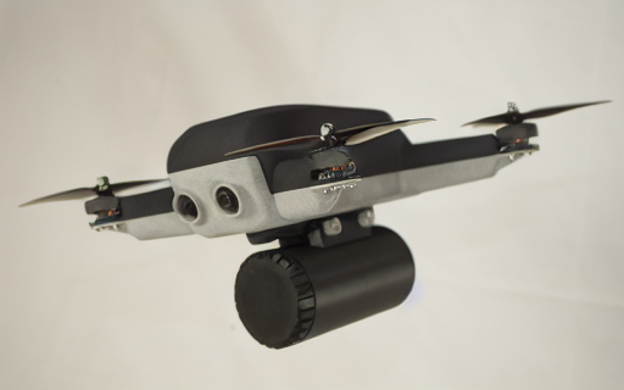
Building on the first flight announced on August 25, 2026, the latest milestone demonstrated operation of the prototype's airframe, propulsion, and core vehicle systems in free flight without a physical tether. The aircraft flew using commercial flight electronics while development of the Company's proprietary controller proceeded in parallel. Integrating that controller into the aircraft for further testing is the next development step.
"Untethered flight is the point where a drone stops being a test article and starts being a vehicle," said Jeffrey Low, Co-Founder and Chief Executive Officer of First Breach. "Every step we take on this program is a step toward owning the full stack, meaning the airframe, the electronics, and the manufacturing, here in the United States. This flight is a visible marker of that progress."
Advancing Flight Controller Development
The flight controller board engineered under the Hellbender agreement is now operating with Betaflight, an open-source flight control firmware. This milestone establishes an initial operating foundation for the Company's controller hardware ahead of integration into upcoming prototype iterations.
The airframe flight and controller development represent separate stages of the program. Further integration and flight testing will be required to evaluate the combined system and support its progression toward production readiness.
"We are proving each piece independently and then bringing them together, which is how you get to a reliable, producible vehicle rather than a one-off," said Jordan Low, Co-Founder, President and Chief Operating Officer of First Breach. "The airframe has flown untethered. Our flight controller is running Betaflight. The next step is putting them in the same aircraft and testing them together as we work toward integrating energetics and manufacturing at scale."
Building Toward Domestic Production
First Breach continues to target completion of its initial prototypes in the fourth quarter of 2026 and the start of production scaling in the second quarter of 2027. As manufacturing operations expand, the Company is targeting production capacity of more than 2,500 drones per week. The timing and pace of that expansion remain subject to development, testing, and manufacturing readiness.
Under the strategic agreement, First Breach owns the drone platforms and their associated intellectual property and will control manufacturing and commercialization. Hellbender provides engineering, design, technical support, and component manufacturing.
"First Breach set out to own its platform, and our work together is helping turn that vision into reality," said Brett Phillips, Chief Revenue Officer of Hellbender. "Both the airframe and flight controller are built to be manufactured domestically and at volume. That is exactly the kind of program our engineering and manufacturing model was designed to support, helping First Breach move from development toward scaled U.S. production."
Prototype specifications
Proof-of-concept build; subject to change ahead of production.
The current prototype is a four-rotor Class 1 platform with an all-up weight of approximately 2.2 kg and a payload capacity of roughly 500 g, supported by a Picatinny rail and electrical interface. It has demonstrated an effective range of 2 km, an endurance of approximately 10 minutes, a cruise speed of 50 km/h, and a maximum speed of 120 km/h.
Navigation is GNSS with visual-inertial augmentation, and the control link is 900 MHz MAVLink. The platform uses swappable LiPo batteries and is designed for field assembly in under ten minutes.
About First Breach
First Breach Inc. is an ISO 9001:2015 certified, American-made defense technologies company focused on manufacturing match-grade ammunition components, finished ammunition, and developing next-generation unmanned aerial systems for commercial, law enforcement, and military markets. The Company manufactures its products in-house at its Hagerstown, Maryland facility, where it produces brass cups, casings, projectiles, lead cores, lead wire, and completed ammunition with rigorous quality control standards. First Breach is also advancing its drone strategy through the development of U.S.-made unmanned systems, leveraging advanced engineering, robotics, ISR and sensor technologies, and precision manufacturing capabilities to address evolving defense, homeland security, law enforcement, and commercial requirements across domestic and international markets.
For more information, please visit: First Breach
About Hellbender
Hellbender, Inc. is a Pittsburgh-based engineering and advanced manufacturing company specializing in physical AI, computer vision, drones, robotics, electronics design, and automated manufacturing. Operating from approximately 90,000 square feet of facilities, the company provides integrated product development capabilities spanning engineering, prototyping, printed circuit board assembly, advanced sensor integration, robotic manufacturing, and production testing. More than
For more information, please visit: Hellbender
Cautionary Note Regarding Forward-Looking Statements
This press release contains forward-looking statements within the meaning of the Private Securities Litigation Reform Act of 1995. Forward-looking statements are not historical facts and include statements regarding the Company's expectations, beliefs, plans, objectives, strategies, future events, future performance, business prospects, growth initiatives, acquisitions, market opportunities, capital resources, operational objectives, and other statements that are predictive in nature. Forward-looking statements may be identified by the use of words such as "anticipate," "believe," "continue," "could," "estimate," "expect," "forecast," "intend," "may," "plan," "potential," "predict," "project," "seek," "should," "target," "will," "would," and similar expressions, although not all forward-looking statements contain these identifying words.
Forward-looking statements are based on management's current expectations, assumptions, and beliefs regarding future developments and their potential effect on the Company. These statements are not guarantees of future performance and involve known and unknown risks, uncertainties, assumptions, and other factors that may cause actual results, performance, or achievements to differ materially from those expressed or implied by such forward-looking statements.
Factors that could cause actual results to differ materially from those expressed or implied by forward-looking statements include, but are not limited to, changes in economic, business, market, competitive, regulatory, technological, legal, and geopolitical conditions; the Company's ability to execute its business strategy; the successful integration of acquisitions and strategic transactions; access to capital and financing; customer demand; industry developments; and other risks and uncertainties described from time to time in the Company's filings with the U.S. Securities and Exchange Commission, which are available for review at www.sec.gov.
Readers are cautioned not to place undue reliance on forward-looking statements, which speak only as of the date they are made. Except as required by applicable law, the Company undertakes no obligation to update, revise, or publicly disclose any revisions to any forward-looking statements to reflect events, circumstances, or changes in expectations occurring after the date of this press release.
Investor Relations
Frank Pogubila
Partner
Integrous Communications
Phone: 951.946.5288
Email: fpogubila@integcom.us
Website: www.firstbreach.com
For additional company updates, follow First Breach on LinkedIn, X, and Facebook.
SOURCE: First Breach
View the original press release on ACCESS Newswire
FAQ
AI-generated questions and answers. How Rhea-AI works. Not financial advice.
What are the roles of First Breach and Hellbender in the drone program?
Under the strategic agreement, First Breach owns the drone platforms and associated intellectual property and will control manufacturing and commercialization. Hellbender provides engineering, design, technical support, and component manufacturing to support development and domestic volume production.
What are the key specifications of the current drone prototype?
The proof-of-concept prototype is a four-rotor Class 1 platform with an all-up weight of about 2.2 kg and payload capacity of roughly 500 g via a Picatinny rail and electrical interface. It has demonstrated an effective range of 2 km, about 10 minutes of endurance, a cruise speed of 50 km/h, and a maximum speed of 120 km/h. It uses GNSS with visual-inertial navigation, a 900 MHz MAVLink control link, swappable LiPo batteries, and is designed for field assembly in under ten minutes.
What development steps come after the first untethered flight?
The next step is integrating the proprietary flight controller into the aircraft and testing the combined system. Further integration and flight testing are required to evaluate the full platform and support its progression toward production readiness, alongside future work on integrating energetics and scaling manufacturing.
What is the targeted production timeline for First Breach’s drones?
First Breach continues to target completion of its initial drone prototypes in the fourth quarter of 2026 and the start of production scaling in the second quarter of 2027. The company states that the timing and pace of expansion remain subject to development, testing, and manufacturing readiness.