
Delivering a Sustainable Future, With Help From FedEx
FedEx's 'Delivering for Good' initiative showcases the company's commitment to community impact beyond package delivery.
Rhea-AI Summary
FedEx's 'Delivering for Good' initiative showcases the company's commitment to community impact beyond package delivery. Recently, FedEx assisted in transporting a significant plant fossil collection from the Yale Peabody Museum to the Smithsonian's National Museum of Natural History in Washington D.C. This collection, dating back 50-66 million years, includes extinct relatives of various tree species and provides important insights into Earth's climate history.
The fossils, collected in the Bighorn Basin of Wyoming and Montana, offer valuable data on temperature fluctuations, ecosystem changes, and abrupt warming events. By facilitating this transfer, FedEx has contributed to the preservation and study of these specimens, which are now part of the world's largest plant fossil archive. This effort aligns with FedEx's broader community engagement program, FedEx Cares, demonstrating the company's role in supporting scientific research and environmental understanding.
Positive
- FedEx demonstrates corporate social responsibility through its 'Delivering for Good' initiative
- The company leverages its global network and logistics expertise for community benefit
- FedEx's involvement in transporting valuable scientific specimens enhances its brand image
Negative
- None.
Details
News Market Reaction – FDX
In the trading session that priced this news, FDX gained 0.99%, reflecting a mild positive market reaction.
Data tracked by StockTitan Argus on the day of publication.
AI-generated analysis. How Rhea-AI works. Not financial advice.




NORTHAMPTON, MA / ACCESSWIRE / August 23, 2024 / FedEx Corporation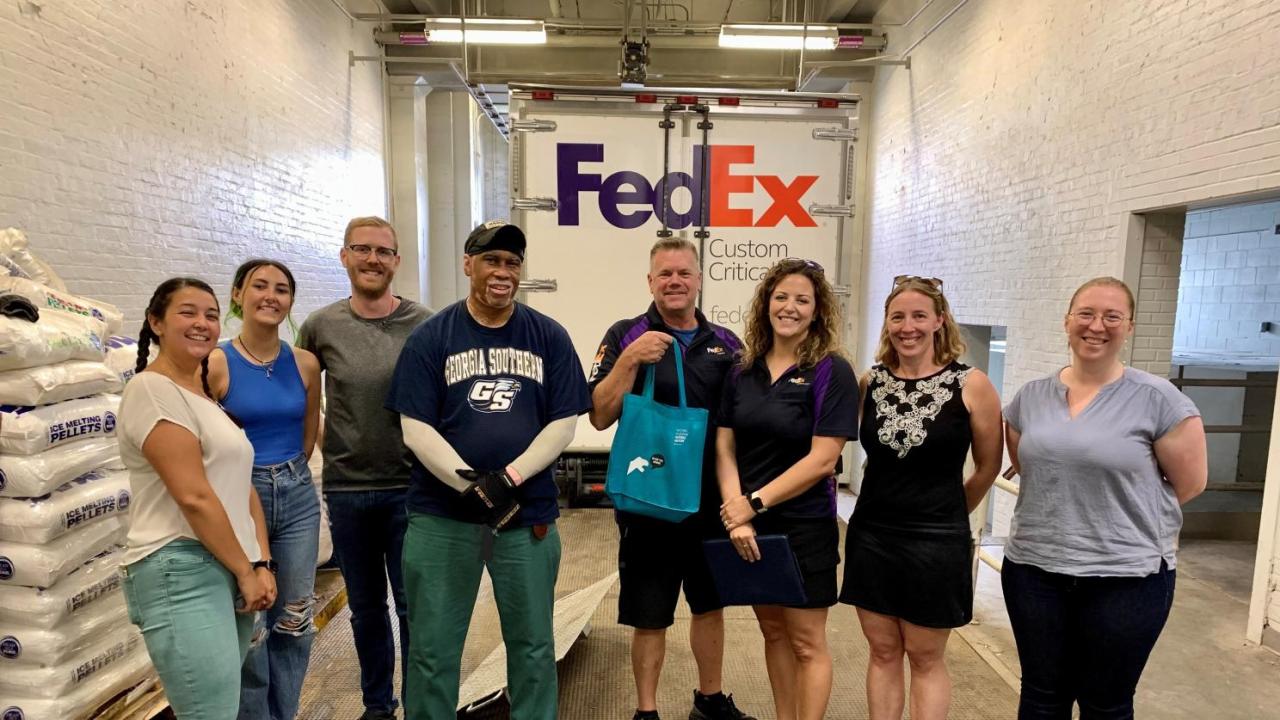
The "Delivering for Good" initiative by FedEx goes beyond shipping packages-it's a commitment to making a positive impact in the communities we serve. By lending our global network and logistics expertise, we assist organizations with precious cargo requests, like delivering a plant fossil collection that offers an effective way to study and combat the ongoing issue of climate change.
In New Haven, the Yale Peabody Museum temporarily housed thousands of specimens of plant fossils that were collected in the Bighorn Basin of Wyoming and Montana in the 1960s-80s by then Smithsonian curator Leo Hickey. They were subsequently loaned to the Yale Peabody Museum when he became its director in 1982.
These plant fossils, mostly leaves, document changes in vegetation and climate during the period from 50 - 66 million years ago, when the Earth's climate was much warmer than it is today. They include extinct relatives of sycamores, dawn redwoods, dogwoods, birches and palms, among many others. Many of the fossils are also aesthetically beautiful, and small selections are on display at both the Yale Peabody and the Smithsonian's National Museum of Natural History's "Deep Time" exhibit, which opened in 2019.
Why should we care about ancient leaves? Because they reveal Earth's climate history, according to the National Museum of Natural History. Scientists study them to understand temperature fluctuations, ecosystem changes, and abrupt warming events. These fossils provide unique insights into our planet's history, allowing us to apply the lessons of the past to help ensure a brighter future.
The collection from the Yale Peabody Museum was returned home to the Smithsonian's National Museum of Natural History in Washington D.C. where it is now part of the world's largest plant fossil archive. There, the fossils will be preserved so that scientists may use them to help reconstruct lost ecosystems and better understand our changing planet, all made possible with a little help from FedEx.
***Photos courtesy of the Smithsonian Institution
Click here to learn about FedEx Cares, our global community engagement program
View additional multimedia and more ESG storytelling from FedEx Corporation on 3blmedia.com.
Contact Info:
Spokesperson: FedEx Corporation
Website: https://www.3blmedia.com/profiles/fedex-corporation
Email: info@3blmedia.com
SOURCE: FedEx Corporation
View the original press release on accesswire.com
FAQ
AI-generated questions and answers. How Rhea-AI works. Not financial advice.