
Firefly Aerospace Onboards Zeno Power on Blue Ghost Mission to Demonstrate Radioisotope Technologies to Survive the Lunar Night
Sentiment and the balance of points
Rhea-AI Sentiment reads the wording of the document, how positive or negative its language is on a 1 to 5 scale. The balance of points shown with the takes weighs what the document actually discloses, so the two can disagree, for example when a trial that missed its main goal is described in upbeat language.
Rhea-AI Summary
Firefly Aerospace (Nasdaq: FLY) announced a commercial payload agreement with Zeno Power Systems to fly Zeno’s Survive-the-Night Package, featuring a 5-watt americium-241 Radioisotope Heater Unit (RHU), on a Blue Ghost lunar lander mission to the Moon’s near side no earlier than 2028.
The payload will operate after Blue Ghost completes its solar-powered lunar day operations for NASA’s Commercial Lunar Payload Services (CLPS) initiative, demonstrating radioisotope-based thermal management to keep spacecraft systems running through the 14-day lunar night and in permanently shadowed regions, supporting future NASA Moon Base and long-duration lunar infrastructure concepts.
Details
Market move: FLY -3.23% in the Aug 19 session. Blue Ghost payload partnership
On Aug 19, the day this news came out, FLY closed 3.23% below the previous close. Argus tracked a trough of -2.5% from its starting point during tracking. Our momentum scanner recorded 26 alerts for this stock that day. Relative volume reached 1.8x the daily average during tracking.
Data tracked by StockTitan Argus for the Aug 19 session.
Key Figures
- Scheduled launch
- no earlier than 2028
- Blue Ghost mission
- Lunar night duration
- 14-day lunar night
- Moon near-side operations
- Lunar day duration
- approximately 14 Earth days
- NASA CLPS payload operations
- RHU thermal output
- 5 Watts
- americium-241 radioisotope heater unit
- Lunar-day temperature
- more than 230°F
- temperature measured during lunar day
- Lunar-night temperature
- below -275°F
- temperature measured at night
- Extreme lunar-night temperature
- below -280°F
- conditions the system is designed to withstand
- Blue Ghost Mission 1
- 2025
- first successful commercial Moon landing
Historical Context
-
NASA spacecraft processing contract eligibility was followed by a 3.84% decline.
-
Defense Innovation Unit deorbit-system design contract was followed by a 0.41% decline.
-
Record quarterly revenue and contracts coincided with a 0.68% gain.
-
Lockheed Martin agreement extension for up to 25 launches coincided with a 0.68% gain.
-
Space Force radar digitization contract coincided with a 2.64% gain.
24h Move is the share-price change in the day after each event; other market factors may also have contributed.
Key Terms
radioisotope heater unit technical
americium-241 technical
radioisotope power systems technical
permanently shadowed regions technical
AI-generated analysis. How Rhea-AI works. Not financial advice.




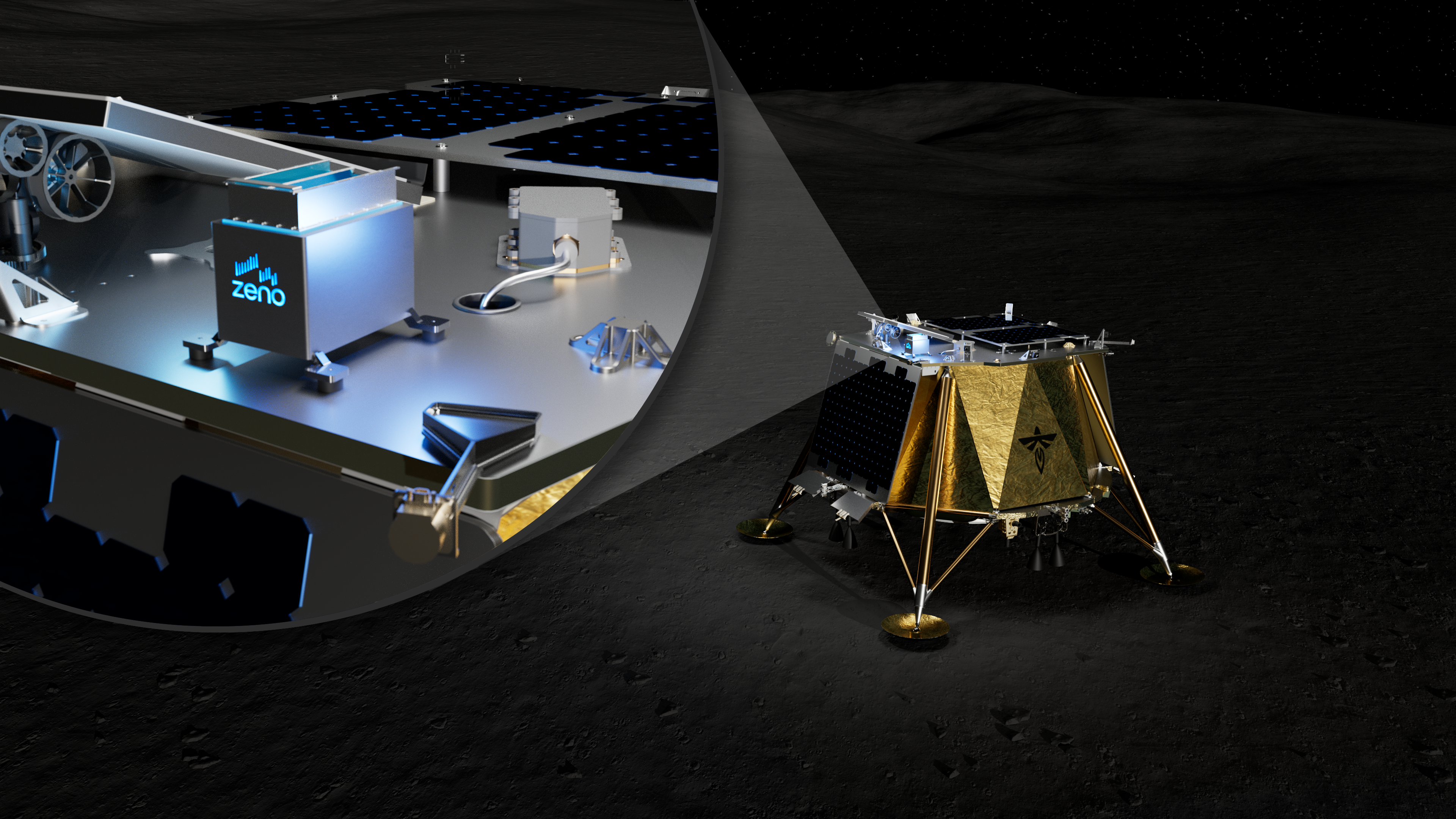
Hosted on Firefly’s Blue Ghost lander, Zeno Power’s payload will demonstrate nuclear energy capabilities to operate through extreme cold lunar temperatures
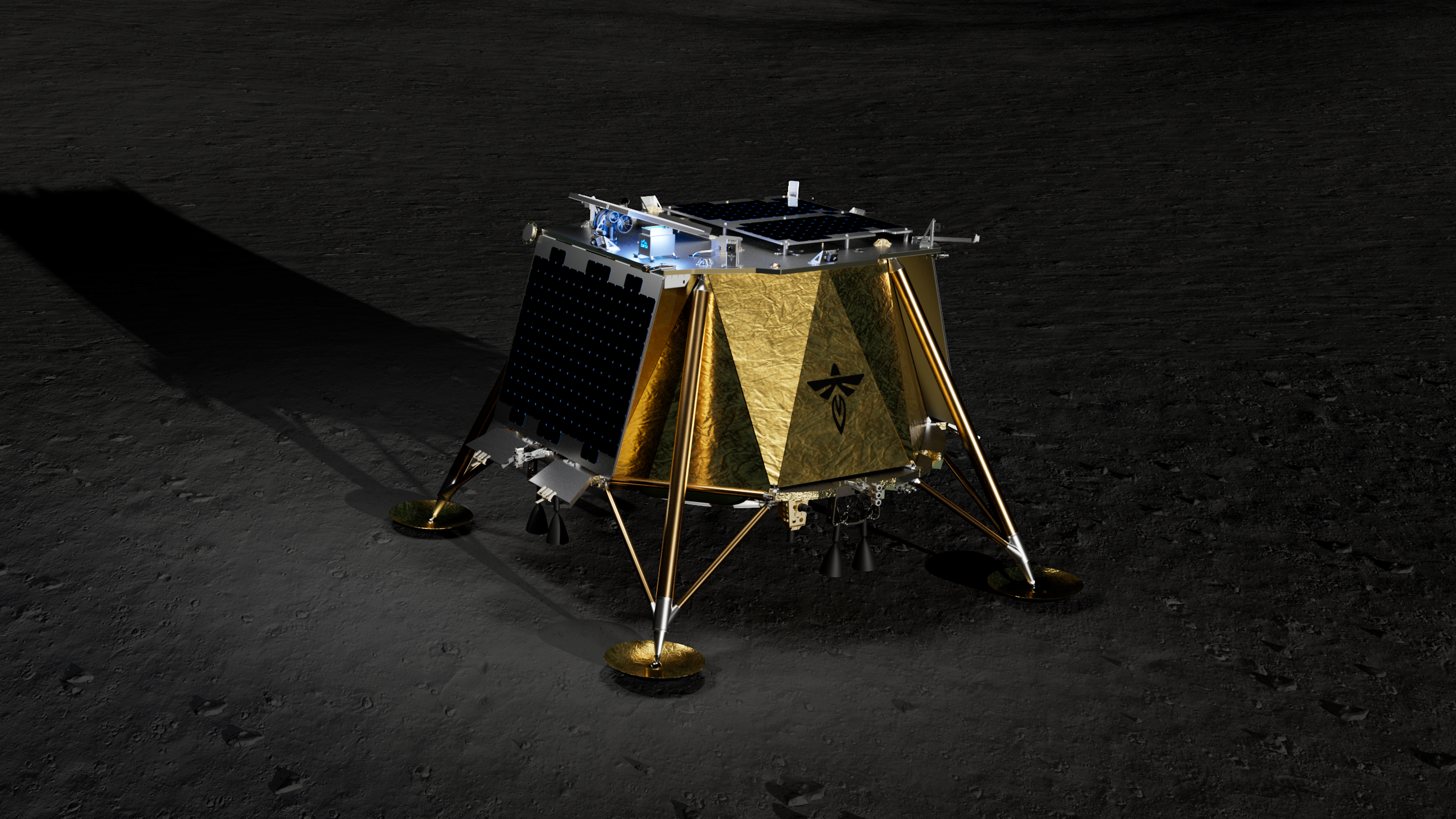
*Rendering of Firefly’s Blue Ghost lunar lander with Zeno Power’s Survive-the-Night Package hosted on the top deck
CEDAR PARK, Texas, Aug. 19, 2026 (GLOBE NEWSWIRE) -- Firefly Aerospace (Nasdaq: FLY), a market leading space and defense technology company, today announced a commercial payload agreement with Zeno Power Systems to deliver its Survive-the-Night Package with a Radioisotope Heater Unit (RHU) on a Firefly mission to the Moon’s near side. Scheduled to launch no earlier than 2028, the mission will demonstrate Zeno’s technologies designed to enable spacecraft, lunar infrastructure, and future Moon Base systems to operate through the extreme cold and prolonged darkness of the 14-day lunar night.
"Firefly is proud to collaborate with innovative companies like Zeno to solve one of the most complex challenges of lunar exploration—surviving the lunar night," said Ray Allensworth, Vice President of Spacecraft at Firefly Aerospace. "Our first Blue Ghost mission gave us firsthand insight into the Moon's extreme thermal environment, where we measured temperatures ranging from more than 230°F during the lunar day to below -275°F at night. Now we’re looking forward to advancing technologies that can extend missions beyond sunset and support long-duration surface operations required for NASA’s Moon Base initiative and the growing lunar economy."
Zeno’s Survive-the-Night Package will be onboarded to one of Firefly’s existing Blue Ghost mission returning to the Moon’s near side as part of NASA’s Commercial Lunar Payload Services (CLPS) initiative. Upon landing, Blue Ghost will first operate multiple NASA CLPS payloads using solar power for the full lunar day, equivalent to approximately 14 Earth days. Zeno’s payload will then operate during the lunar night and transmit operational data back to Earth.
Zeno’s payload is comprised of a 5 Watts thermal americium-241 RHU and dedicated platform that includes structural, communications, electrical power, command and data handling, and thermal management subsystems. The RHU generates passive thermal energy through the natural decay of radioactive material, providing continuous heat without relying on solar power. The lightweight, compact system is designed to keep critical spacecraft components operational during the frigid lunar night, when temperatures can fall below -280°F, as well as within permanently shadowed regions that never receive direct sunlight.
"Hardware capable of surviving the extreme cold of the lunar night will be essential to enabling sustained operations on the Moon," said Tyler Bernstein, CEO and Co-Founder of Zeno Power. "NASA’s Moon Base Program has identified the need for technologies such as radioisotope power systems to support future lunar exploration, and Zeno is proud to answer that call to demonstrate this capability aboard Firefly's Blue Ghost mission. As demand for long-duration lunar infrastructure grows, we are building the production capacity to support future commercial and government missions."
This demonstration on Blue Ghost will provide critical data to advance radioisotope and nuclear-powered technologies for future robotic and human lunar missions requiring extended operations beyond sunset. The mission builds on the success of Blue Ghost Mission 1, which achieved the first successful commercial Moon landing in 2025, and follows Firefly’s upcoming missions to the Moon’s far side and Gruithuisen Domes.
About Firefly Aerospace
Firefly Aerospace is a space and defense technology company on a mission to reliably and repeatedly launch, land, and operate space systems from Earth to the Moon and beyond. As the partner of choice for responsive space missions, Firefly is the first commercial company to launch a satellite to orbit with approximately 24-hour notice and the first to achieve a successful landing on the Moon. Established in 2017, Firefly’s engineering, manufacturing, and test facilities are co-located in central Texas to enable rapid innovation and vertical integration for the company’s small- to medium-lift launch vehicles, lunar landers, and orbital vehicles. For more information, visit www.fireflyspace.com.
Forward-Looking Statements
This press release contains “forward-looking statements” including, but not limited to, statements regarding expected demonstrations, RHU capabilities, mission timing, necessary operations, statements of Firefly’s VP of spacecraft, and other statements regarding Firefly’s future expectations, beliefs, plans, objectives, financial condition, assumptions, future events, or performance that are not historical facts. In some cases, you can identify forward-looking statements because they contain words such as “expand,” “help,” “may,” “pave,” “will,” “expects,” “plans,” “anticipates,” “could,” “would,” “target”, “set,” “intends,” “support,” and “believes.” There may also be negative words or other similar terms or expressions that concern our expectations, strategy, plans, or intentions. Not all forward-looking statements contain such identifying words. The inclusion of forward-looking statements should not be regarded as a representation that such plans, estimates, or expectations will be achieved.
Various risks that could cause actual results to differ from those expressed by the forward-looking statements included in this press release include, but are not limited to: our failure to manage our growth effectively, including the increasing technological complexity of our business, and our ability to achieve and maintain profitability; the potential for delayed or failed launches, and any failure of our launch vehicles and spacecraft to operate as intended; our inability to deliver software on time or of a quality that our customers demand; the hazards and operational risks that our products and service offerings are exposed to, including the wide and unique range of risks due to the unpredictability of space; the inability to realize our backlog; the fluctuation of our operating results; adverse publicity stemming from any incident involving us, our competitors, or our customers; the failure to adequately protect our proprietary intellectual property rights; our inability to comply with our contractual obligations; and other risk factors set forth in our filings with the Securities and Exchange Commission.
Readers are cautioned not to place undue reliance on the forward-looking statements contained herein, which speak only as of the date hereof. These statements are based on management’s current expectations, assumptions, and beliefs concerning future developments, which are inherently subject to uncertainties, risks, and changes in circumstances that are difficult to predict. We cannot assure you that the events reflected in the forward-looking statements will occur; actual events could differ materially from those described in the forward-looking statements. We undertake no intent or obligation to publicly update or revise any of the estimates and other forward-looking statements made in this announcement, whether as a result of new information, future events or otherwise, except as required by law.
Media Contact
press@fireflyspace.com
Photos accompanying this announcement are available at
https://www.globenewswire.com/NewsRoom/AttachmentNg/760bcab0-d855-471f-a9e5-cf1fa60c205b
https://www.globenewswire.com/NewsRoom/AttachmentNg/2f1eedd8-d4b1-4f2f-b082-676162a4b181

FAQ
AI-generated questions and answers. How Rhea-AI works. Not financial advice.