
Firefly Aerospace Announces Extension of Multi-Launch Agreement with Lockheed Martin Through 2031
Firefly Aerospace (Nasdaq: FLY) has extended its multi-launch agreement with Lockheed Martin by two years, enabling the use of its upgraded Alpha Block II rocket configuration for up to 25 dedicated launches through 2031.
Rhea-AI Summary
Firefly Aerospace (Nasdaq: FLY) has extended its multi-launch agreement with Lockheed Martin by two years, enabling the use of its upgraded Alpha Block II rocket configuration for up to 25 dedicated launches through 2031.
According to Firefly Aerospace, Alpha Block II is designed to enhance manufacturability, reliability and responsiveness, supporting higher flight rates and meeting demand for dedicated launch services in the 1,000 kg payload class. The company says the upgrade broadens support for national security, tactically responsive space, hypersonic testing and commercial satellite missions. Firefly is also collaborating with Lockheed Martin and Seagate Space on sea-based launch concepts using Seagate’s Gateway offshore platform to provide rapid, flexible access to space from diverse locations.
Positive
- Multi-launch agreement extended two years, enabling up to 25 Alpha Block II launches through 2031
- Alpha Block II upgrade targets higher manufacturability, reliability and responsiveness for 1,000 kg-class missions
- Sea-based launch collaboration with Lockheed Martin and Seagate Space using the Gateway offshore platform
Details
News Market Reaction – FLY
On Aug 12, the first trading day after this news, FLY closed 0.68% above the previous close. Argus tracked a trough of -4.2% from its starting point during tracking. Our momentum scanner recorded 12 alerts for this stock that day. Relative volume reached 11.3x the daily average during tracking.
Data tracked by StockTitan Argus for the Aug 12 session.
Key Figures
- Contract extension
- 2 years
- Multi-launch agreement extension with Lockheed Martin
- Dedicated launches
- up to 25 launches
- Alpha Block II agreement through 2031
- Agreement term
- through 2031
- Extended multi-launch agreement
- Payload class
- 1,000 kg
- Dedicated launch services
Historical Context
-
Company scheduled second-quarter 2026 results and investor conference call
-
NASA JPL awarded Firefly a $13 million Mars mission aeroshell subcontract
-
NASA awarded Firefly a $144 million accelerated Blue Ghost lunar mission
-
Firefly and SSC Space completed milestones for launches from Sweden
-
Firefly announced acquisition of Space-ng for autonomous space operations
24h Move is the share-price change in the day after each event; other market factors may also have contributed.
AI-generated analysis. How Rhea-AI works. Not financial advice.




Extended partnership leverages upgraded Alpha Block II configuration to deliver up to 25 dedicated launches
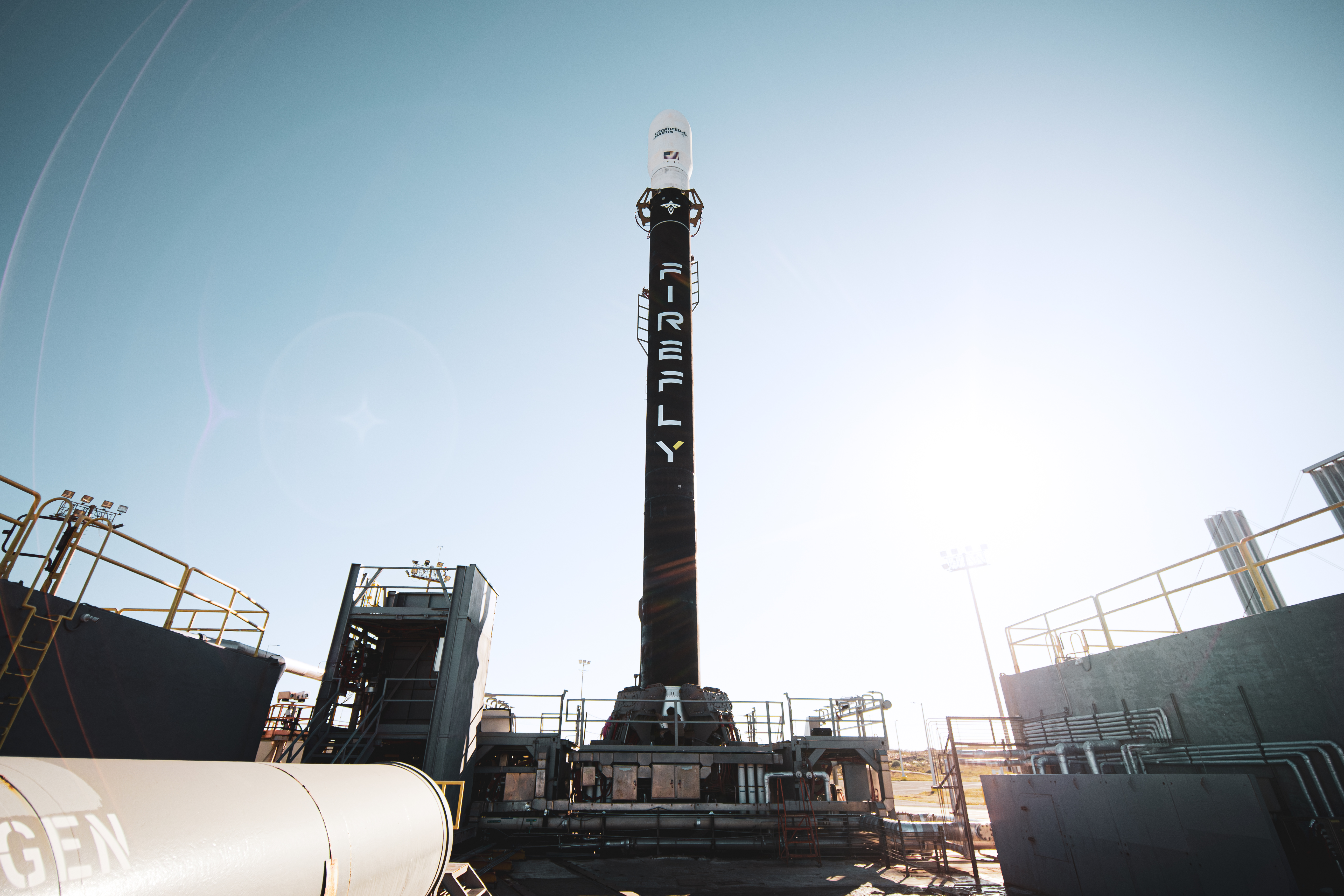
*Firefly’s Alpha Flight 7 rocket at Space Launch Complex 2 in Vandenberg Space Force Base
CEDAR PARK, Texas, Aug. 11, 2026 (GLOBE NEWSWIRE) -- Firefly Aerospace (Nasdaq: FLY), a market leading space and defense technology company, today announced a two-year contract extension of its multi-launch agreement with Lockheed Martin, utilizing its Alpha Block II rocket configuration for up to 25 launches through 2031.
"This extension reflects Firefly’s continued support to Lockheed Martin and their critical missions anchored by our Block II configuration, which is the next evolution of our launch capabilities," said Jason Kim, CEO of Firefly Aerospace. "As we upgrade to Alpha Block II, we're increasing the manufacturability, reliability, and responsiveness of our rockets to support a higher flight rate and provide assured access to space when our customers need it most. This upgraded configuration allows us to increase Alpha’s production rate and fills a void at a time when launch options are in high demand, but payload capacity is scarce and launch site diversity is limited."
The agreement extension underscores the growing demand for dedicated launch services in the 1,000 kg payload class as government and commercial customers seek greater control over launch schedules and direct delivery to their preferred orbits. With the Alpha Block II upgrade, Firefly is well positioned to support a broader class of national security and commercial missions that require responsive space access. In addition to improving reliability and production rate, Block II is designed to expand Alpha’s deployable launch capabilities for tactically responsive space missions, hypersonic testing, and commercial satellite launches for domestic and international customers.
Firefly and Lockheed Martin are further collaborating on sea-based launch solutions with Seagate Space to enhance national security missions. The three companies are working together on mission-application concepts and flight-demonstration projects that leverage Seagate’s Gateway offshore launch platform. This sea-based launch facility, combined with Firefly’s responsive Alpha launch vehicle, will provide rapid, flexible access to space from diverse locations to support the warfighter’s evolving operational requirements.
About Firefly Aerospace
Firefly Aerospace is a space and defense technology company on a mission to reliably and repeatedly launch, land, and operate space systems from Earth to the Moon and beyond. As the partner of choice for responsive space missions, Firefly is the first commercial company to launch a satellite to orbit with approximately 24-hour notice and the first to achieve a successful landing on the Moon. Established in 2017, Firefly’s engineering, manufacturing, and test facilities are co-located in central Texas to enable rapid innovation and vertical integration for the company’s small- to medium-lift launch vehicles, lunar landers, and orbital vehicles. For more information, visit www.fireflyspace.com.
Forward-Looking Statement
This press release contains “forward-looking statements” including, but not limited to, statements regarding expectations regarding market demand, Firefly’s market positioning, Block II capabilities, statements of Firefly’s chief executive officer, and other statements regarding Firefly’s future expectations, beliefs, plans, objectives, financial condition, assumptions, future events, or performance that are not historical facts. In some cases, you can identify forward-looking statements because they contain words such as “expand,” “grow,” “may,” “will,” “expects,” “plans,” “anticipates,” “could,” “would,” “target”, “intends,” “support,” and “believes.” There may also be negative words or other similar terms or expressions that concern our expectations, strategy, plans, or intentions. Not all forward-looking statements contain such identifying words. The inclusion of forward-looking statements should not be regarded as a representation that such plans, estimates, or expectations will be achieved.
Various risks that could cause actual results to differ from those expressed by the forward-looking statements included in this press release include, but are not limited to: our failure to manage our growth effectively, including the increasing technological complexity of our business, and our ability to achieve and maintain profitability; the potential for delayed or failed launches, and any failure of our launch vehicles and spacecraft to operate as intended; our inability to deliver software on time or of a quality that our customers demand; the hazards and operational risks that our products and service offerings are exposed to, including the wide and unique range of risks due to the unpredictability of space; the inability to realize our backlog; the fluctuation of our operating results; adverse publicity stemming from any incident involving us, our competitors, or our customers; the failure to adequately protect our proprietary intellectual property rights; our inability to comply with our contractual obligations; and other risk factors set forth in our filings with the Securities and Exchange Commission.
Readers are cautioned not to place undue reliance on the forward-looking statements contained herein, which speak only as of the date hereof. These statements are based on management’s current expectations, assumptions, and beliefs concerning future developments, which are inherently subject to uncertainties, risks, and changes in circumstances that are difficult to predict. We cannot assure you that the events reflected in the forward-looking statements will occur; actual events could differ materially from those described in the forward-looking statements. We undertake no intent or obligation to publicly update or revise any of the estimates and other forward-looking statements made in this announcement, whether as a result of new information, future events or otherwise, except as required by law.
Media Contact press@fireflyspace.com
A photo accompanying this announcement is available at https://www.globenewswire.com/NewsRoom/AttachmentNg/898b999e-d881-4fc8-899d-bc31ac02f843

FAQ
AI-generated questions and answers. How Rhea-AI works. Not financial advice.