
Firefly Aerospace Receives $13 Million NASA JPL Subcontract to Build Aeroshell for SkyFall Mars Mission
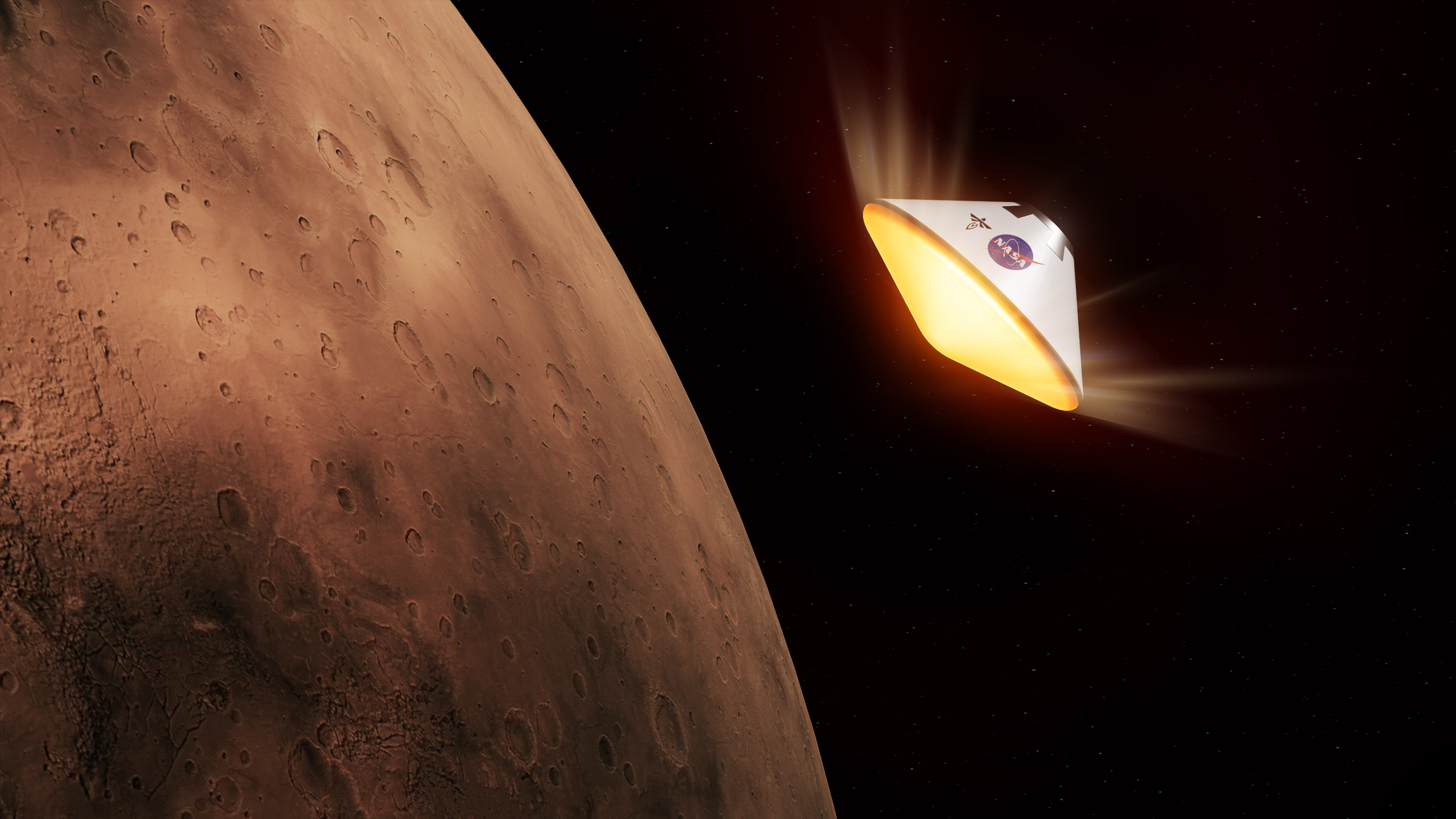
Firefly Aerospace (Nasdaq: FLY) received a $13 million NASA JPL subcontract to manufacture, test, and deliver the aeroshell (backshell and heatshield) for the SkyFall Mars mission, targeted for launch in late 2028.
Rhea-AI Summary
Firefly Aerospace (Nasdaq: FLY) received a $13 million NASA JPL subcontract to manufacture, test, and deliver the aeroshell (backshell and heatshield) for the SkyFall Mars mission, targeted for launch in late 2028.
The aeroshell will be developed in Firefly’s new Gloworks lab and built and tested at its Rocket Ranch in Texas using composite technologies from its Blue Ghost lunar landers, Elytra orbiters, and Alpha and Eclipse launch vehicles.
Positive
- $13 million JPL subcontract for SkyFall Mars aeroshell
- New Mars mission work leverages Blue Ghost, Elytra, Alpha, Eclipse technologies
- Gloworks innovation lab engaged on first external mission contract
- Rocket Ranch facilities and test capabilities utilized for structural and flight testing
- Multiple upcoming lunar missions under NASA CLPS initiative
- Facilities in central Texas recently doubled in size for higher spacecraft output
Negative
- None.
Details
Market reaction after SkyFall aeroshell contract award: FLY -8.36% in the Jul 7 session
In the Jul 7 session, FLY declined 8.36%, reflecting a notable negative market reaction. Argus tracked a trough of -9.3% from its starting point during tracking. Our momentum scanner triggered 15 alerts that day, indicating notable trading interest and price volatility.
Data tracked by StockTitan Argus on the day of publication.
Key Figures
- NASA JPL subcontract value
- $13 million
- Aeroshell for NASA’s SkyFall Mars mission
- Mission launch target
- late 2028
- Planned launch window for SkyFall Mars mission
- SkyFall helicopters
- three helicopters
- Heritage Mars helicopters deployed by SkyFall mission
- Upcoming lunar missions
- four missions
- Future lunar missions under NASA’s CLPS initiative
- MoonFall drones
- four drones
- Drones to be delivered above lunar south pole via Elytra spacecraft
Historical Context
-
Award of $144 million NASA CLPS contract for accelerated Blue Ghost mission.
-
Milestones reached toward orbital Alpha rocket launches from Esrange Space Center.
-
Acquisition of Space-ng to enhance autonomous guidance for space missions.
-
SciTec awarded U.S. Air Force contract option under CBC2 program.
-
Public offering of common stock including primary and secondary share sales.
24h Move is the share-price change in the day after each event; other market factors may also have contributed.
Key Terms
aeroshell technical
backshell technical
heatshield technical
subsurface radar technical
AI-generated analysis. How Rhea-AI works. Not financial advice.




Firefly to leverage proven composite manufacturing expertise from its lunar landers and rockets to enable next generation of Mars exploration
CEDAR PARK, Texas, July 07, 2026 (GLOBE NEWSWIRE) -- Firefly Aerospace (Nasdaq: FLY), a market leading space and defense technology company, today announced a
“NASA’s SkyFall is Firefly’s first award coming out our new Gloworks innovation lab, which embodies our commitment to developing disruptive space technologies without disrupting our existing production lines,” said Shea Ferring, Chief Technology Officer at Firefly Aerospace. “Our deep expertise in building large composite structures for both spacecraft and rockets gives us a unique advantage to enable critical planetary missions like SkyFall. We’re further innovating these core technologies through Gloworks to push the boundaries of what’s possible and open new frontiers across our solar system.”
The SkyFall aeroshell, comprising both the backshell and heatshield, will be developed within Firefly’s new Gloworks innovation lab and manufactured at the company’s Rocket Ranch in Briggs, Texas. Firefly will utilize advanced carbon composite technologies from its proven Blue Ghost lunar landers, Elytra orbiters, and Alpha and Eclipse launch vehicles to rapidly produce high-strength, lightweight structures.
Following manufacturing, Firefly will complete rigorous structural qualification and flight acceptance testing at its Rocket Ranch to ensure the SkyFall aeroshell meets all mission requirements for the harsh environments encountered during launch, cruise, and Mars entry, descent, and landing. The company will then deliver the aeroshell to JPL for additional environmental testing at JPL’s facilities prior to integration with JPL’s SkyFall helicopters and deployment system.
Built on the success of NASA’s Ingenuity Mars Helicopter, the SkyFall helicopters will be deployed using an innovative mid-air release technique known as the “SkyFall Maneuver.” This technique utilizes an entry capsule to release the three helicopters during descent, eliminating the need for a landing platform. The helicopters will then fly to the surface and capture high-resolution surface imagery and subsurface radar data. This data will be used to obtain a better understanding of the terrain and natural forces that shaped the landing site and scout for water ice.
“Firefly is ready to support the next generation of Mars exploration with a new level of speed and affordability,” said Ray Allensworth, Vice President of Spacecraft at Firefly Aerospace. “We’ve proved our ability to execute off-Earth missions at a fraction of the cost and timeline through our successful Blue Ghost lunar mission. Now we’re applying these lessons learned and utilizing our proven technologies to continue accelerating and lowering costs for future missions to the Moon, Mars, and beyond. Everything we’re doing on the Moon yields transferrable technologies and experience that we can apply to Mars.”
Firefly is making significant progress across multiple missions to the Moon, including four upcoming lunar missions as part of NASA’s Commercial Lunar Payload Services (CLPS) initiative. Firefly also recently received a JPL subcontract to deliver four drones above the lunar south pole with its Elytra spacecraft in support of NASA’s MoonFall mission.
The company continues to ramp up spacecraft production and recently doubled the size of its facilities in central Texas and expanded its spacecraft cleanroom to enable an assembly line of lunar landers and orbital vehicles in support of multiple missions a year to the Moon and beyond.
About Firefly Aerospace
Firefly Aerospace is a space and defense technology company on a mission to reliably and repeatedly launch, land, and operate space systems from Earth to the Moon and beyond. As the partner of choice for responsive space missions, Firefly is the first commercial company to launch a satellite to orbit with approximately 24-hour notice and the first to achieve a successful landing on the Moon. Established in 2017, Firefly’s engineering, manufacturing, and test facilities are co-located in central Texas to enable rapid innovation and vertical integration for the company’s small- to medium-lift launch vehicles, lunar landers, and orbital vehicles. For more information, visit www.fireflyspace.com.
Forward-Looking Statement
This press release contains “forward-looking statements” including, but not limited to, statements regarding expectations regarding timing and expected outcomes of the SkyFall mission, composition and testing specifics, deployment expectations and capabilities, statements of Firefly’s chief technology officer and vice president of spacecraft and other statements regarding Firefly’s future expectations, beliefs, plans, objectives, financial condition, assumptions, future events, or performance that are not historical facts. In some cases, you can identify forward-looking statements because they contain words such as “enable,” “demonstrate,” “may,” “will,” “expects,” “plans,” “anticipates,” “could,” “would,” “target”, “intends,” “support,” and “believes.” There may also be negative words or other similar terms or expressions that concern our expectations, strategy, plans, or intentions. Not all forward-looking statements contain such identifying words. The inclusion of forward-looking statements should not be regarded as a representation that such plans, estimates, or expectations will be achieved.
Various risks that could cause actual results to differ from those expressed by the forward-looking statements included in this press release include, but are not limited to: our failure to manage our growth effectively, including the increasing technological complexity of our business, and our ability to achieve and maintain profitability; the potential for delayed or failed launches, and any failure of our launch vehicles and spacecraft to operate as intended; our inability to deliver software on time or of a quality that our customers demand; the hazards and operational risks that our products and service offerings are exposed to, including the wide and unique range of risks due to the unpredictability of space; the inability to realize our backlog; the fluctuation of our operating results; adverse publicity stemming from any incident involving us, our competitors, or our customers; the failure to adequately protect our proprietary intellectual property rights; our inability to comply with our contractual obligations; and other risk factors set forth in our filings with the Securities and Exchange Commission.
Readers are cautioned not to place undue reliance on the forward-looking statements contained herein, which speak only as of the date hereof. These statements are based on management’s current expectations, assumptions, and beliefs concerning future developments, which are inherently subject to uncertainties, risks, and changes in circumstances that are difficult to predict. We cannot assure you that the events reflected in the forward-looking statements will occur; actual events could differ materially from those described in the forward-looking statements. We undertake no intent or obligation to publicly update or revise any of the estimates and other forward-looking statements made in this announcement, whether as a result of new information, future events or otherwise, except as required by law.
Media Contact
press@fireflyspace.com
A photo accompanying this announcement is available at https://www.globenewswire.com/NewsRoom/AttachmentNg/b7af4838-e10c-4634-ac07-85bd8623534f

FAQ
AI-generated questions and answers. How Rhea-AI works. Not financial advice.