
Firefly Aerospace Successfully Launches Alpha Flight 7
Firefly Aerospace (Nasdaq: FLY) successfully launched Alpha Flight 7 on March 11, 2026 from Vandenberg SFB, completing orbital insertion and delivering a demonstrator payload for Lockheed Martin.
Sentiment and the balance of points
Rhea-AI Sentiment reads the wording of the document, how positive or negative its language is on a 1 to 5 scale. The balance of points shown with the takes weighs what the document actually discloses, so the two can disagree, for example when a trial that missed its main goal is described in upbeat language.
Rhea-AI Summary
Firefly Aerospace (Nasdaq: FLY) successfully launched Alpha Flight 7 on March 11, 2026 from Vandenberg SFB, completing orbital insertion and delivering a demonstrator payload for Lockheed Martin.
Flight 7 validated a stage two engine relight and key Alpha Block II upgrades, including a new in‑house avionics suite, enhanced thermal protection, and structural improvements ahead of Flight 8.
Positive
- Delivered a demonstrator payload to Lockheed Martin
- Validated a stage two engine relight in flight
- Tested in‑house avionics and enhanced thermal protection
- Planned Block II upgrades include a 7‑foot length increase and stronger composite structures
Negative
- Full Block II configuration not yet flight‑proven; final milestones remain before Flight 8
- Operational changes (consolidated batteries/automated manufacturing) may require integration time and validation
Details
News Market Reaction – FLY
On Mar 12, the first trading day after this news, FLY closed 12.77% above the previous close.
Data tracked by StockTitan Argus for the Mar 12 session.
Key Figures
- Launch time
- 5:50 pm PDT
- Alpha Flight 7 liftoff from Vandenberg Space Force Base
- Mission number
- Alpha Flight 7
- Stairway to Seven mission designation
- Next mission
- Flight 8
- Planned launch of full Block II configuration
- Block II length increase
- 7-foot increase
- Planned enhancement to Alpha’s vehicle length
- Current price
- $20.60
- Price before/around news; up 6.24% over 24h
- 52-week high
- $73.80
- Pre-news 52-week high level
- 52-week low
- $10.72
- Pre-news 52-week low level
- Market cap
- $3,087,879,256
- Pre-news equity value
Historical Context
-
Announced Alpha Block II upgrade and outlined Flight 7 and Flight 8 plans.
-
Added to Russell 2000 and Russell 3000 benchmark indexes.
-
Appointed new COO to scale operations and enhance reliability.
-
Added Volta wireless power receiver to Blue Ghost Mission 2 payloads.
-
Announced participation in multiple defense and space investor events.
24h Move is the share-price change in the day after each event; other market factors may also have contributed.
Key Terms
orbital insertion technical
avionics technical
thermal protection system technical
carbon composite technical
stage two engine relight technical
AI-generated analysis. How Rhea-AI works. Not financial advice.




Stairway to Seven mission tested and validated key Alpha Block II upgrades ahead of Flight 8
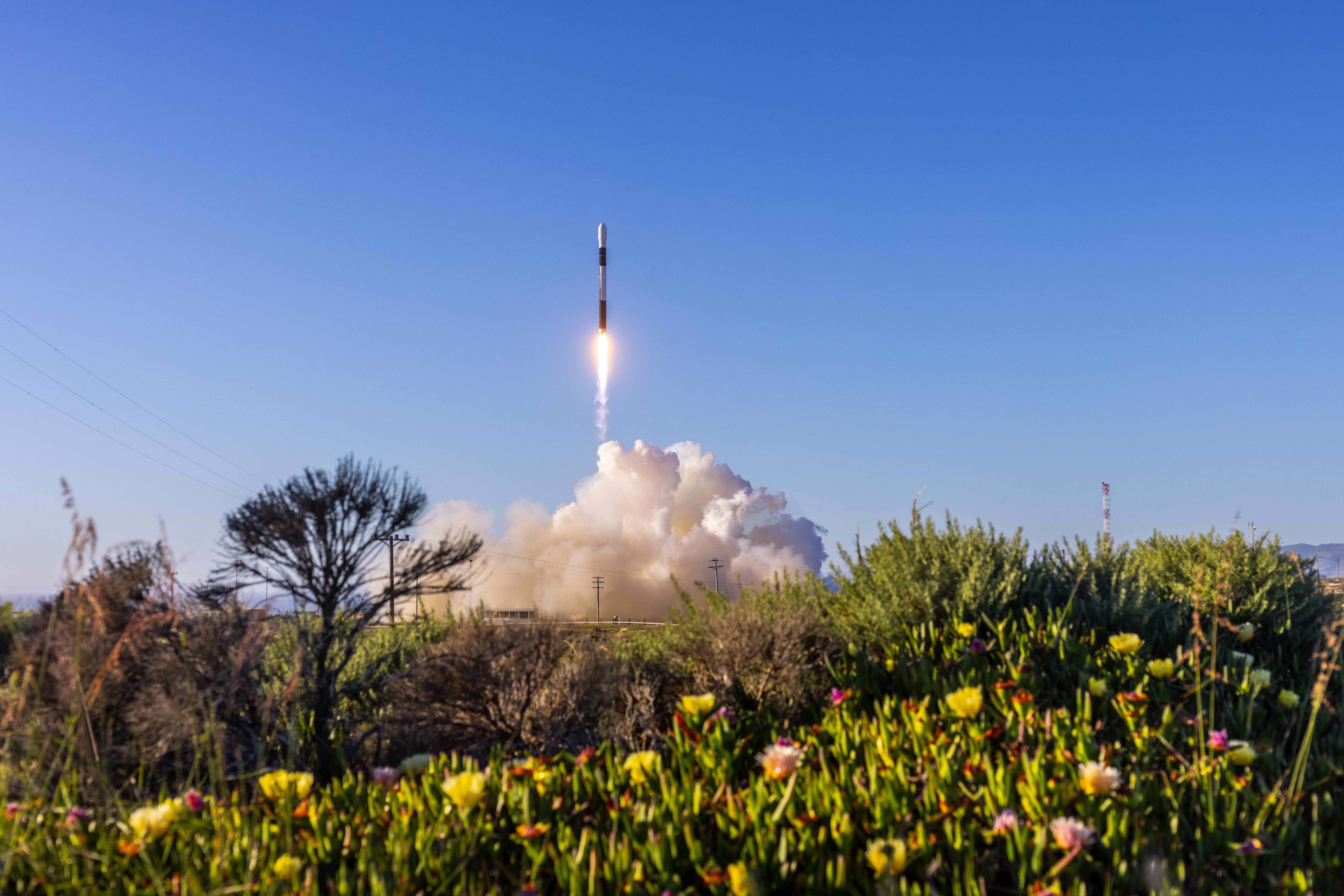
LOMPOC, Calif., March 11, 2026 (GLOBE NEWSWIRE) -- Firefly Aerospace (Nasdaq: FLY), a market leading space and defense technology company, today announced the successful launch of its Alpha Flight 7 Stairway to Seven mission. Alpha lifted off from Firefly’s Space Launch Complex 2 at the Vandenberg Space Force Base at 5:50 pm PDT on March 11 before completing an orbital insertion and delivering a demonstrator payload for Lockheed Martin.
Firefly’s Alpha rocket also performed a stage two engine relight and validated key Alpha Block II upgrades, including a new in-house avionics suite and enhanced thermal protection system, ahead of the full Block II configuration upgrade planned for Flight 8.
“Alpha Flight 7 was flawlessly executed with all mission requirements completed, further proving the resiliency, innovation, and passion of the Firefly team,” said Jason Kim, CEO of Firefly Aerospace. “Over the last several months, we took a hard look at our processes across engineering, production, test, integration, and operations and invested the time required to make a series of improvements to ensure a higher level of quality and reliability in every Alpha we deliver and launch as we move to our Block II upgrade.”
The Firefly team is now working to complete the final milestones for Alpha Flight 8 that is set to launch the full Block II configuration upgrade designed to enhance reliability and manufacturability across the vehicle. The upgrades include a 7-foot increase to Alpha’s length, consolidated batteries and avionics built in house, improved thermal protection system, and stronger carbon composite structures built with automated machinery.
“Flight 7 served as a critical opportunity to validate Alpha’s performance ahead of our Block II upgrade, and this team knocked it out of the park,” said Adam Oakes, Vice President of Launch at Firefly Aerospace. “I’m incredibly proud of the Firefly team for continuing to define perseverance. We have full confidence in our Alpha rocket, and we’re committed to continuous improvement as we roll out Block II. We want to thank Space Launch Delta 30 and our customers for their ongoing collaboration and support.”
About Firefly Aerospace
Firefly Aerospace is a space and defense technology company that enables government and commercial customers to launch, land, and operate in space – anywhere, anytime. As the partner of choice for responsive space missions, Firefly is the only commercial company to launch a satellite to orbit with approximately 24-hour notice. Firefly is also the only company to achieve a fully successful landing on the Moon. Established in 2017, Firefly’s engineering, manufacturing, and test facilities are co-located in central Texas to enable rapid innovation. The company’s small- to medium-lift launch vehicles, lunar landers, and orbital vehicles are built with common flight-proven technologies to enable speed, reliability, and cost efficiencies for each mission from low Earth orbit to the Moon and beyond. For more information, visit www.fireflyspace.com.
Forward-Looking Statement
This press release contains “forward-looking statements” including, but not limited to, statements regarding the expectations regarding Alpha Flight 8, the benefits and expectations of the Alpha Block II upgrade and other statements regarding Firefly’s future expectations, beliefs, plans, objectives, financial conditions, assumptions, future events, or performance that are not historical facts. In some cases, you can identify forward-looking statements because they contain words such as “set,” “prepare,” “may,” “will,” “expects,” “plans,” “anticipates,” “could,” “would,” “intends,” and “believes.” There may also be negative words or other similar terms or expressions that concern our expectations, strategy, plans, or intentions. Not all forward-looking statements contain such identifying words. The inclusion of forward-looking statements should not be regarded as a representation that such plans, estimates, or expectations will be achieved. Readers are cautioned not to place undue reliance on the forward-looking statements contained herein, which speak only as of the date hereof. These statements are based on management’s current expectations, assumptions, and beliefs concerning future developments, which are inherently subject to uncertainties, risks, and changes in circumstances that are difficult to predict. We cannot assure you that the events reflected in the forward-looking statements will occur; actual events could differ materially from those described in the forward-looking statements. In addition to the risks and uncertainties of our ordinary business operations and conditions in the general economy and markets in which we compete, the forward-looking statements in this press release are subject to the risks, uncertainties, and other factors disclosed in our filings with the U.S. Securities and Exchange Commission, including our Form 10-Q for the quarterly period ended September 30, 2025, which risks, uncertainties, and other factors could cause actual events to differ materially from those described in the forward-looking statements. Any forward-looking statement speaks only as of the date as of which such statement is made, and except as required by law, we undertake no obligation to update or revise publicly any forward-looking statements whether because of new information, future events; etc.
Media Contact
press@fireflyspace.com
Video/Image Gallery
Flickr | Alpha Flight 7 Stairway to Seven
A photo accompanying this announcement is available at https://www.globenewswire.com/NewsRoom/AttachmentNg/60197458-0a6b-4175-8d79-16628937a633

FAQ
AI-generated questions and answers. How Rhea-AI works. Not financial advice.