
Firefly Aerospace Adds Volta’s Wireless Power Receiver to Blue Ghost Mission on Far Side of the Moon
Firefly Aerospace (Nasdaq: FLY) will host Volta Space Technologies’ LightPort wireless power receiver on the Blue Ghost Mission 2 lander to demonstrate laser-based power transfer on the far side of the Moon.
Sentiment and the balance of points
Rhea-AI Sentiment reads the wording of the document, how positive or negative its language is on a 1 to 5 scale. The balance of points shown with the takes weighs what the document actually discloses, so the two can disagree, for example when a trial that missed its main goal is described in upbeat language.
Rhea-AI Summary
Firefly Aerospace (Nasdaq: FLY) will host Volta Space Technologies’ LightPort wireless power receiver on the Blue Ghost Mission 2 lander to demonstrate laser-based power transfer on the far side of the Moon.
The payload will test Volta’s LightGrid concept by validating a lunar surface receiver and integration into surface power distribution architectures. Blue Ghost Mission 2 will carry six payloads from five countries, including NASA’s LuSEE-Night and ESA’s Lunar Pathfinder. Firefly’s Elytra Dark vehicle will act as transfer vehicle and relay, then remain in lunar orbit for more than five years to provide ultraviolet and visible imaging and cislunar situational awareness.
Positive
- First LightPort demo on far side of the Moon
- Blue Ghost Mission 2 will carry six payloads from five countries
- Elytra Dark to remain in lunar orbit for more than five years providing imaging
- Integration with NASA and ESA payloads under CLPS tasking
Negative
- None.
Details
News Market Reaction – FLY
On Dec 10, the day this news came out, FLY closed 9.46% above the previous close.
Data tracked by StockTitan Argus for the Dec 10 session.
Key Figures
- Payload count
- 6 payloads
- Total payloads on Blue Ghost Mission 2
- Participating countries
- 5 countries
- Countries represented on Blue Ghost Mission 2 payloads
- Lunar imaging duration
- More than 5 years
- Planned operational life of Elytra Dark in lunar orbit
- Mission number
- Second Blue Ghost mission
- Blue Ghost Mission 2 far-side lunar lander
- LightPort instance
- First LightPort
- Initial LightPort receiver demonstration on the lunar surface
Historical Context
-
Management highlighted broad investor conference participation in late 2025.
-
Q3 2025 results with strong revenue growth and new NASA contracts.
-
Completed SciTec acquisition, adding defense software and classified sites.
-
Announced timing and access details for upcoming Q3 2025 earnings release.
-
Announced definitive agreement to acquire SciTec for cash and stock.
24h Move is the share-price change in the day after each event; other market factors may also have contributed.
Key Terms
wireless power receiver technical
lunar orbit power grid technical
laser-receiver system technical
lunar imaging service technical
ultraviolet technical
cislunar situational awareness technical
AI-generated analysis. How Rhea-AI works. Not financial advice.




Hosted onboard Firefly’s Blue Ghost lander, Volta’s LightPort will demonstrate technologies to survive the lunar night and support a lunar orbit power grid
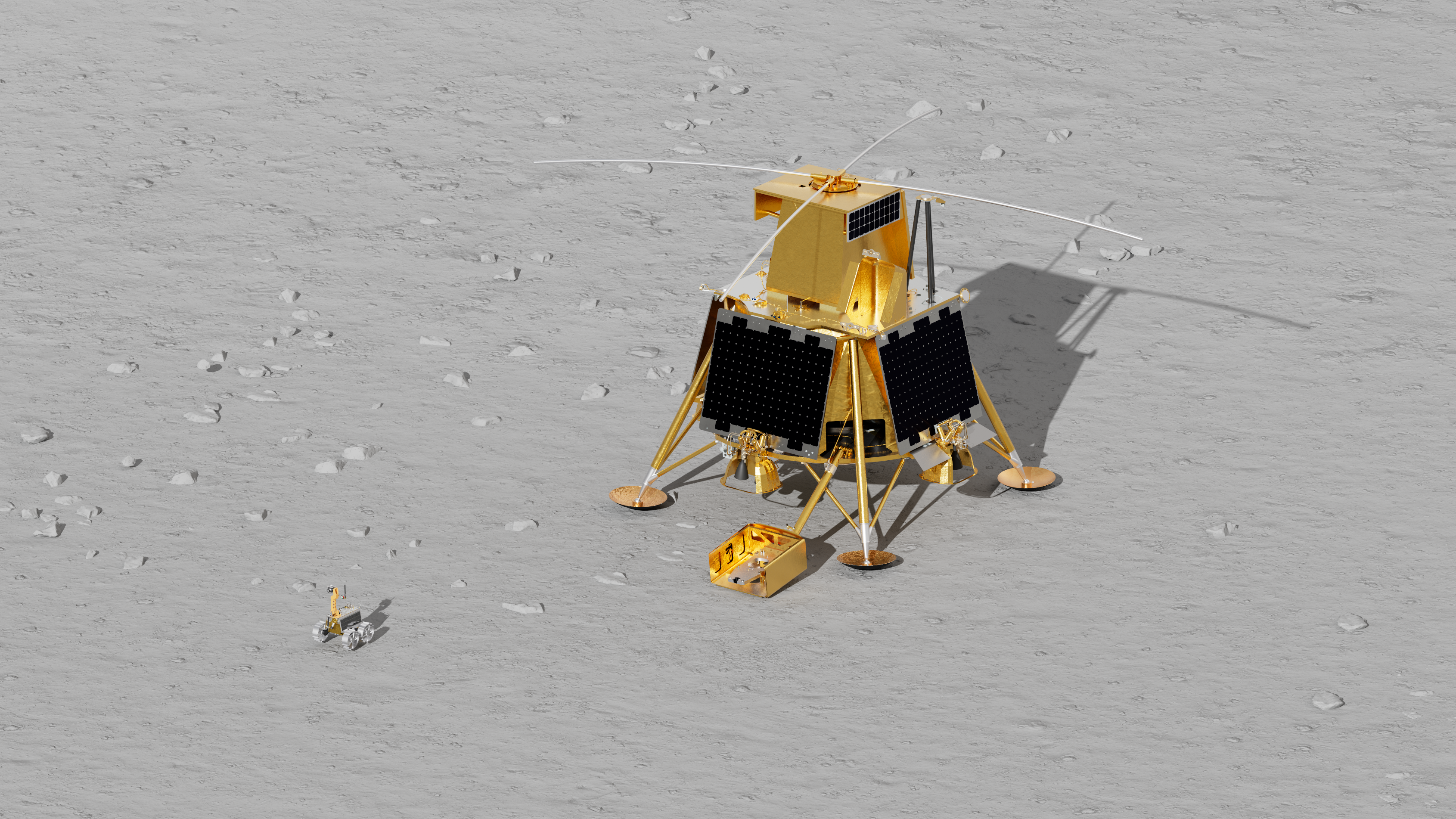
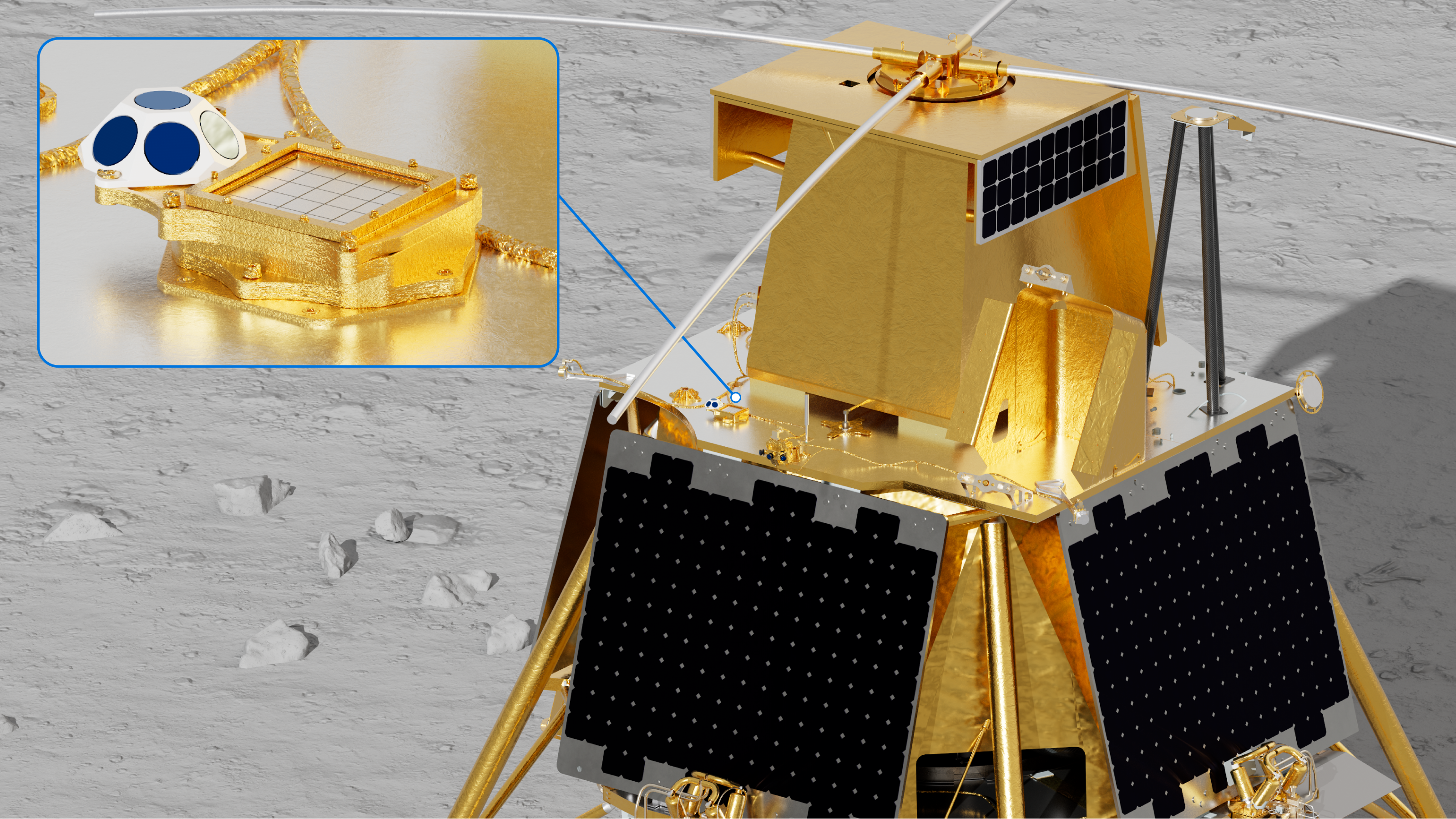
CEDAR PARK, Texas, Dec. 10, 2025 (GLOBE NEWSWIRE) -- Firefly Aerospace (Nasdaq: FLY), a market leading space and defense technology company, today announced a new commercial payload agreement with Volta Space Technologies to host a wireless power receiver on Firefly’s Blue Ghost Mission 2 lander on the far side of the Moon. The payload will serve as a technology demonstration for Volta’s planned lunar power network, called LightGrid.
“Firefly is proud to welcome Volta to our second Blue Ghost mission and serve as a core partner in the ongoing development of lunar power utilities,” said Jason Kim, CEO of Firefly Aerospace. “Our international mission will enable critical technology demonstrations that lay the groundwork for lasting operations on the Moon. Longer term, our Blue Ghost landers and Elytra orbiters are well equipped to support Volta’s larger vision for a lunar power network, and we look forward to seeing the evolution of our collaboration in the years ahead.”
Volta’s planned LightGrid consists of a network of satellites in lunar orbit that collect solar energy and transmit it via laser to receivers known as LightPorts that are integrated on customer landers, rovers, and infrastructure on the Moon’s surface. The Volta payload hosted on Blue Ghost Mission 2 will be used to test and validate the first LightPort, demonstrating how surface users can tap into Volta’s power grid. The mission will further demonstrate how Volta’s dedicated laser-receiver system can be integrated into centralized surface power generation architectures to enable local surface-to-surface power distribution and provide redundant power capabilities as the lunar ecosystem develops.
“Partnering with Firefly on Blue Ghost Mission 2 is an important step forward for Volta and the future of lunar infrastructure,” said Justin Zipkin, CEO of Volta. “This collaboration allows us to prove our LightPort receiver in a real lunar environment and move one step closer to delivering a fully integrated power grid for the Moon."
With the addition of Volta based in Montreal, Canada, Blue Ghost Mission 2 will now carry six payloads from five different countries. Other payloads flying on Firefly’s mission include NASA’s LuSEE-Night radio telescope and User Terminal and the European Space Agency’s Lunar Pathfinder satellite as part of Firefly’s NASA Commercial Lunar Payload Services task order. Firefly also onboarded additional government and commercial payloads, including the United Arab Emirates Mohammed Bin Rashid Space Centre Rashid Rover 2 and Fleet Space Technologies’ SPIDER payload. These payloads aim to provide insights into the geological properties and minerals on the Moon, enhance lunar surface mobility, improve lunar communications, and uncover new insights about the origins of the universe.
Blue Ghost Mission 2 will also initiate Firefly’s Ocula lunar imaging service through Firefly’s Elytra Dark vehicle that is equipped with high-resolution telescopes. Elytra will first serve as a Blue Ghost transfer vehicle and communications relay for the mission and then remain operational in lunar orbit for more than five years to provide ultraviolet and visible spectrum imaging – a key capability to identify mineral deposits on the Moon’s surface, map future landing sites with higher fidelity, and enable cislunar situational awareness.
Qualification testing for the fully stacked Blue Ghost and Elytra spacecraft structure is well underway for Blue Ghost Mission 2. The team has also begun assembling flight hardware and has accepted and tested a majority of the payloads at Firefly’s spacecraft facility. For more details on the mission, visit https://fireflyspace.com/missions/blue-ghost-mission-2/.
About Firefly Aerospace
Firefly Aerospace is a space and defense technology company that enables government and commercial customers to launch, land, and operate in space – anywhere, anytime. As the partner of choice for responsive space missions, Firefly is the only commercial company to launch a satellite to orbit with approximately 24-hour notice. Firefly is also the only company to achieve a fully successful landing on the Moon. Established in 2017, Firefly’s engineering, manufacturing, and test facilities are co-located in central Texas to enable rapid innovation. The company’s small- to medium-lift launch vehicles, lunar landers, and orbital vehicles are built with common flight-proven technologies to enable speed, reliability, and cost efficiencies for each mission from low Earth orbit to the Moon and beyond. For more information, visit www.fireflyspace.com.
About Volta Space Technologies
Volta is building the energy grid for sustainable lunar operations, enabling endless and affordable power to lunar surface missions. Volta’s Optical Wireless Power Transmission (OWPT) stack has been funded in part by CSA, NASA, ESA, and the U.S. Department of War, Operational Energy-Innovation Office, and Naval Research Lab Volta will begin orbital power missions in 2028 and will subsequently extend the reach of future lunar-based power systems like nuclear fission. Volta’s long-term vision includes adding communication and positioning, navigation, and timing (PNT) services to become the dominant lunar utility provider. https://www.voltaspace.co/
Forward-Looking Statements
This press release contains “forward-looking statements” including, but not limited to, statements regarding the expected capabilities and success of the Firefly spacecraft and services and other statements regarding Firefly’s future expectations, beliefs, plans, objectives, financial conditions, assumptions or future events or performance that are not historical facts. In some cases, you can identify forward-looking statements because they contain words such as “may,” “will,” “expects,” “plans,” “anticipates,” “could,” “would,” “intends,” “believes,” or the negative of these words or other similar terms or expressions that concern our expectations, strategy, plans, or intentions. The inclusion of forward-looking statements should not be regarded as a representation that such plans, estimates or expectations will be achieved. Readers are cautioned not to place undue reliance on the forward-looking statements contained herein, which speak only as of the date hereof. These statements are based on management’s current expectations, assumptions, and beliefs concerning future developments, which are inherently subject to uncertainties, risks, and changes in circumstances that are difficult to predict. These uncertainties and risks include, but are not limited to, the risks and uncertainties set forth in our filings with the Securities and Exchange Commission. We cannot assure you that the events reflected in the forward-looking statements will occur, and actual events could differ materially from those described in the forward-looking statements. Any forward-looking statement speaks only as of the date as of which such statement is made, and except as required by law, we undertake no obligation to update or revise publicly any forward-looking statements, whether because of new information, future events, or otherwise.
Media Contacts
press@fireflyspace.com
news@voltaspace.co
Photos accompanying this announcement are available at:
https://www.globenewswire.com/NewsRoom/AttachmentNg/5c41034e-c12d-40ad-a816-9d077afbf4da
https://www.globenewswire.com/NewsRoom/AttachmentNg/13432287-602d-4084-82b8-ddfd45c2a334

FAQ
AI-generated questions and answers. How Rhea-AI works. Not financial advice.