
HII is Awarded Option Year Contract for U.S. Navy Lionfish Unmanned Undersea Vehicle Production
HII (HII) received an option year production contract for the U.S. Navy’s Lionfish small unmanned undersea vehicle, based on the REMUS 300 platform.
Rhea-AI Summary
HII (HII) received an option year production contract for the U.S. Navy’s Lionfish small unmanned undersea vehicle, based on the REMUS 300 platform. Lionfish supports mine countermeasures, ISR, anti-submarine and electronic warfare missions.
The five-year program could reach up to 200 vehicles with a total contract value of over $347 million. By the end of 2025, 42 Lionfish vehicles had been completed at HII’s Pocasset facility. Lionfish is described as the Navy’s first OTA prototype-to-production transition and the first and only cyber-compliant unmanned underwater vehicle currently in production for the service.
Positive
- Lionfish program may scale to as many as 200 vehicles over five years
- Total Lionfish contract value could exceed $347 million
- 42 Lionfish vehicles completed by end of 2025 at Pocasset facility
- First U.S. Navy OTA prototype-to-full-production transition for unmanned undersea vehicle
- Only cyber-compliant unmanned underwater vehicle currently in production for the U.S. Navy
- More than 700 REMUS vehicles delivered to over 30 countries; 90% still active
Negative
- None.
Details
News Market Reaction – HII
In the Jul 6 session, HII gained 0.89%, reflecting a mild positive market reaction.
Data tracked by StockTitan Argus on the day of publication.
Key Figures
- Total contract value
- $347 million
- Potential value of five-year Lionfish SUUV program
- Program length
- 5 years
- Duration of Lionfish SUUV program
- Program vehicle ceiling
- 200 vehicles
- Maximum scale of Lionfish SUUV production program
- Production milestone
- 42 vehicles
- 42nd Lionfish vehicle completed by end of 2025
- REMUS vehicles delivered
- more than 700
- REMUS family deliveries worldwide
- Customer countries
- over 30
- Countries operating REMUS vehicles
- NATO customers
- 14 members
- NATO countries using REMUS vehicles
- Active REMUS systems
- more than 90%
- Share of REMUS systems still in active service
Historical Context
-
Began fabrication of Flight III Arleigh Burke destroyer John F. Lehman.
-
Opened Carrier Refueling Overhaul Workcenter to support carrier RCOH work.
-
Won $418M five-year IDIQ to support Navy fleet operational readiness.
-
Delivered first REMUS 130 unmanned underwater vehicle to a U.S. ally.
-
Hosted DefenseTech LIVE 2026 event showcasing defense tech and innovation themes.
24h Move is the share-price change in the day after each event; other market factors may also have contributed.
Key Terms
other transaction authority (ota) regulatory
unmanned undersea vehicle technical
intelligence, surveillance and reconnaissance (isr) technical
electronic warfare technical
open-architecture technical
dual-use technical
AI-generated analysis. How Rhea-AI works. Not financial advice.




POCASSET, Mass., July 06, 2026 (GLOBE NEWSWIRE) -- HII, a global leader in autonomous unmanned maritime systems, has been awarded an option year production contract for the U.S. Navy’s next-generation program of record, the Lionfish small unmanned undersea vehicle (SUUV). Lionfish is based on HII’s commercial REMUS 300 platform, originally developed as part of a rapid prototyping initiative in collaboration with the U.S. Navy and the Defense Innovation Unit (DIU).
Designed to address a broad range of undersea warfare missions, Lionfish supports mine countermeasures, intelligence, surveillance and reconnaissance (ISR), anti-submarine warfare, and electronic warfare operations.
This latest option year contract continues to build the momentum of the Lionfish program, which marked a major production milestone at the close of 2025 with the completion of the 42nd Lionfish vehicle at HII’s Pocasset facility. The five-year program could scale to as many as 200 vehicles, with a total contract value exceeding
“The decision to exercise this option year production of the Lionfish program reflects the U.S. Navy’s confidence in the platform’s operational performance, reliability and adaptability,” said Duane Fotheringham, president of the Unmanned Systems group in HII’s Mission Technologies division. “Our team remains focused on delivering advanced autonomous systems that provide sailors and marines with critical undersea warfare capabilities in support of evolving mission requirements.”
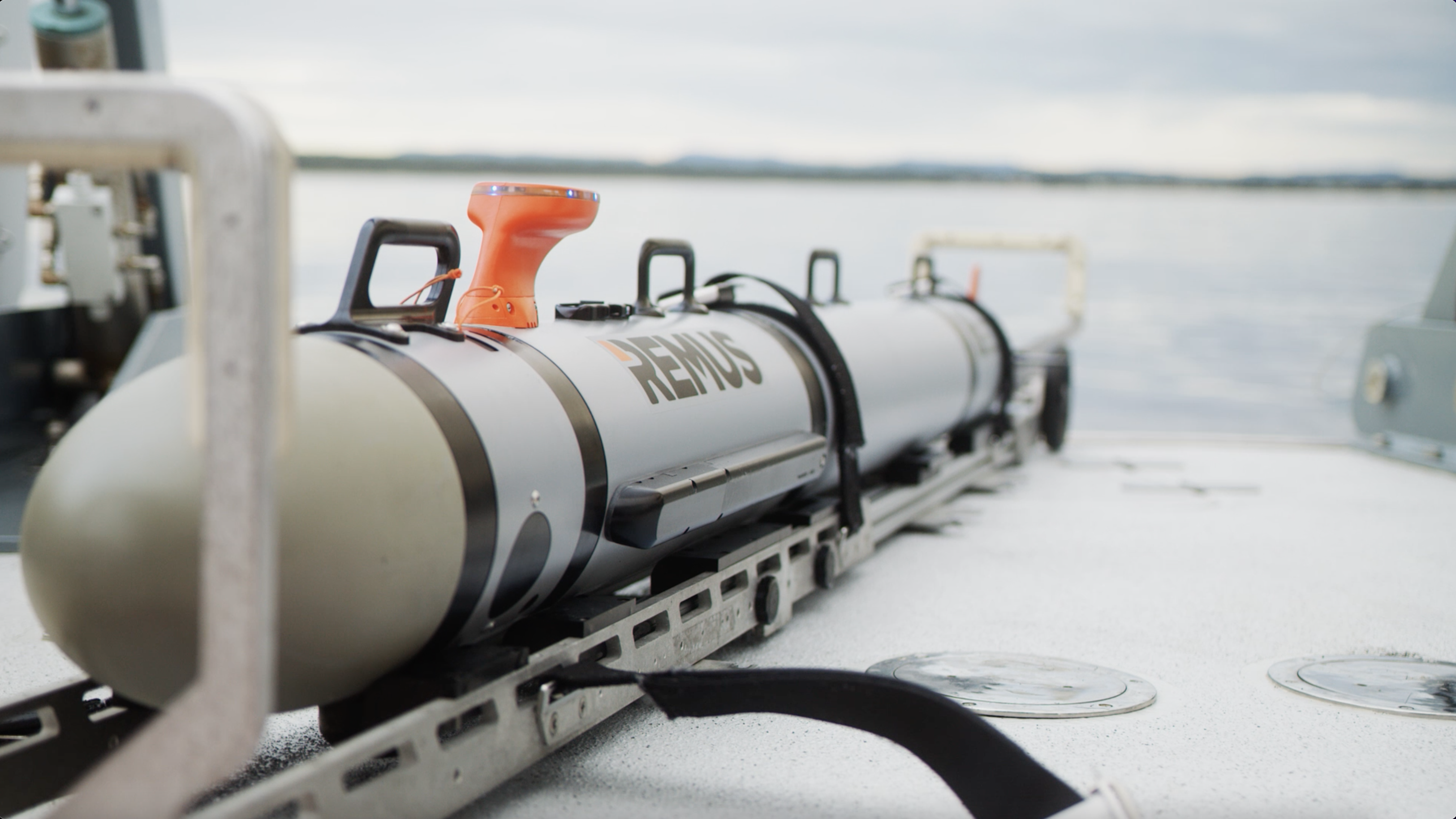
An image accompanying this release is available at: https://www.hii.com/news/hii-is-awarded-option-year-contract-for-us-navy-lionfish-unmanned-undersea-vehicle-production/.
Following the selection of HII’s REMUS 300 platform for Lionfish, the program has been recognized as the U.S. Navy’s first successful transition from an Other Transaction Authority (OTA) prototype effort to full-scale production, demonstrating accelerated application of dual-use commercial technologies in support of operational U.S. Department of Defense capabilities. Lionfish is also the first and only cyber-compliant unmanned underwater vehicle currently in production for the U.S. Navy.
The REMUS 300 platform is a modular, open-architecture SUUV engineered for multi-mission adaptability. Its open-architecture design enables rapid payload integration and future technology upgrades, allowing operators to adapt the system to evolving mission needs while maintaining cost efficiency over the platform lifecycle.
The REMUS family of unmanned underwater vehicles has been field-proven across global naval operations. HII has delivered more than 700 REMUS vehicles to over 30 countries, including 14 NATO members. More than
About HII
HII is America’s largest shipbuilder, delivering the world’s most powerful ships and all-domain mission technologies, including unmanned systems, to U.S. and allied defense customers. HII is the largest producer of unmanned underwater vehicles for the U.S. Navy and the world.
With a more than 140-year history of advancing U.S. national security, HII builds and integrates defense capabilities extending from the core fleet to C6ISR, AI/ML, EW and synthetic training. Headquartered in Virginia, HII’s workforce is 44,000 strong. For more information, visit:
- HII on the web: https://www.HII.com/
- HII on Facebook: https://www.facebook.com/TeamHII
- HII on X: https://www.twitter.com/WeAreHII
- HII on Instagram: https://www.instagram.com/WeAreHII
- HII on LinkedIn: https://www.linkedin.com/company/wearehii
Contact:
Greg McCarthy
(202) 264-7126
gregory.j.mccarthy@hii-co.com
A photo accompanying this announcement is available at https://www.globenewswire.com/NewsRoom/AttachmentNg/5a5a9fec-c328-41b6-bd66-562063d1842d

FAQ
AI-generated questions and answers. How Rhea-AI works. Not financial advice.